Africa Rail Grinding & Maintenance
Rail Grinding & Track Maintenance Support for African Railways
Africa runs roughly 80,000 km of railway across 39 operating countries — 1435 mm standard gauge in the north, 1067 mm narrow gauge through the south and centre, 1000 mm metre gauge in the west. Mining corridors are expanding fast, yet much of the network has gone years without profile grinding, and corrugation, gauge-corner wear and rolling contact fatigue keep accumulating.
We supply the consumables that address this: rail grinding wheels for Loram, Harsco, Speno, Mecno, Geismar/Robel and Chinese grinding vehicles — plus the wheel selection, grinding-interval calculation and operator support that most suppliers do not provide.
54African countries
39with operating railways
~80,000 kmnetwork length
3main track gauges
Why a dedicated approach
Why African Tracks Need a Different Rail Grinding Approach
Four conditions shape wheel specification and grinding strategy across the continent — and none of them is the same as plain-line maintenance in Europe or Asia.
Rail Defects Left Too Long
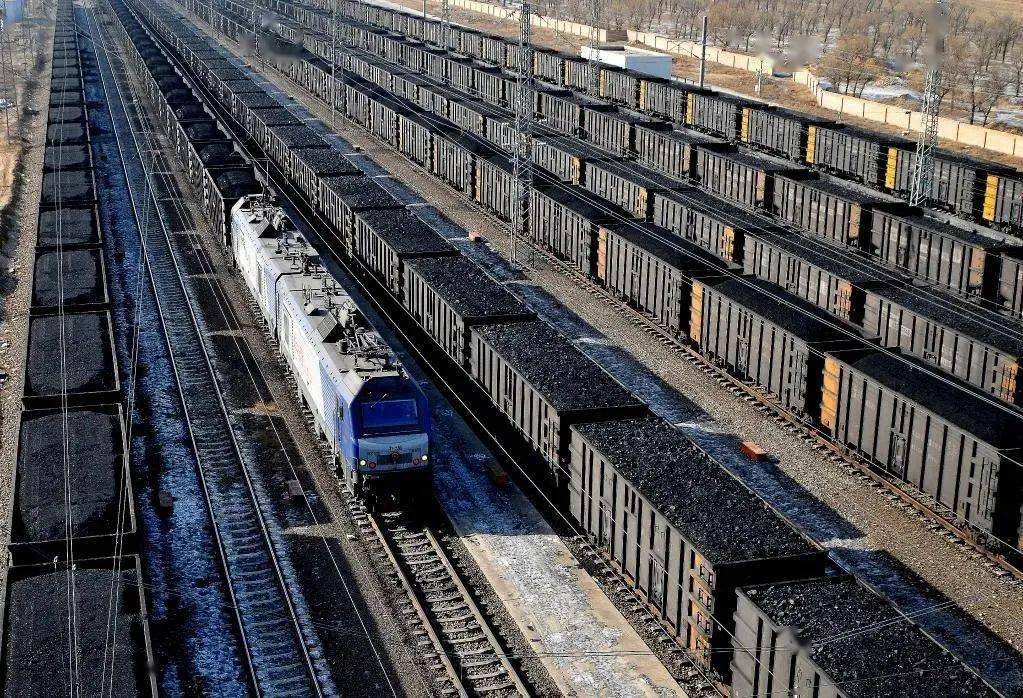
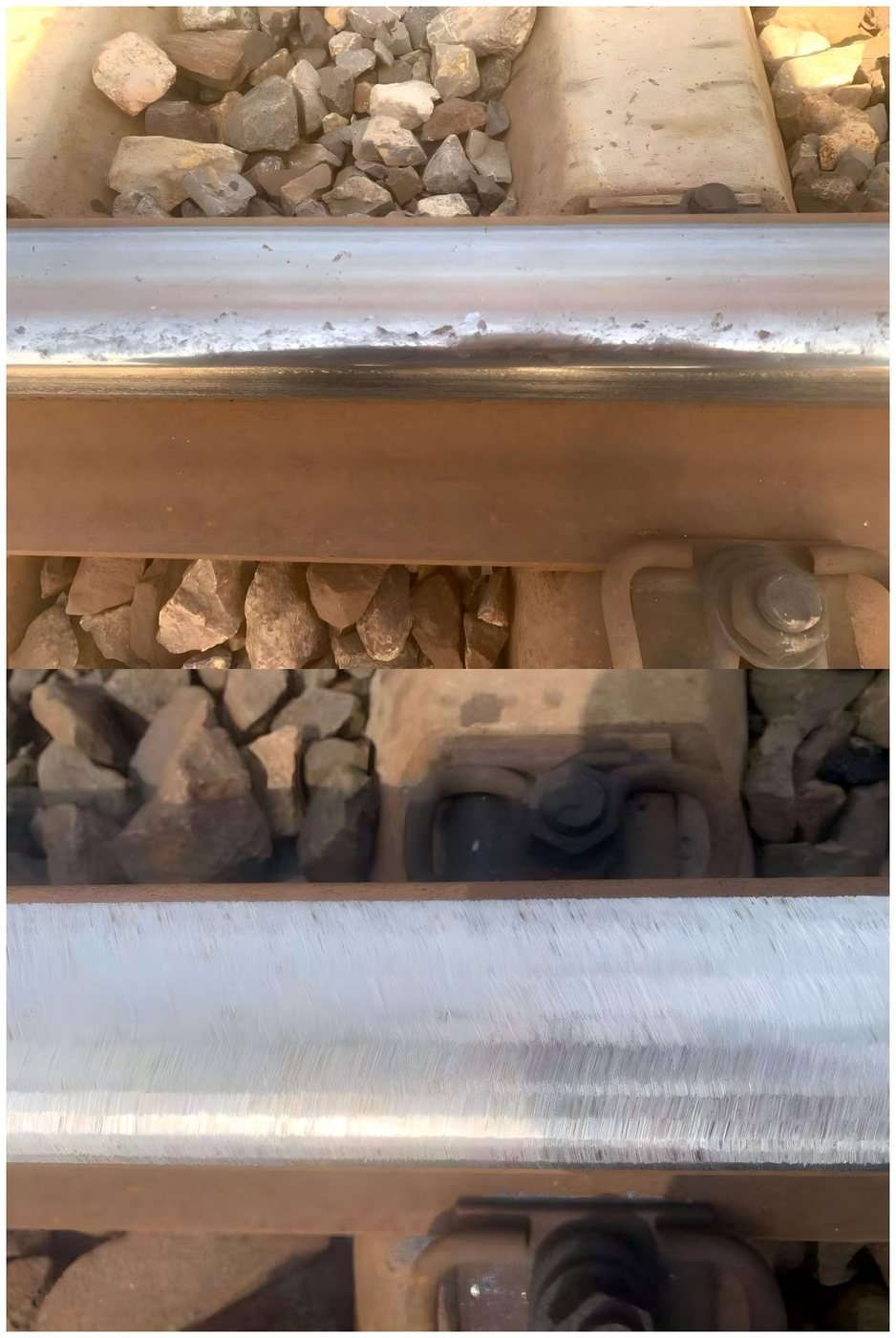
Much of the network was built for a different era of traffic and now carries far more than it was designed for. On many corridors basic profile grinding is years overdue, so corrugation, contact fatigue (RCF) and spalling have built up beyond what routine maintenance would allow.
Narrow Gauge Curves
1067 mm and 1000 mm systems are far more sensitive to wheel–rail geometry. On small-radius curves the gauge face wears abnormally fast and RCF develops quickly, so wheels must balance aggressive stock removal against curve-specific life.
Heavy-Haul Mining Lines
Axle loads of 21–30 t with concentrated tonnage push defects to form quickly. Mining operators pay for grinding from their own budget and judge wheels on cost per kilometre, not price per wheel.
Self-Contained Working Conditions
Infrastructure in remote sections can be intermittent, and power and signalling assets in some regions need additional protection. Portable power, self-contained grinding equipment and low-dependency methods suit these corridors.
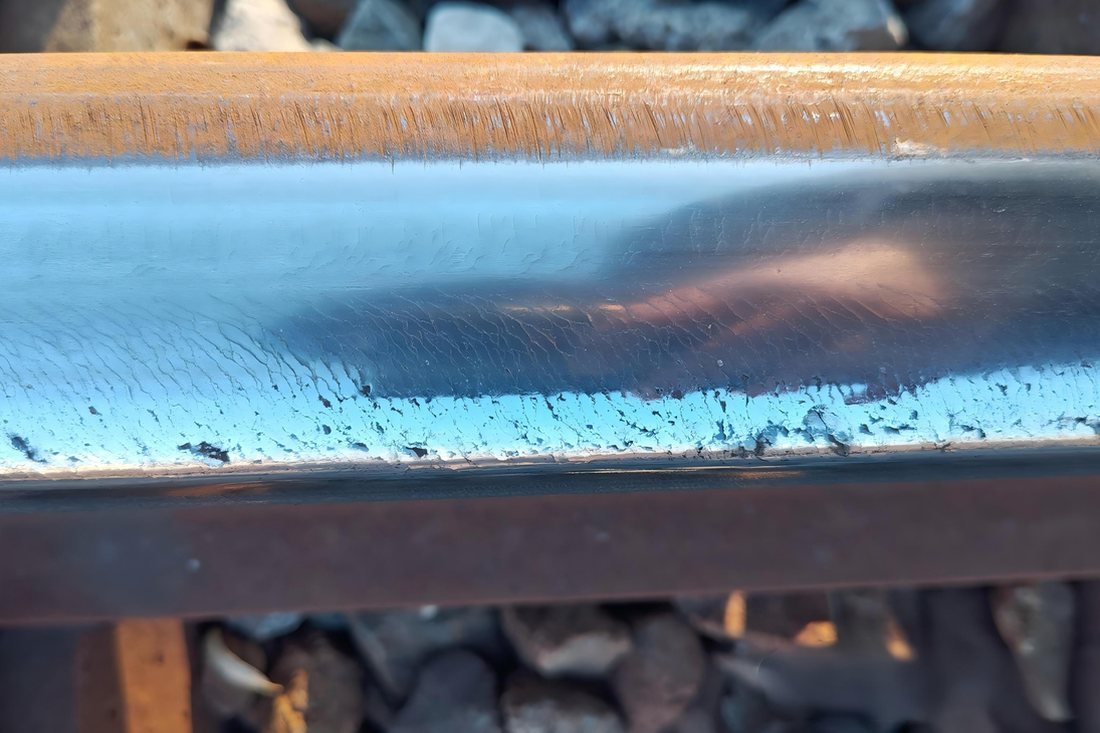
Typical Rail Surface Defect Conditions
Three gauges, three specifications
Matching Grinding Wheels to Africa's Three Track Gauges
A single country may run several gauges and several machine brands at once — which is why wheel selection starts from the machine, not the map.
| Track gauge |
Where it runs |
Typical axle load |
Grinding machines in service |
Wheel family |
1435 mm
standard gauge |
Egypt, Algeria, Morocco, new Chinese-built lines, Mauritania (SNIM) |
21–30 t |
Loram C44 / MFS, Harsco PGM-48 / 96C, Mecno, Chinese grinding vehicles |
260 × 83 / 90 × 154
350 × 25 × 127 |
1067 mm
narrow gauge |
South Africa, Mozambique, Zambia, DR Congo, Angola, Tanzania |
21–26 t |
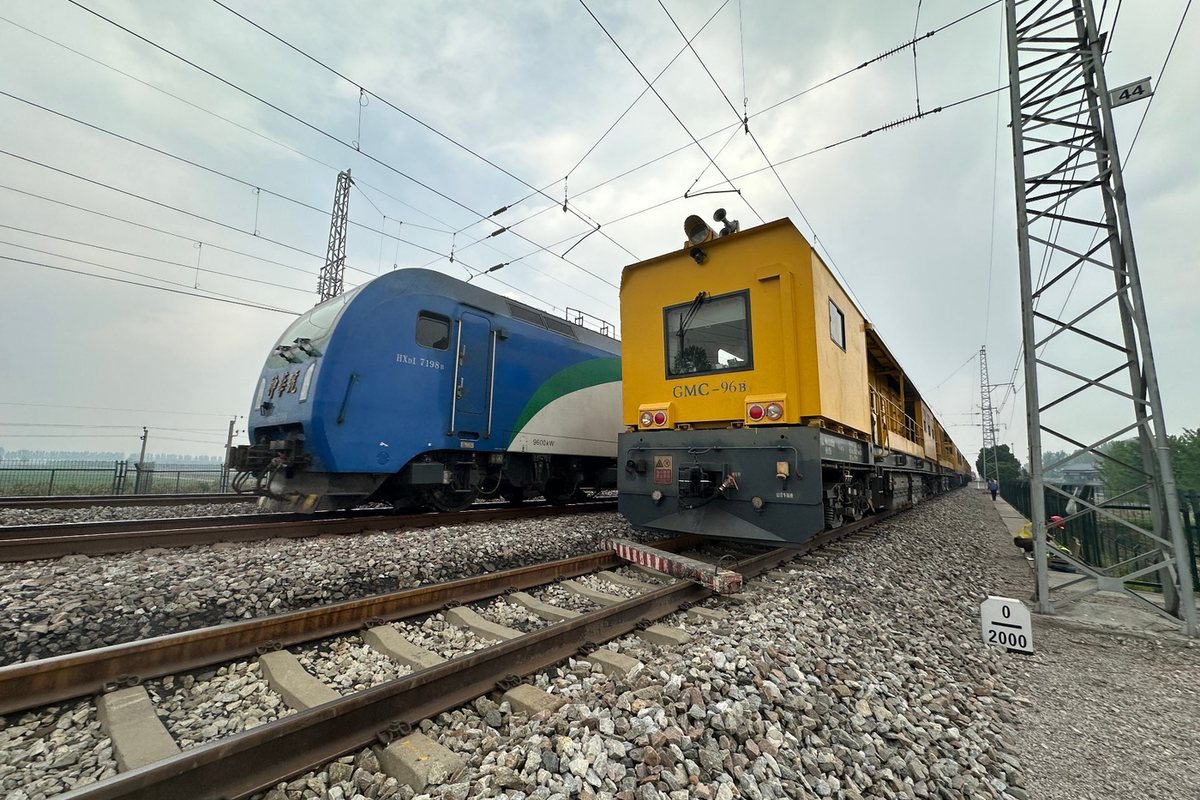
Speno GMC16A / 96B, Harsco, Geismar / Robel portables |
350 × 25–60 × 127
260 × 110 × 30
150 series |
1000 mm
metre gauge |
West African corridor networks |
18–21 t |
Portable and small rail grinders |
150 / 125 series
260 × 110 × 30 |
Same dimension does not mean same wheel. Wheels of identical size are made with different flange interfaces for different machine brands and are not interchangeable. Always quote the machine model and flange interface when ordering — our full machine-by-machine size matrix lists every interface.
One supplier for the whole fleet. We cover Loram, Harsco, Speno, Mecno, Geismar/Robel and Chinese machines from a single source, which simplifies both procurement and spares holding for operators running mixed fleets.
Demand centres
Mining Corridors Driving Rail Grinding Demand
These are the corridors where grinding demand is concentrated, and where wheel specifications are being decided now.
| Corridor / project |
Country |
Key figures |
Grinding demand |
| Sishen–Saldanha (OREX) |
South Africa |
861 km · 30 t axle load · ~60 Mt iron ore per year |
Heavy haul corrective + preventive |
| Nacala Logistics Corridor |
Mozambique / Malawi |
1067 mm · 115RE · 21 t · 30+ MGT rising to 40 MGT by 2028 |
Several years without profile grinding — corrective programme under way |
| SNIM iron ore line |
Mauritania |
704 km · US$275 m rehabilitation · Jinying CMC-30 grinding vehicle in service |
Corrective grinding now, preventive cycle after |
| Simandou Trans-Guinean |
Guinea |
650 km · 120 Mt/yr design capacity · passenger service planned 2027 |
New line — maintenance system being established |
| TAZARA |
Zambia / Tanzania |
~US$1.4 bn rehabilitation · capacity 0.1 Mt rising to 2.4 Mt/yr |
Heavy corrective grinding during rehabilitation |
| Lobito Corridor |
Angola / DR Congo |
Copper–cobalt export route · capacity target 4.6 Mt/yr |
Capacity expansion and new sections |
China–Africa equipment link. Chinese-built grinding vehicles are now entering service on the continent. The clearest recent example is the Jinying CMC-30 on Mauritania's SNIM iron ore line — a modular set of three grinding cars plus an accommodation car, configured for desert working with sand-clearing equipment, a fully enclosed body and multiple braking systems.
Projects like this create predictable, long-term wheel demand, and we work with Chinese equipment manufacturers on wheel supply for them.
Strategy by condition
Rail Grinding Strategy by Track Type and Axle Load
The same wheel on two corridors can give very different results. These are the two conditions that dominate African demand.
Narrow Gauge & Small-Radius Curves (1067 / 1000 mm)
Curve wear on narrow gauge is driven by geometry as much as tonnage: the angle of attack on tight curves concentrates contact stress on the gauge corner, so wear and RCF develop together and quickly.
In practice that means three choices — a coarser, harder-bonded wheel for corrective passes; a 20-grit zirconia-alumina wheel, typically 260 × 110 × 30 on small machines, for blended corrective and maintenance work; and more frequent, lighter passes rather than one heavy campaign, because narrow-gauge geometry recovers faster when grinding is regular.
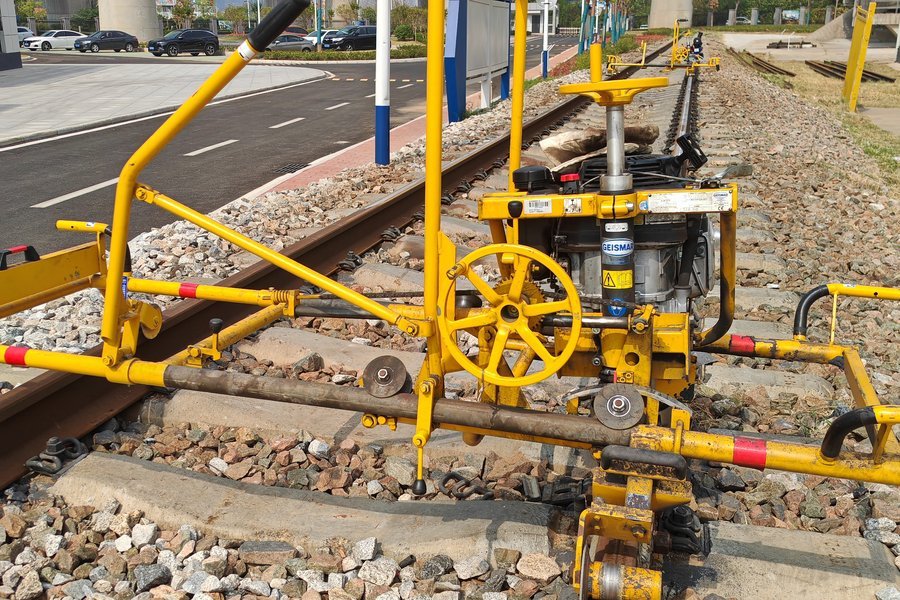
For switch and crossing work that large machines cannot reach, the Geismar / Robel 150 and 125 series cover hand-held applications.
Heavy Haul Mining Corridors (21–30 t axle load)
On heavy haul corridors at 25–30 t axle load, defects evolve by three mechanisms at once: plastic flow and crushing at the gauge corner, corrugation from high-frequency dynamic loads, and shelling and spalling from accumulated fatigue.
Wheels here need a high wear-resistance formulation — the MRC-L260083 and MRC-L260090 grades for 260 mm machines, and the 350 × 127 series for Mecno-type carriers — because the economics are settled by cost per kilometre ground, not price per wheel.
What matters most to mining operators is the grinding interval. Establishing a preventive cycle from measured wear data is what removes the emergency re-railing cost that follows when defects are left to grow.
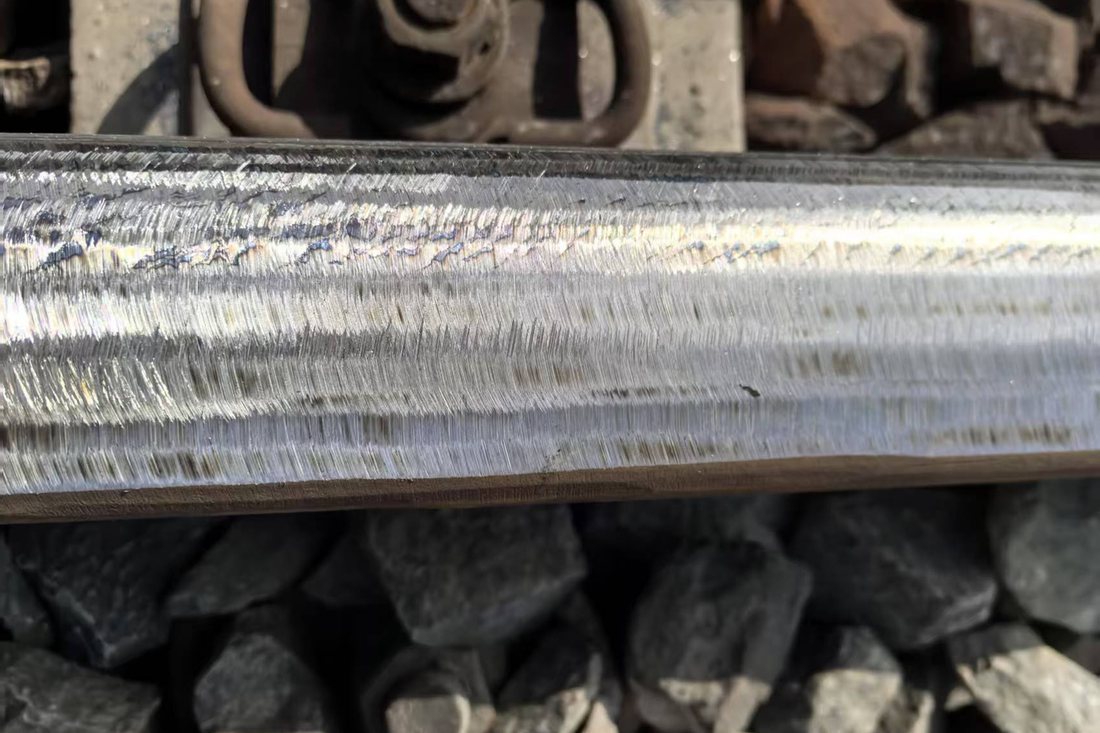
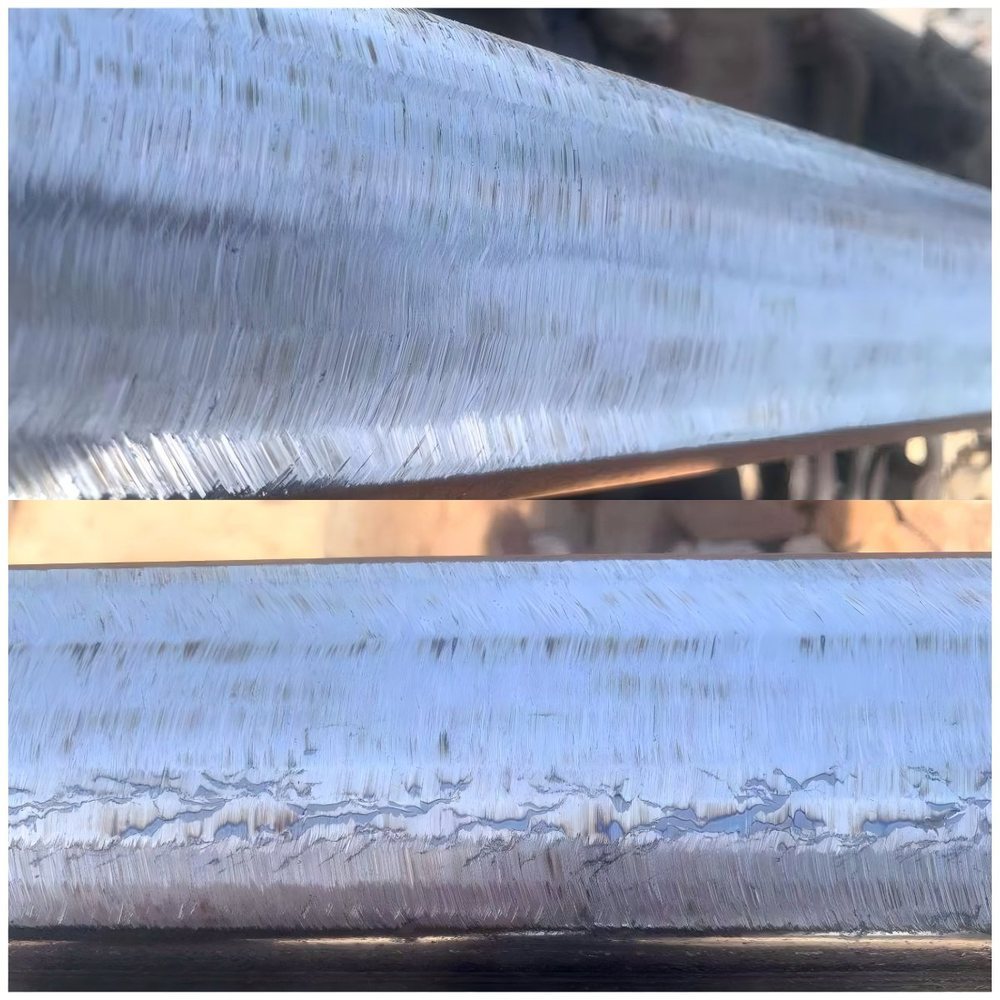
Rail Grinding Results — Before and After
Rail surface condition before and after profile grinding
Who buys
Who Buys Grinding Wheels in Africa
Purchasing decisions sit with five different types of organisation — each with a different idea of what a good supplier looks like.
| Buyer type |
Examples |
What they need from a supplier |
| State railway operators |
Transnet (South Africa), Kenya Railways, NRZ (Zimbabwe), TAZARA, SNIM |
Tender-ready supply, technical documentation, sustained sheet volume |
| Private operators (TOCs) |
South Africa's newly licensed operators — ARC South Africa, The Railway Corporation, TLD Marine, MENAR, Sharp Logistics, Barberry, Grindrod, Minrail, IRACEMA, Motheo Logistics, Interlinks |
Fast quotations, low-volume trial batches, competitive cost per kilometre |
| Mining companies |
Vulcan (Nacala), ArcelorMittal (Liberia), SNIM, Simandou project owners |
Cost-per-kilometre reduction, preventive grinding cycles |
| Grinding contractors |
Regional grinding service providers and track contractors |
Aftermarket wheels that match the machines they already run |
| Project contractors |
Contractors on TAZARA, corridor extensions and rehabilitation projects |
Supply aligned to project schedules and milestones |
Batch Purchasing by Season
Orders are placed by maintenance season rather than in large single lots — so we support lot-by-lot shipment against a single specification.
Sea freight is the constraint
Transit times are measured in months. We plan production ahead and help align deliveries with your maintenance calendar.
Field Trials Decide, Not Brochures
Customers want to see a wheel work on their own machine, on their own track — which is why we lead with samples and measured data.
Process support is welcome
In-house grinding expertise is often thin, so customers accept — and value — wheel selection, interval calculation and training.
Local compliance matters
South Africa in particular requires BBBEE and local-content arrangements, which we address through local cooperation.
Payment capacity varies
Mining customers settle quickly; state railways are budget- and approval-bound. Supply terms are set accordingly.
Products and evidence
Rail Grinding Wheels and Machines We Supply
Wheel range, inspection instruments and the measured results behind them.
Grinding Vehicles & Machines
Wheels for 260 mm, 250 mm, 350 mm, 280 mm and 150 mm families, covering Loram, Harsco, Speno, Mecno, Geismar/Robel and Chinese machines, plus portable and narrow-gauge grinders.
Railway grinding vehicles →
Rail grinding machines →
Rail Grinding Wheels
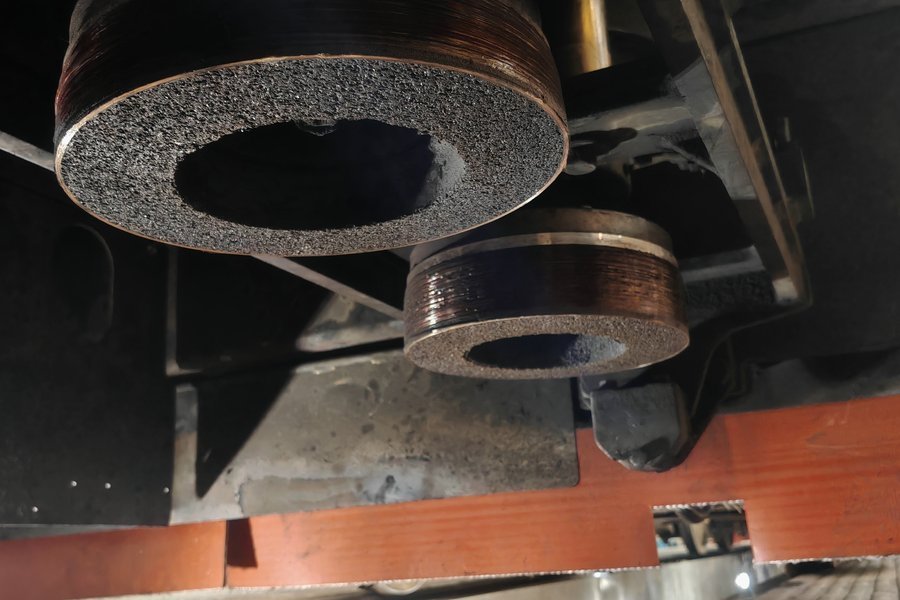
Zirconia-alumina, resin-bonded, glass-fibre reinforced and speed-rated to 50 m/s. Standard sizes are held in stock; custom specifications are also produced.
Rail grinding wheel range →
Rail Inspection & Measuring Tools
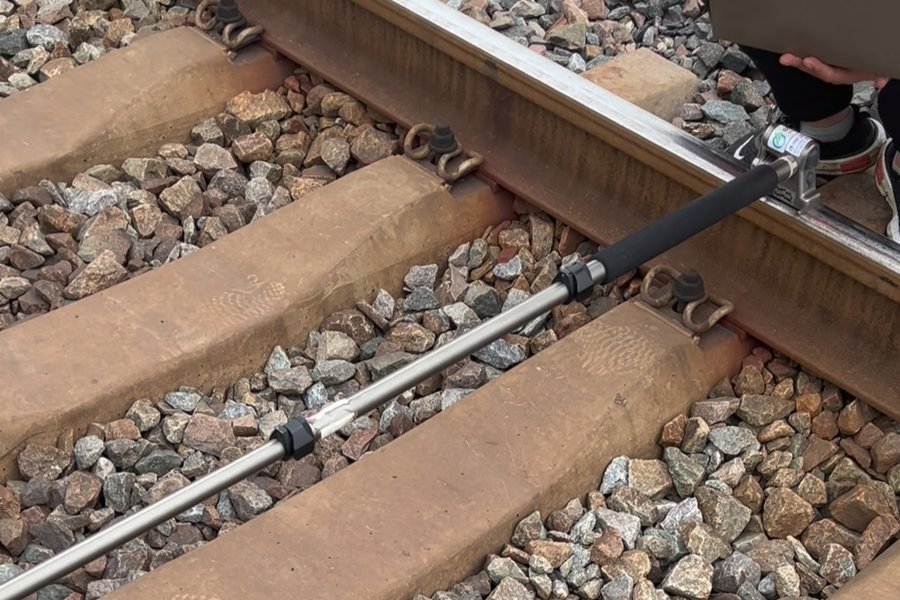
Rail profile instruments, digital track gauges and frog wear gauges, so the measure–grind–verify loop closes on site rather than in a report.
Rail inspection tools →
Measured Rail Grinding Results in the Field
- Loram grinder trial (2026) — ground-surface roughness 1.05–9.0 μm, most readings 2–4 μm, with no blue discolouration and no fracture or shedding; test report available in Chinese, English and Portuguese.
- Comparative running test — test wheels consumed 20–30 mm each against 43.5–59 mm for the imported reference wheel at equal surface quality, roughly 2× the durability; a later half-car comparison measured 1.5×.
- High-speed line trial — 4.28 km·pass per mm of wheel wear against 3.27 for the wheels previously used, averaging 214.22 km·passes per wheel with no continuous blue band.
- Heavy-haul line — 4.98 km·pass per mm, validated across batch runs of 100–600 wheels.
- Grinding temperature — working-face temperature of 124 °C / 55 °C against 143 °C / 68 °C for the imported wheel, with sulphur content ≤0.03 %.
- Independent review — metal removal exceeded the technical requirement by 1.4–2.6× under China Academy of Railway Sciences review TKTJ-19-0007-ST (G1/G2/G6).
Support and supply
Wheel Selection, Trials and Supply Support
The fastest way to settle a wheel specification is to grind with it — everything else follows from the measured data.
Free Grinding Wheel Sample & On-Site Trial
We supply free sample wheels for a single grinding head, work alongside your crew on site, and compare surface quality and consumption against the wheel you use now. You hold the measured result before committing to a batch.
Wheel Selection, Grinding Intervals & Training
Send us your gauge, axle load, annual tonnage and curve radii and we recommend wheel type and specification. We also help set a preventive grinding interval from your own wear records and train operators on wheel selection, grinding practice and safety.
Supply Terms for African Deliveries
Flexible batch supply — order by maintenance season and take delivery in one or several lots. Standard sizes are held in stock at our factory and can be dispatched quickly. For project work we support pre-positioning against critical milestones and help you plan around sea-freight lead times.
Market focus
Where We Supply Grinding Wheels in Africa
Three markets currently drive our African activity — each with a different gauge, a different defect mix and a different buyer.
Mozambique
Mozambique — Nacala Corridor
1067 mm narrow gauge on 115RE rail with 21 t axle loads, carrying 30+ MGT and heading for 40 MGT by 2028. The corridor has gone several years without profile grinding, and the corrective programme is now being planned.
Mauritania
Mauritania — SNIM Iron Ore Line
704 km of standard gauge between the Zouerate mining region and the port of Nouadhibou, with a US$275 m rehabilitation under way and a new Chinese grinding vehicle in service on the line.
South Africa
South Africa — Transnet & Private Operators
A network of roughly 21,000 km including the 30 t axle-load Sishen–Saldanha ore line, and eleven newly licensed private operators now entering the network — new buyers with no established wheel supplier.
Coverage
Coverage Across African Railways
North Africa runs 1435 mm standard gauge — Egypt's network together with its new high-speed lines, Algeria's network and mining branches, Morocco's high-speed line, plus Tunisia and Sudan.
West Africa mixes 1000 mm metre gauge and 1435 mm across Nigeria's older narrow-gauge network and its new standard-gauge lines, Ghana, Côte d'Ivoire, Senegal, Mali, Burkina Faso, Benin, Togo, Guinea, Liberia and Mauritania.
Central Africa is dominated by 1067 mm — the DR Congo copper belt, Cameroon, Angola's Benguela line and Zambia's copper routes.
East Africa combines 1067 mm and 1435 mm: Kenya's standard-gauge railway alongside its older metre-gauge system, Tanzania, the electrified Addis Ababa–Djibouti line in Ethiopia and Djibouti, Uganda and Madagascar.
Southern Africa — South Africa's network, Mozambique, Zimbabwe, Botswana, Namibia, Malawi and Eswatini — is almost entirely 1067 mm, with South Africa's heavy-haul ore lines carrying the highest axle loads on the continent.
Whichever of these networks you operate, the wheel specification follows the machine and the defect — not the border. A 1067 mm grinding vehicle in Mozambique and one in Zimbabwe will generally run the same wheels; what changes is the grinding strategy, and that comes from your axle load, curve radii and annual tonnage.
Manufacturer credentials
Why Molaton / RailwayCare for African Rail Grinding
The wheel is only as good as the manufacturer behind it. These are the credentials that sit behind every specification on this page.
China's First Rail Grinding Wheel Maker
We have manufactured rail grinding wheels since 2004 as China's first dedicated producer, growing out of the friction-materials laboratory of Wuhan University of Technology. Annual capacity is 500,000 wheels.
Industry Standard Drafter
We took part in drafting JB/T 11431, the industry standard for bonded abrasive rail grinding wheels — the same specification our wheels are produced and inspected against.
Certified Rail Wheel Manufacture
ISO 9001:2015 and ISO 45001:2018 certified, CRCC registered since 2011, and reviewed by the China Academy of Railway Sciences under TKTJ-19-0007-ST for G1 / G2 / G6 wheels.
Materials and Laboratory
Zirconia-alumina grain from Saint-Gobain and resin from SI Group, verified in the rail-grinding-wheel laboratory we co-built with Wuhan University of Technology.
Manufacturing tolerances and quality limits: outer diameter ±2.0 mm · thickness ±1.5 mm · parallelism ≤0.4 mm · concentricity ≤0.5 mm · imbalance ≤30 g (G1) and ≤34 g (G3) per GB/T 2492 · wheel wear ≥100 km·passes per Q/CR 1-2014 · ground-surface roughness Ra ≤10 μm.
FAQ
Africa Rail Grinding FAQ
Which grinding wheel fits my machine?
Quote the machine brand and model, the wheel size and the flange interface. Size alone is not enough: wheels of identical dimensions are made with different flange interfaces for different machine brands and cannot be swapped between them. If you are unsure of the interface, send a photo of the side-wall marking of the wheel you use now and we will confirm the match.
Which grinding wheels suit 1067 mm narrow gauge track?
Narrow gauge curves need a different balance from heavy-haul plain line. Corrective passes on 1067 mm and 1000 mm track are usually run with a coarser, harder-bonded wheel, while blended corrective and maintenance work suits 20-grit zirconia-alumina — typically 260 × 110 × 30 on small machines. Switch and crossing work that large machines cannot reach is covered by the 150 and 125 series portable wheels. Tell us your curve radii and annual tonnage and we will confirm the specification.
Do you supply rail grinding wheels to other African countries?
Yes. African railways operate in 39 countries, on three different gauges, and the wheel specification follows the machine and the defect rather than the border. Tell us the machine you run and the defects you are dealing with, and we will recommend the wheel type and the grinding process for your track.
How do we start a trial, and what is the delivery time to Africa?
Start with a free sample trial: a small set of wheels on one grinding head, run against the wheel you use now, with roughness and consumption measured and compared. Standard sizes are held in stock and dispatched quickly; sea freight to African ports is planned ahead with your maintenance calendar, and we support lot-by-lot delivery against a single specification.
Let Us Recommend the Right Grinding Wheel for Your Machine
Send us your machine model and flange interface, the defects you are dealing with, your gauge and annual tonnage. Our engineers will reply with the wheel type, the expected life and a grinding-process recommendation for your track.