Rail Profile Grinding: Techniques, Standards & Best Practices
- Share
- publisher
- RailwayCare
- Issue Time
- Sep 3,2026
Summary
Learn rail profile grinding techniques, acceptance standards (GQI, Ra ≤ 10 μm, grinding depth) and best practices with field data from HSR, heavy-haul and metro projects in China.
Rail Profile Grinding: Techniques, Standards & Best Practices
Rail profile grinding is one of the most cost-effective ways to keep a railway line safe, quiet and durable. A rail that has lost its designed profile generates higher contact stress, more noise and vibration, faster wear of wheels and track, and eventually fatigue cracks that shorten rail life. This guide explains what rail profile grinding is, which techniques are used, what standards you must meet, and what real-world results look like – backed by field data from high-speed, heavy-haul and metro projects.
Why Rail Profile Matters More Than You Think
The wheel-rail contact patch is tiny – roughly the size of a fingernail – yet it carries the entire load of a train. When the rail head wears unevenly, three problems appear:
- Contact stress concentrates on a small area, accelerating fatigue cracks, spalling and crushing.
- The grinding band becomes narrow, irregular or shifted, which increases noise, vibration and the risk of wheel hunting.
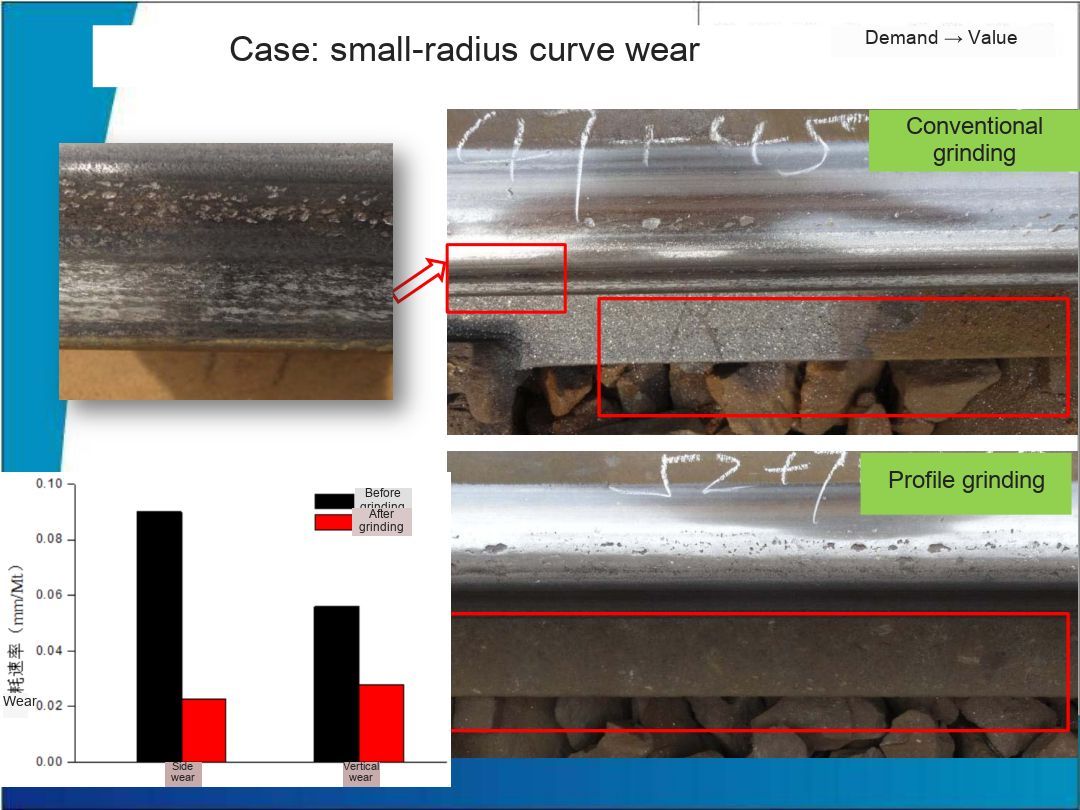
- Side wear on curves grows fast. In one small-radius curve case, side wear increased by 12.556 mm per year before corrective profile grinding – and dropped to just 0.85 mm per year afterwards.
Ignoring profile degradation does not save money. It leads to premature rail replacement, speed restrictions, fastener damage and higher maintenance costs across the whole line.
What Is Rail Profile Grinding?
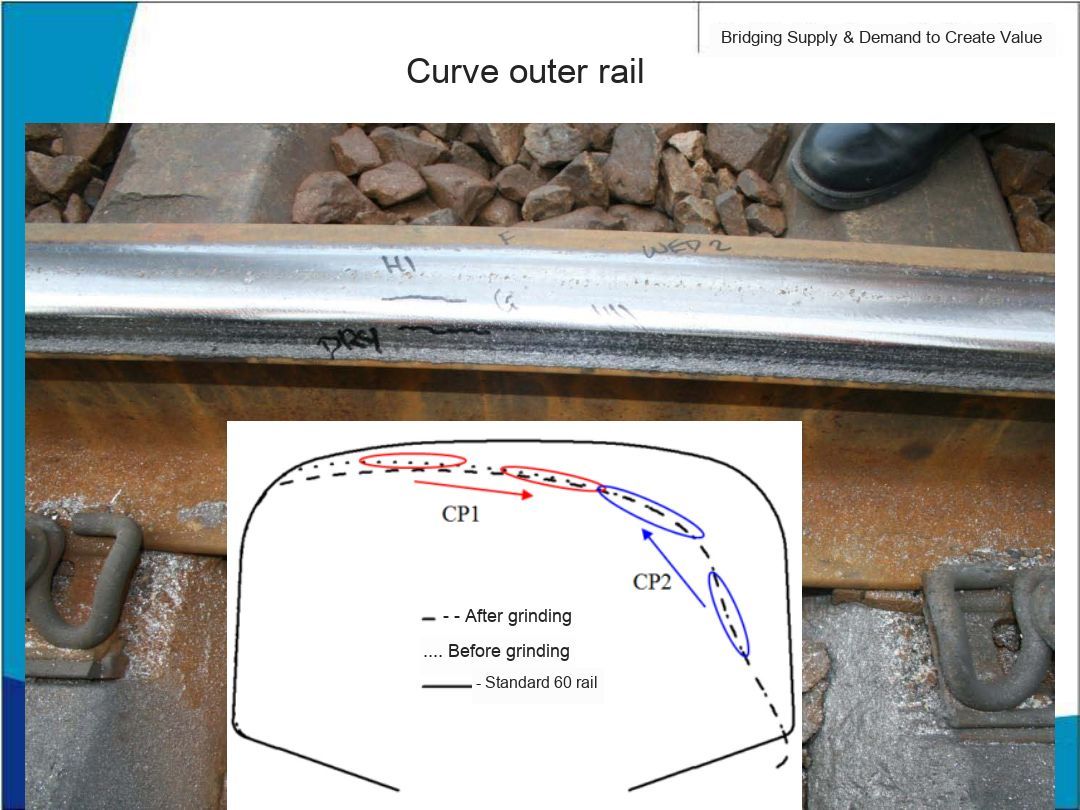
Rail profile grinding is a preventive and corrective maintenance technique that restores the rail head to a designed target profile. Unlike ordinary surface grinding, which simply removes defects, profile grinding shapes the rail cross-section so that the wheel and rail interact in the intended way: contact centred on the tread, a stable grinding band, and minimal creepage and contact stress.
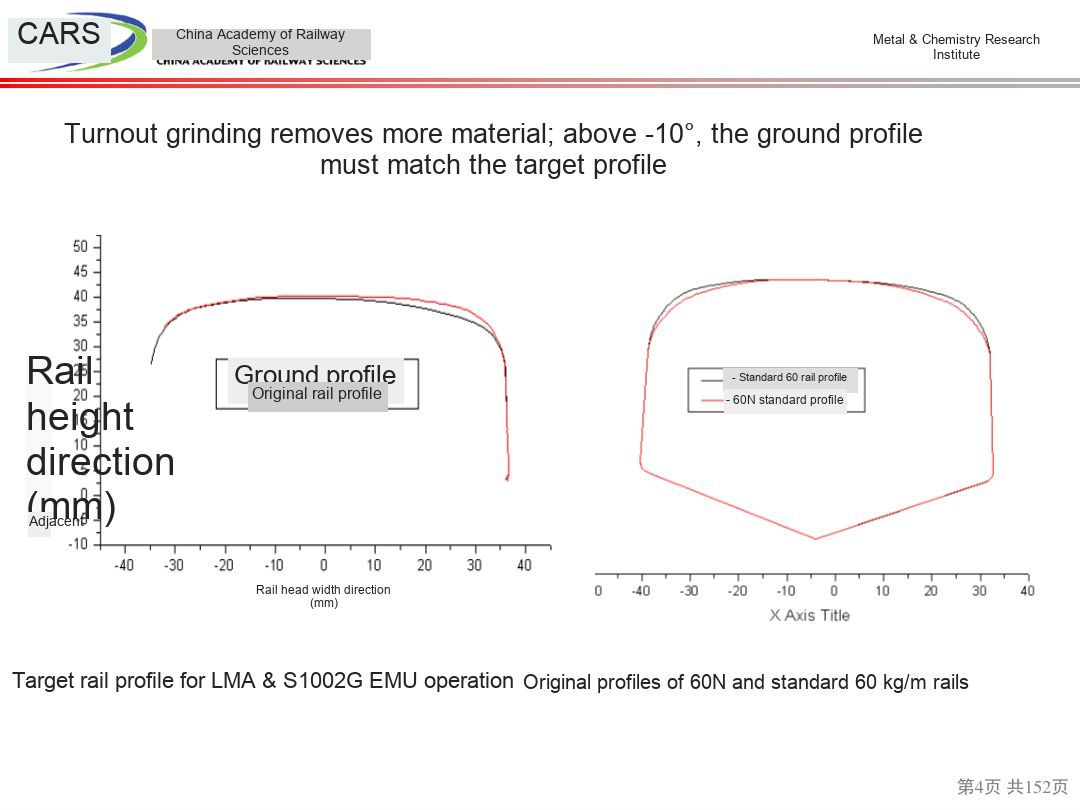
A well-designed target profile is the foundation. For high-speed turnouts, the main contact zone is typically kept 25–30 mm wide; for conventional and heavy-haul lines, 35–40 mm. The profile should follow the wheel’s nominal rolling circle and avoid the non-working edge, where contact causes high stress and plastic deformation.
How Rail Profile Grinding Works
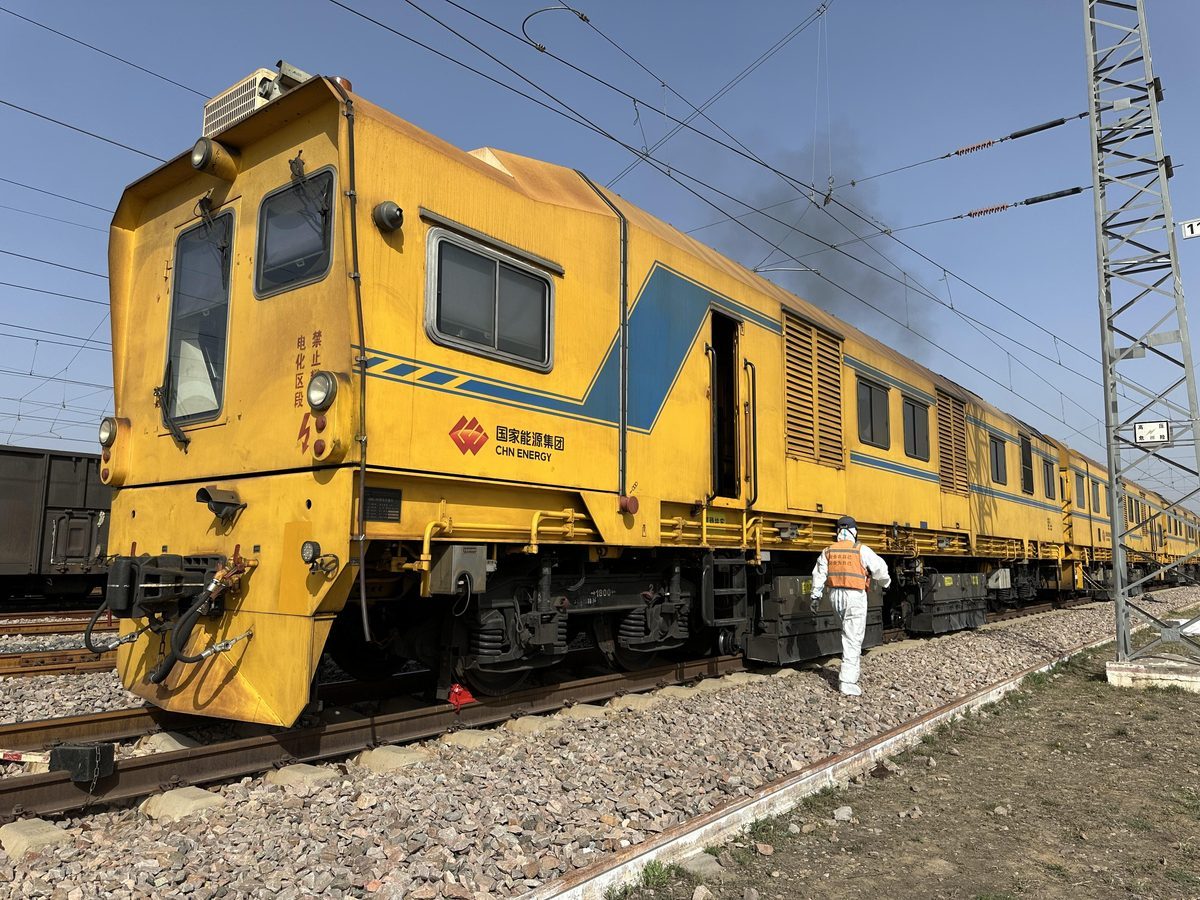
Profile grinding is performed by grinding trains (for long sections) and small machines (for turnouts and restricted zones). The process follows four steps:
- Measure: profile gauges or laser profilers capture the actual rail cross-section before grinding.
- Compare: the measured profile is compared with the design target profile to define where material must be removed.
- Grind: grinding units work from the gauge corner toward the rail centre, pass by pass, at controlled angles and depths.
- Verify: profile, roughness, grinding band and drop values are re-measured against acceptance standards.
Grinding angles are selected by pass. For example, switch and stock rails are usually ground from −15° to +70°; the switch top narrower than 20 mm is covered only from +3° to +40° to avoid damaging the thin switch rail. In turnout grinding, where the target is the design profile, 10–14 passes are typical; grinding to the 60N standard profile takes 18–20 passes, while uniform preventive grinding needs only 6–8 passes.
Acceptance Standards You Need to Know
Whatever grinding machine you use, the result is judged against measurable standards. The most common requirements in China and internationally:
- Surface roughness: Ra ≤ 10 µm on the ground rail surface.
- No continuous blue bands: grinding must not overheat the rail and form blue oxide layers.
- Grinding depth: pre-grinding ≥ 0.2 mm at the rail top centre (zone −1° to +3°); preventive grinding ≥ 0.1 mm; corrective grinding ≥ 0.2 mm.
- Profile tolerance: deviation from the design profile typically +0.2/−0.4 mm at the rail top centre and ±0.2 mm elsewhere.
- Grinding Quality Index (GQI): a single profile is excellent at GQI ≥ 85, qualified at ≥ 70 and failed below 70. For a section, excellent requires GQI ≥ 85 with standard deviation ≤ 8 and at least 70% of profiles above 85.
These values come from operating standards such as TB 10413-2018 (railway track construction quality acceptance), Q/CR 1-2014 (ordering technical conditions for grinding train wheels), and the GQI acceptance standard applied by Guangdong Intercity Railway (Q/GDCJ-SS-GL-JS-041).
Preventive vs Corrective Profile Grinding
Preventive profile grinding removes only a thin layer (0.1–0.2 mm) before defects appear, keeping the rail in the designed shape at all times. It is scheduled by cumulative tonnage – typically every 30–50 Mt on busy mainlines, and no longer than every two years. Corrective (remedial) grinding removes more material to eliminate existing corrugation, fish-scale cracks, spalling and side wear.
The economics are clear: preventive grinding extends rail life, reduces noise and vibration, and avoids the much higher cost of corrective work, speed restrictions and early rail replacement.
Best Practices from Real Projects – Field Data
Theory is only as good as the results. Here is what profile grinding achieves when wheels, machines and process are matched properly:
Case 1 – Curved track side wear control
On a small-radius curve, profile grinding cut the side-wear rate from 12.556 mm/year to 0.85 mm/year – a 93% reduction – by restoring a conformal contact and correct rolling radius difference.
Case 2 – Conventional vs profile grinding wear rate
Comparative wear-rate data show profile grinding keeps the rail surface closer to the target profile and reduces wear per million gross tonnes compared with conventional grinding.
Case 3 – Wheel life on high-speed lines
On the Hefei–Wuhan HSR line, a 48-wheel side-by-side comparison showed the composite grinding wheel achieved 4.28 pass-km per mm of wheel wear versus 3.27 for the incumbent wheel – an average of 214 pass-km per wheel, 1.31 times the service life.
Case 4 – Heavy-haul lines (Shuohuang & Yiyang railways)
On the Shuohuang heavy-haul line, 172.8 pass-km were ground with an average wheel consumption of only 4.98 pass-km per mm. On the 68-km Yiyang line (60-U71Mn and 60-U75V rails, 40 million tonnes per year), the average was 5.7 pass-km per mm over 145 pass-km, with a maximum metal removal of 1.8 mm on the inner rail of an R800 m curve.
Case 5 – Durability vs Norton wheels (Liuzhou GMC-96X)
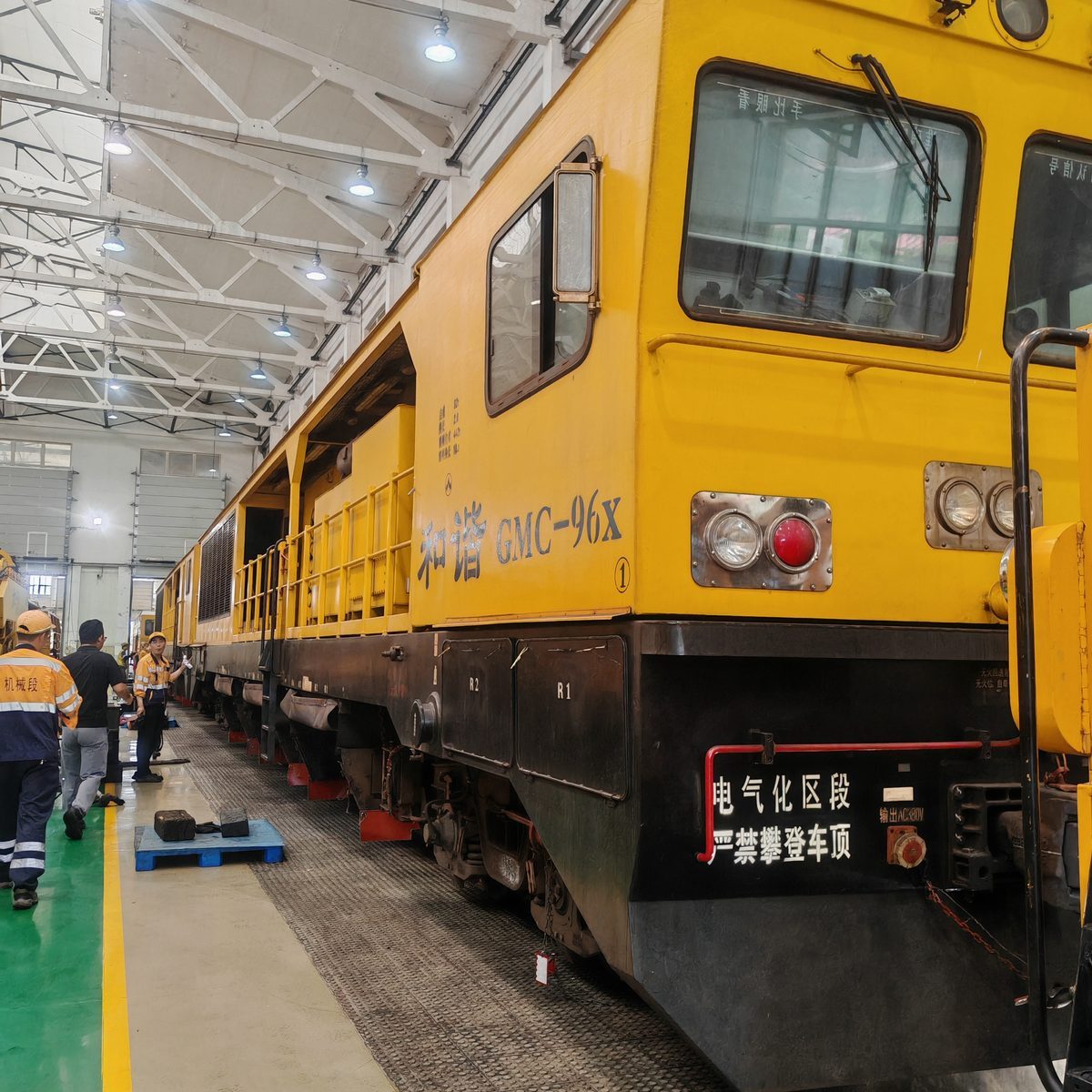
In a half-train comparison against a Norton wheel, Molaton composite wheels lasted 1.5 times longer (100–150 pass-km per wheel vs 50–60), removed damage in 2–3 passes instead of 4–6, ran cooler (124 °C vs 143 °C at the working face) and cut SO₂ emissions by 30–35%. Norton is Molaton’s main international rival, and head-to-head trials between US-made and domestic wheels are routine in China – a market that has now largely shifted to domestic-made grinding wheels.
How Molaton Helps You Hit the Target Profile
Profile grinding is only as good as the wheel doing the cutting. RailwayCare’s Molaton rail grinding wheels are engineered for exactly this job:
- Super-hard composite abrasives – zirconia-alumina bonded in resin with glass-fibre wrapping for safety, rated 50 m/s, from 16 to 30 grit for grinding trains, hand machines and cut-off applications.
- Matched to leading machines – PGM-48/96C (260×90×154 mm), RGH20C switch grinders, Speno GMC16A/96B, Loram (250×75×150 mm), and Geismar/Robel hand grinders.
- Independently tested – wheel samples passed rotary safety testing at 6,354 r/min without fracture; wheel wear reached 1.4–2.6 times the requirement of Q/CR 1-2014.
- Field-proven since 2004 on HSR, heavy-haul and metro lines, with an annual capacity of 500,000 wheels and ISO 9001 / ISO 45001 certified production.
RailwayCare (Wuhan Huatie Ruijie Rail Transit Technology Co., Ltd.) supplies grinding wheels and rail maintenance solutions to railways, contractors and distributors worldwide. If you are planning a rail profile grinding programme, tell us your rail type, machine model and line conditions – we will recommend the right wheel specification and grinding parameters.
FAQ – Rail Profile Grinding
What is the difference between rail grinding and rail profile grinding?
Ordinary rail grinding removes surface defects without a specific target shape. Rail profile grinding restores the rail head to a designed target profile so the wheel-rail contact, grinding band and creepage are controlled – it shapes the rail, not just cleans it.
How often should preventive rail profile grinding be carried out?
Preventive grinding is usually scheduled by cumulative tonnage: every 30–50 Mt on busy lines, and no longer than every two years. Turnout grinding should follow the same cycle as the mainline.
What is a good GQI value after grinding?
GQI (Grinding Quality Index) measures how closely the measured profile matches the design profile, from 0 to 100. A single profile is excellent at GQI ≥ 85, qualified at ≥ 70, and failed below 70. For a whole section, excellent requires GQI ≥ 85 with standard deviation ≤ 8.
What surface roughness should rail have after profile grinding?
The ground rail surface should have Ra ≤ 10 µm, no continuous blue bands, and no obvious periodic wheel marks. Profile deviation from the design target is typically +0.2/−0.4 mm at the rail top centre and ±0.2 mm elsewhere.
How long does a rail grinding wheel last?
It depends on the wheel and the line. In field tests, Molaton composite wheels achieved 4.28 pass-km per mm on high-speed lines (about 214 pass-km per wheel) and 4.98–5.7 pass-km per mm on heavy-haul lines – roughly 1.3–1.5 times the life of Norton wheels in side-by-side tests.
Final Thoughts
Rail profile grinding is not an expense – it is an investment in rail life, ride quality and safety. Measure the profile, grind to a designed target, verify against clear standards, and use wheels you can trust. That combination is what delivers the 93% side-wear reduction and 1.5× wheel life shown above.
Need a grinding wheel solution or a second opinion on your grinding programme? Talk to RailwayCare – our engineers will help you select the right Molaton wheels, grinding parameters and acceptance criteria for your line. You can also browse our grinding wheels or read more rail maintenance articles.
Contact RailwayCare
Whether you need rail grinding wheels for grinding trains, switch grinders or hand machines, want a quotation, or have a technical question about profile grinding standards and parameters, our engineers are ready to help. Reach us by any channel below:
- Email: simon.wang@railwaycare.com
- WhatsApp: +86 15072332788
- Send an inquiry: Submit your requirement online – we usually reply within one working day.
- Technical consultation: Contact our team or email your rail type, machine model and line conditions for a wheel recommendation.
RailwayCare (Wuhan Huatie Ruijie Rail Transit Technology Co., Ltd.) – your professional partner in rail grinding, with Molaton grinding wheels field-proven on high-speed, heavy-haul and metro lines since 2004.