Rail Head Grinding: Restoring the Contact Surface
- Share
- publisher
- RailwayCare
- Issue Time
- Sep 4,2026
Summary
What is rail head grinding and why does the rail head matter? Defects, grinding angles, acceptance standards (Ra, GQI) and field data from Chinese HSR, heavy-haul and metro lines.
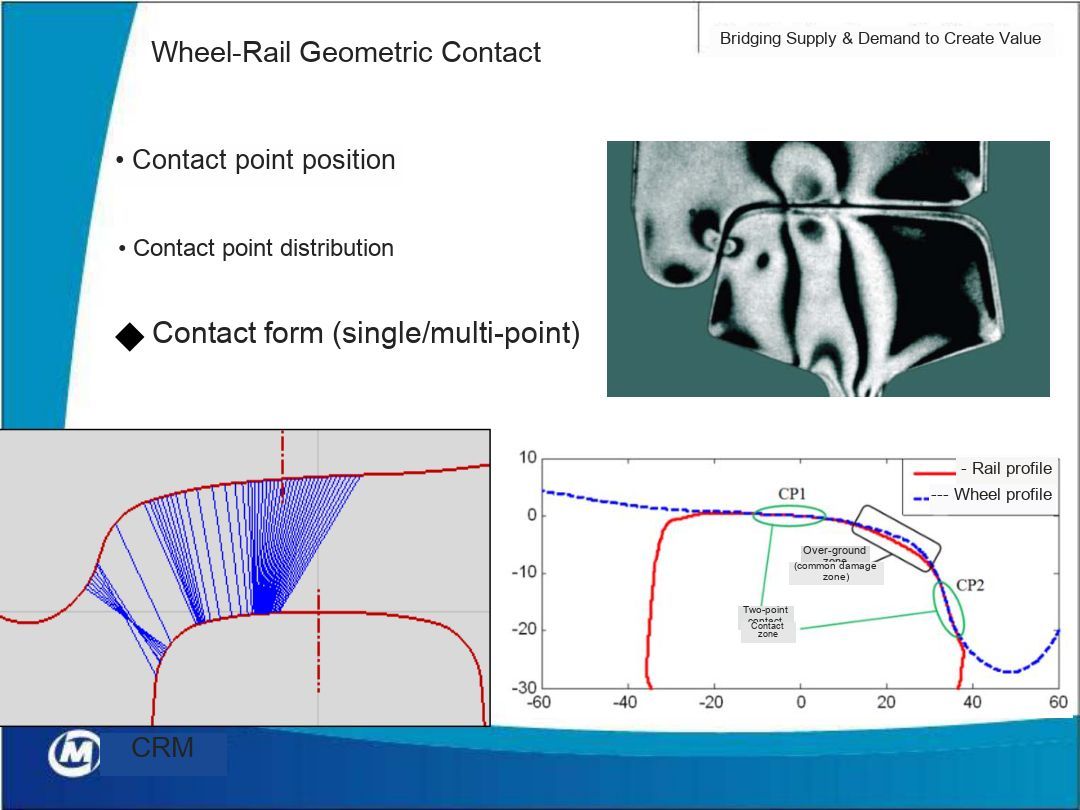
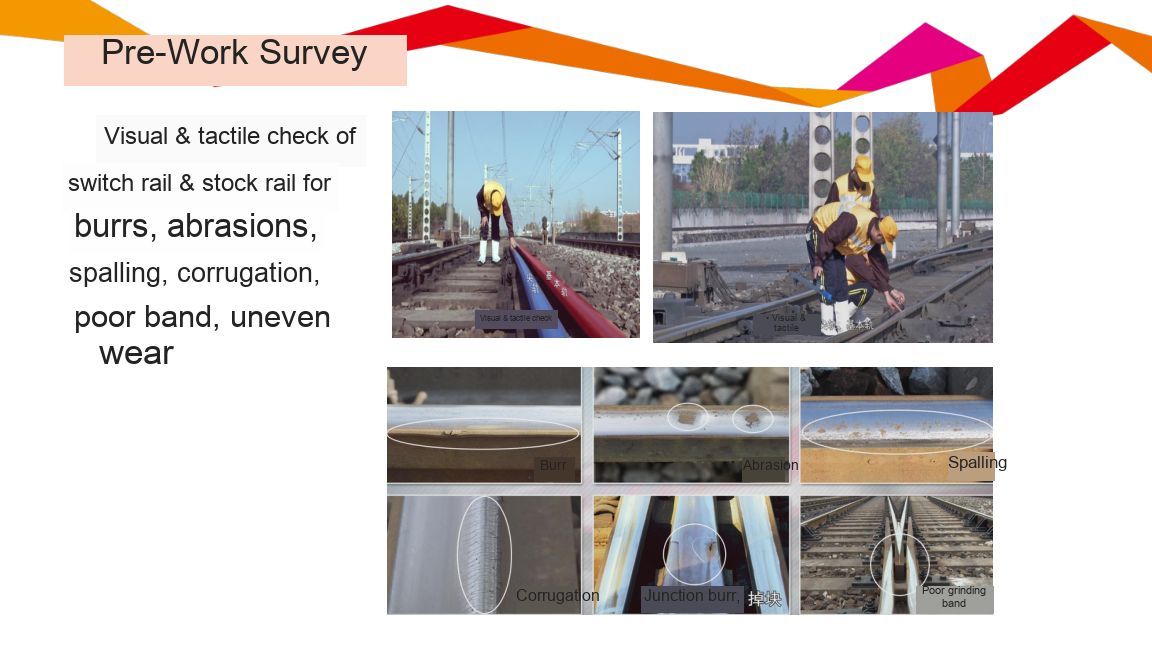
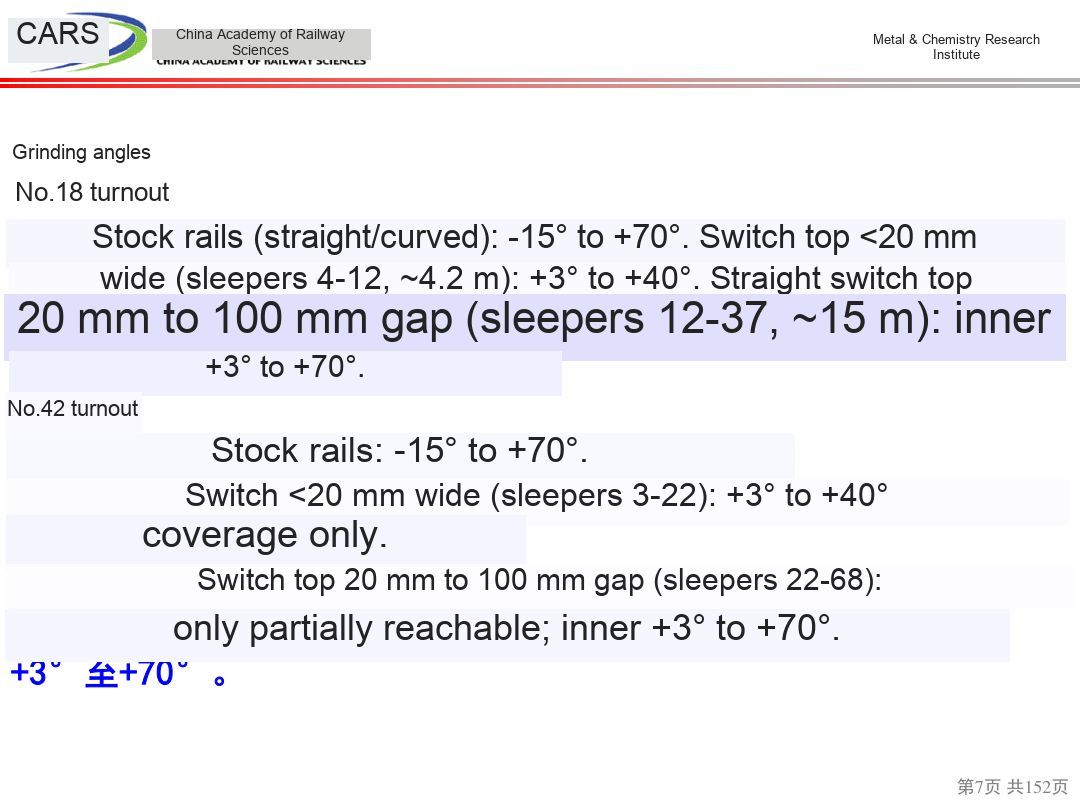
Every tonne of a train passes through a contact patch smaller than a fingernail on the rail head. When that surface loses its designed shape, the whole line pays: higher contact stress, fatigue cracks, corrugation, noise and premature rail replacement. Rail head grinding restores the rail head - the true contact surface between wheel and rail - before those costs compound. This guide explains what rail head grinding does, which defects it controls, how angles and passes are chosen, and what restored-rail performance looks like in the field. The rail head is where wheel and rail actually meet. Its geometry - the gauge corner, the crown and the running band - decides how load is distributed, how the wheelset steers, and how quickly damage develops. When the rail head wears unevenly, the contact patch shrinks or shifts, and three problems appear together: concentrated contact stress that drives fatigue cracks and spalling; a narrow, irregular or shifted light band (the visible grinding band) that increases noise, vibration and wheel-hunting risk; and faster wear on curves and turnouts. Restoring the rail head is therefore not cosmetic. It re-centres the contact on the nominal rolling circle, widens the load-bearing band to a controlled width, and removes the fatigued steel layer before cracks can grow deep. The payoff is measurable in ride dynamics. In turnout cases documented in China's rail grinding handbook, car-body lateral acceleration dropped from roughly 0.20 m/s² before grinding to 0.04-0.08 m/s² after the rail head profile was restored – the train simply tracks better on a correctly shaped head. Rail head grinding is a preventive and corrective maintenance operation that removes a controlled layer of metal from the rail head surface to eliminate defects and restore the target profile. It is performed by grinding trains on plain track and by small machines on turnouts, switches and restricted zones. Modern rail head grinding differs from simple 'defect removal' in one important way: it grinds to a designed shape, not just to a clean surface. The target profile is selected so that wheel-rail contact sits where it should - centred on the tread for high-speed turnouts (25-30 mm contact width) and wider for conventional and heavy-haul lines (35-40 mm) - avoiding the non-working edge where contact generates high stress and plastic flow. A pre-grinding survey identifies which rail head defects are present and where they sit on the head cross-section. The most common families (Fig. 2): Each defect family sits at a different position on the head and therefore needs a different grinding angle - which is why angle control matters more than the amount of metal removed. A real survey from the field makes this concrete. On the 68-km Yiyang heavy-haul line (60-U71Mn and 60-U75V rails, 40 million tonnes per year), the pre-grinding survey found exactly this mix - lipping and fish-scale cracking were the dominant defects, driven by heavy axle loads on curves. The grinding plan therefore attacked the gauge corner and the crown first, restoring the contact band before any further plastic flow could develop. Rail head grinding is planned as a sequence of angled passes that sweep across the head from the gauge corner to the field side. The angle range and increments depend on the rail and the defects: Pass count is set by the target: preventive grinding typically needs 6-8 passes over a section, corrective removal of corrugation or cracks can require more, and grinding a badly worn head back to a standard profile takes the most. Whatever the plan, the wheel must remove the damaged layer in the fewest passes - this is where wheel quality shows up directly in cost per kilometre. A restored rail head is judged against measurable limits. The core requirements used across Chinese and international practice: These come from operating standards such as TB 10413-2018 and the GQI acceptance standard of Guangdong Intercity Railway (Q/GDCJ-SS-GL-JS-041). They give track engineers an objective way to verify that the head has been restored - and to reject work that would fail a later inspection. These are not abstract limits in RailwayCare's own testing. After grinding trials, the ground rail surface measured Ra 7.13-7.25 µm - comfortably inside the 10 µm limit. In the 2026 Loram-machine test at Jiangmen (DM01, 80% power, 7 km/h), roughness across all ground rails ranged 1.05-9.0 µm with most readings at 2-4 µm, and no blue bands were observed - a clean, verifiable restoration. Preventive rail head grinding removes a thin layer (0.1-0.2 mm) before defects appear, scheduled by cumulative tonnage - typically every 30-50 Mt on busy mainlines and no later than every two years. Corrective grinding removes far more metal to eliminate existing corrugation, head checks, spalling or side wear. The economics decide the argument: preventive grinding keeps the rail head inside its designed profile at all times, which slows every subsequent damage mechanism. Corrective work removes metal the rail can never get back, shortens rail life, needs more passes and more night windows, and often arrives after a line has already been running with accelerated wear. Rail replacement is the final, most expensive step in that chain - the one preventive grinding exists to postpone. Theory is useful, but the numbers below come from side-by-side and independent tests on Chinese mainlines, heavy-haul lines and metro systems. What these numbers mean for the rail head: the same grinding programme removes defects in fewer passes, leaves a cooler surface (lower risk of blue bands and rework), and keeps the restored profile working longer between cycles - which is the definition of lower cost per pass-km. RailwayCare's Molaton wheels are engineered for rail head restoration across the full machine range: Every wheel is resin-bonded with glass-fibre wrapping, ISO 9001/45001 certified, and produced at an annual capacity of 500,000 wheels. The abrasives themselves are load-rated: in the Shenhua research programme, zirconia-alumina showed a compressive strength of 308.0 MPa and a grinding ratio of 41.0, versus 124.0 MPa and 22.4 for calcined brown corundum - which is why Molaton wheels keep cutting the rail head at depth without glazing or premature breakdown. If you are setting up a rail head grinding programme, tell us your rail type, machine model and the defects you are fighting - we will recommend the right wheel specification and angle plan. Rail head grinding is a maintenance operation that removes a controlled layer of metal from the rail head - the surface where wheel and rail contact - to eliminate defects such as head checks, corrugation, lipping and skid damage, and to restore the rail head to its designed profile. Preventive grinding removes only 0.1-0.2 mm before defects form. Corrective grinding removes more - in heavy-haul practice up to 1.8 mm per pass set on the inner rail of sharp curves - to eliminate existing corrugation, cracks and side wear. They are closely related: profile grinding is the shape-driven approach, and rail head grinding is its application on the rail head surface. In modern practice, rail head grinding is always done to a designed target profile - the head is the part of the rail that gets profiled. Preventive grinding is scheduled by cumulative tonnage, typically every 30-50 Mt on busy mainlines and no later than every two years, matching the mainline grinding cycle. Corrective grinding is done when corrugation, head checks or other defects appear and exceed management limits. The ground surface should have Ra ≤ 10 μm, no continuous blue bands and no obvious periodic wheel marks. The light band should be centred and stable - 25-30 mm wide on high-speed turnouts and 35-40 mm on conventional and heavy-haul lines - with profile deviation within +0.2/-0.4 mm at the rail top centre and ±0.2 mm elsewhere. The rail head is the smallest surface on the railway and the one that does the most work. Grind it preventively, restore it to a designed profile, verify it against Ra, light-band and GQI limits - and the rest of the line costs less: slower wear, lower noise, fewer speed restrictions and later replacement. That is the return rail head grinding is designed to deliver. Send us your rail type, machine model and defect survey - our engineers will recommend the right Molaton wheel and grinding parameters for a clean, verifiable restoration. Whether you need rail grinding wheels for grinding trains, switch grinders or hand machines, want a quotation, or have a rail head defect you need help diagnosing, our engineers are ready to help. Reach us by any channel below: RailwayCare (Wuhan Huatie Ruijie Rail Transit Technology Co., Ltd.) – your professional partner in rail grinding, with Molaton grinding wheels field-proven on high-speed, heavy-haul and metro lines since 2004.Why the Rail Head Is the True 'Contact Surface'
What Rail Head Grinding Actually Does
Rail Head Defects You Need to Know
Grinding Angles and Pass Strategy
Acceptance Standards for the Restored Head
Preventive vs Corrective Rail Head Grinding
Field Data: What a Restored Rail Head Delivers
Molaton Wheels for Rail Head Grinding
FAQ - Rail Head Grinding
What is rail head grinding?
How much metal does rail head grinding remove?
What is the difference between rail head grinding and rail profile grinding?
How often should rail head grinding be carried out?
What roughness should the rail head have after grinding?
Final Thoughts
Contact RailwayCare