Grinding Acceptance Standards Reflect the Rigorous Requirements of Rail Maintenance -- Only Superior Products Can Achieve An Optimal Rail Profile.
- Share
- publisher
- Scarlett
- Issue Time
- Jun 30,2026
Summary
Rail grinding acceptance standards demand profile deviations within +0.2 mm. Compare pre-grinding, preventive and corrective grinding - and why precision wheels pass acceptance on every rail.

Rail Grinding Wheels Are tailored to 3 Distinct Grinding Scenarios.
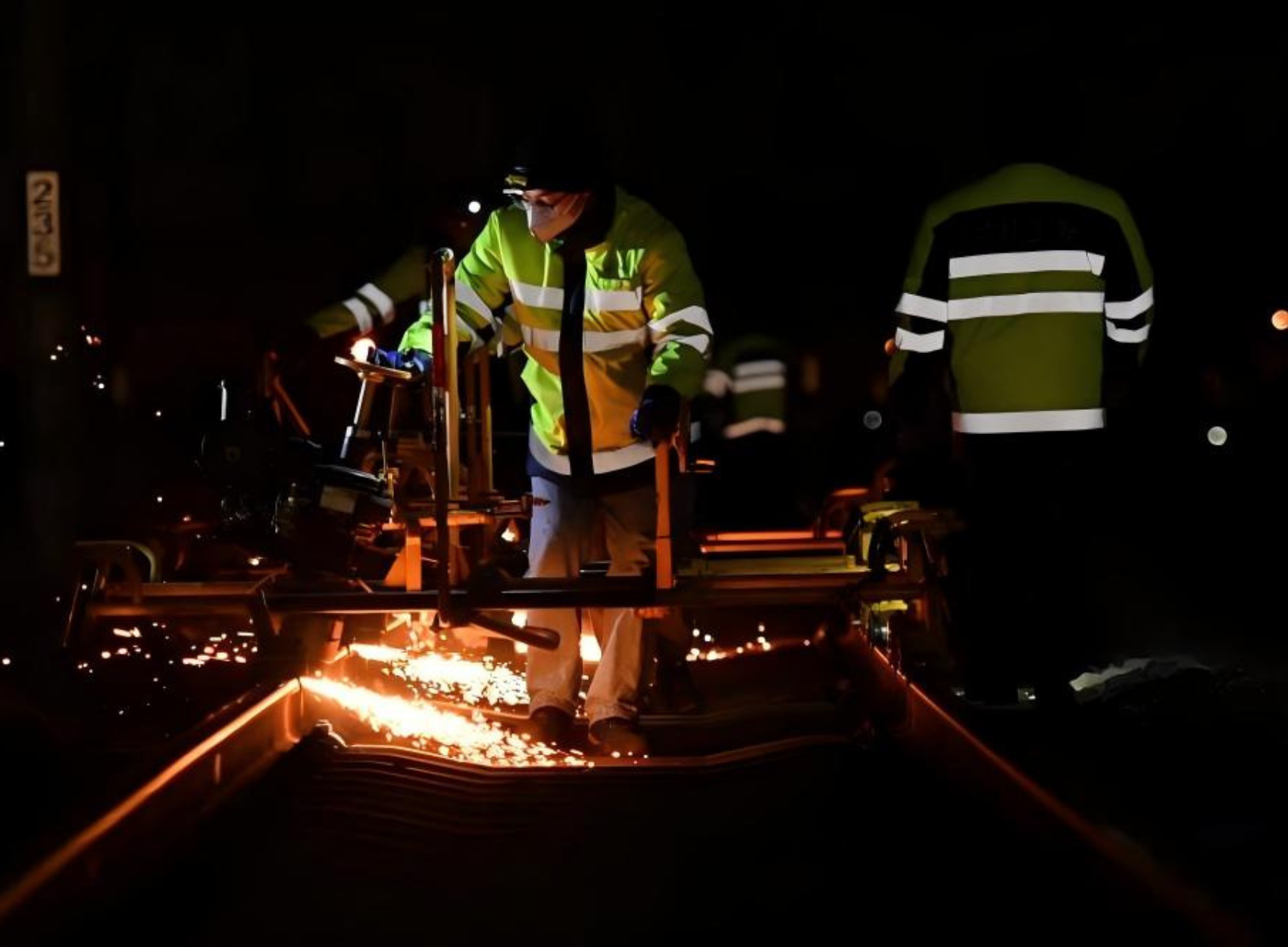
Rail grinding is not limited to a single type; depending on the objective, it is categorized into three main types: pre-grinding, preventive grinding, and corrective grinding.
Pre-grinding is performed after new rails are laid to remove the surface decarburized layer and minor damage incurred during installation, giving the rails a good "start."
Preventive grinding is performed before serious rail defects develop; by improving the wheel-rail contact relationship through grinding, it delays the onset of issues such as fatigue cracks and wear.
Corrective grinding is performed when defects such as corrugation or fish-scale cracking have already appeared on the rails, with the aim of removing these defects.
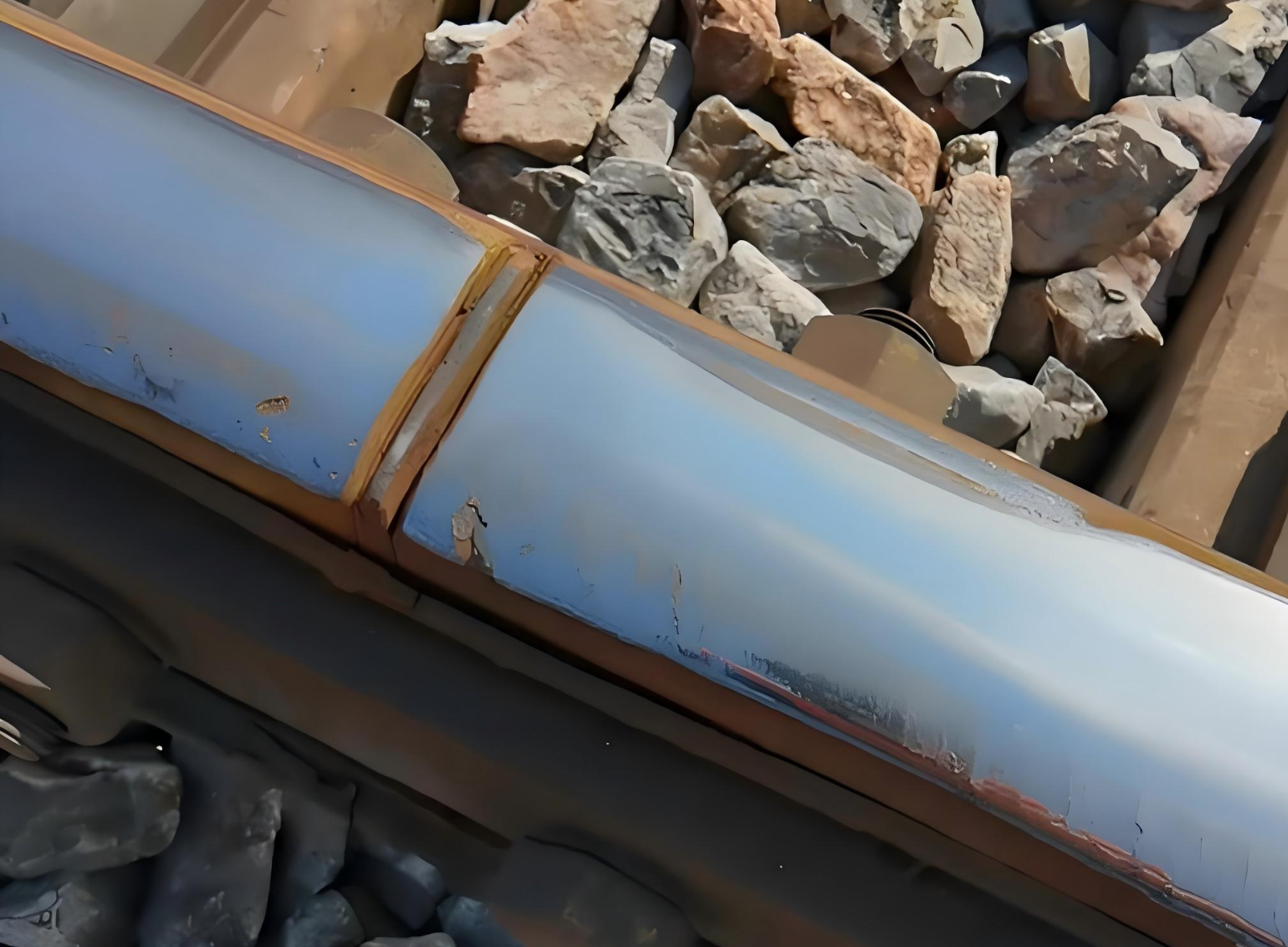
Each of these grinding methods has its own specific role, but regardless of the method used, the final result must pass inspection.
Grinding Acceptance: The Numbers Tell The Story
How do you assess quality after grinding?
It’s not enough to simply look at whether the surface is shiny; you need data to back it up.
Following rail grinding, deviations in the inner gauge face and top surface of the parent rail head, as well as the top surface and inner gauge face of the weld, are strictly controlled within the range of +0.2 mm to 0.
What does this "+0.2mm" signify? It implies that the rail grinding wheel must maintain exceptional dimensional stability while undergoing high-speed rotation and longitudinal feed. Any uneven shedding of abrasive grains or wheel deformation caused by insufficient bond strength would be directly reflected in the profile deviation, resulting in a failure to meet acceptance standards.
To this end, the industry has introduced the Grinding Quality Index (GQI) to provide a comprehensive evaluation based on the degree of conformity between the measured profile and the target profile. Improving the GQI value depends directly on the quality of the abrasives and the strength of the bonding agent in the rail grinding wheel, as well as the wheel's compatibility with the grinding equipment.
Choosing the Right Rail Grinding Wheel Starts with the Abrasive
Given such rigorous acceptance standards, what tools are used to perform the grinding operations? The key lies in the rail grinding wheel.
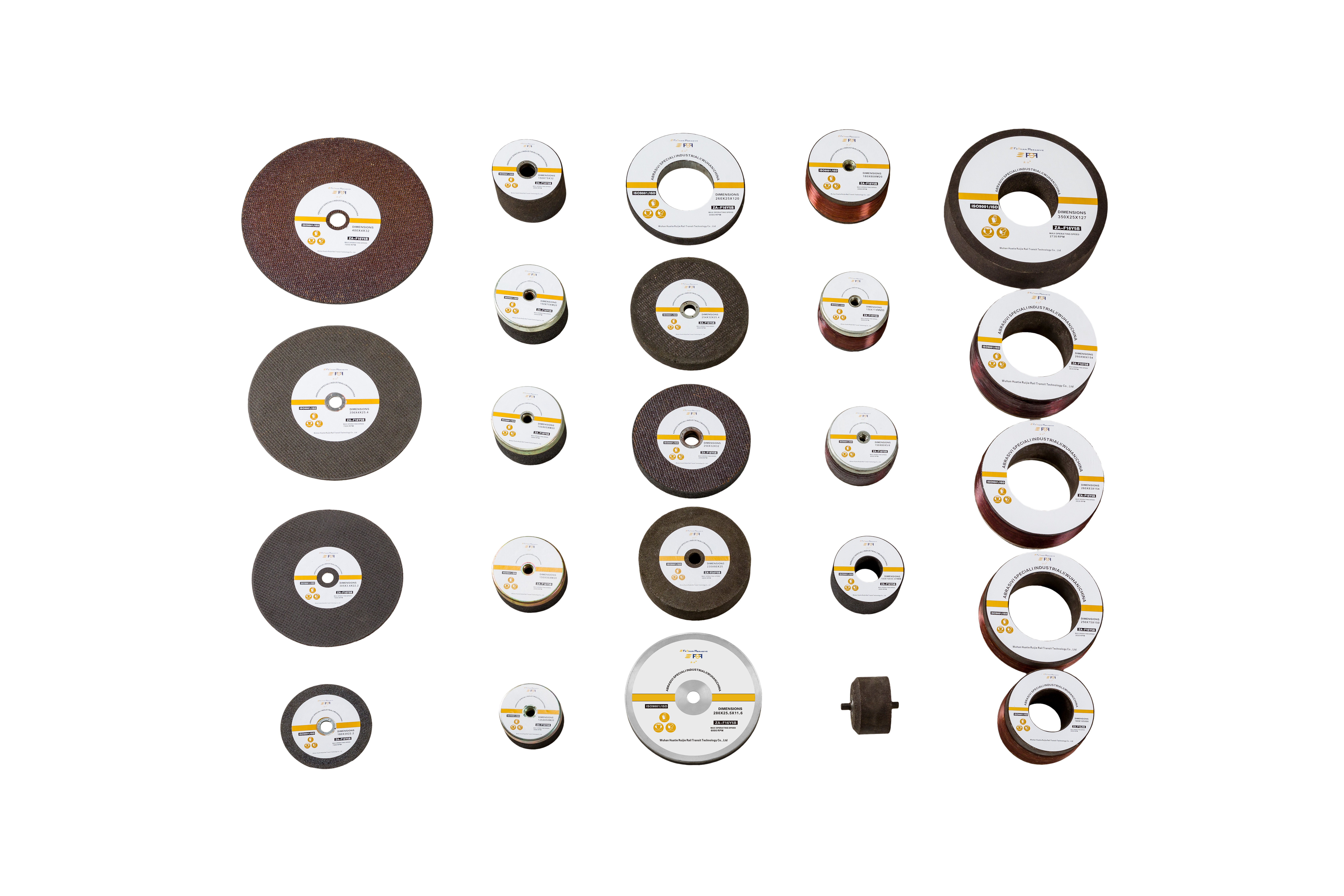
A rail grinding wheel is far more than a simple "sharpening stone"; its core lies in the scientific ratio of abrasive material to bonding agent. We offer a range of abrasive solutions tailored to different track classes and grinding objectives:
Diamond and zirconia-alumina grinding wheels:: These offer extreme hardness and excellent wear resistance, making them ideal for the high-precision grinding required by high-speed and heavy-haul railways, effectively ensuring the desired grinding profile and surface quality.
Grinding wheel performance directly impacts grinding efficiency and determines whether the final profile meets acceptance standards. A high-quality grinding wheel must deliver high grinding efficiency, low consumption, and durability, all while avoiding thermal damage (burning) to the rail surface during the process.
Our Rail Grinding Wheels Are Engineered to Meet The "+0.2mm" Acceptance Standard
In response to increasingly stringent acceptance standards for rail grinding, we focus on the R&D and manufacturing of high-performance rail grinding wheels, dedicated to ensuring that every grinding operation meets specifications with precision.
We fully recognize that every point of contact between a rail grinding wheel and the rail impacts both operational safety and maintenance costs. Therefore, we have focused our design efforts on the following areas:
· Comprehensive Application Coverage: Tailored abrasive formulations are provided for pre-grinding, preventive grinding, and corrective grinding. Specific rail grinding wheel models are available for a wide range of scenarios, including 350 km/h high-speed rail lines, station turnouts, and tight-radius curves on metro lines.
· High-Fidelity Profile Accuracy: Utilizing premium abrasives and high-strength bonding agents, the grinding wheels exhibit excellent shape retention and structural integrity during operation. This ensures compliance with the +0.2 mm profile deviation standard and helps improve the GQI (Grinding Quality Index).
· Superior Cost-efficiency: By optimizing abrasive grain protrusion and self-sharpening characteristics, the wheels deliver high grinding efficiency while significantly extending service life. This reduces the frequency of replacements and lowers the overall cost per grinding operation.Balances efficiency and durability: By optimizing the wheel's structural design, we extend service life and reduce replacement frequency, thereby lowering overall grinding costs while maintaining high grinding efficiency.
The standards for rail grinding are improving, and the requirements for Rail Grinding Wheels are also upgrading. Choosing a grinding wheel with reliable performance and excellent parameters is a core insurance for your grinding quality.


Contact Us
FAQ
What does the +0.2 mm acceptance standard mean in rail grinding?
It is the profile deviation allowance measured after grinding: the inner gauge face and top surface of the parent rail head, and the corresponding surfaces of the weld, must stay within +0.2 mm to 0 of the target profile. Meeting it is a consumable requirement as much as an operator one, because uneven grain shedding or bond deformation shows up directly as profile deviation.
What is the Grinding Quality Index and how is it improved?
The Grinding Quality Index (GQI) scores how closely the measured profile matches the target profile after a pass. Raising it depends on abrasive quality, bond strength and the compatibility between wheel and machine — a wheel that is not matched to the equipment leaves deviation that no amount of operator correction can remove at the finishing stage. The profile side of that work is covered in rail profile grinding.
What are the three types of rail grinding?
Pre-grinding removes the decarburised layer and handling damage after new rail is laid. Preventive grinding runs on healthy rail to improve wheel-rail contact and delay fatigue cracking and wear. Corrective grinding removes defects that have already appeared, such as rail corrugation or fish-scale cracking. Each has its own removal depth, and the choice of method is covered in our complete guide to rail grinding.
Which rail grinding wheel holds the +0.2 mm standard?
One built on a high-strength bond with controlled grain protrusion and self-sharpening behaviour — zirconia alumina or diamond formulations for high-speed and heavy-haul duty — and dimensioned for the machine it runs on. Wheel performance, not machine power, usually decides whether the finishing pass reaches the target or needs repeating; see railway grinder wheel selection by grinding vehicle.
How is grinding quality verified after a pass?
By re-measuring the profile against the target and checking surface condition for burn and roughness, ideally before the machine leaves the section. The acceptance limits applied to those measurements, and the field practice around them, are set out in rail wear measurement.
If you are looking for a Rail Grinding Wheel that can stably pass the +0.2mm profile acceptance, please contact us immediately to obtain the selection manual and technical solutions!
Email: simon.wang@railwaycare.com
WhatsApp: +86 15072332788
LinkedIn