Facing Uneven Tracks and Loose Ballast? A Complete Guide to Precision Inspection and Efficient Tamping
- Share
- Issue Time
- May 15,2026
Summary
This article breaks down the standardized tamping workflow and details RailwayCare's comprehensive equipment solutions.
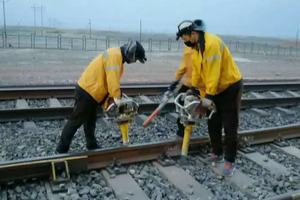
Core Functions and Technical Requirements of Rail Tamping
The immense impact and vibration generated by long-term train operations cause the ballast in the track bed to loosen and harden, leading to decreased density. This results in track diseases such as uneven levels, subsidence, and directional deviations. Tamping operations utilize professional equipment to mechanically clamp, vibrate, and consolidate the ballast beneath the sleepers. Its core functions are mainly reflected in the following five aspects:
● Improve ballast density to enhance the longitudinal and lateral stability of the line;
● Correct deviations in track level, longitudinal level, and alignment to ensure smooth train operation;
● Extend the maintenance cycle and reduce comprehensive lifecycle maintenance costs;
● Enhance the overall load-bearing capacity of the line to meet the demands of heavy-haul and high-speed transport;
● Reduce track diseases such as voids and hanging sleepers, fundamentally ensuring operational safety.
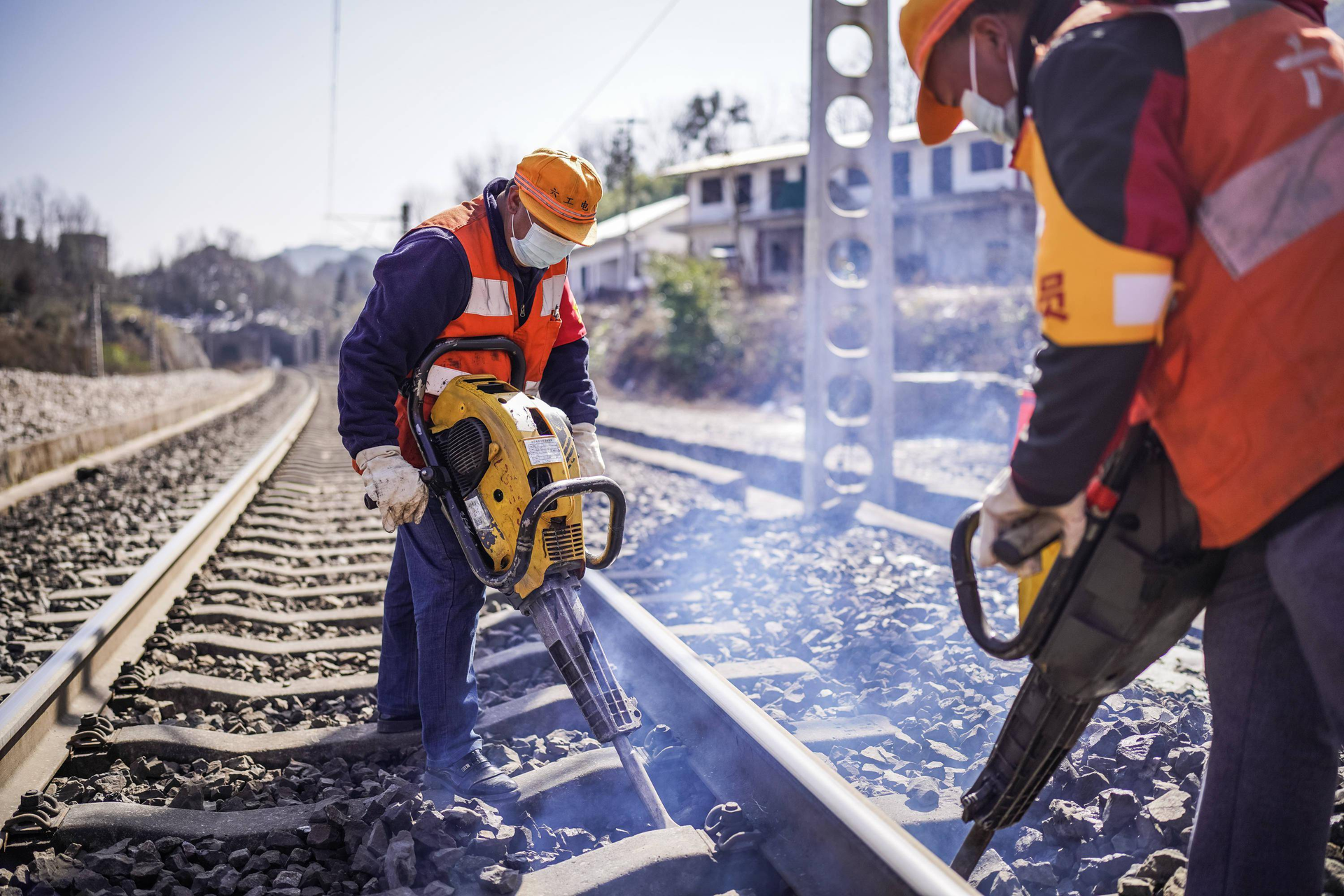
1. Efficient Rail Tamping: Standardized Workflow & Core Equipment
High-quality tamping operations must be built upon a rigorous standardized workflow. From pre-operation preparation to multi-post collaboration during the operation, every step is crucial to the final track quality.
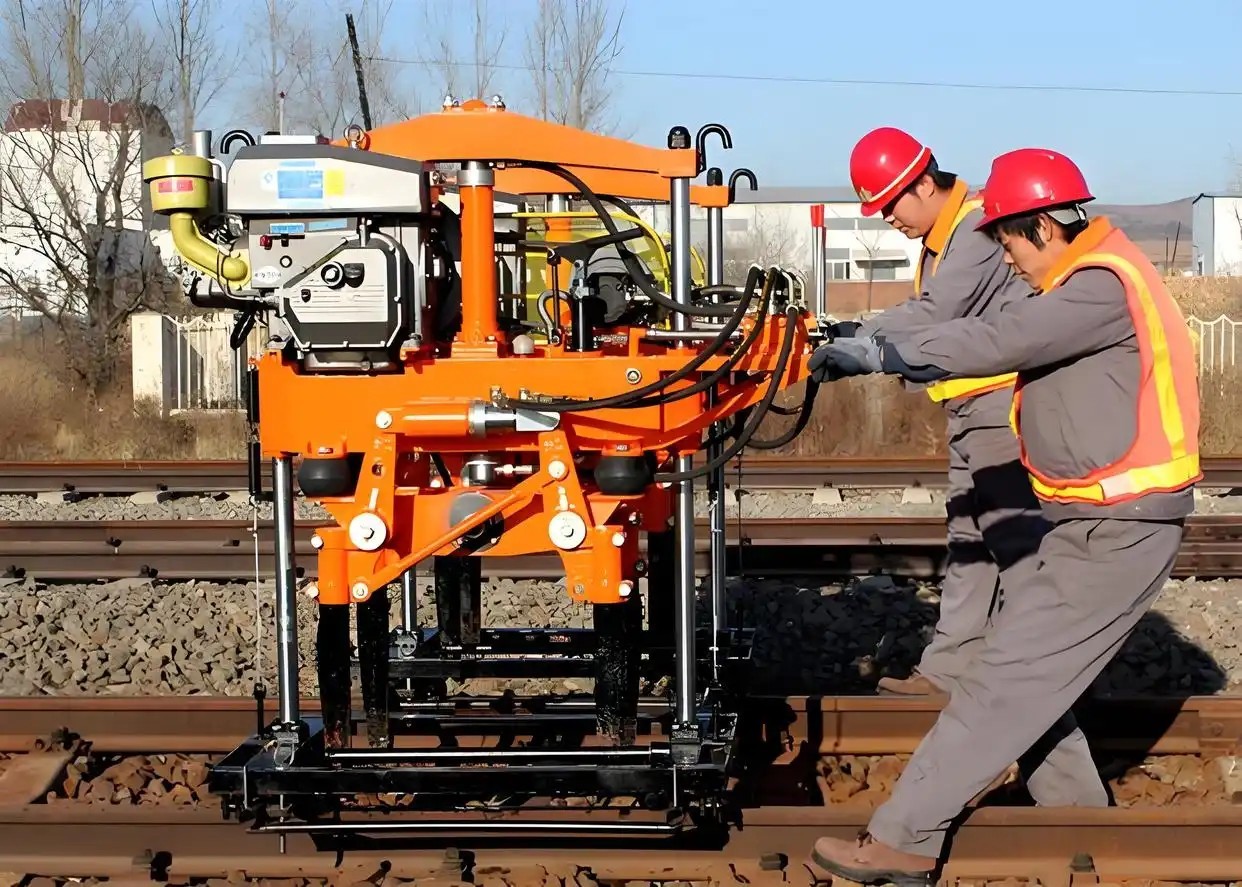
In practical operations, besides large tamping machines, flexible internal combustion hydraulic lifting machines are indispensable for auxiliary and emergency tasks. The YQJ-250(G) Internal Combustion Hydraulic High-Lift Track Lifting Machine we provide is specifically designed for lifting various rail types, featuring:
● Powerful Engine: Equipped with a HONDA GX390 gasoline engine, delivering a power of 9.5 kW with a low fuel consumption rate of 310 g/kW.h.
● High Efficiency: Maximum lifting force is 125×2 kN, with a single-stroke maximum lifting height of 500 mm, significantly improving work efficiency.
● Safety & Reliability: Comes with a safe and reliable insulation device meeting track circuit requirements, and a visible safety warning line to ensure operations remain within the safe stroke range.
● Flexibility: Weighing only 370 kg (including hydraulic oil) with travel and off-tracking devices, it is easy to operate and maintain.
2. Precision Measurement & Adjustment: Where are the "Eyes" for Tamping Operations?
"Craftsmen must first sharpen their tools." The accuracy of tamping largely depends on the precision of preliminary measurement data. Traditional relative measurement methods are prone to cumulative errors and cannot meet modern railways' demands for absolute smoothness. How can we provide accurate data guidance for tamping operations?
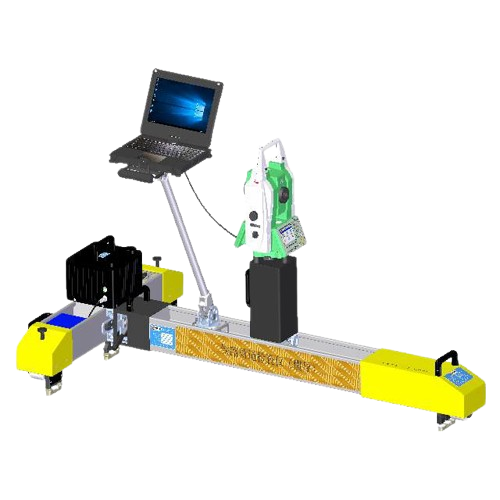
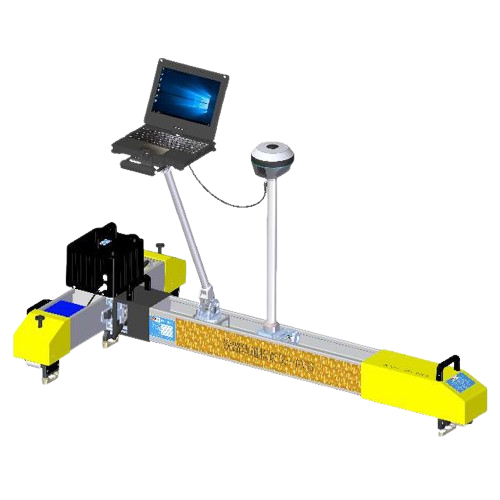
Therefore, we have launched the RCI Series track geometry measurement Inspection Trolleys to provide accurate data support for tamping operations:
1. RCI INS (Inertial Navigation) Inspection Trolley
● Full-Parameter Measurement: Based on inertial navigation principles, it accurately measures all parameters including gauge, superelevation, twist, longitudinal level, and alignment.
● High-Precision Reference: Provides a high-precision relative measurement benchmark in environments without satellite signals or for short-wave irregularity detection, guiding the precise treatment of local defects.
2. RCI GNSS (GNSS-Augmented) Inspection Trolley (Absolute Positioning)
● Absolute Coordinate Measurement: Integrates dual-frequency GNSS receivers (L1/L2) with an Inertial Measurement Unit (IMU), constraining lateral and vertical deviations to within ±20.00 mm and ±30.00 mm respectively in known network RTK mode.
● Digital Operations: Automatically generates static TQI reports and exports adjustment data compatible with tamping machine control systems, realizing a digital closed-loop of "Inspection - Analysis - Operation".
● Efficiency & Portability: Weighing ≤30 kg, it achieves a measurement efficiency of 4–5 km/h, significantly reducing the labor intensity of operators.
3. RailwayCare: Your Track Maintenance Partner
In the field of railway maintenance, standardized workflows and high-performance machinery are equally indispensable. RailwayCare (Wuhan Huatie Ruijie Rail Transit Technology Co., Ltd.) leverages practical experience accumulated on China's railways to provide pragmatic and professional track maintenance solutions.
● Full-Cycle Services: We offer one-stop services ranging from defect diagnosis, scheme design, equipment supply, to technical training.
● Equipment Support: Besides the inspection and lifting equipment mentioned above, we also provide a complete range of tools for rail grinding, flaw detection, and maintenance to meet diverse customer needs.
● Customized Solutions: We can provide customized maintenance strategies and equipment configuration recommendations based on different line grades and maintenance requirements.
FAQ
What does tamping actually do to the ballast?
It mechanically clamps, vibrates and consolidates the ballast beneath the sleepers. Long-term traffic impact and vibration loosen and harden the stones so density falls, and tamping restores that density — which in turn restores longitudinal and lateral stability, corrects level, longitudinal level and alignment, and removes voids and hanging sleepers.
Why is precision measurement needed before tamping?
Because tamping without accurate data simply moves the error along the track. Relative measurement methods accumulate error over distance and cannot deliver absolute smoothness, so the track first has to be measured in absolute terms — gauge, superelevation, twist, longitudinal level and alignment — and the adjustment data exported to the tamping machine so the whole length is corrected to one reference rather than to its neighbour.
Can tamping fix rail surface defects?
No. Tamping deals with the supporting structure; defects in the rail head are a different job. Rail corrugation, squats, spalling and head checking have to be removed by grinding or milling, and the profile restored afterwards. The two work together: grinding sets the rail profile, tamping restores the geometry the profile sits in.
What equipment does a tamping programme need?
Large tamping machines for production work, and flexible lifting machines for auxiliary and emergency tasks such as lifting track inside a short possession. On the measurement side, an inspection trolley is what converts a tamping pass into a controlled operation — the parameters it captures are the same ones the machine has to be given.
Does ballast condition affect how often grinding is needed?
It does. Loose, fouled or uneven ballast lets the track move under load, which changes wheel-rail contact and accelerates rail head wear and corrugation growth. The supporting structure and the rail surface are one system, which is why ballasted and ballastless track call for different maintenance priorities.
Find Your Perfect Match in Railway Maintenance Tech
Besides the equipment mentioned above, are you interested in the special techniques for turnout tamping or the measurement methods for curve versine? Feel free to leave a comment below for further discussion.
Official Website: <http://www.railwaycare.com>
Talk to RailwayCare
Need a grinding wheel specification for your fleet, or a second opinion on a rail maintenance programme? Our engineers work directly with track operators, contractors and distributors worldwide, and answer technical questions in English and Chinese.
WhatsApp: +86 15072332788
Email: simon.wang@railwaycare.com
Web: www.railwaycare.com