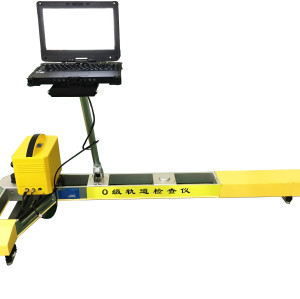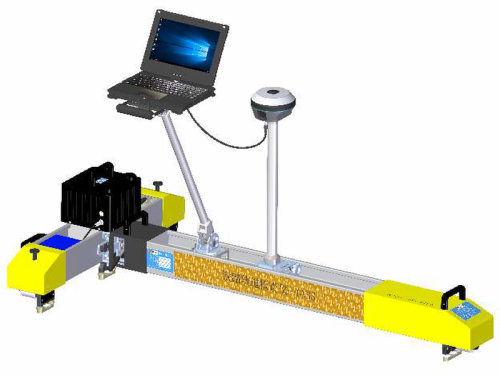
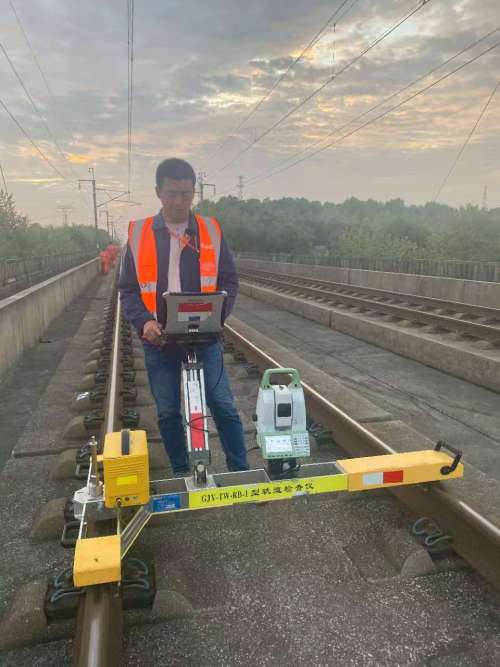
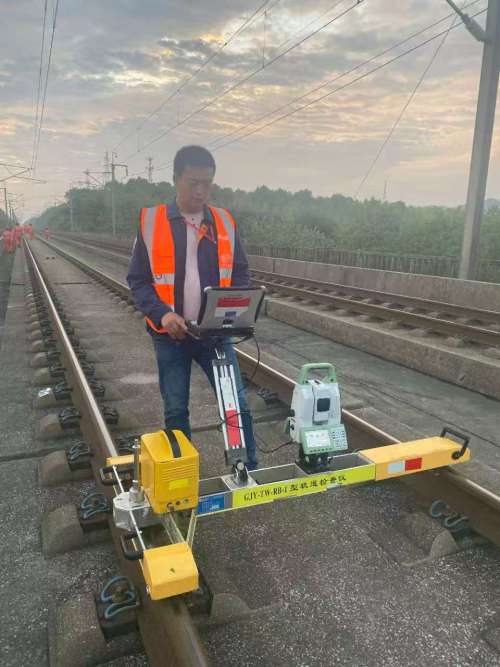
GNNS-based Track Geometry System
- Model
- GNSS-Based Track Geometry Measurement System
Item specifics
- Dimensions (L × W × H)
- 1705 × 850 × 935 mm
- Weight
- ≤ 50kg
- Correction Time
- 5 min
Review
Description
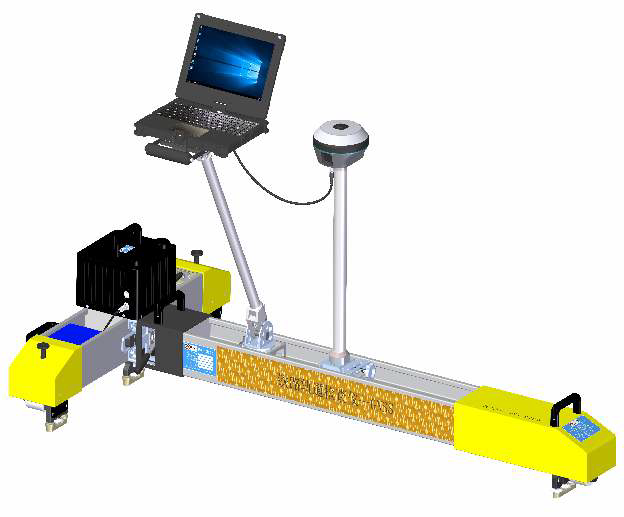
GNNS-based Track Geometry System Overview
The system operates on an integrated Global Navigation Satellite System (GNSS) and Inertial Measurement System (IMS) model to acquire the three-dimensional coordinates of the track centerline. It supports multiple measurement modes, including RTK (1+1) and Network RTK.
Utilizing dedicated track re-profiling software, the system reconstructs the track alignment based on relative displacement data from the existing track geometry and its relative smoothness. The dedicated adjustment software then performs simulated adjustments, outputting data reports at various intervals (e.g., 2m, 2.5m, 5m). It generates tamping solutions in VER or TGCS file formats, which can be directly imported into the tamping machine's computer system. This guides the machine in performing precise, digital tamping operations, progressively achieving the goal of controlling and optimizing the alignment of existing conventional railway lines.
The generated static Track Quality Index (TQI) report for the section can be used for overall track quality assessment upon completion of the work and for project acceptance.
Key Components
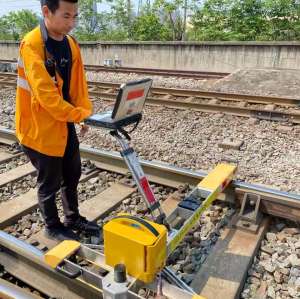
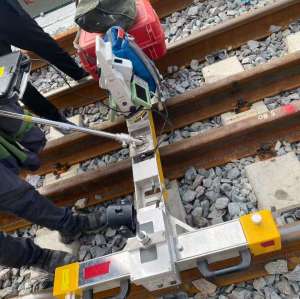
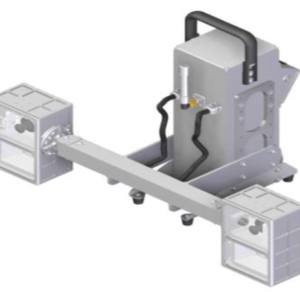
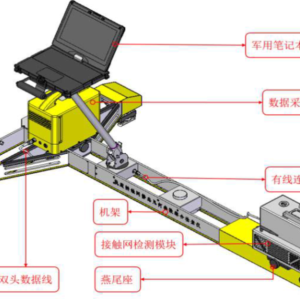
The GNSS-based railway track inspection system consists of the following components: a T-shaped trolley, an Inertial Measurement System (IMS), a sleeper identification and positioning system, a ruggedized military-grade laptop computer, data acquisition and analysis software, a Global Navigation Satellite System (GNSS) receiver, and dedicated ballasted track adjustment software.
Application Scopes
⚪ Reconstruction of track alignment based on:
The relative displacement data of the existing track geometry,
The smoothness (riding quality) of the existing reference line.
⚪ Guidance for precise and digital tamping operations by large maintenance machinery on lines with unspecified track quality conditions (e.g., BSG, SERUM, RMS).