How to calculate rail grinding wheel cost per kilometer of track?
- Share
- Issue Time
- Sep 30,2026
How to calculate rail grinding wheel cost per kilometer of track?
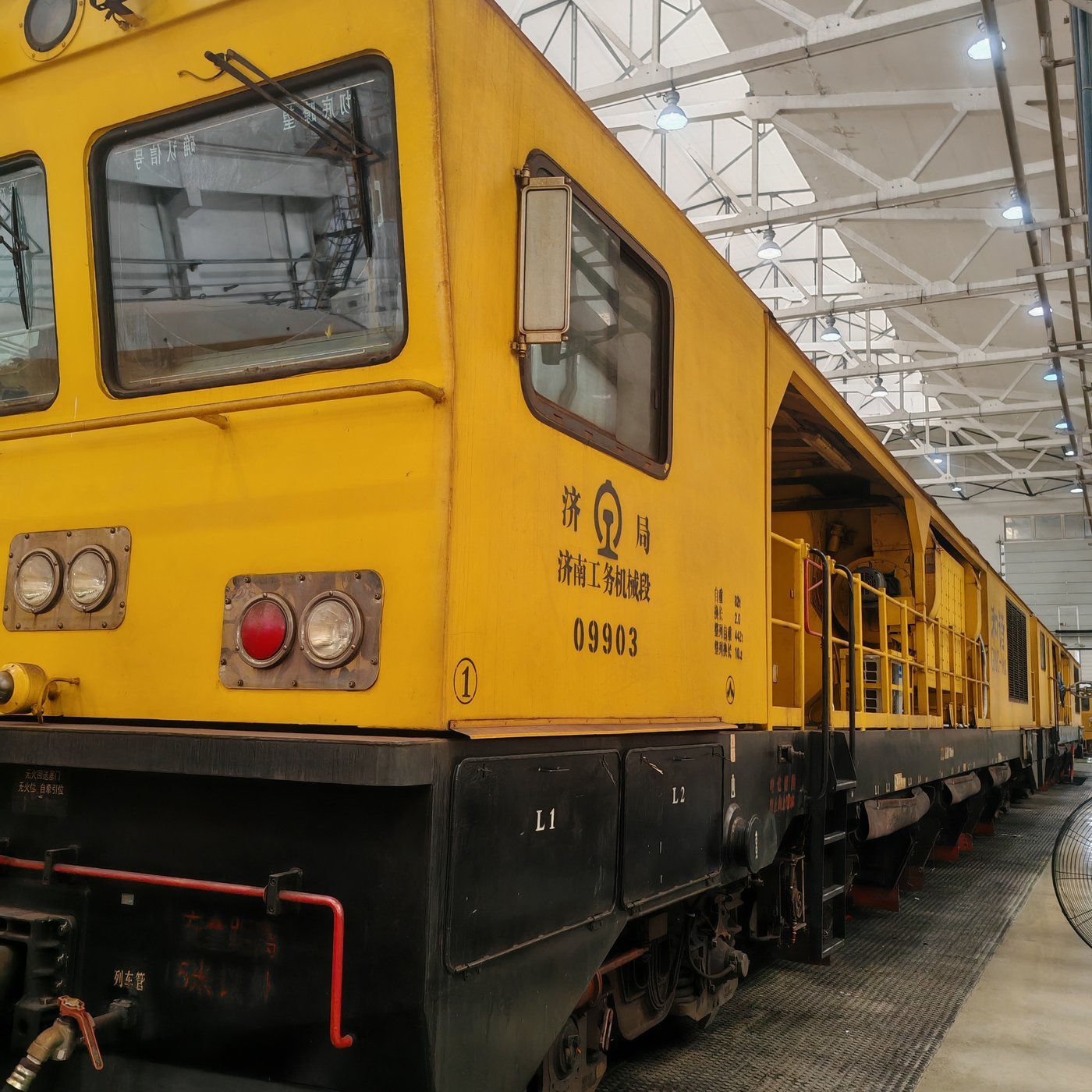
Divide before you compare. Three steps: (1) convert wheel life into pass-kilometres; (2) divide the number of grinding heads by that life to get wheels consumed per pass-km; (3) multiply by the piece price, then by the passes your track actually needs. Cost per pass-km = heads ÷ wheel life × piece price. A 48-stone train running wheels that last 199 pass-km therefore consumes 48 ÷ 199 = 0.24 wheels per pass-km, and the piece price is the last number that matters, not the first.
Step 0: get the units right, or the number is meaningless
Three units get mixed up in wheel quotations, and mixing them is how operators end up mis-pricing a contract.
| Unit | What it means | Why it misleads on its own |
|---|---|---|
| Price per wheel | What you pay per piece, delivered | A cheap wheel that wears fast costs more per kilometre ground |
| Pass-kilometre (pass-km) | Grinding length × number of passes — the work done | This is the only unit in which wheels and contracts are comparable |
| Route-kilometre | Physical length of track | Meaningless until you state how many passes are run over it |
One more convention: a wheel is counted as spent when it reaches its wear limit, and the last 25 mm of thickness is never used. So the life you can plan on is wear rate × (nominal thickness − 25 mm) — 50 mm of usable thickness on a 75 mm wheel, 65 mm on a 90 mm wheel.
Step 1–3: the calculation, and where each input comes from
| # | Formula | Where the input comes from |
|---|---|---|
| 1 | Life (pass-km) = wear rate (pass-km per mm) × (thickness − 25 mm) | Wear rate from your own measurement, or from a supplier's track record on comparable track |
| 2 | Wheels per pass-km = grinding heads ÷ life | Head count from the machine: 48 or 96 on a production grinding train, 12–16 on a light unit |
| 3 | Wheel cost per pass-km = wheels per pass-km × piece price | Piece price from your quotation, at the delivered quantity |
| 4 | Wheel cost per track-km = wheel cost per pass-km × passes needed | Passes needed from the defect survey, not from habit |
Step 4 is the one people skip. It is also where the real money is: conventional wheels have needed 4–6 passes to clear the same damage that a super-hard composite wheel cleared in 2–3, and in heavy-haul terms those extra passes are paid for in machine hours, fuel, labour and possession time as well as in wheels.
A worked example on heavy-haul track
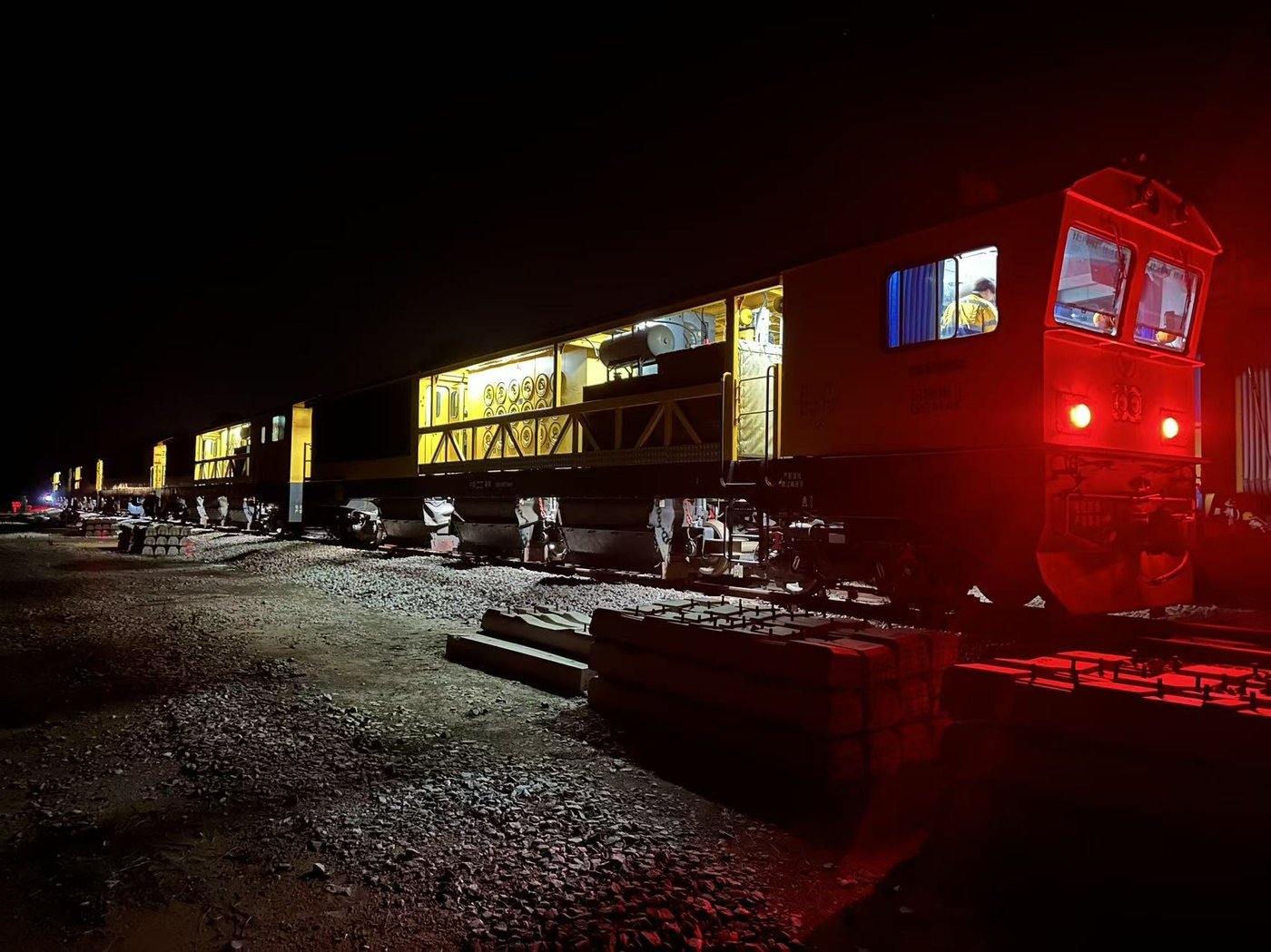
Take a 48-stone half-car set on heavy-haul rail. Our tracked heavy-haul programme on the Shuohuang line recorded 4.98 pass-km per mm of wear on a 75 mm-class wheel with an average life of 199 pass-km per wheel.
- Usable thickness = 75 − 25 = 50 mm; planning envelope = 4.98 × 50 = 249 pass-km. Budget on the measured average instead: 199 pass-km.
- Wheels per pass-km = 48 ÷ 199 = 0.241.
- At a piece price of RMB 980 — the price recorded for the Molaton wheel in the 2026 Loram DM01 trial at Jiangmen — wheel cost is 0.241 × 980 = about RMB 236 per pass-km.
- If that section needs three passes, wheel cost per track-kilometre = 3 × 236 = about RMB 708.
Keep the reference in view: 2026 Chinese tenders priced complete machine grinding at RMB 4,750 per pass-km for a 48-stone train and RMB 9,500 per pass-km for a 96-stone train, equipment and consumables included. Wheels at RMB 236 and RMB 473 respectively are therefore about 5% of the all-in price in both cases. That is the honest proportion: the wheel matters far more than 5% because it decides how many passes you buy, but no wheel choice will halve an all-in grinding contract on price alone.
The piece price above is a 260 mm-class wheel price from the 2026 trial, used here as an arithmetic input rather than as a quotation for a 75 mm-class wheel, and RMB is kept as the original currency throughout. Full market context sits in rail grinding cost per kilometre and what actually drives rail grinding wheel price.
The two levers, ranked
| Lever | Effect on wheel cost | Verdict |
|---|---|---|
| Wheel life +30% at the same piece price | Cost per pass-km falls by about 23% | Real but modest |
| Passes needed, 4–6 down to 2–3 | Grinding content roughly halves, including machine and possession time | The dominant lever |
| A cheaper wheel with a shorter life | Neutral at best, and it adds change-outs and stockholding | Judge on cost per pass-km, never on price per piece |
| Failing first-time acceptance | Re-grinding: the whole pass cost is paid twice | Avoid by specifying acceptance up front |
Acceptance is part of the calculation because rework is not free. The working limits are Ra ≤ 10 μm (contract grade often ≤ 8 μm), deviation ≤ 0.3 mm under a 1 m straightedge, no continuous blueing, and metal removal per pass kept within the profile allowance. A wheel that passes first time is worth considerably more than a 10% lower piece price.
Note what the piece price does not include: machine capital and depreciation, power or fuel, crew, possession cost, dust extraction, wheel-change downtime, and the working capital tied up in a spare set. Any total-cost comparison that ignores possession time is not a cost per kilometre, it is a price list.
How we hold ourselves to the number
Our rail grinding wheel development work is carried out against contractual performance targets, not aspirations: purchase cost no more than 70% of the equivalent imported wheel, and average grinding mileage equal to 130% of the imported wheel, at a metal removal of ≥ 0.2 mm per pass at 7 km/h, finish Ra ≤ 8 μm, with no blueing and no sulphur-bearing fume. Those are agreed targets; where they have been verified on track, the evidence is published wheel-class by wheel-class and the specification basis is the industry standard for rail grinding wheels that Molaton co-drafted.
One discipline we apply to our own claims, and recommend to buyers: in the 2026 Loram DM01 trial at Jiangmen, three suppliers' wheels ran side by side at 80% power and 7 km/h. Our wheel consumed 0.079–0.151 mm per 100 m · pass, against 0.059–0.095 and 0.063–0.082 for the two other wheels, and the three prices were RMB 980 / 740 / 1,390 per piece. The trial report's conclusion was that overall performance was close and our wheel was priced in the middle. The lesson for a cost calculation is exact: divide price by life before you decide, and never read a price list as a performance ranking. Published life reference points for each size class are in how to read a rail grinding wheel specification and in the heavy-duty rail grinding wheel range.
Related questions you may also ask
Rail grinding cost per kilometre: what operators pay How much does a rail grinding machine cost? What does a specification like 260x90x154 mm mean? Rail grinding wheel range by machine class More answers on rail grinder wheelsGet a cost per pass-kilometre, not a price list
Send Molaton your wheel size, head count, working speed and current consumption figure. We will return the expected life on comparable track, the wheels consumed per pass-km, and a delivered price at your quantity — so you can compare suppliers on the only number that decides the budget.
Request Cost per Pass-km