EN 12413, ANSI B7.1 or GB/T 2492: which safety standard applies to rail grinding wheels?
- Share
- Issue Time
- Sep 29,2026
EN 12413, ANSI B7.1 or GB/T 2492: which safety standard applies to rail grinding wheels?
All three are real standards, but they are not the same kind of document — and one of them does not mean what its position in that list suggests. GB/T 2492 is not a general safety code: it is the test method for the permissible unbalance of wheels as delivered. The genuine Chinese safety requirement for bonded abrasive products is GB 2494. In practice the region where the wheel goes into service sets the legal frame — EN 12413 in Europe, ANSI B7.1 in North America, GB 2494 in China — and for rail grinding wheels specifically, the standard that carries the machine-side requirements is Q/CR 1-2014, with JB/T 11431 as the product standard. If you supply or operate rail wheels internationally, the honest answer is that you declare against several of them at once.
What each standard actually governs
| Standard | Region / level | What it really covers | Overspeed margin |
|---|---|---|---|
| EN 12413:2019 | Europe, product | Safety requirements for bonded abrasive products: burst speed, side load, impact, balance, marking (including safety pictograms and shelf life) | 1.73× marked maximum |
| ANSI B7.1 | North America, user side | Safety code for the use, care and protection of abrasive wheels: guards, flanges, mounting, speed matching, storage and handling; enforced through OSHA 29 CFR 1910.215 | 1.5× marked maximum |
| GB 2494-2014 | China, product + user | Safety requirements for bonded abrasive products: hazard list, safety technical requirements, test methods, inspection rules, acceptance and storage, mounting and use | Applied per product standard |
| GB/T 2492-2017 | China, test method | Permissible unbalance of wheels as delivered, and its measurement. Adopts ISO 6103:2014. Applies to wheels ≥ 125 mm, ≥ 80 g, ≥ 16 m/s | Not applicable — it is not a safety code |
| GB/T 2493 | China, test method | Rotational (burst) test method for grinding wheels | Test method, not a limit |
| GB/T 2495-2017 | China, packaging | Bonded abrasive packaging: technical requirements, marking, transport and storage | Not applicable |
| JIS R 6242 | Japan, product | Resinoid bonded products, including burst strength | 2.0× marked maximum |
The distinction matters commercially. A purchasing document that cites GB/T 2492 as the "safety standard" is citing a balance test, and a supplier who accepts that wording without comment has not answered the safety question at all. What you want named in the contract is a product safety standard plus a balance test method plus a burst test method — three separate documents.
The rail-specific layer on top
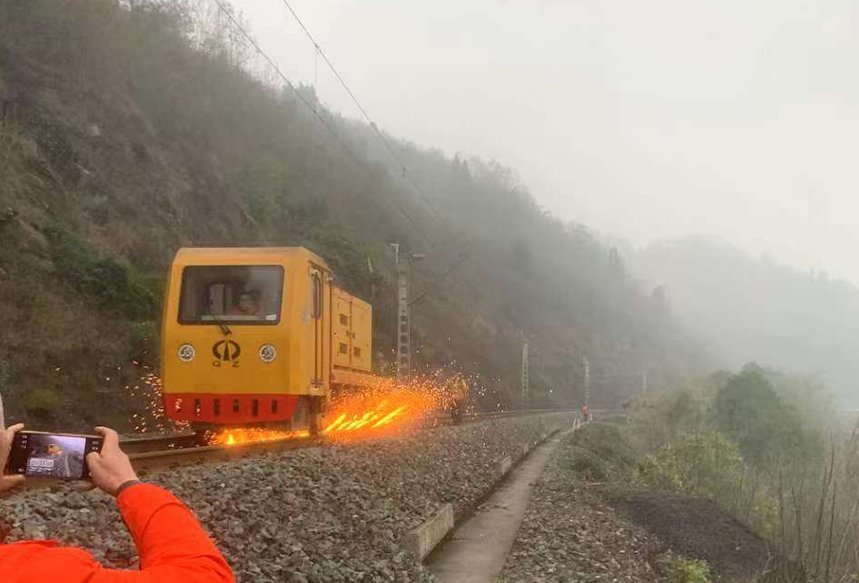
General abrasive standards are written for workshop grinding. Rail grinding adds conditions they were never designed for: 50 m/s rims on 260 mm wheels, steel or aluminium cores, glass-fibre wrap, water and dust, and a workpiece that is the running rail itself. That is why rail wheels are released against rail-specific documents as well.
| Rail-specific requirement | Value | Why it is not in the general standards |
|---|---|---|
| Overspeed test | 1.5× rated speed held 30 s up to 50 m/s; 1.6× above | General standards quote a burst factor, not a hold time at that speed |
| Static balance | K = 0.4; unbalance not more than 0.4 × √M | Rail wheels carry cores and wrap, so balance has to be treated as a rail-specific parameter |
| Workpiece temperature after grinding | Below 150 °C, measured by infrared within 30 s | Protects the rail metallurgy — irrelevant to bench grinding |
| Contact pressure | Below 10 kN | Prevents the machine loading the wheel beyond its duty |
| Surface condition | No continuous blueing; no bonded-on iron filings; no fracture, cracking or abnormal vibration | Acceptance criteria written for the rail surface, not the wheel alone |
| Test termination | Wheel burst, abnormal sound, pressure above 10,000 N, or instantaneous power above the set value by 50 % | Defines when a test run stops — unique to the rail test rig |
Here is what those numbers look like when they are actually measured rather than quoted. Independent reports on our rail wheel classes record unbalance of 21 g against a permitted ≤ 39 g, and on a second class 15 g against ≤ 21 g; diameter and thickness deviations inside ±1.0 mm and ±1.5 mm; parallelism measured at 0.0 mm against a ≤ 0.4 mm limit; and safe-speed tests at 4,775 rpm and 8,276 rpm each held 30 s without bursting, with a burst test taken to 11,014 rpm without failure. On a third-party test report for a Loram-class wheel, the ISO 6103 declaration records permissible unbalance of ≤ 42 g, ISO 13942 covers limit deviations and run-out, and ISO 8486-1 (14 grit on that part) covers the grain designation.
One caution that catches buyers out: unbalance limits scale with mass, not with a fixed gram figure. A 15 g measured value on a small wheel and a 42 g declared value on a 9 kg wheel are not comparable numbers — both are correct against their own class. Compare like with like, or the comparison is meaningless. The same discipline applies to how you read the torque and balance data on vibration during rail grinding.
How to answer the question for your own contract
- Start from where the wheel enters service, not from where it was made. A wheel made in China and used on a European network is normally expected to satisfy EN 12413; used in North America, ANSI B7.1 applies to the user's procedure; used domestically, GB 2494 plus the product standard.
- Name three document types, not one. A safety standard, a balance test method, and a rotational strength test method. GB 2494 + GB/T 2492 + GB/T 2493 in the Chinese scheme; EN 12413 with ISO 6103 and ISO 13942 alongside it in Europe.
- Add the rail-specific technical conditions. This is where the 30 s overspeed hold, the 150 °C workpiece limit and the 10 kN pressure ceiling live, and no general abrasive standard contains them.
- Ask for per-wheel records, not a certificate of the batch. Certification tells you the process is controlled; the release record tells you this wheel passed. Both belong in the file.
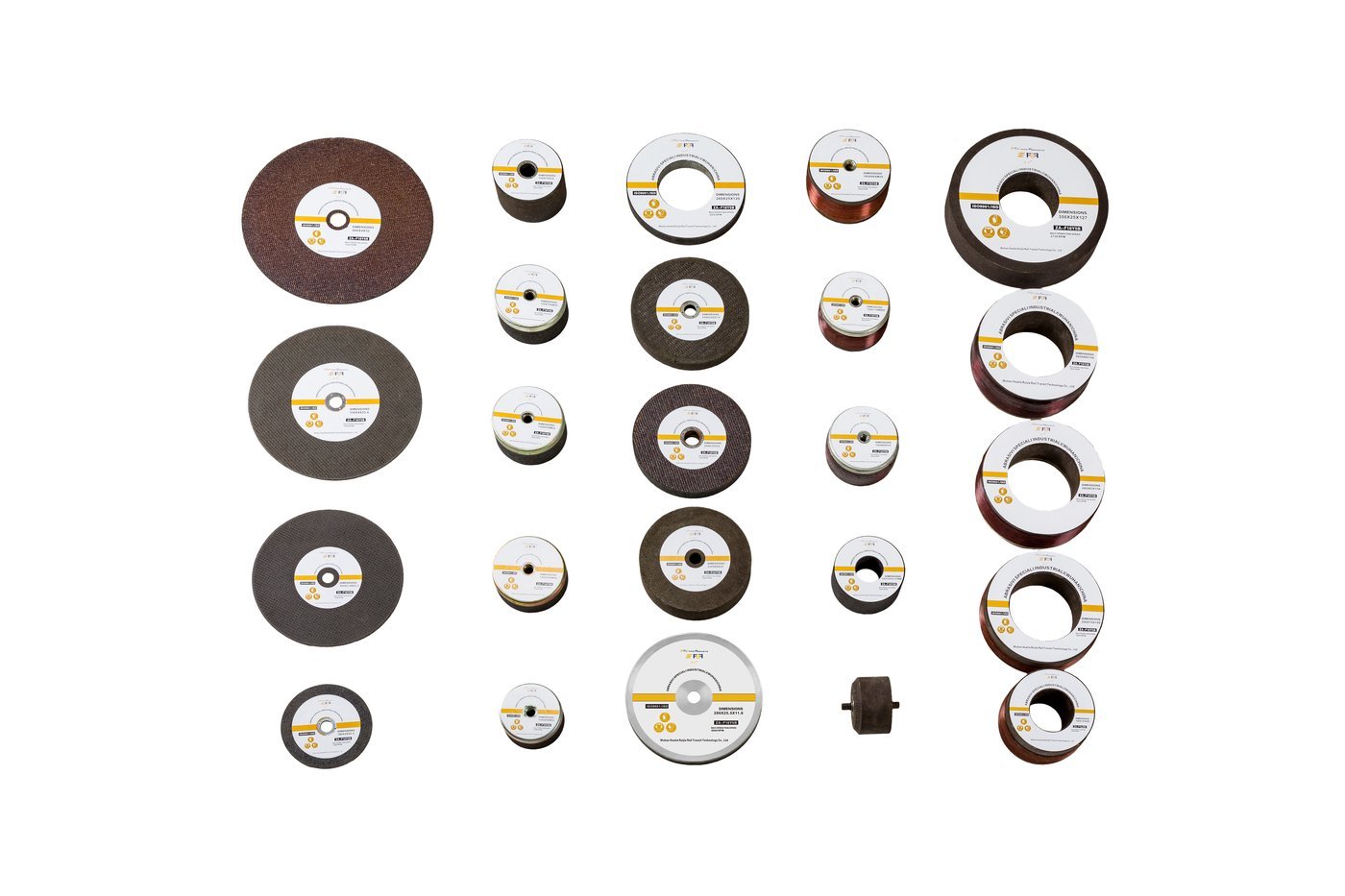
RailwayCare's product brand Molaton has manufactured rail grinding wheels since 2004 and co-drafted the JB/T 11431-2020 industry standard for rail grinding wheels — which is also why we say plainly what each standard does and does not cover. Test documentation is listed alongside the rail grinding wheel range, and certificates covering ISO 9001, ISO 45001 and CRCC are available on request.
Related questions you may also ask
How to prevent rail grinding wheel cracking during operation? How to perform a ring test on a rail grinding wheel Resin bond vs vitrified bond rail grinding wheels Can one rail grinding wheel fit different grinding machines? Wheels for Harsco PGM-48 and PGM-96C grinding trains More answers on rail grinder wheelsAsk for the compliance file, not just the price
Tell Molaton which network and which standard your contract names. We will send the matching test records, the balance and burst data for the wheel class you run, and the certificates behind them.
Request Compliance File