Which rail grinding wheel fits Schweerbau grinding vehicles?
- Share
- Issue Time
- Sep 25,2026
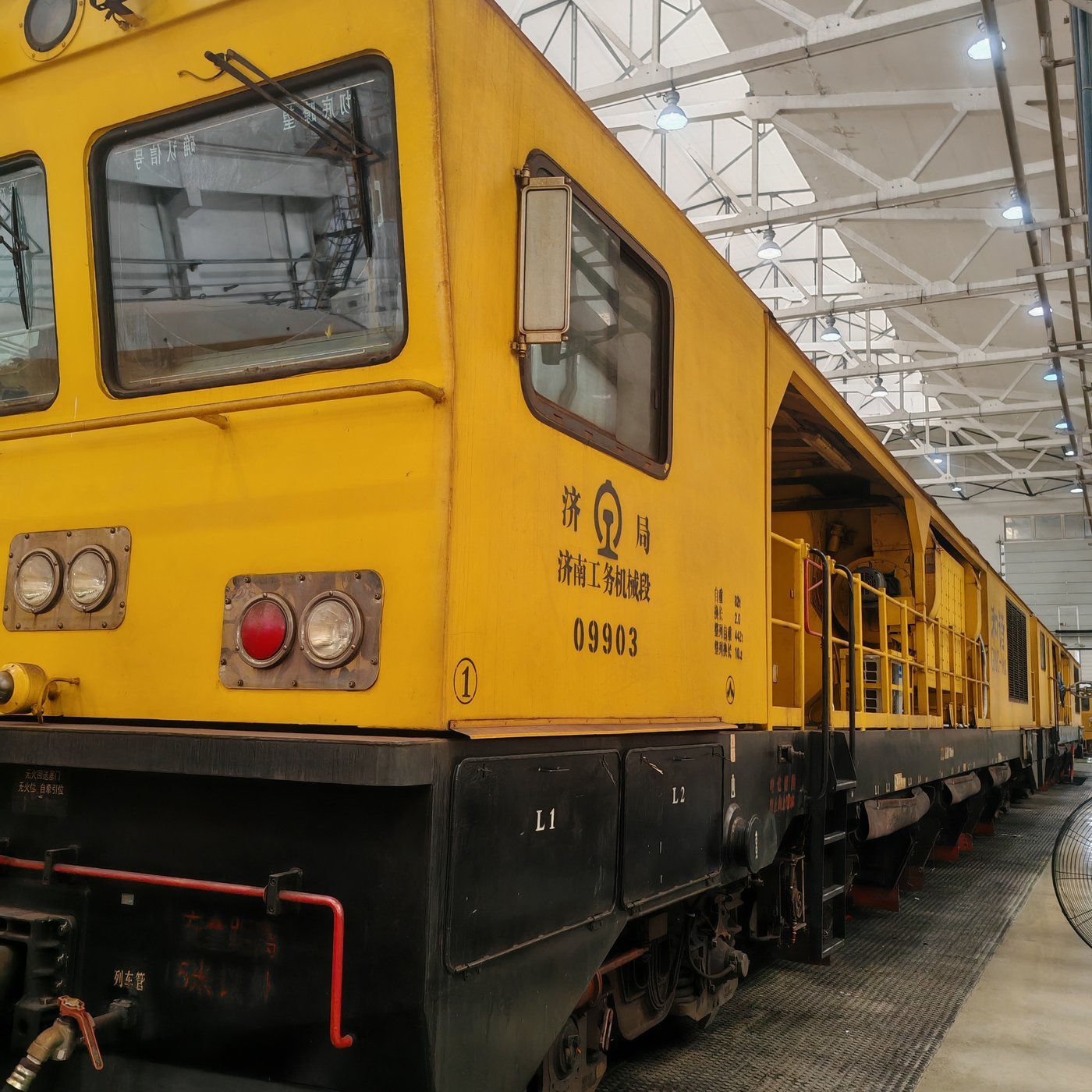
Which rail grinding wheel fits Schweerbau grinding vehicles?
On a Schweerbau vehicle the consumable is decided by the working unit on the vehicle, and Schweerbau International publishes three of them: two milling units and one polishing unit. The milling heads — RMU 600 with a 600 mm milling wheel and RMU 1445 with a 1,445 mm milling wheel — consume carbide cutting inserts, not abrasive wheels. The abrasive consumable belongs to the polishing/grinding head (HPP 150), and there the wheel is fixed by three numbers: the bore that fits the spindle, a diameter inside the head's limit, and a speed rating above the head's working speed. The formats we keep for that side of the machine are the 125-series cup (125×65×20, bore 54×47 or 36×18, 7,500 rpm) and the 150-series (150×70×M20, 150×65×M20, 150×75×32, 150×56×M20 at 6,000 rpm), all zirconia-alumina resin bond rated 50 m/s.
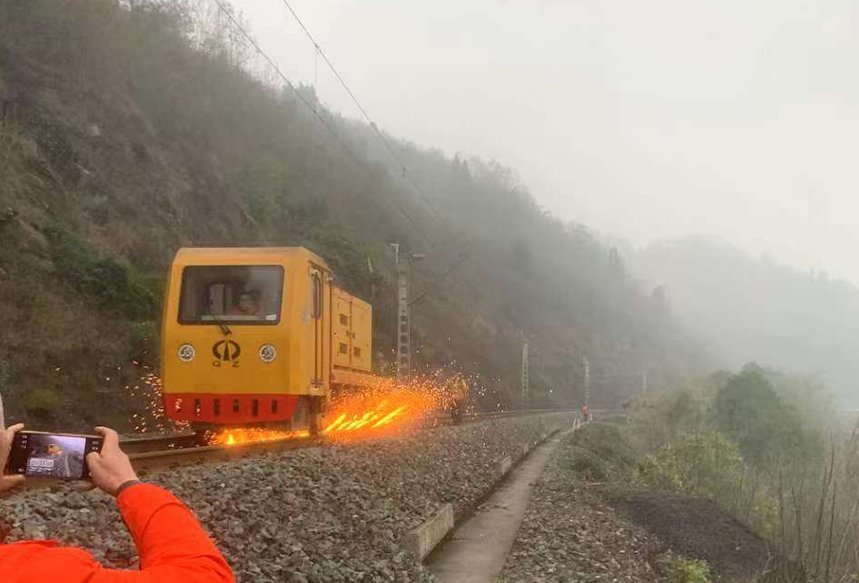
What a Schweerbau vehicle actually carries
Schweerbau International GmbH & Co. KG (SBI), based at Bückeburg in Germany with the present structure in place since 2017, does not sell one machine. It supplies modular working units that are built into rail treatment trains, and it states plainly that trains from Robel Bahnbaumaschinen fitted with its units reach the surface quality a customer specifies through a combination of milling and grinding. Service and retrofit work is delivered with Plasser Robel Services. The wider Schweerbau group — Stadthagen, in operation since 1929 — runs rail grinding, milling and planing machines on networks across Germany and Europe, so the same fleet family contains several different head types.
| Working unit | Function | Consumable | What decides the match |
|---|---|---|---|
| RMU 600 (current standard RMU 2.0) | Rough milling of the rail head, heavy rail and urban networks | Carbide cutting inserts on a 600 mm milling wheel | Insert grade and geometry, not an abrasive wheel |
| RMU 1445 | Rough milling for heavy rail and long shifts | Carbide cutting inserts, close to 600 cutting edges per working side, 1,445 mm wheel | Insert grade and geometry |
| HPP 150 (HPP 2.0 following) | High-performance polishing and final surface finish | Abrasive wheel on the polishing head | Bore, head diameter limit, rated speed above working speed, resin bond |
| Grinding modules on Robel-built treatment trains | Profile grinding on plain line, switches and crossings | 125 mm cup and 150-series rail wheels | Quick-lock 125 mm flange, thread or bore format, 6,000-7,500 rpm |
We do not publish a Schweerbau-specific catalogue number, and we will not pretend otherwise: the format is fixed from the head drawing of your unit. What Molaton does publish is the full rail wheel range for the grinding side of the train, so the match is made from the head's bore and speed rather than from a brand label.
The three checks that fix the wheel
- Bore and mounting. A 125 mm cup with a 54×47 mm bore, the same cup with a 36×18 mm bore, and a 150 mm stone on an M20 thread or an M32 bore are four different spindles. The mounting must match the flange or arbor exactly — it cannot be adapted in the field.
- Rated speed above working speed. The wheel's maximum working speed has to exceed the machine's maximum spindle speed, not equal it. Our rail range is rated 50 m/s; the light cup formats run to 7,500 rpm.
- Bond and reinforcement. Rail grinding needs a resin bond with a glass-fibre wrap. That construction is what prevents fragment loss when the head meets a dipped weld or a frog point, and it is what makes a 1.5× safety factor at 50 m/s achievable.
Where a vehicle carries a production head rather than a portable one, the same logic leads to the larger families: 250×75×150 mm and 260×90×154 mm, both 16 grit and 50 m/s. That is the point of buying consumables by head type rather than by machine brand — one specification can serve several vehicles in a mixed fleet.
Evidence from the formats we supply
Portable and turnout heads are judged on the profile they leave and the vibration they remove. On turnout grinding, measured car-body lateral acceleration fell from about 0.20 m/s² to 0.04-0.08 m/s², and the contact band after grinding measured 25-30 mm on high-speed turnouts and 35-40 mm on conventional and heavy-haul turnouts. On the Loram DM01 vehicle trial at Jiangmen in 2026, wheels from this range produced no burning and a surface roughness of 1.05-9.0 μm, mostly 2-4 μm, against an acceptance limit of Ra 10 μm, with consumption of 0.079-0.151 mm per 100 m·pass. Type testing of the rail range held 4,775 rpm for 30 seconds without rupture, survived a 6,354 rpm burst test and balanced at 21 g, inside the G1 limit of 30 g.
Compliance is stated per format, not assumed: JB/T 11431-2020 (the rail grinding wheel standard RailwayCare drafted), JB/T 7992 for surface defects, GB 2494-2014 for bonded abrasive safety, GB/T 2492 for imbalance, EN 12413:2019 for the European market, and Q/CR 1-2014 for railway-specific acceptance. Dimensional tolerances are ±2.0 mm on outside diameter, ±1.5 mm on thickness, ≤0.4 mm parallelism and ≤0.5 mm concentricity.
Related questions you may also ask
What is a Robel rail grinder? Light rail grinder wheel 125x65x20 (54x47 bore) for 125-class machines Urban rail grinder wheel 125x65x20 (36x18 bore) for 125-class machines Rail grinding wheels for portable rail grinders Light customization solutions for rail grinding wheelsSend the head drawing, get the wheel
For a mixed fleet, the fastest route is one message: machine model, the size currently fitted, and a photo of the hub or flange. Molaton will match the format — or build a light-customization batch where the standard range does not fit.
Request a Wheel Match