Which rail grinding wheel fits Speno USG grinding trains?
- Share
- Issue Time
- Sep 25,2026
Which rail grinding wheel fits Speno USG grinding trains?
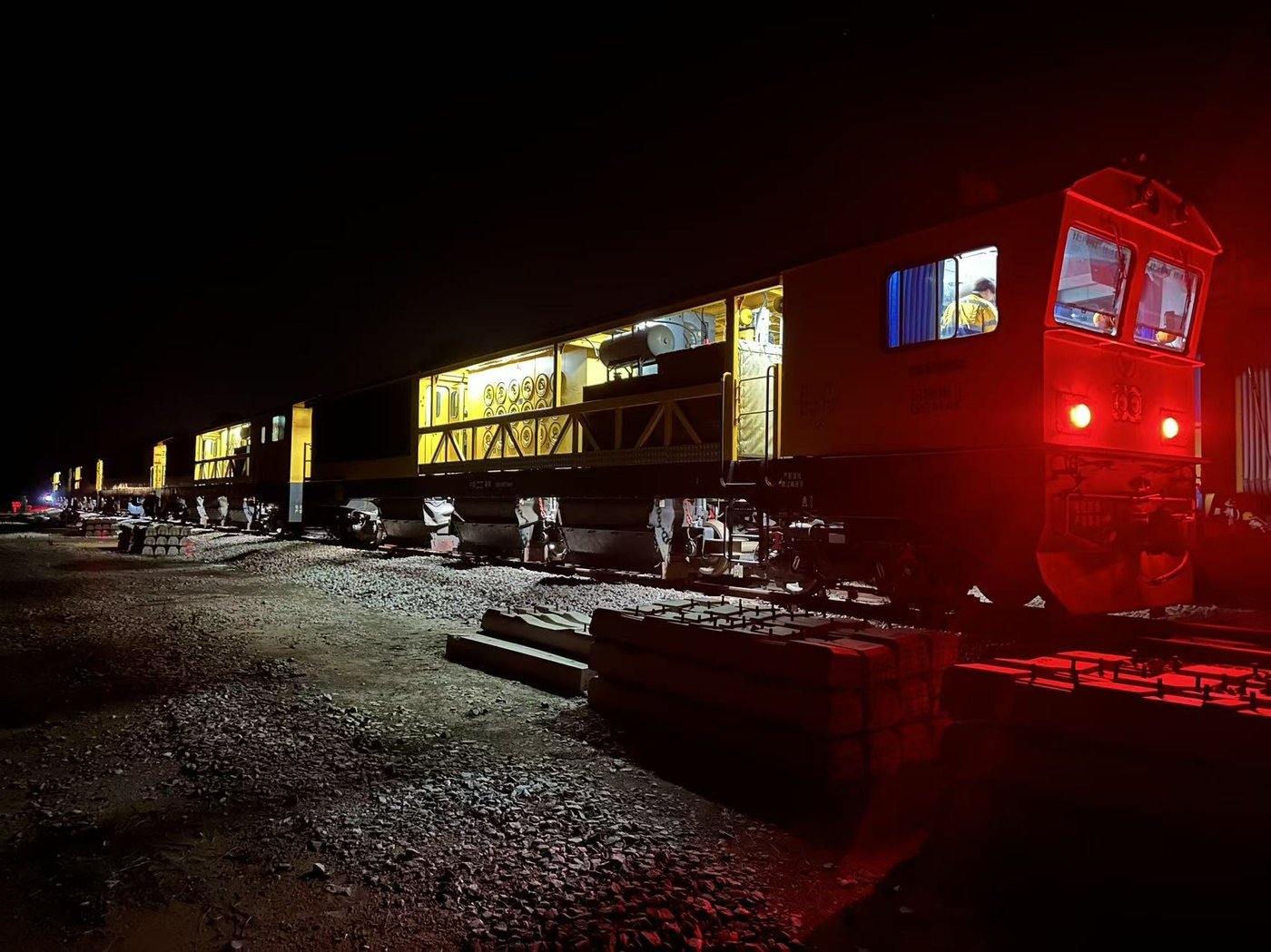
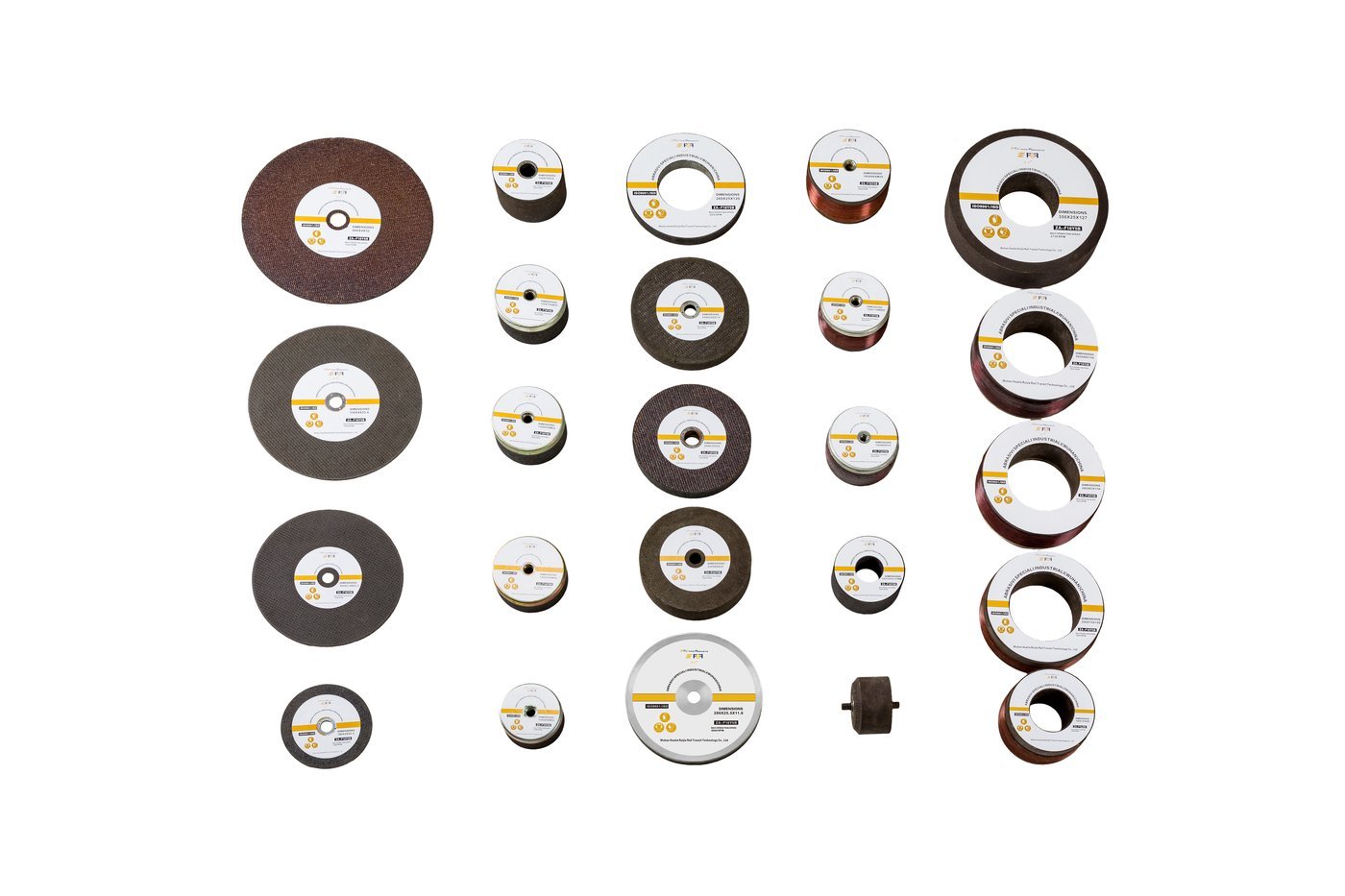
The wheel that fits a Speno-class grinding train is decided by the grinding head, not by the train's trade name. For Speno-class production and metro units the format we supply is 250×75×150 mm — zirconia alumina, 16 grit, resin bond, glass-fibre wrapped, rated 50 m/s at 3,820 rpm. The switch-grinding units working on the same fleet take 180×105×90 mm, also 50 m/s, at 6,000 rpm. Because Speno builds its machines in short series and produces its own stones, the bore and the spindle speed must always be confirmed against the head drawing before an order is placed.
Why the train name is not the specification
Speno International SA was founded in 1960 and adopted its present name in 1965; it designs and builds its own equipment rather than rebadging other builders' trains. Its published figures describe an operation of that kind: about 700 staff, some 230 clients, more than 300 machines built since 1975, roughly 160,000 grinding stones produced each year, and about 50,000 km of track ground annually across a fleet of more than 30 machines it operates itself.
Two consequences matter when you buy wheels. First, machines are tailored to local networks, so two trains carrying the same class name can differ in head geometry. Second, Speno makes its own stones in a dedicated plant in Italy, which means an independent supplier has to match the head, not copy a label. Rail-grinding stones are also made by Norton, Weiler and Noritake in the wider market, and all of them face the same constraint: the wheel must physically suit the head and be rated above the speed the head actually turns.
Speno fleet classes and what they ask of a wheel
| Machine class | Typical duty | Wheel format we supply | Rated speed |
|---|---|---|---|
| Light urban class (8-stone, e.g. Mini 8M type) | Tram, metro and short-rail sections; very light periodic grinding | Hand-operated and compact formats: 150-series M20 / M32, 125-series cup | 6,000-7,500 rpm at 50 m/s |
| Conventional line class (16-stone, e.g. RR 16M type) | Open track, turnouts and crossings; light periodic to corrective | 250×75×150 mm, zirconia alumina, 16 grit | 3,820 rpm at 50 m/s |
| Heavy-haul / high axle load class (48-stone type) | Heavy-haul production grinding, deep corrective passes | 250×75×150 mm and 260×90×154 mm families | 3,630-3,820 rpm at 50 m/s |
| 96-head production class | Main-line and metro campaigns with profile definition and defect removal | 250×75×150 mm class; switch units 180×105×90 mm | 3,820 rpm / 6,000 rpm |
Industry reporting has put roughly twenty 96-head grinding trains built within the Speno-era programme into service across more than ten Chinese railway bureaux, which is why the 250×75×150 mm format is the single most common Speno-class consumable. Molaton holds that format as a catalogue item with a gross weight of 7.48 kg, so it can be ordered directly from stock specification rather than as a one-off.
The four checks that decide whether it actually fits
- Bore before diameter. A 150 mm bore on a 250 mm wheel and a 90 mm bore on a 180 mm wheel are different spindles entirely. A bore mismatch cannot be shimmed out — it destroys balance.
- Rated speed above working speed. The stone's maximum working speed must exceed the head's maximum spindle speed, not equal it. The rail-grade figure is 50 m/s.
- Bond type. Rail grinding stones are resin bonded with a glass-fibre wrap. Vitrified or unreinforced product does not survive the impact of a rail head.
- Head geometry at the ends of the range. On switch units the wheel works in confined space beside check rails and frog points, so thickness and reach are as decisive as diameter.
What the same wheel format delivers on track
Wheel format is only half the answer; what the format has to deliver is measured, not asserted:
- Liuzhou, GMC-96X class machine, 2022: 18.72 km·passes inside a single 2-hour night possession, with wheel wear of 20-30 mm against 43.5-59 mm for the imported wheel in the same duty.
- Hewu high-speed line, 2020: 4.28 km·passes per mm against 3.27 for the imported reference, with a single wheel record of 214.22 km·passes and no continuous blue burning.
- Loram DM01 vehicle trial, Jiangmen, 2026: surface roughness after grinding measured 1.05-9.0 μm, mostly 2-4 μm, against an acceptance limit of Ra 10 μm, with no burning on either side of the machine.
- Type testing: a rail wheel rated 50 m/s held 4,775 rpm for 30 seconds without rupture and survived a burst test to 6,354 rpm, with 21 g unbalance — inside the G1 limit of 30 g.
The acceptance figures behind those numbers are the ones a Speno-class train is judged on: Ra ≤10 μm (contract target ≤8 μm), no continuous blue burning, no periodic wheel marks, a 1 m straightedge reading within 0.3 mm, and metal removal no deeper than 0.5 mm. Every Molaton batch is dimensionally controlled to JB/T 7992 and JB/T 11431 tolerances — outside diameter ±2.0 mm, thickness ±1.5 mm, parallelism ≤0.4 mm, concentricity ≤0.5 mm.
Related questions you may also ask
Speno / CRRC GMC96B rail grinder wheel 250x75x150 for main line and metro Turnout rail grinder wheel 180x105x90 for Speno GMC16A switch units What is a Speno rail grinding machine? Rail grinding wheels for Speno grinding trains What actually drives the cost of a rail grinding wheelMatch the wheel to your head, not to the label
Send the machine class, the size currently fitted and a photo of the hub. Molaton will confirm diameter, thickness, bore, abrasive, grit and the 50 m/s rating, and quote the format that fits your Speno-class vehicle.
Confirm My Wheel Format