What types of railway grinding wheels does Molaton offer for different railways?
- Share
- Issue Time
- Sep 24,2026
What types of railway grinding wheels does Molaton offer for different railways?
Molaton organises rail grinding wheels into four families, keyed to the machine and the railway rather than to one universal size: grinding-train wheels (260-350 mm diameter), turnout and switch wheels (250-260 mm), portable-machine wheels (125-180 mm) and cut-off wheels (305-400 mm). All are resin-bonded and all carry a 50 m/s working rating except the cut-off range, which is rated 100 m/s. The right family is decided by the machine first, then by the defect mix on that particular railway.
The four families, by machine and by railway
| Family | Catalogue sizes (OD x thickness x bore) | Abrasive / grit | Typical machine | Typical railway |
|---|---|---|---|---|
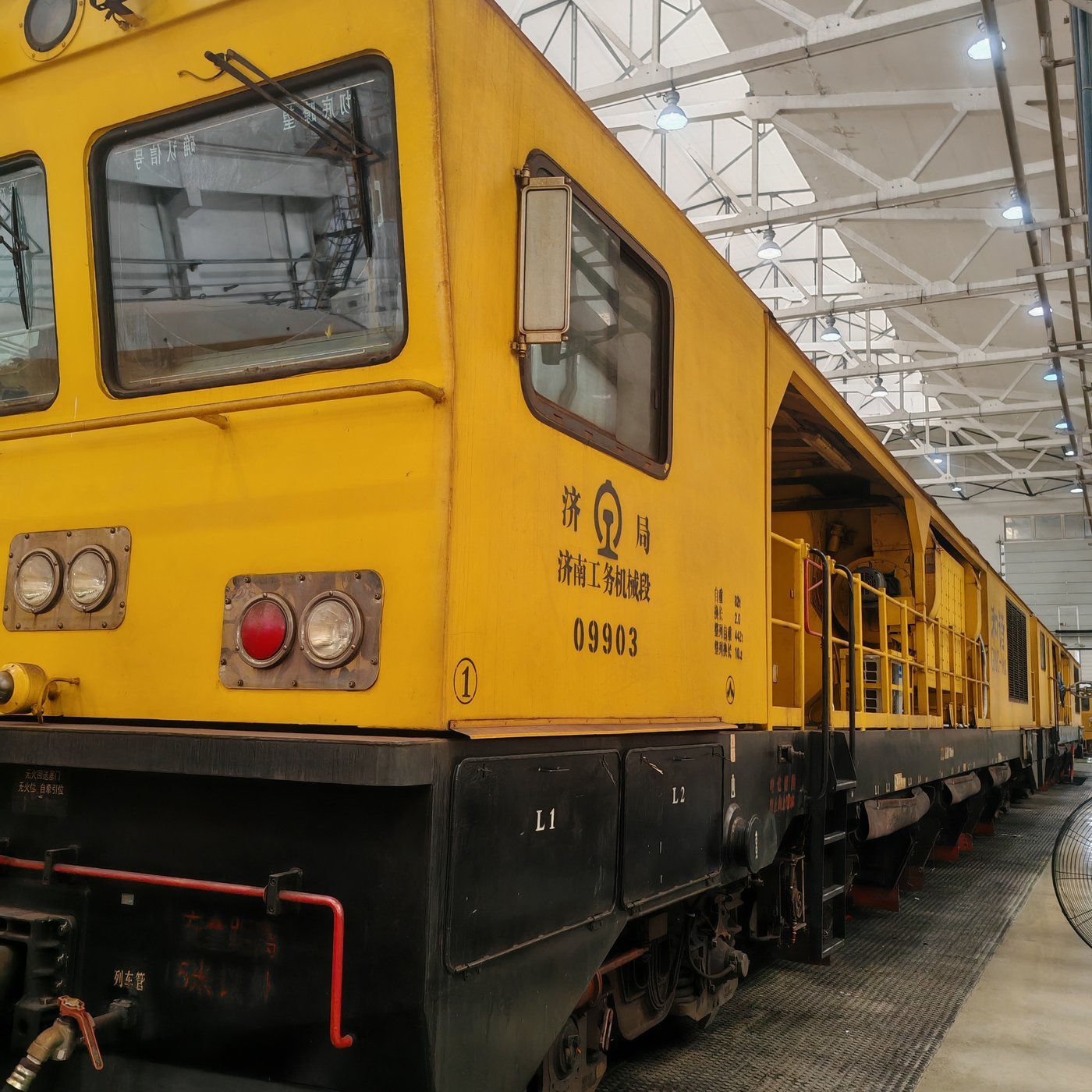
| Grinding-train wheels | 260x90x154, 350x60x127, 350x50x127, 350x35x127, 350x25x127, 180x105x90, 250x75x150, 260x83x154 | Zirconia alumina, 16 grit, glass-fibre reinforced | Production grinding vehicles (PGM-48/96C class, 16-head and 96-head vehicles, Loram and Speno class trains) | High-speed main line, heavy-haul, city-to-city corridor |
| Turnout and switch wheels | 260x25x120, 254x32x25.4, 250x32x32 | Zirconia alumina / brown alumina on iron core, 20 grit | Vertical-axis turnout grinders, switch and crossing units | Turnouts, crossings, switch panels, station throats |
| Portable-machine wheels | 150x70xM20, 150x75x32, 150x65xM20, 150x56xM20 (weld-seam wheel), 180x80xM20, 125x65x20 (7,500 rpm) | Zirconia alumina, 20 grit | Portable rail grinders, weld-seam finishers, battery-powered grinders | Metro and light rail, weld finishing, spot defect removal |
| Cut-off wheels | 356x4x25.4, 305x3.6x22.2, 400x4x32 | Brown alumina ZA/F30, 30 grit, 100 m/s | Abrasive rail saws and cut-off machines | Rail replacement, emergency work, weld preparation |
Why the railway type changes the wheel specification
The defect mix is not the same on a high-speed line as on a heavy-haul line, and the wheel is chosen around that mix. Across rail defects generally, corrugation, shelling, spalling, burrs, bruising, side wear and crushing account for more than 80% of all damage — but in different proportions:
| Railway type | Dominant defect | What it means for the wheel |
|---|---|---|
| High-speed main line | Rolling contact fatigue cracks, light corrugation | Controlled cut depth, fine enough finish to avoid burning; 350 mm class train wheels |
| Heavy-haul | Shelling, spalling, rail-head crushing, burrs | Coarser 16 grit and thicker wheels (90 mm) for wear life under high axle loads |
| Metro and light rail, tight curves (R < 1,000 m) | Side wear and corrugation, driving noise and vibration | Shaped and smaller-diameter wheels, low-vibration formulas, work designed around short night windows |
| Turnouts and crossings | Frog point wear, damaged gap profile | Small-bore shaped wheels (250-260 mm) that reach narrow zones |
| Tram and grooved rail | Groove and groove-shoulder wear on 59R2 / 60R2 sections | Grooved-rail-specific wheels and welding applications |
| Port, crane and industrial rail | Wear on QU70-QU150 crane rail | Bore-matched wheels for heavy industrial sections |
What the wheels do on real networks
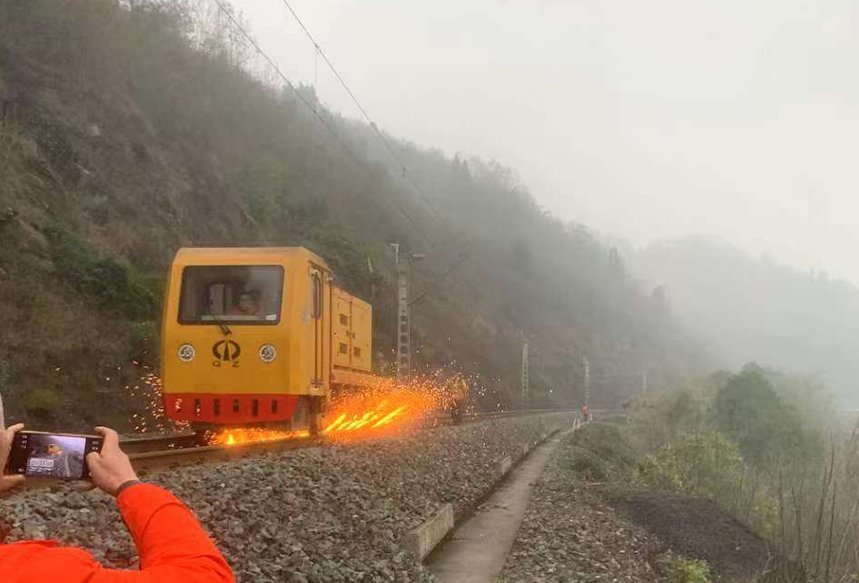
Family selection is not a catalogue exercise — it is checked on track. On Liuzhou GMC-96X in 2022, our train wheels ground 18.72 km·passes within one 2-hour night window, wearing 20-30 mm against 43.5-59 mm for the imported wheel — roughly twice the durability at the same surface quality. On the Hewu high-speed line, the comparison was 4.28 km·passes per mm against 3.27, with 214.22 km·passes per wheel and no continuous burning. On heavy-haul, the Yiyang Line returned 5.7 km·passes per mm and Shuohuang 4.98. A 600-wheel batch for Shenhua passed full batch inspection before delivery.
Type testing backs the same numbers in the laboratory: a 260x90x153 mm wheel rated 50 m/s was spun to 4,775 rpm for 30 seconds without rupture, held to 6,354 rpm in the burst test, and measured 21 g unbalance — comfortably inside the GB/T 2492 limit.
Related questions you may also ask
What grit size and abrasive should I use for rail grinding? Which grinding wheel fits Harsco PGM-48 and PGM-96C grinding trains? Which grinding wheel fits Loram rail grinders? Rail profile grinding: techniques, standards and best practicesFind the wheel family for your line
Send us your machine model, rail section and the defect you are fighting. We will identify the correct Molaton family and the exact size, grit and speed rating — and back it with test data on request.
Match My Wheel