What is a Robel rail grinder?
- Share
- Issue Time
- Sep 23,2026
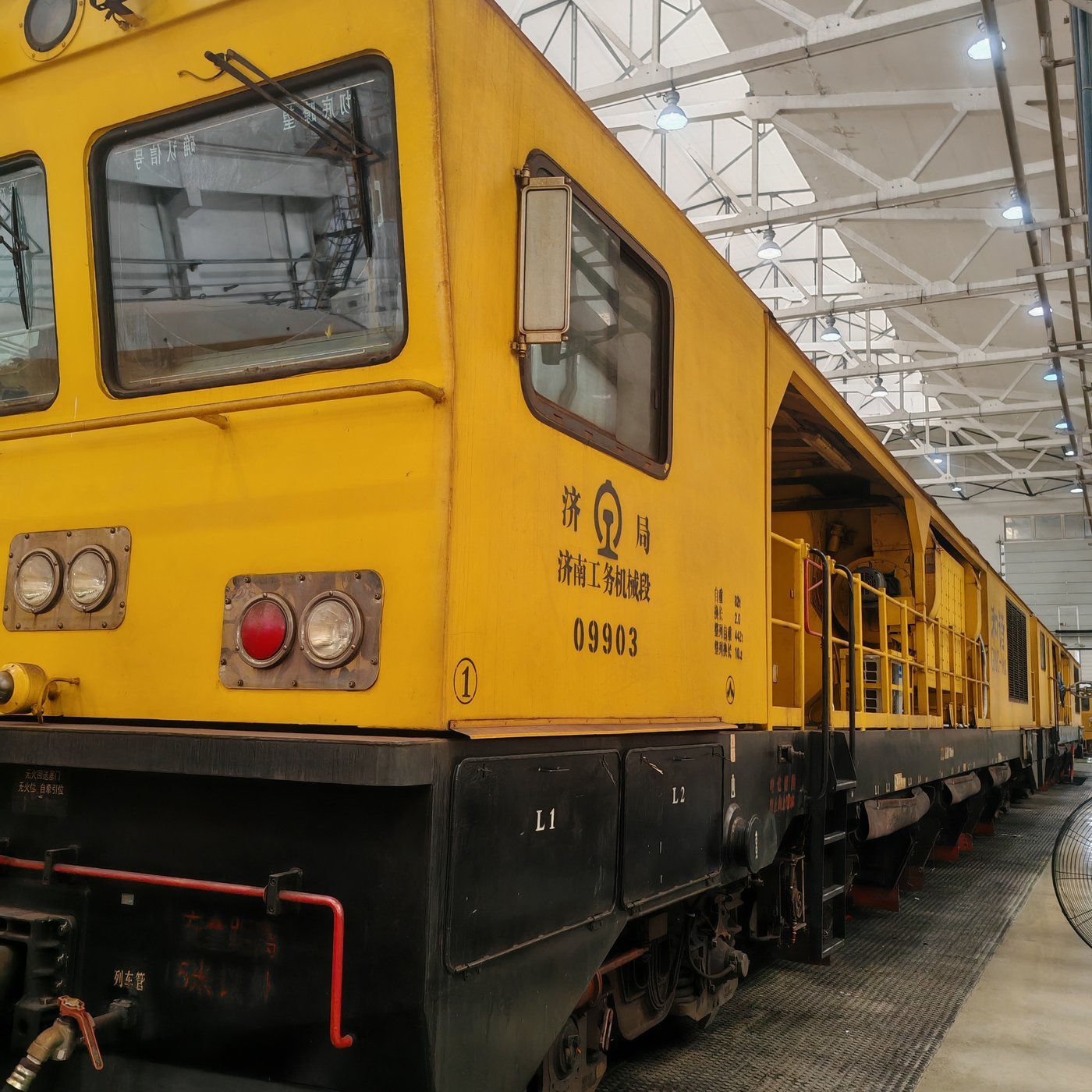
What is a Robel rail grinder?
A Robel rail grinder is a hand-guided rail or switch grinding machine built by ROBEL Bahnbaumaschinen GmbH in Freilassing, Upper Bavaria. The name is not one machine but a family — the RoGrind rail profile grinders (13.44, 13.45, 13.48), the 13.63 modular rail and switch grinding machine, and the high-frequency 13.49 — covering everything from a weld seam between two trains to a full switch blade. The company's roots go back to the Georg Robel file factory founded in Munich in 1875, which began building hand-operated track construction machines in 1901 and has been part of the Plasser & Theurer Group since 1976. For an operator, the practical consequence is simple: these are machines that live or die by the stone and the guide rollers, because there is no train behind them to hide a bad cut.
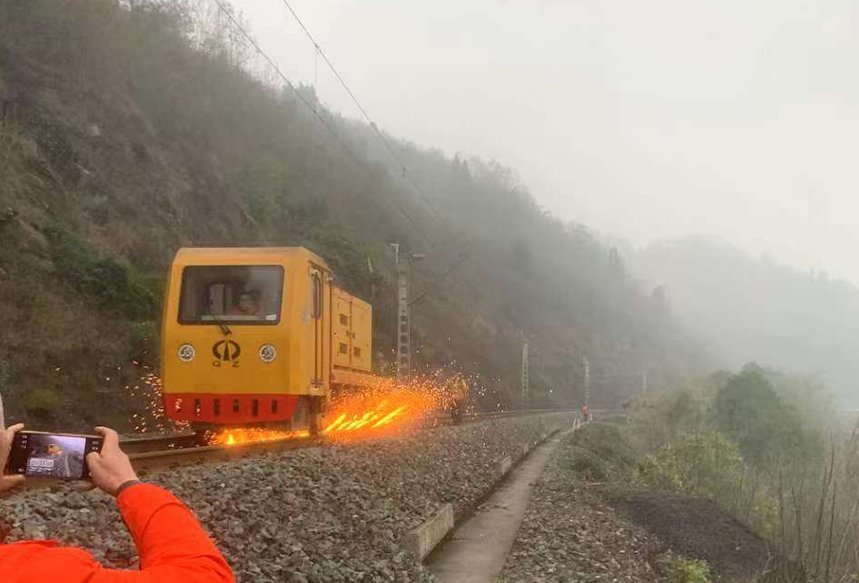
The Robel grinding family: what each machine is for
ROBEL's grinding line sits in its Machines & Tools business unit, alongside a wider portfolio of rail treatment and milling systems. Its scope is worth knowing before you buy stones, because the four machine types take different tools and work to different tolerances.
| Machine | Duty | What sets it apart |
|---|---|---|
| 13.45 / 13.45 E | Rail profile grinding machine | Petrol or lithium-ion battery drive; spindle speed about 4300 rpm; patented contour copying; quick-lock flange so the cup wheel is changed without hand tools. The battery version is the one that goes into metros and tunnels where exhaust is not acceptable. |
| 13.48 | Rail head profile grinding machine, for deburring and for finishing after thermite or flash welding | Patented contour copying over a 184° slewing range, with a restraint that turns the rail guidance discs so contact pressure stays constant and the machine does not skid. Cup wheel infeed is motorised through a PLC with 0.1 mm resolution: the operator sets a zero level, then a finishing programme from 0.1 to 0.9 mm in 0.1 mm steps. A hybrid drive stores braking energy in supercapacitors (usable to −30 °C, about a 10-year life) so a 9 kg lighter engine delivers the same grinding power; the outrigger extends to 1435 mm to reach rail not yet finally positioned. |
| 13.63 (RoGrind) | Modular rail and switch grinding machine | A base frame that travels on the rails plus eight attachable grinding modules — four electric E³ units and four combustion units of different output — assembled by hand with no additional tools. Gauge adjusts across 1000–1676 mm, so it covers grooved rail and multi-gauge track; one 2300 Wh battery gives 60 minutes of uninterrupted grinding, which is a full shift in practice. |
| Handheld machines (13.44 class) | Rail head top, sides and transition radii; weld beads and the web of a weld | Typical build: about 4.9 kW at 4000 rpm, a 125 mm cup wheel, stone speed around 4250–4500 rpm, maximum 50 m/s, weight 59–64 kg, grinding possible from the vertical through a 90° range. |
Note what is common across all four: contour copying against the unworn part of the rail, and a tool whose diameter, mounting and speed rating are fixed by the machine. That is why a Robel machine is easy to buy and hard to feed. The wheel has to match a guide-roller geometry and an arbor speed, not just a diameter.
The stone a Robel machine takes
The handheld and modular machines in this family run cup and cylindrical stones in the 125–150 mm class, with thread or bolt mounting depending on the head. In the Molaton range the Geismar / Robel portable family is specified as follows:
| Stone as catalogued (OD × thickness × mounting) | Construction | Grit | Max speed | Rated stone speed |
|---|---|---|---|---|
| 150 × 70 × M20 mm | Zirconia alumina / brown fused alumina, AZ/A F20J9B | 20 | 50 m/s | 6000 rpm |
| 150 × 65 × M20 mm | Zirconia alumina / brown fused alumina, AZ/A F20J9B | 20 | 50 m/s | 6000 rpm |
| 150 × 75 × 32 mm | Iron matrix with zirconia / brown fused alumina | 20 | 50 m/s | 6000 rpm |
| 150 × 70 × 55, 4 × M8 mm | Zirconia alumina / brown fused alumina, AZ/A F20J9B | 20 | 50 m/s | 6000 rpm |
| 150 × 56 × M20 mm (weld seam grinding) | Zirconia alumina / brown fused alumina, AZ/A F20J9B | 20 | 50 m/s | 6000 rpm |
| 125 × 65 × 20 mm, 54 × 47 boss | Iron matrix with zirconia / brown fused alumina | 20 | 50 m/s | 7500 rpm |
| 125 × 65 × 20 mm, 36 × 18 boss | Iron matrix with zirconia / brown fused alumina | 20 | 50 m/s | 7500 rpm |
Three things to check before ordering on a Robel machine. First, boss and mounting: two 125 mm stones that look identical on a drawing can differ in boss dimensions, which is why the range lists both 54 × 47 and 36 × 18 variants. Second, speed headroom: these stones are rated to 50 m/s, and the machine's own arbor speed must sit below that with margin, not just beneath it. Third, grit and bond behaviour: 20 grit zirconia alumina removes rail steel quickly and holds its shape, which is what makes contour copying repeatable pass after pass; a glazing stone will copy the same profile badly every time.
Case and data — the weld seam and the switch, measured
The Robel 13.48 exists for one reason: after thermite or flash welding, the joint is comparatively coarse, and the profile has to be returned to the target dimension — often in the gap between two trains. There is now a policy reason the job keeps its importance. China's national operator instructed in 2025 that new and rebuilt railways should use flash and pressure welding instead of aluminothermic welding, because thermite weld strength is lower than the parent rail and the joint tends to dip slightly at the surface, while requiring more frequent ultrasonic inspection than flash-welded joints. Thermite welding remains the practical method for locking welds in switches and for short or awkward positions — which is exactly where a hand-guided grinder finishes the work.
What the finish has to hit is written down, and it applies to hand-guided and train-mounted grinding alike:
| Criterion | Value |
|---|---|
| Surface roughness | Ra ≤ 10 μm; contractual target for train grinding at 7 km/h is Ra ≤ 8 μm |
| Removal per pass | Train grinding contract condition: ≥ 0.2 mm of rail head metal per pass at 7 km/h; total depth limit ≤ 0.5 mm |
| Flatness | ≤ 0.3 mm under a 1 m straightedge with feeler gauge |
| Surface condition | No blue-banding, no burning, no periodic wheel marks |
| Ramp | Steeper than 1‰ |
| Switch ride quality | Car-body lateral acceleration after switch grinding: about 0.20 → 0.04–0.08 m/s² |
For scale on what good consumables do under measured conditions, our own half-train comparisons on grinding vehicles are published elsewhere: on a GMC-16 class machine, imported stones wore 1.027× as fast as the domestic stones with no burning on either side, and in a 2022 half-train trial on the Hengliu line the Molaton stones consumed 20–30 mm per stone against 43.5–59 mm for the imported comparison over the same two-hour possession. The same abrasive system — zirconia alumina in a resin bond, dynamically balanced per batch — is what sits in the 125 and 150 mm hand-guided stones above.
Related questions you may also ask
What is aluminothermic welding in rail replacement? Portable rail grinder vs full-size grinding train — which do I need? Who are the leading rail grinding machine manufacturers?Find the stone for your Robel machine
Tell us the machine number, the stone you take off it — diameter, thickness, boss and thread — and the arbor speed. We will match it in the Molaton range, confirm the speed rating against your machine, and send the drawing for approval before anything is pressed.
Get a Robel Stone QuoteThe Robel-compatible range is grouped under Geismar and Robel grinder wheels, with representative sizes at 150 × 75 mm for the 150 model handheld grinders and 250 × 32 mm cylindrical for portable equipment; the machines are compared under railway grinders. For the workflow either side of the grinding pass, see how rail replacement and welding work and rail profile grinding standards and best practice.