Loram grinding train vs Molaton rail grinding vehicle?
- Share
- Issue Time
- Sep 22,2026
Loram grinding train vs Molaton rail grinding vehicle?
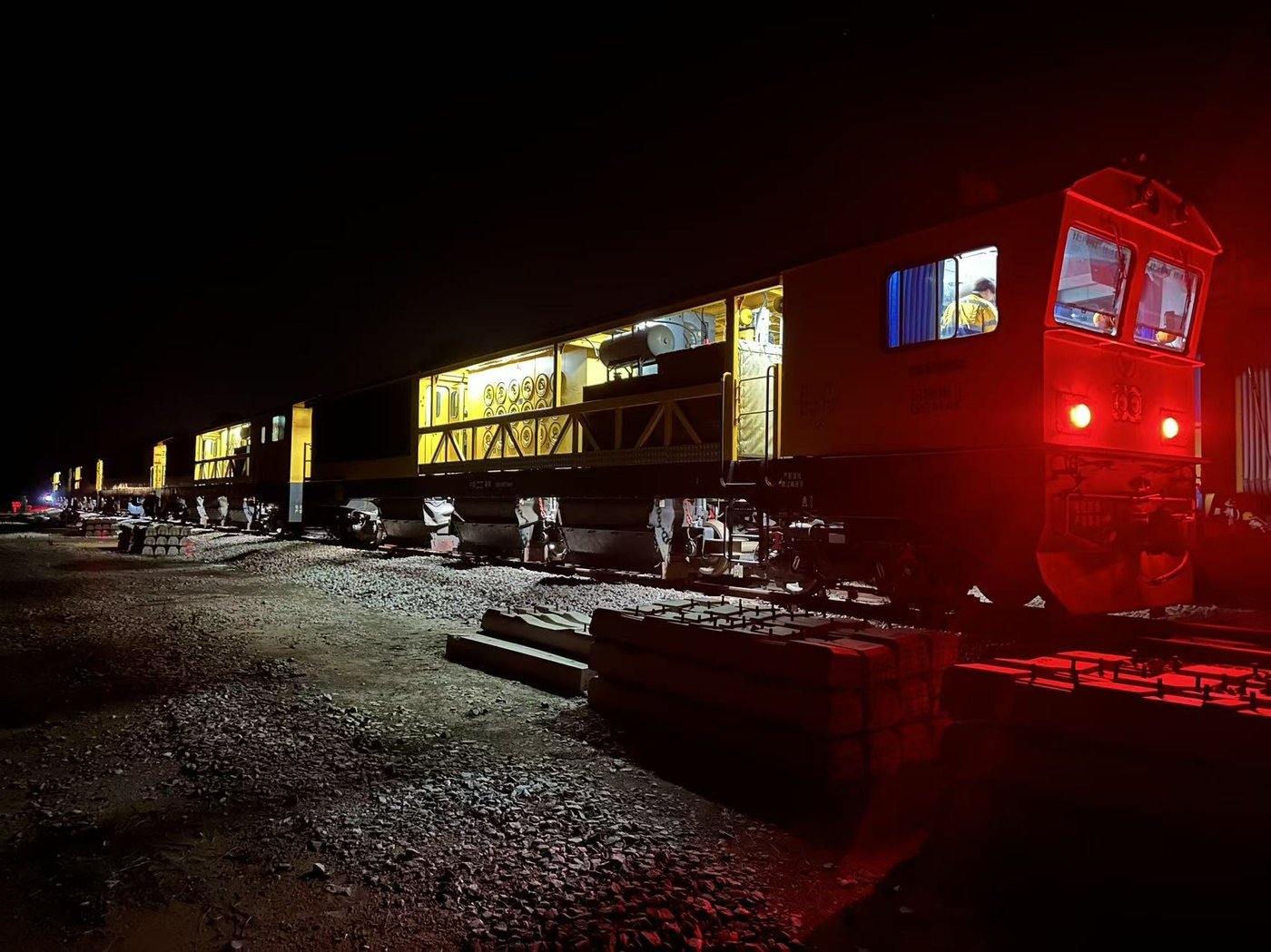
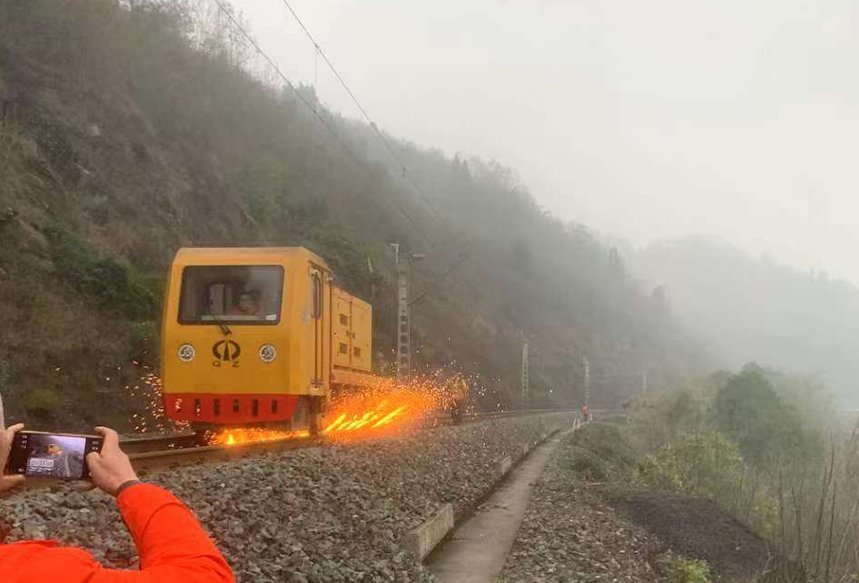
They are not competing versions of the same purchase. A Loram grinding train is a large production fleet that you hire: four to seven sections carrying 32 to 64 grinding stones, working at around 25 km/h and removing up to 0.5 mm per pass, crewed and maintained by the supplier. A Molaton rail grinding vehicle is a machine you own and run: for example the GMC16A rail grinding train, two vehicles with one eight-head grinding unit each for 16 grinding heads in total, built for both preventive and corrective grinding of main line and turnouts. Buy the fleet when you need capacity on a network you do not want to staff; buy the vehicle when you need the capability in your own depot, with your own windows and your own wheel supply.
Side by side
| Loram-type production grinding train | Molaton rail grinding vehicle | |
|---|---|---|
| What you are buying | Contracted capacity, with crews, logistics and maintenance included | A machine, plus the wheels it consumes |
| Scale | Four to seven sections; 32 stones on a four-section machine and 64 stones on a seven-section machine (Network Rail C44 fleet), about 150 m long | Two vehicles with 8 grinding heads each, 16 heads total (GMC16A); at least one Chinese-network train runs 48 stones on a single side |
| Working speed and cut | Up to about 15 mph (25 km/h), up to 0.5 mm per pass | Typically 7–15 km/h in production work, 0.2–0.3 mm per pass with a full stone set |
| Transit and access | Transit at 70–75 mph (110–120 km/h), so it can move between possessions under its own power; long train formation to path | Short formation, easier to path into a depot or a short possession, and able to work turnouts on the same machine |
| Who operates | Supplier crews and technicians; the railway supplies track access, local drivers and supervision | Your own staff, after commissioning and training |
| Consumable | The wheel is the recurring cost of every shift, and both OEM-linked and independent suppliers are available | The same, and the wheel is normally the largest single operating cost per pass-kilometre |
| Best fit | A large network that wants a guaranteed annual programme without building a fleet | An operator that wants control of cycle, timing and unit cost, and to bring turnout work in-house |
The maths that actually decides it
Three numbers settle most of these evaluations, and none of them is the purchase price of the machine.
First, the consumable per pass-kilometre. Measured on Chinese networks: Yiyang Railway ground 145 pass-kilometres at 12 km/h and 15.6 kW with an average wheel consumption of 25.45 mm, which is 5.7 pass-km per millimetre of wheel; Shuohuang Railway ground 172.8 pass-kilometres at 15 km/h and 13.8 kW, consuming 34.67 mm, or 4.98 pass-km per mm. That ratio, not the machine, is the number that repeats every year.
Second, what a possession is worth. On the Hengliu line at Liuzhou in 2022 a single grinding car delivered 18.72 pass-kilometres inside an overnight window of about two hours. A short-formation vehicle that can be pathed into many small windows is often more useful than a long train that needs one rare large one.
Third, the acceptance standard both routes must hit. Roughness Ra ≤10 μm, no blue burning, 0.3 mm deviation within a 1 m straightedge, grinding depth ≤0.5 mm and a ramp steeper than 1‰. These limits are set by the rail, not by the machine class, so a properly run 16-head vehicle and a contracted production train are judged against the same yardstick.
Case and data — the wheel is shared between the two worlds
The clearest evidence that this is one market rather than two comes from a trial run on a Loram DM01 grinding train at Jiangmen Huidafeng between April and June 2026. Molaton stones were fitted to grinding heads 1, 3, 5 and 7 on the left side while two incumbents ran 2, 4, 6 and 8 on the right, both sides at the same angles on straight track, at 80 % power and 7 km/h. Results: no blue burning, roughness 1.05–9.0 μm with most passes between 2 and 4 μm against the ≤10 μm limit, no breakage, cracking or loosening, and consumption of 0.079–0.151 mm per 100 m of grinding per pass against 0.059–0.095 mm for the incumbents. Measured metal removal reached 0.142–0.247 mm in the inner rail zone, 0.165–0.373 mm in the outer zone and 0.193–0.222 mm at the crown, and the stone price sat in the middle of the group at about 980 CNY against 740 CNY and 1,390 CNY. The report's own conclusion was that performance was close across the three and that the decision turns on price and supply reliability — which is exactly the position we put in writing.
That is why the comparison is not really train against vehicle. Whatever you buy, you will keep buying wheels, and the supplier that can match a Loram grinding head and a 16-head vehicle from the same factory is worth the conversation. RailwayCare has made rail grinding wheels since 2004 as the first dedicated producer in China, drafted the industry standard JB/T 11431, holds ISO 9001, ISO 45001 and CRCC certification, and has passed China Academy of Railway Sciences and national abrasives institute testing with wheel wear 1.4–2.6× better than specification.
Related questions you may also ask
What is a Loram rail grinder and who makes compatible machines? What is a rail grinder train and how does it work? What are the types of track grinding machines?Cost a grinding vehicle against the service you hire today
Send us your annual grinding kilometres, the typical possession length you get, whether turnouts are in scope, and the wheel consumption you see now. We will model the vehicle, the wheel range and the cycle, and put the unit cost next to your contracted rate.
Get a Vehicle ComparisonThe machines are listed under railway grinding vehicles and railway grinders, the consumable range under railway grinding wheels. For the buying case against the OEM-linked wheel brands see Molaton vs Norton for Loram grinding wheels, and for what drives the annual consumable bill see what actually drives rail grinding wheel price.