What does Loram rail maintenance include?
- Share
- Issue Time
- Sep 22,2026
What does Loram rail maintenance include?
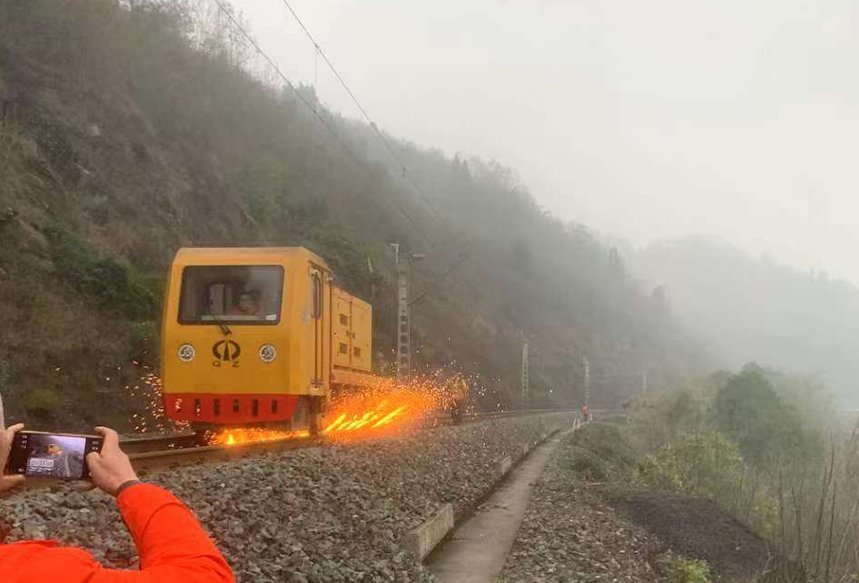
Loram rail maintenance is the maintenance-of-way scope delivered by Loram Maintenance of Way, Inc., a United States company based in Hamel, Minnesota and family-owned since 1954. It is a portfolio, not a single task: rail grinding and rail milling, ballast and drainage work, material handling, track and infrastructure inspection, friction management, structural monitoring, and rolling stock maintenance — all delivered as contracted services using Loram-owned machines and Loram crews. The important distinction for a buyer is this: Loram sells capacity. A railway that wants to own the capability instead buys grinding machines and the grinding wheels they consume, and that is the half of the market Molaton supplies.
The scope, line by line
| Service line | What it covers | Why it is in a maintenance scope |
|---|---|---|
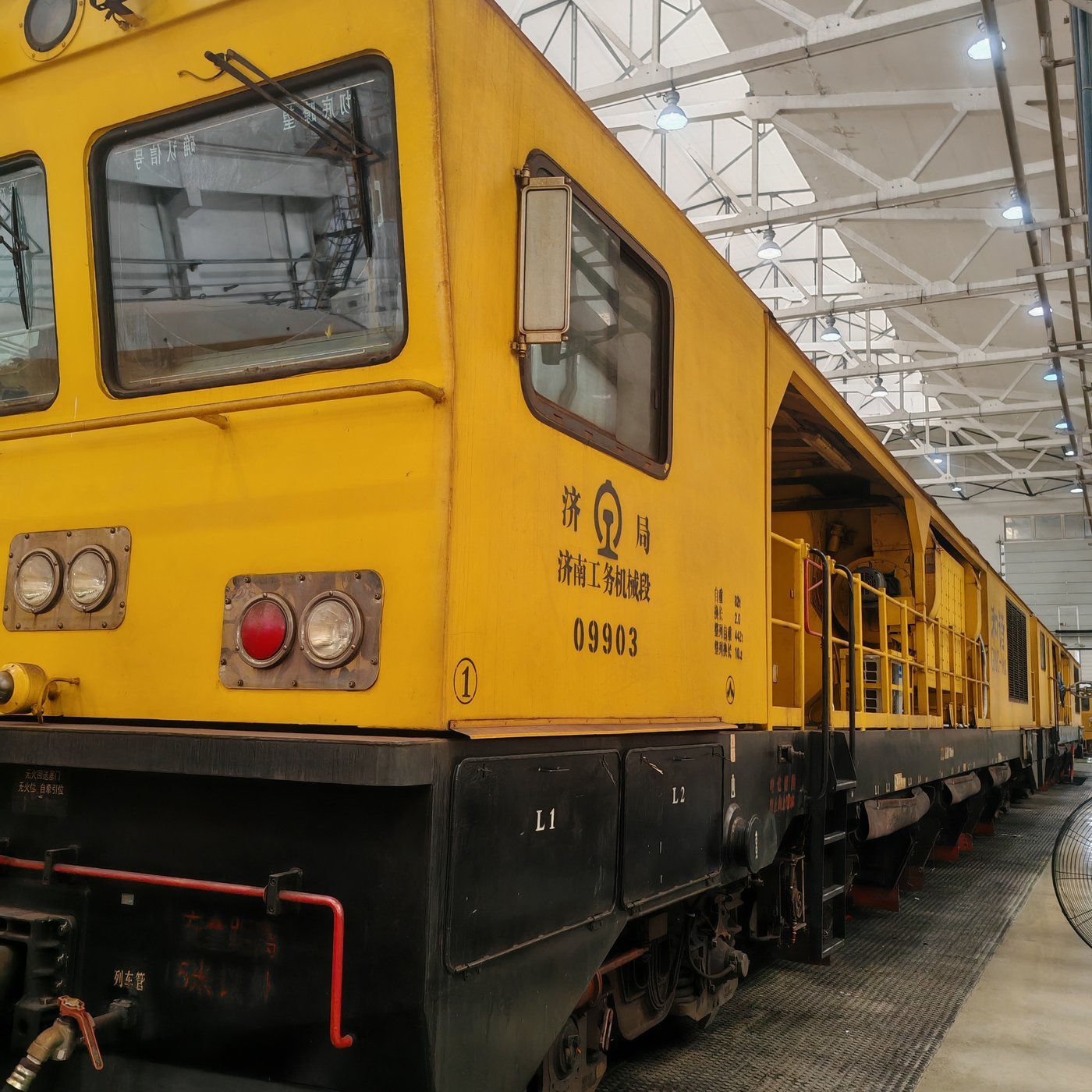
| Rail grinding | Production grinding, specialty grinding (switches, crossings, turnouts) and transit grinding, plus rail milling | Removes fatigued metal, restores the rail head profile and controls rolling contact fatigue — the single highest-frequency intervention on a running line |
| Ballast and drainage | Shoulder ballast cleaning, ditching, undercutting, track lifting and roadbed drainage | Ballast fouling and blocked drainage soften the track structure and accelerate geometry loss |
| Material handling | Rail and ballast handling, work platforms, slot and dump trains | Most of a possession is lost to logistics rather than to the work itself |
| Inspection | Track, ballast and tie inspection, ground-penetrating radar, geometry and surface condition records | Condition data decides where grinding and tamping are spent |
| Friction management | Top-of-rail friction modifiers and gauge-face lubrication | Controls wheel and rail wear, noise and traction energy on curves |
| Structural monitoring | Bridges, tunnels and other civil assets | Grinding and track work cannot fix a structure that is moving |
| Rolling stock maintenance | Routine maintenance, overhaul, refurbishment and repurposing of vehicles and on-track machines | The fleet that does the work needs its own maintenance plan |
The commercial model matters as much as the list. Loram operates from regional offices covering North America, South America, Europe, Scandinavia, Australia and India, and it both runs its own fleets and supplies equipment with trained operators and technicians — the railway provides track access, local drivers and supervision. Loram has positioned itself in rail grinding for more than fifty years and describes its grinding platforms as high-power, flexible grinding modules with control systems aimed at profile accuracy and repeatability.
What the grinding line costs, in public numbers
Grinding is the line item that repeats, so it is the one worth quantifying. When Network Rail in the United Kingdom replaced its ageing grinding fleet it commissioned three grinding trains at about £36 million, designed and built by Loram in Minneapolis and operated and maintained by Colas Rail. Two are four-section machines (C44-01 and C44-02) and one is a seven-section machine (C44-03), around 150 m long, carrying 32 and 64 grinding stones respectively. Grinding speed reaches about 15 mph (25 km/h) with up to 0.5 mm removed in a pass, transit speed is 70–75 mph (110–120 km/h), the trains were specified to reduce cost per shift by about £1,000 while raising output by about 35 %, and they were designed for a 30-year life.
Two consequences follow for anyone planning this work. First, the asset is expensive but the consumable is what you buy every shift — the grinding wheel is the interface with the rail, and its diameter, thickness, bore, base body, balance grade and maximum working speed are what make it fit a given grinding head. Second, grinding is a cycle rather than a one-off repair: Chinese railway practice sets preventive grinding at every 30–50 Mt of traffic with an interval of no more than 2 years on high-speed lines, every 100 Mt on plain line and large-radius curves above 1,200 m, and every 30–50 Mt on curves below 1,200 m. Preventive passes are shallower and cheaper than corrective ones, and the mechanism explains why: once rolling contact fatigue cracks pass about 0.2 mm in depth, a normal pass removes the surface layer but leaves the crack roots behind.
Case and data — the same scope run by the operator
Railways that keep grinding in-house measure it exactly the same way a contractor does: pass-kilometres per stone millimetre, roughness, and the absence of blue burning. Verified figures from Chinese networks:
| Programme | Conditions | Result |
|---|---|---|
| Liuzhou, GMC-96X (Hengliu line, 2022) | Overnight possession of about 2 hours, half-train comparison on one machine | 18.72 pass-kilometres in the window; Molaton stones consumed 20–30 mm per stone against 43.5–59 mm for the imported comparison stones — roughly twice the wear resistance |
| Yiyang Railway (2023) | 12 km/h at 15.6 kW, mixed 60 kg/m rail | 145 pass-kilometres, average consumption 25.45 mm, or 5.7 pass-km per mm of wheel |
| Shuohuang Railway (2023) | 15 km/h at 13.8 kW, 75 kg/m and 60 kg/m rail | 172.8 pass-kilometres, average consumption 34.67 mm, or 4.98 pass-km per mm |
Acceptance is not a matter of opinion either. A ground rail is accepted against roughness Ra ≤10 μm, no blue burning, 0.3 mm deviation within a 1 m straightedge, grinding depth ≤0.5 mm and a ramp steeper than 1‰. Molaton wheels are made to those numbers: RailwayCare has produced rail grinding wheels since 2004 as the first dedicated manufacturer in China, drafted the industry standard JB/T 11431, holds ISO 9001, ISO 45001 and CRCC certification, and has passed China Academy of Railway Sciences and national abrasives institute testing with wheel wear 1.4–2.6× better than specification.
Related questions you may also ask
What is a Loram rail grinder and who makes compatible machines? What is rail maintenance and why does it matter? What are rail track maintenance best practices?Run the same maintenance scope with your own machines
Tell us the vehicles you operate, the annual grinding kilometres you plan and the rail condition you start from. We will size the wheel range and the machine mix to the programme rather than to a catalogue, and quote both against a contracted grinding service.
Plan My Grinding ProgrammeThe service side of the industry is compared in rail grinding services, contracts and acceptance, and the in-house equipment route in rail maintenance solutions. The consumable range is listed under railway grinding wheels, the machines under railway grinding vehicles, and the maintenance tooling under railway maintenance tools.