What is a Loram rail grinder and who makes compatible machines?
- Share
- Issue Time
- Sep 21,2026
What is a Loram rail grinder and who makes compatible machines?
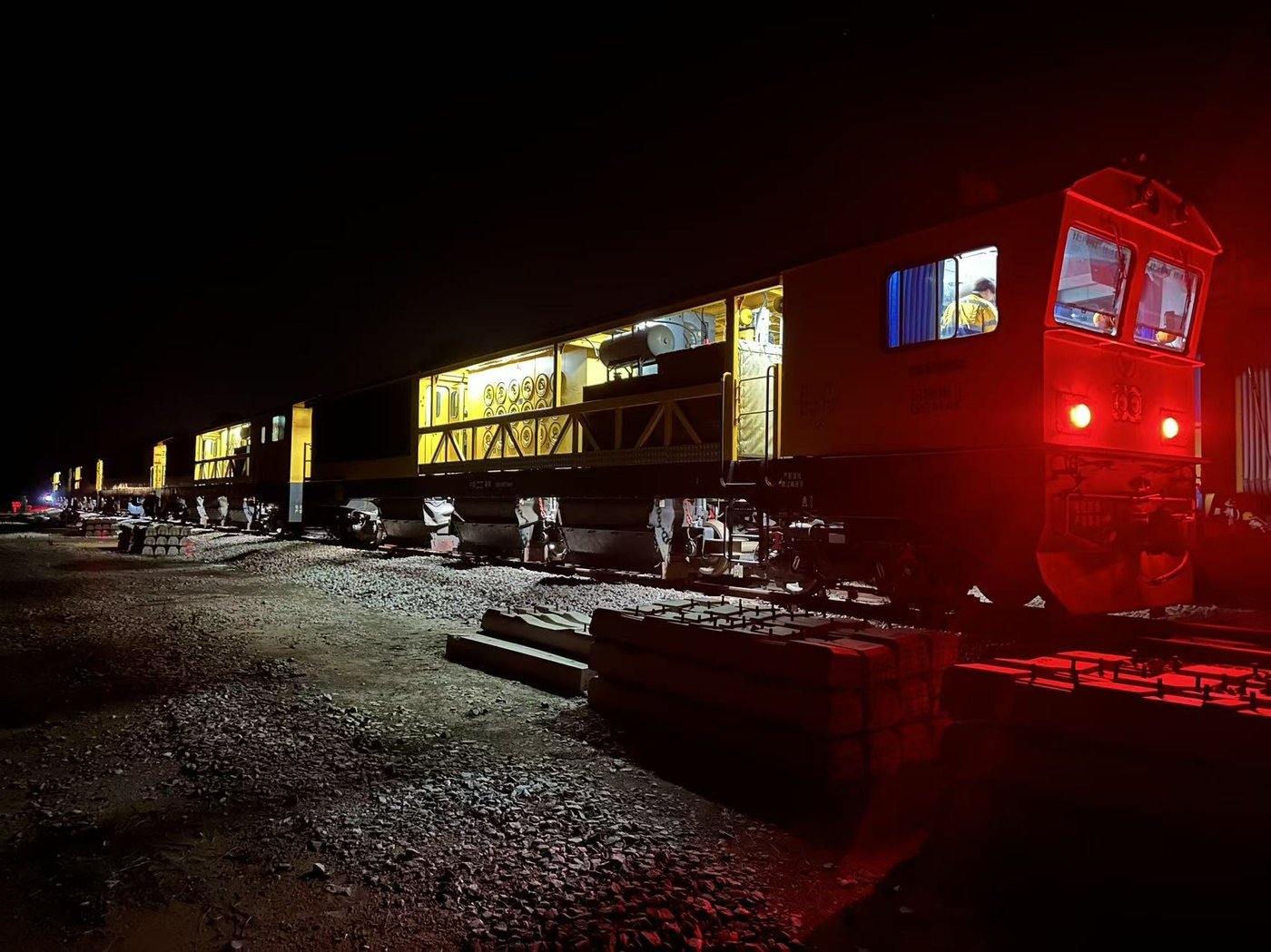
A Loram rail grinder is a production rail grinding train built by Loram Maintenance of Way, a United States manufacturer based in Minneapolis, Minnesota, and operated by railways and contractors as the reference fleet for profile grinding on heavy-haul and high-speed networks. “Compatible machines” means two separate things: the other grinding fleets whose stone pattern a Loram wheel also fits — Harsco, Speno, Mecno and similar — and the independent suppliers who make those stones and the smaller machines that work alongside a Loram train. RailwayCare is in the second group: we make the Molaton grinding wheel range for these machines rather than the trains themselves.
What a Loram rail grinder actually is
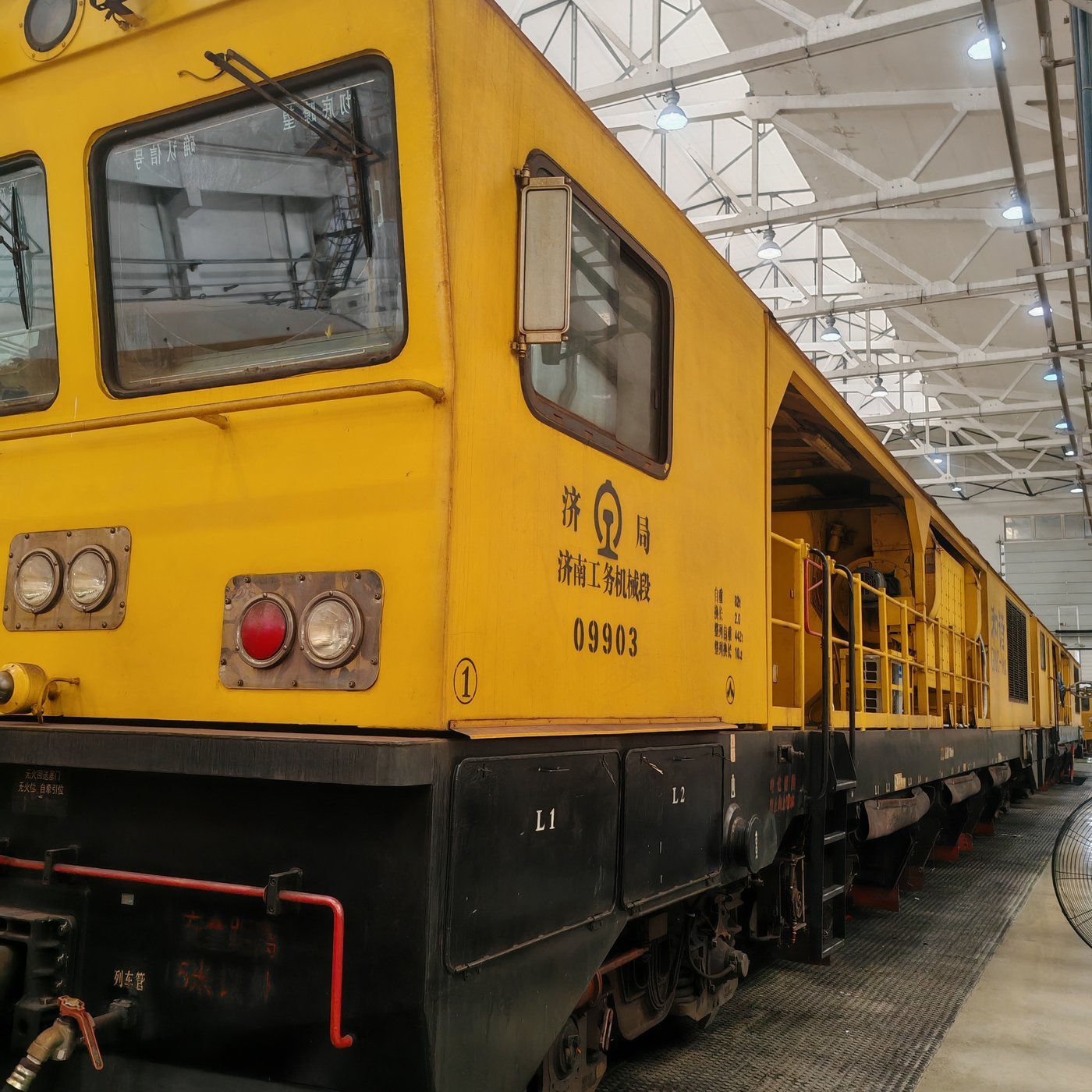
It is a self-propelled consist, not a hand tool. The grinding stones are carried on individual grinding motors arranged across the rail head, each set to its own angle so the stones together reproduce the target profile in a single pass over the section. Because the motors are independently positioned, the same train can carry out corrective work on a badly deformed head and light preventive work on a good one without changing the machine.
The scale is worth understanding. When Network Rail replaced its ageing grinding fleet in the United Kingdom, it commissioned three grinding trains at about £36 million, designed and built by Loram in Minneapolis and maintained and operated by Colas Rail. Two are four-section machines (C44-01 and C44-02) and one is a seven-section machine (C44-03), roughly 150 m long, carrying 32 and 64 grinding stones respectively. Grinding speed reaches about 15 mph (25 km/h) with up to 0.5 mm removed per pass, transit speed is 70–75 mph (110–120 km/h), the trains were specified to cut cost per shift by about £1,000 while raising output by about 35 %, and they carry a 30-year design life.
The grinding stone, not the machine, is what you buy every shift
The interface between a grinding train and the rail is a consumable, and its geometry is what makes one wheel compatible and another not. Two Molaton specifications cover the Loram class of machine:
| Specification | Construction | Grit | Max speed | Operating speed |
|---|---|---|---|---|
| 250 × 75 × 150 mm | Ultra-hard composite with zirconia and fibreglass winding (G3 series) | 16 | 50 m/s | 3280 rpm |
| 260 × 83 × 154 mm | Aluminium base body with zirconia and fibreglass, AZ/A F16Y5B | 16 | 50 m/s | 3630 rpm |
Both figures are quoted deliberately, because Loram machines have run both stone sizes and neither set of numbers is wrong. What matters commercially is that the wheel carries the right diameter, thickness and bore, the right base body and mounting method, a balance grade inside tolerance — G1 at 30 g or better, G3 at 34 g or better to GB/T 2492 — a maximum working speed of 50 m/s per GB 2494, and dimensional tolerances within ±2.0 mm on diameter, ±1.5 mm on thickness, 0.4 mm parallelism and 0.5 mm concentricity under JB/T 7992 and JB/T 11431. A stone that is 0.5 mm out of thickness does not fail on the bench; it fails as an uneven cut and vibration on the rail.
Who makes compatible machines and wheels
| Layer | Who is in it | What compatibility means here |
|---|---|---|
| Grinding train builders | Loram, Harsco (PGM-48 and PGM-96C cars), Speno, Mecno and the Chinese grinding-train builders | The stone must match the motor flange, the bore or thread, the thickness and the balance grade of that specific grinding head |
| Small machine makers | Geismar and Robel portable grinders (including the 150 and 125 models), plus the turnout and profile grinders built by RailwayCare as the RCG series | Wheel diameter is smaller and the mounting is bolted or threaded — for example 150 × 70 × M20 for 6000–7500 rpm machines |
| Consumable suppliers | Independent grinding wheel manufacturers, including Molaton, alongside the wheel makers tied to the OEMs | A wheel is compatible when its envelope and its cutting behaviour match, and this is proven by a trial on the actual train, not by a data sheet |
Historically the imported options for those trains came from a small group of suppliers — among them Norton in France, Speno in Switzerland, Weiler in Slovakia and Noritake in Japan — and price and durability, rather than availability, were the complaint. That is the gap an independent supplier addresses, and it is measured on the train rather than in a catalogue.
Case and data — proving compatibility on a Loram DM01
The most recent verification was run on a Loram DM01 grinding train at Jiangmen Huidafeng in April to June 2026. The trial was set up as a controlled comparison on the same train at the same time: the Molaton stones were fitted to grinding motors 1, 3, 5 and 7 on the left side, and the incumbent stones of two other suppliers to motors 2, 4, 6 and 8 on the right, with both sides running identical angles on straight track at 80 % power and 7 km/h.
The results: no blue burning on any pass, surface roughness of 1.05–9.0 μm with most passes between 2 and 4 μm against an acceptance limit of ≤10 μm, no stone breakage, cracking or loosening, and a measured consumption of 0.079–0.151 mm per 100 m of grinding per pass against 0.059–0.095 mm for the incumbents — a slightly higher consumption rate consistent with the slightly higher cutting rate. Measured metal removal from the miniprof profile survey reached 0.142–0.241 mm in the inner rail zone, 0.165–0.326 mm in the outer zone and 0.193–0.222 mm at the crown. On price the stone sat in the middle of the group at about 980 CNY per stone against 740 CNY and 1,390 CNY for the two incumbents, and the trial conclusion was that performance was close enough across all three that the decision turns on price and on supply reliability.
That is what a compatibility claim looks like when it is real: the same train, the same power setting, the same speed, measured roughness and measured stone wear on both sides. RailwayCare has produced rail grinding wheels since 2004 as the first dedicated rail grinding wheel manufacturer in China, drafted the industry standard JB/T 11431, holds ISO 9001, ISO 45001 and CRCC certification, runs an annual capacity of about 500,000 wheels, and has passed the China Academy of Railway Sciences and national abrasives research institute testing programmes with wheel wear 1.4–2.6× better than specification.
Related questions you may also ask
Which rail grinding machine fits Loram equipment? Which rail grinding wheel fits Loram rail grinders? Who are the leading rail grinding machine manufacturers?Get a compatible stone quoted for the train you actually run
Send us the machine make and model, the stone drawing or the dimensions you replace, the grinding power and speed you work at, and a sample of the rail condition. We will match the Molaton wheel to your grinding head and set up a controlled two-sided trial on your own train.
Get a Loram Wheel QuoteThe machine options are compared in which rail grinding machine fits Loram equipment and in what a rail grinder train is and how it works; the wheel range itself is listed under railway grinding wheels and the machine range under railway grinders. For the buying case against the OEM-linked brands, see Molaton vs Norton for Loram grinding wheels and why the wheel should be matched to the grinding vehicle, not just the track.