What railroad maintenance equipment do I need?
- Share
- Issue Time
- Sep 17,2026
What railroad maintenance equipment do I need?
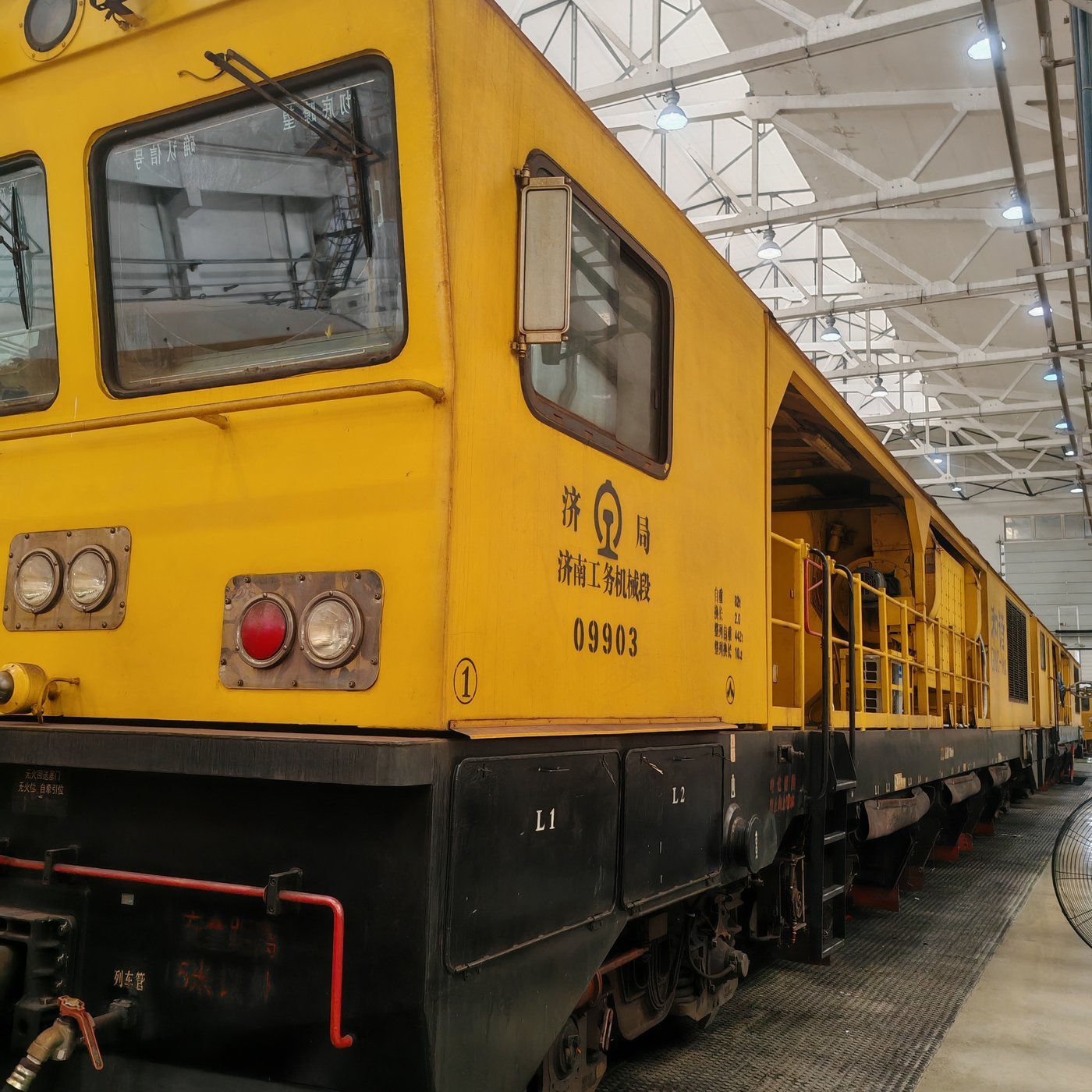
You need five equipment families, not one machine: grinding (the wheels and whatever carries them), inspection and measurement, rail cutting and drilling, track-work machines for ballast and alignment, and fastening tools. Which models you buy is decided by three things — line type, annual tonnage and the length of your possession window, not by a catalogue page.
The five families, and what to specify in each
| Family | What it does | What you must specify |
|---|---|---|
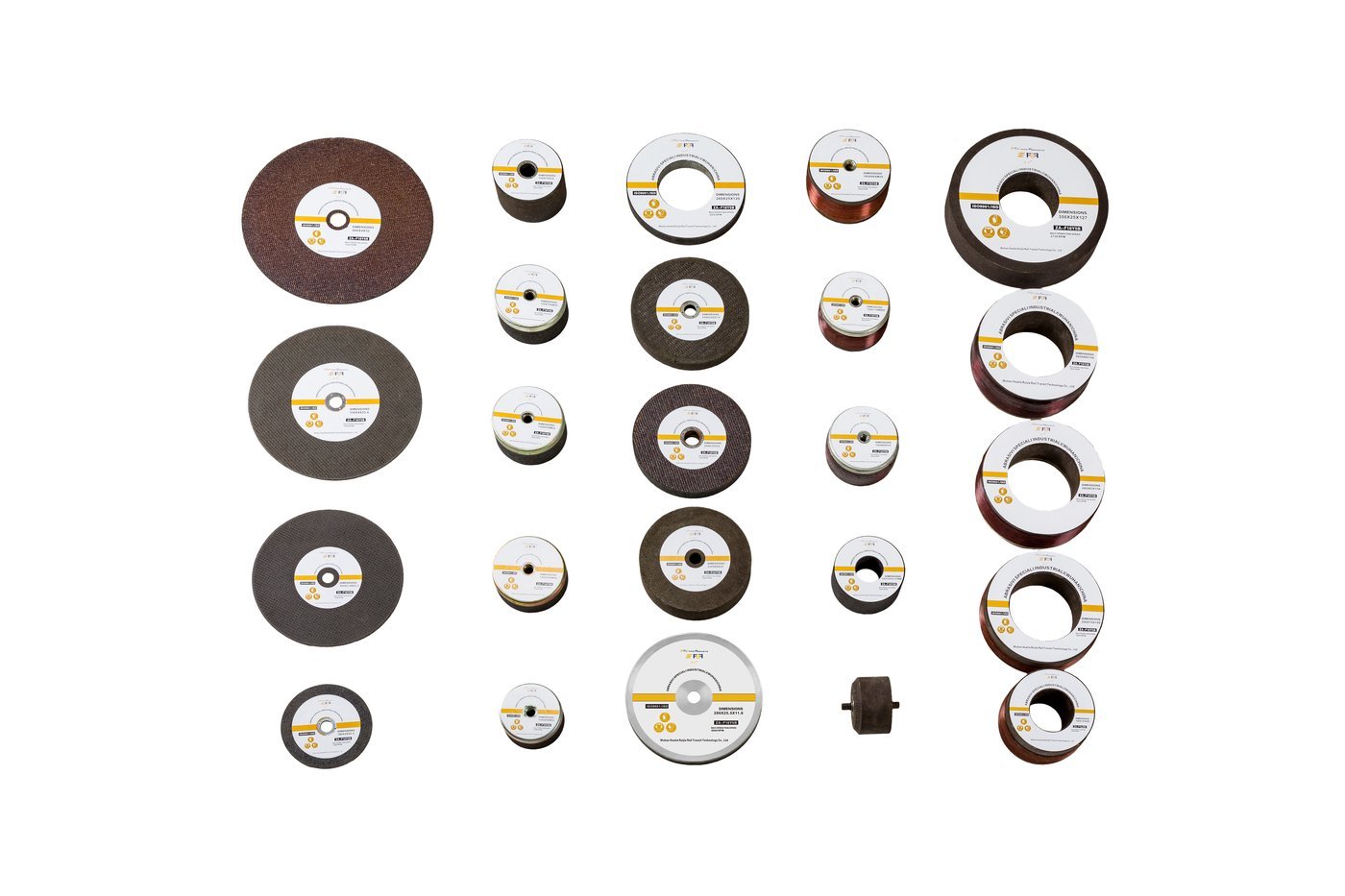
| Grinding — wheels and carriers | Removes corrugation, the fatigued layer and surface damage, and restores the rail profile | The wheel that fits the machine's seat and duty: 16 grit zirconia alumina in a glass-fibre reinforced resin bond, rated to at least 50 m/s |
| Inspection and measurement | Establishes the baseline before work and proves the result afterwards | Geometry (gauge, cross level, twist, alignment, longitudinal level, versine), running band width and roughness |
| Rail cutting and drilling | Joint replacement, closures, insulated joints, emergency repairs | Disc diameter and maximum peripheral speed; hole diameter and drilling cycle time |
| Track-work machines | Ballast compaction, lifting, lining and turnout renewal | Working speed and output per possession, not just power rating |
| Fastening, bolt and small tools | Keeps the assembly inside the specification after every intervention | Torque capability and battery commonality across the tool fleet |
Line type, tonnage and possession decide the list
Line type sets the grinding rhythm. On high-speed lines the requirement is one pass every 30–50 Mt of cumulative traffic with no more than 2 years between passes; on conventional straight track and large-radius curves above 1,200 m, every 100 Mt; on curves below 1,200 m radius, every 30–50 Mt. Those intervals, not the defect you can see today, are what the equipment has to deliver against.
Possession length decides which carrier makes sense. A two-hour night window suits a compact grinding train working intensively; where no possession is available at all, high-speed passive grinding at 60–80 km/h removes roughly 0.1 mm per pass for up to three passes and needs no line closure. Location decides the power source: tunnels, enclosed stations and elevated sections rule out internal combustion, which is why lithium-powered machines exist for turnout and night work.
Whatever you buy, the same acceptance numbers should appear in the contract: flatness within 0.3 mm under a 1 m straightedge, roughness Ra ≤ 10 μm, no continuous blue burning, ramps steeper than 1‰, and no more than 0.5 mm removed from the parent metal.
Case and data — what the right kit returns
On the Liuzhou network a Molaton-wheeled GMC-96X ground 18.72 pass-kilometres in a single two-hour possession, and its CYF wheels consumed 20–30 mm against 43.5–59 mm for the imported wheels on the same duty — roughly double the life. On the Yiyang railway a wheel reached 5.7 pass-kilometres per millimetre and on Shuohuang 4.98. On Hewu high-speed line the comparison measured 4.28 versus 3.27 pass-kilometres per millimetre, with a best wheel of 214.22 pass-kilometres and no continuous blue burning.
Independent verification backs the numbers: the China Academy of Railway Sciences recorded rail wear 1.4–2.6× better than specification, a 600-wheel batch passed Shenhua acceptance, and in third-party testing a G1b 260×90×153 wheel held 4,775 rpm for 30 seconds without rupture and burst only at 6,354 rpm, with imbalance of 21 g. That is the difference between buying equipment and buying a result — RailwayCare has manufactured these wheels since 2004 at a capacity of 500,000 wheels a year.
Related questions you may also ask
What are rail track maintenance best practices? Portable rail grinder vs full-size grinding train: which do I need? What are the types of track grinding machines?Build the equipment list around your line, not around a brochure
Send us your line type, annual tonnage, milling or grinding fleet and possession window. We will return a shortlist of machines and the wheel specification for each one, with the pass-kilometres per millimetre you should expect.
Request an Equipment ShortlistSee the full railway maintenance tools range and the rail maintenance solution that ties them together.