What are rail track maintenance best practices?
- Share
- Issue Time
- Sep 16,2026
What are rail track maintenance best practices?
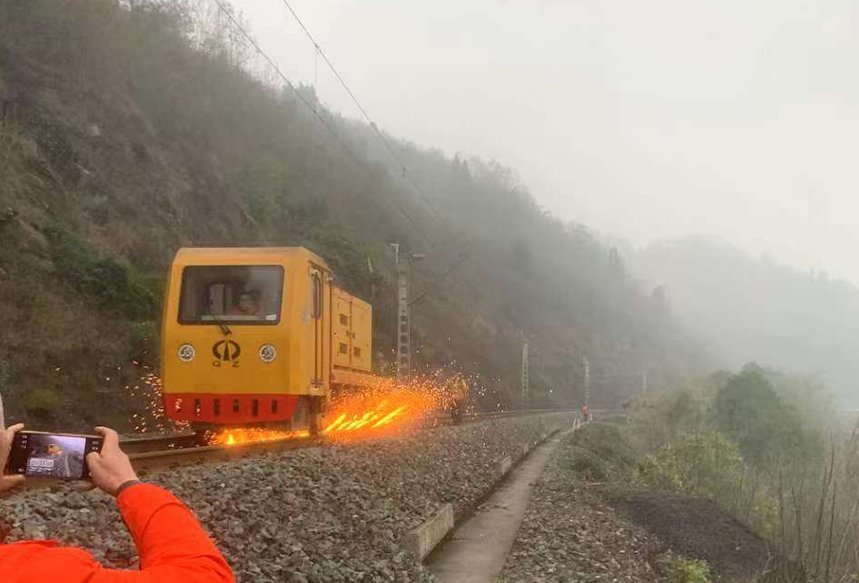
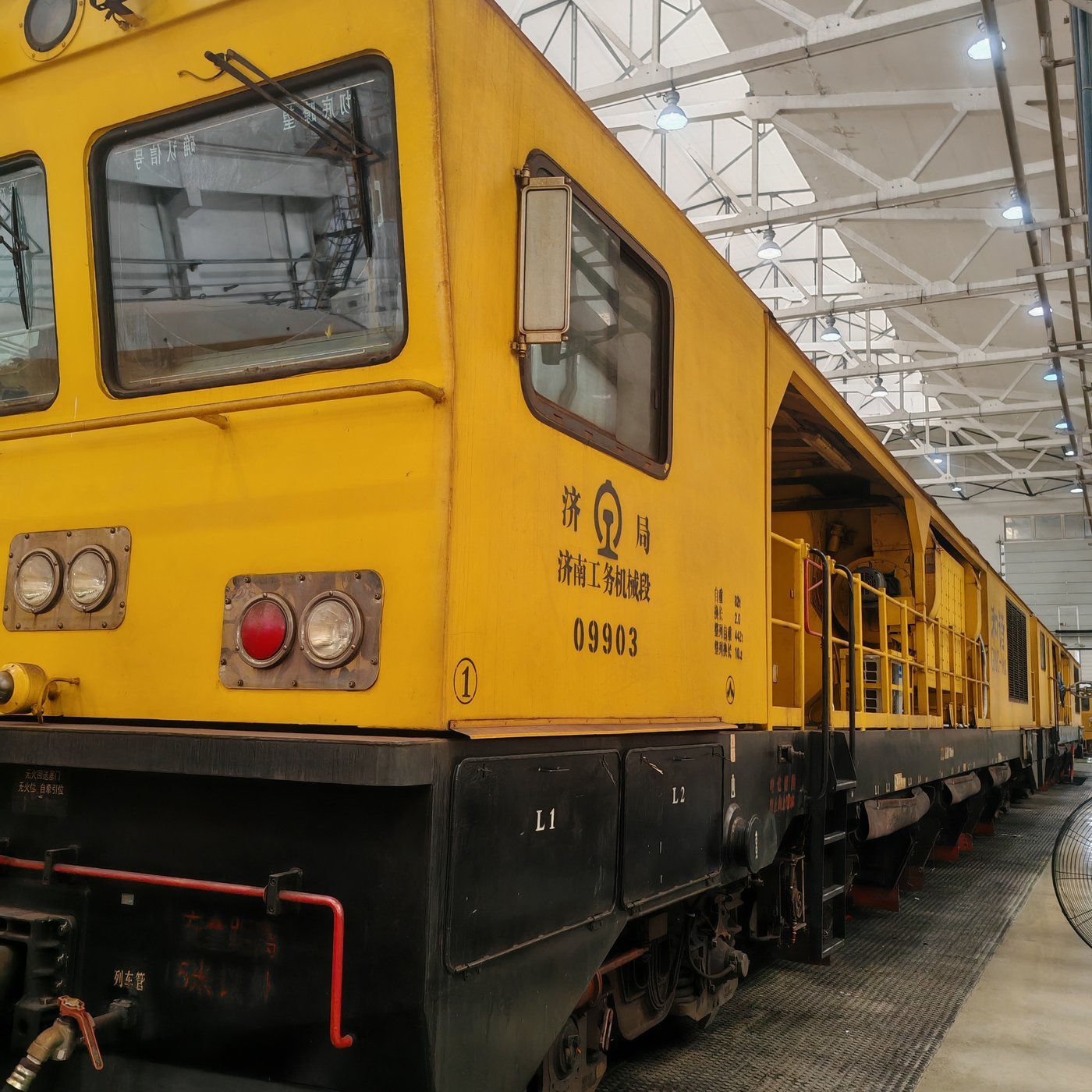
Nine practices do most of the work: measure before you touch anything, grind preventively on a tonnage-based schedule instead of reacting to defects, keep every pass shallow and controlled, match the wheel specification to the machine and duty, control and inspect the consumable, treat turnouts as a separate job, verify the profile numerically, keep a cost-per-kilometre record, and plan around short possessions — because on a live railway the maintenance window, not the machine, is usually the real constraint.
The nine practices and what each one actually means
| # | Practice | What it looks like on site |
|---|---|---|
| 1 | Establish a baseline first | Record geometry, profile and roughness before any work, so the pass can be judged against data instead of against memory |
| 2 | Grind preventively, by tonnage | Schedule on cumulative traffic, not on visible damage: every 30–50 Mt on high-speed lines with no more than 2 years between passes, 100 Mt on straight and large-radius conventional track, every 30–50 Mt on curves under 1,200 m radius |
| 3 | Keep passes shallow | Light, repeated passes remove the fatigue layer without cutting into the parent metal — the correct first choice for most conditioning work |
| 4 | Match wheel to machine and duty | Coarse 16 grit zirconia alumina in a glass-fibre reinforced resin bond for corrugation removal and long life, dimensioned to the machine's seat and rated to at least 50 m/s |
| 5 | Control the consumable | Dynamically balanced batches, dry storage, ring test before mounting, and any wheel dropped or stored wet rejected |
| 6 | Treat turnouts separately | Own plan and own machines, gauge and contact band verified, and the transition into big-machine ground measured 5–10 m either side before work starts |
| 7 | Verify the profile | Grade with a grinding quality index: GQI ≥ 85 excellent, ≥ 70 acceptable, with a standard deviation limit across the section |
| 8 | Record cost per kilometre | Pass-kilometres achieved per millimetre of wheel consumed, so the next tender compares like with like |
| 9 | Plan around the possession | Fit the work to the access available — for example 2-hour night windows for active grinding, or high-speed passive grinding at 60–80 km/h that needs no possession at all |
Why shallow and controlled beats heavy and fast
The single most common mistake is trying to remove too much in one pass. Grinding at the wrong speed or depth leaves a hard, brittle white layer on the railhead measuring about 870 HV0.3 against roughly 340 HV0.3 for the parent metal, an increase of about 155%. That layer fractures early under wheel load, its fragments drive into the parent metal and cracks initiate from there. Lab work shows the effect of speed on its thickness — raising grinding speed from 1,000 to 2,000 rpm took white-layer thickness from about 45 μm to 320 μm, which is why speed, depth and pass count are controlled together rather than left to the operator's judgement.
Acceptance numbers keep the result honest: flatness within 0.3 mm under a 1 m straightedge and feeler gauge, roughness Ra ≤ 10 μm, no continuous blue burning or oxide layer, ramps better than 1‰, and no more than 0.5 mm removed from the parent metal. On high-speed turnouts the running band should end up about 25–30 mm wide, on conventional and heavy-haul turnouts 35–40 mm. The standards behind the technique are covered in this guide to rail profile grinding techniques and standards.
Case and data — what the practices return
These are not theoretical figures. A Molaton-wheeled GMC-96X on the Liuzhou network ground 18.72 pass-kilometres in a single 2-hour possession, and its CYF wheels consumed 20–30 mm against 43.5–59 mm for the imported wheels — about double the life, which is exactly what practice 8 measures. On the Yiyang railway a wheel reached 5.7 pass-kilometres per millimetre and on Shuohuang 4.98. On Hewu high-speed line the comparison measured 4.28 versus 3.27 pass-kilometres per millimetre, with a best wheel of 214.22 pass-kilometres and no continuous blue burning. Independent testing at the China Academy of Railway Sciences recorded wear 1.4–2.6× better than specification, a 600-wheel batch passed Shenhua acceptance, and where turnout profiles were corrected, car-body lateral acceleration fell from about 0.20 m/s² to 0.04–0.08 m/s². Grinding also shows up in the geometry numbers: precision tamping delivered to a measured plan on the Taiyuan network took average static TQI from 7.19 to 4.52 and dynamic TQI from 7.64 to 4.67 over 15.28 km of work.
RailwayCare has made the wheels behind these results since 2004, to the standard JB/T 11431 that the company drafted, certified to ISO 9001, ISO 45001 and CRCC, at a capacity of 500,000 wheels a year. The wider programme is set out in the rail maintenance solution overview.
Related questions you may also ask
What factors determine the rail grinding cycle? What is a high-speed grinding train? Rail grinding cost per kilometre: what operators payPut these practices into your next grinding campaign
Give us your line type, annual tonnage, machines and current part numbers. We will come back with the wheel specification, the expected pass-kilometres per millimetre and the acceptance numbers to hold on site.
Request a Wheel Specification