What is rail maintenance and why does it matter?
- Share
- Issue Time
- Sep 15,2026
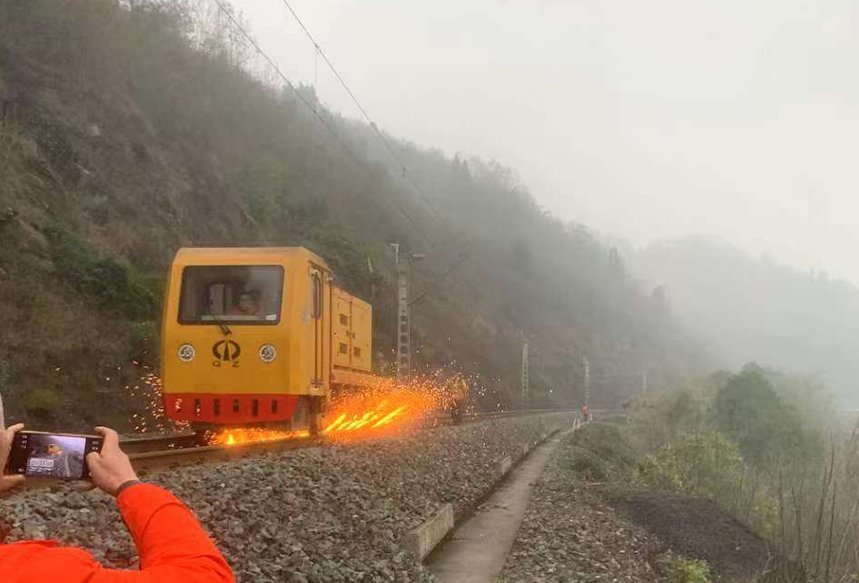
What is rail maintenance and why does it matter?
Rail maintenance is the set of activities that keep the rail in the condition trains actually need: the right profile for wheel/rail contact, a smooth surface free of defects, and the correct track geometry under it. It matters because a railhead is the one part of the infrastructure that touches the vehicle on every metre of travel. Once contact degrades, the damage runs both ways — rail and wheels wear each other faster, noise and vibration rise, and defects that could have been removed by a light grinding pass grow into ones that force replacement. Preventive grinding, done on the right interval, is the single highest-return item in the programme.
What rail maintenance actually covers
| Activity | What it is for |
|---|---|
| Inspection and measurement | Track recording, ultrasonic flaw detection, profile and roughness measurement — it sets the interval for everything else |
| Rail grinding | Removes the rolling-contact-fatigue layer and restores the design profile. The core of day-to-day rail maintenance |
| Rail milling | Cuts rather than abrades; used where defects are too deep for grinding to reach within the depth limit |
| Welding and repair | Reclaims local damage — built-up welds, welded joints, crossings — then the area is ground to profile |
| Lubrication | Reduces gauge-face and flange wear, mostly on small-radius curves |
| Track geometry work | Tamping, ballast and fastening work, so the rail sits where the profile was designed to work |
| Rail replacement | The last resort, and the one grinding programmes exist to postpone |
Why it matters — what the damage costs
Eight defect types — corrugation, head checks / shelling, spalling, lipping, scuffing, indentation, side wear and crushing — account for more than 80% of all rail defects, and which one dominates depends on the line: high-speed lines suffer mainly rolling-contact-fatigue cracking, heavy-haul lines crushing and lipping, and urban lines with curves under 1,000 m radius side wear and corrugation. On small-radius urban track, that corrugation and side wear is precisely what turns into the noise and vibration residents complain about, and into faster wear of every wheelset running on it.
The mechanism behind poor maintenance is measurable. Grinding at the wrong speed or depth leaves a hard, brittle white layer on the railhead: roughly 870 HV0.3 against about 340 HV0.3 for the parent metal, an increase of about 155%. That layer fractures early under wheel load, the fragments drive into the parent metal, and cracks initiate from there — which is exactly why grinding depth is capped and why the process must be controlled rather than simply heavy.
Why the interval matters more than the depth
Rail maintenance has shifted from corrective grinding (repairing damage once it is found) to preventive grinding: removing the fatigue layer on a schedule, at shallow depth. Shallower passes protect the parent metal, so preventive grinding extends rail service life and costs less than repair grinding over the life of the asset. China Railway sets it by cumulative traffic:
| Line type | Preventive grinding trigger | Interval limit |
|---|---|---|
| High-speed railway | Every 30–50 Mt of total passing tonnage | No more than 2 years |
| Conventional line, straight and large-radius curves (>1,200 m) | One grinding process per 100 Mt | Per the maintenance plan |
| Conventional line, small-radius curves (<1,200 m) | Every 30–50 Mt | Per the maintenance plan |
Each pass is then judged against hard numbers rather than appearance: flatness within 0.3 mm under a 1 m straightedge and feeler gauge, roughness Ra ≤ 10 μm, no blue burning or oxide layer, ramps better than 1‰, and no more than 0.5 mm removed from the parent metal. Where a grinding quality index is used, GQI ≥ 85 counts as excellent. The full programme, from strategy to acceptance, is set out in the rail maintenance solution overview.
Case and data — what a working programme delivers
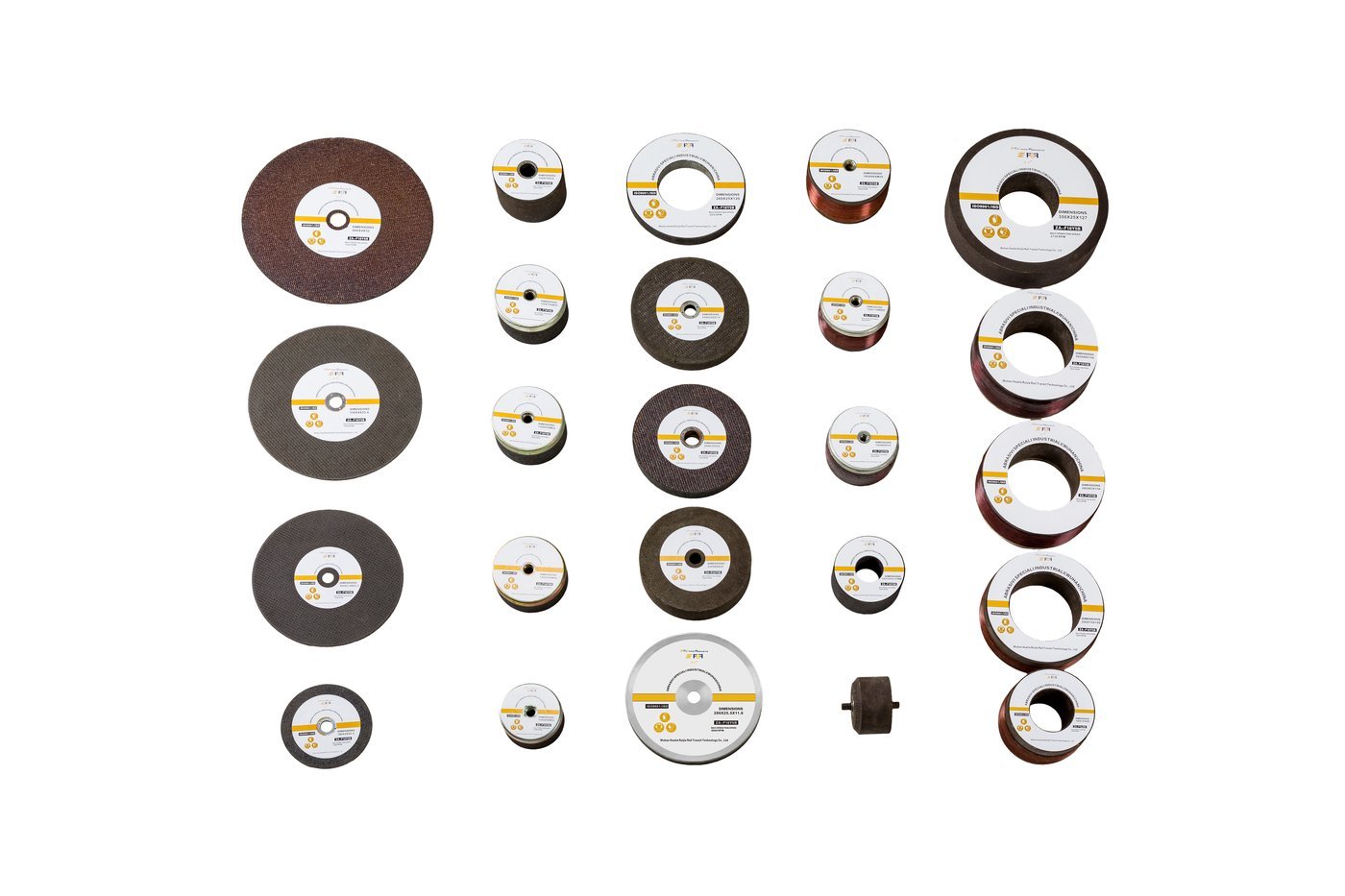
Since 2004 RailwayCare has supplied the grinding wheels these programmes run on, and the on-track records are the clearest argument for doing the work properly. On the Liuzhou network a Molaton-wheeled GMC-96X unit completed 18.72 pass-kilometres inside a 2-hour possession window, and compared with imported wheels the CYF wheels lasted about twice as long (20–30 mm consumed against 43.5–59 mm). On the Yiyang railway a wheel averaged 5.7 pass-kilometres per millimetre of consumption, on Shuohuang 4.98. On the Hewu high-speed line the same comparison measured 4.28 versus 3.27 pass-kilometres per millimetre with a best wheel reaching 214.22 pass-kilometres and no continuous blue burning on the inspected surface. Independent testing at the China Academy of Railway Sciences recorded wear 1.4–2.6× better than the order specification; a 600-wheel batch passed Shenhua's acceptance tests; and turnout grinding has been measured cutting lateral acceleration from 0.20 m/s² to 0.04–0.08 m/s². Annual capacity is now 500,000 wheels, all of it certified to ISO 9001, ISO 45001 and CRCC, against the standard JB/T 11431 that RailwayCare drafted.
Related questions you may also ask
How does a grinding train remove rail defects? What is a train track grinder used for? Rail grinding cost per kilometre: what operators payBuild the maintenance programme around the consumable
Tell us your line type, annual tonnage and the grinding machines you run, and we will map the wheel specification and its expected pass-kilometres to that duty. Or send the part number you use today for a like-for-like Molaton quote.
Plan My Grinding Programme