What is a rail road grinder?
- Share
- Issue Time
- Sep 14,2026
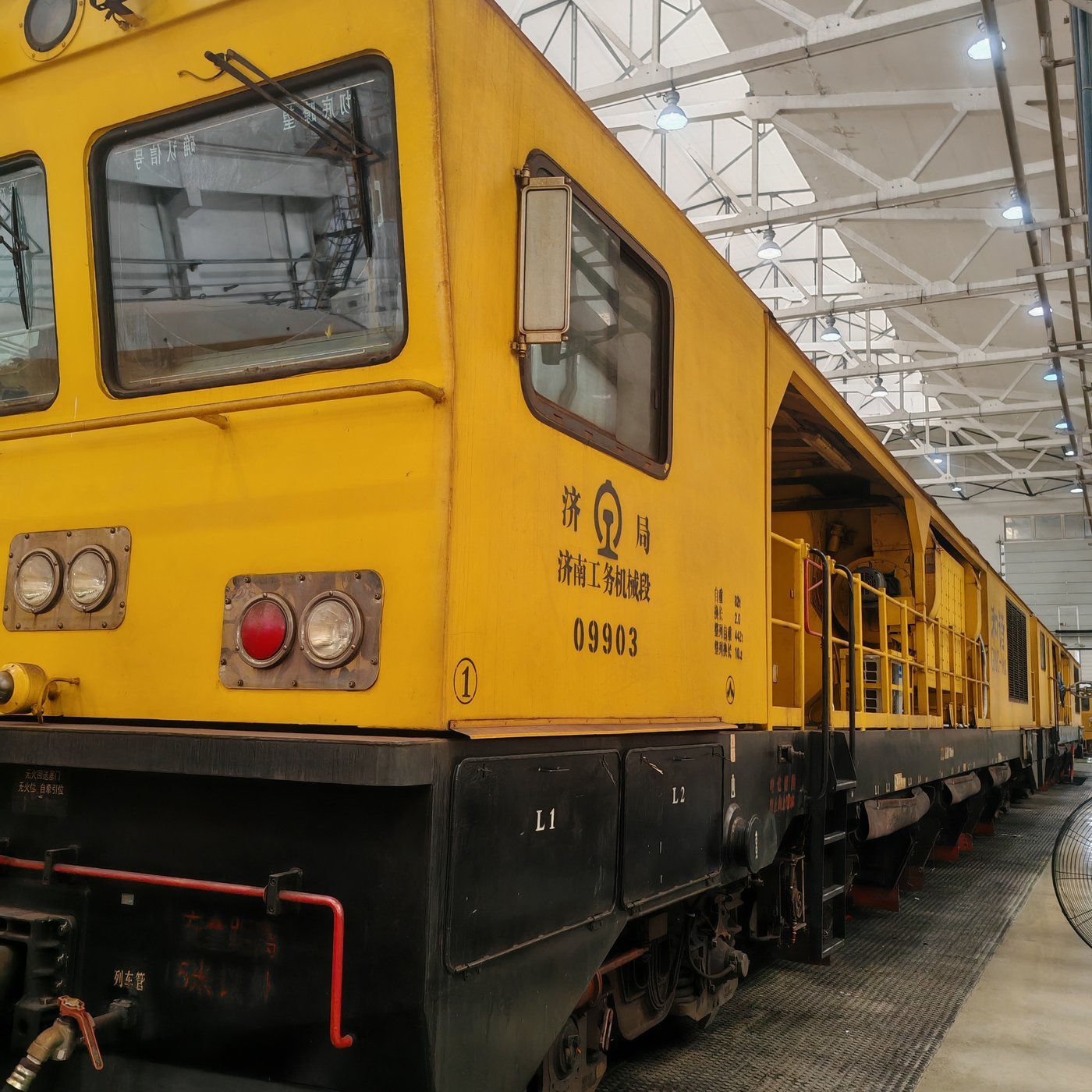
What is a rail road grinder?
"Rail road grinder" is simply a spaced-out spelling of railroad grinder, and in the trade it means one of two things. Most often it is the machine — a rail-mounted or hand-guided grinder that runs grinding wheels against the railhead to remove defects and restore profile. Just as often, buyers use it for the grinding wheel itself, the consumable that does the cutting. Decide which one you mean and the specification becomes straightforward.
Untangling the terms
| Searched term | What it usually refers to |
|---|---|
| Rail road grinder / railroad grinder | The grinding machine used on railway track (the spaced spelling is a very common variant) |
| Rail grinder / track grinder | Same machine, shorter name |
| Rail grinding wheel / rail grinding stone / grinding stone | The abrasive consumable mounted on the machine — this is the part that is bought repeatedly |
| Rail grinder train / grinding train | A full train with multiple grinding heads, used for kilometre-scale main-line work |
| Switch grinder / turnout grinder | A compact machine sized to work between the stock rail and the switch blade |
If you mean the machine
Railroad grinders are grouped by how they hold the wheel: portable and hand-guided machines for switches, station tracks and spot defects; vertical-axis machines that follow the railhead contour for profile work; CNC copying machines that drive the head along a stored target profile; and grinding trains with many heads for main-line preventive grinding. The machine's spindle speed, arbor bore and wheel diameter fix which grinding wheel will physically fit and run safely — that is the bridge between the two meanings of the word.
If you mean the wheel
| Application | Typical Molaton specification |
|---|---|
| Portable machines (150 mm class) | 150×70×M20 etc., rated 6,000–7,500 rpm |
| Grinding trains, Harsco PGM-48 / PGM-96C | 260×90×154 mm, zirconia alumina F16, 50 m/s, 3,630 rpm |
| Loram grinding cars | 250×75×150 mm, G3 balance, 3,280 rpm |
| GMC16A | 350×60 / 25 / 50 / 35×127 mm, 2,730 rpm |
Two numbers matter more than the rest. Balance: batch balancing to G1 ≤ 30 g or G3 ≤ 34 g (GB/T 2492) is what prevents chatter and burning. Speed rating: 50 m/s minimum for train-mounted work, verified by a safety-speed test at 4,775 rpm for 30 s and a burst test at 6,354 rpm without rupture.
Case and data — why the wheel, not the name, decides results
RailwayCare has produced rail grinding wheels since 2004, the first dedicated manufacturer of rail grinding wheels in China, and drafted the industry standard JB/T 11431 that now governs the product. On the Loram DM01 grinding car trial at Jiangmen Huidafeng (April–June 2026), Molaton stones ground with no blue burning and finished the railhead at Ra 1.05–9.0 μm against a 10 μm acceptance limit, consuming 0.079–0.151 mm per 100 m·pass. Independent testing at the China Academy of Railway Sciences recorded wheel wear 1.4–2.6× better than the order specification, and annual capacity now stands at 500,000 wheels. So whichever meaning of "rail road grinder" brought you here, the useful question is the same: which wheel, at which bore, at which speed, balanced to which grade.
Related questions you may also ask
What is the difference between a rail grinding wheel and a grinding stone? What is a rail grinding vehicle? How do I choose a railroad rail grinder for switch and turnout work?Tell us which one you need
Send a photo of your machine's nameplate or the part number stamped on the wheel you use today. We will confirm the exact Molaton wheel — or the right machine for the job — within 24 hours.
Send Us Your Part Number