What is a train track grinder used for?
- Share
- Issue Time
- Sep 14,2026
What is a train track grinder used for?
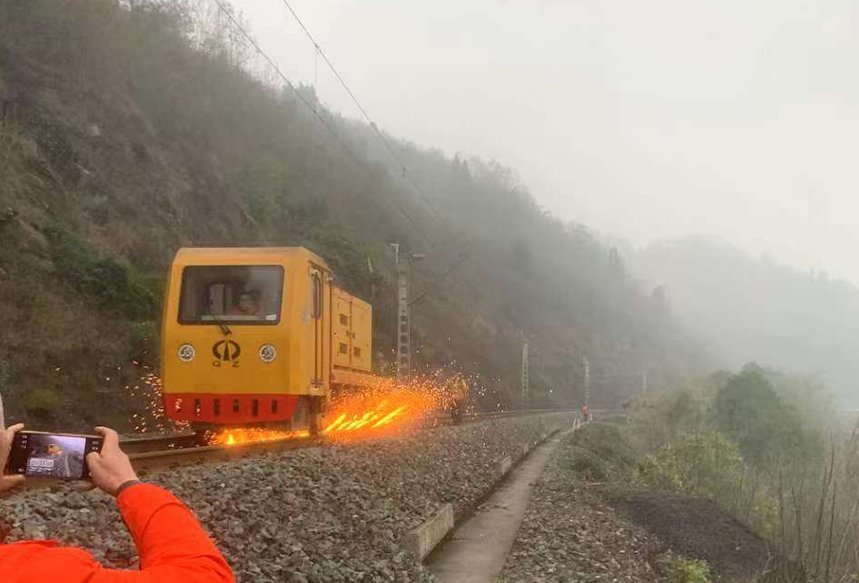
A train track grinder is used to cut a thin, controlled layer of steel off the railhead with rotating abrasive wheels. Practically, it does four jobs: (1) remove surface and near-surface defects — corrugation, shelling, spalling, burns, fat edges and fatigue cracks; (2) restore the designed rail profile; (3) prevent rolling contact fatigue (RCF) by removing the crack-initiation layer before cracks propagate; and (4) protect ride quality by flattening the impact points that cause noise, vibration and dynamic loads.
The jobs a track grinder is bought to do
| Job | What it removes or corrects |
|---|---|
| Defect removal | Corrugation, fish-scale cracking, shelling/spalling, wheel burns, scuffing, bruising, side wear and fat edges — together these make up more than 80% of rail damage |
| Profile restoration | Returns the railhead to the target profile so the wheel–rail contact band sits where it was designed to sit |
| RCF prevention | Removes the cracked and work-hardened surface layer before cracks turn into rail breaks — the main reason networks grind on a fixed cycle |
| Ride quality | Cuts the vertical and lateral irregularities that generate noise, vibration and impact loads |
| Switch and crossing work | Restores blades, frogs and guard rails, where profile errors drive impact loads and fast wear |
| Weld and joint repair | Blends weld collars and joint irregularities back to profile after welding or spot repair |
Typical defect patterns differ by line type: high-speed lines are dominated by contact fatigue cracking, heavy-haul lines by crushing and fat edges, and urban transit on tight curves (R < 1,000 m) by side wear and corrugation. That is why the machine class is chosen by where the work is, not only by how much metal has to come off.
Machine class follows the job
| Machine | Typical use |
|---|---|
| Portable / lithium grinder (e.g. RCG-L50, RCG-L65) | Switches, switch blades, station tracks, spot defects; zero emission for tunnels and night work |
| Vertical-axis copying grinder (e.g. RCG-V50) | Profile restoration, frog and blade contours, tight curves |
| CNC copying grinder (e.g. RCG-C65) | High-accuracy grinding of frogs and switch rails against a stored target profile |
| Grinding train (e.g. GMC16A) | Kilometre-scale preventive grinding on main lines, high-speed and heavy-haul |
What a ground rail must measure up to
Grinding is accepted on numbers, not on appearance: railhead unevenness ≤ 0.3 mm under a 1 m straightedge and feeler gauge, roughness Ra ≤ 10 μm, no blue burning or oxide layer, ramp gradient better than 1‰, and parent-metal removal kept within 0.5 mm. Where a grinding quality index (GQI) is specified, a section is rated excellent at GQI ≥ 85; the contact band should finish at about 25–30 mm on high-speed turnouts and 35–40 mm on conventional ones.
Case and data — what the grinder actually delivers
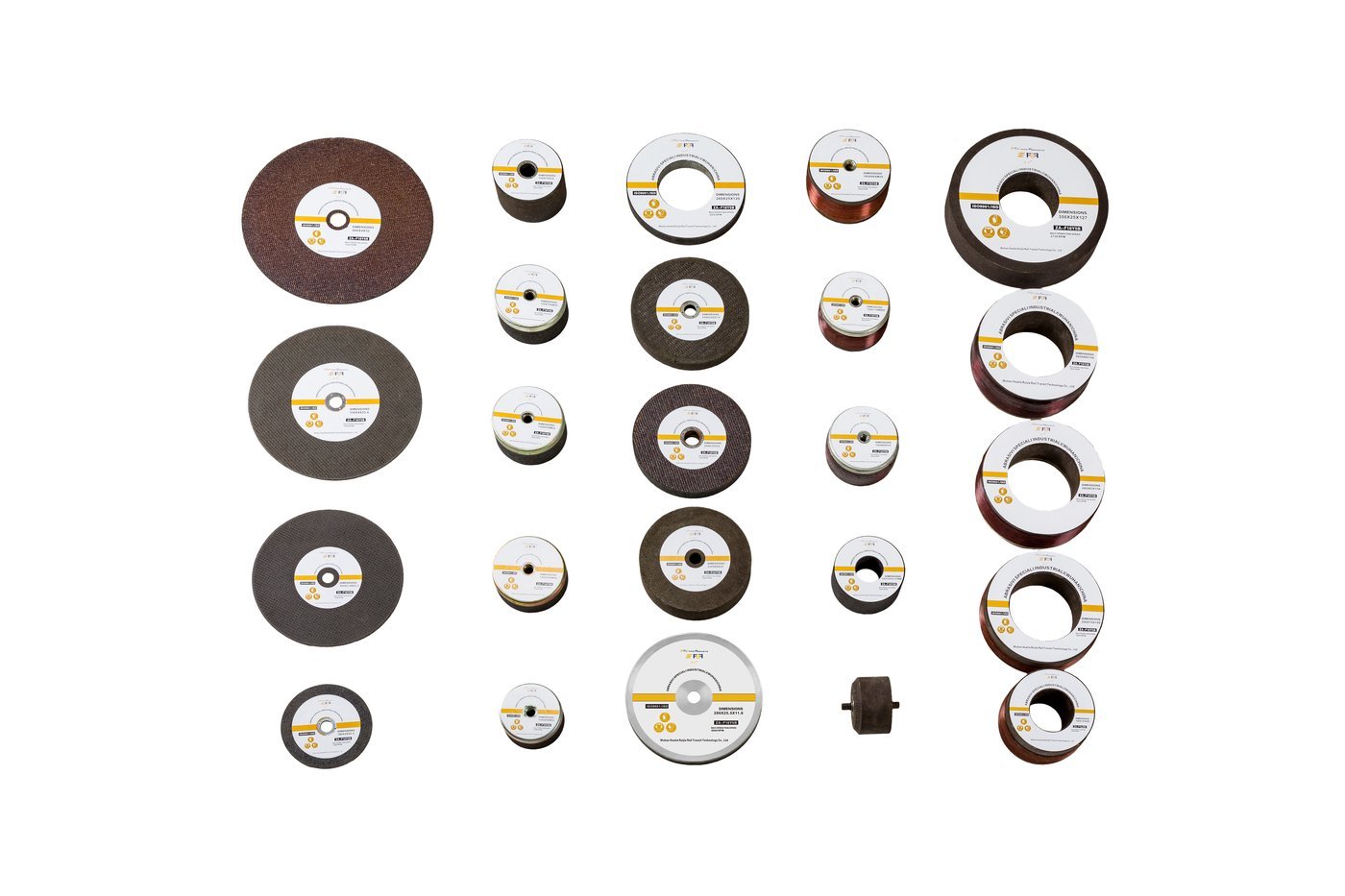
On the Liuzhou GMC-96X grinding train (2022), Molaton wheels completed 18.72 km·passes inside a single 2-hour night possession, with 20–30 mm of wheel wear against 43.5–59 mm for the imported reference on the same job — roughly twice the durability at equal surface quality. Fleet averages reached 5.7 km·passes per mm on the Yiyang line and 4.98 km·passes per mm on Shuohuang heavy-haul. Laboratory grinding at 8 kW and 2,400 rpm cleared defects in 2–3 passes against 4–6 for ordinary wheels. The effect that matters most to operations is visible after turnout work: measured car-body lateral acceleration dropped from about 0.20 to 0.04–0.08 m/s².
Related questions you may also ask
What is a rail grinding machine and how does it work? What are the types of track grinding machines? Railway grinder range — portable to train-mountedMatch the grinder and the wheel to the job
Send us your track type, the defects you are fighting and your available possession time. We will recommend the machine class and the matching Molaton wheel specification for your programme.
Ask an Engineer