How do I choose the right rail grinding wheel to remove rail corrugation?
- Share
- Issue Time
- Sep 8,2026
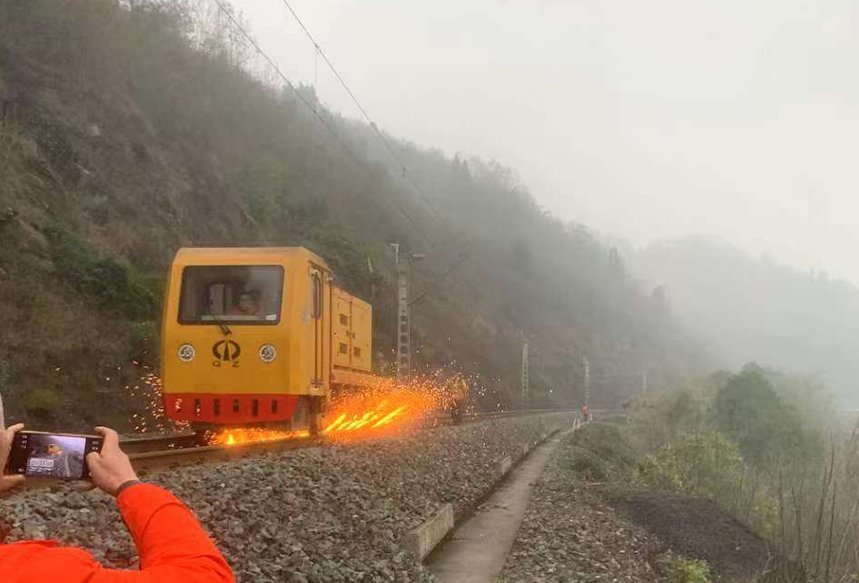
How do I choose the right rail grinding wheel to remove rail corrugation?
Choose the wheel in three steps: (1) match the machine (grinding train vs portable) so the bore and diameter fit the arbor; (2) match the defect — zirconia alumina (ZA) 16-grit resin-bonded wheels for wave lengths above 30 mm and deeper corrugation, balanced to ≤30 g and rated 50 m/s; (3) verify with a small field trial before full roll-out.
Why corrugation is the wheel's toughest job
Corrugation appears as alternating wide and narrow bands on the rail head. It is defined by its wavelength and depth, and it drives noise, vibration and dynamic impact loads. Removing it is demanding because the wheel must cut fast enough to erase the wave within a short possession, while keeping the ground surface free of burns and below Ra 10 μm — our standard finish after corrugation passes.
Six selection factors
| Factor | Recommendation for corrugation removal |
|---|---|
| Abrasive | Zirconia alumina (ZA) — 308 MPa grain strength vs 124 MPa for calcined brown alumina; better cut and longer life |
| Grit | 16 grit (coarse) for fast stock removal; follow with a fine pass if the finish spec is tight |
| Bond | Resin bond with glass-fibre reinforcement to survive impact loading and avoid fracture |
| Size & bore | Must match the grinding head, e.g. 260x90x154 mm for PGM-48/96C class vehicles |
| Balance | Batch-balanced (≤30 g per GB/T 2492) to prevent chatter, burning and short life |
| Speed rating | Minimum 50 m/s working speed for grinding trains (our standard is tested to 4775 rpm for 30 s without rupture) |
Field evidence — why the right wheel matters
On Liuzhou GMC-96X (2022, Guilin), Molaton wheels ground 18.72 km·passes in a 2-hour night window with 20-30 mm wear per wheel vs 43.5-59 mm for the imported reference — about twice the durability at equal surface quality. On Yiyang Line and Shuohuang heavy-haul, the fleet averaged 5.7 and 4.98 km·passes per mm of wheel wear. Laboratory tests (8 kW, 2400 rpm) showed defect elimination in 2-3 passes vs 4-6 for ordinary wheels.
Related questions you may also ask
What causes premature wheel wear — and how to prevent it? Rail corrugation elimination — from theory to practiceSpecify the right wheel for your corrugation job
Send us your grinding machine model, a corrugation photo or measurement, and your current part number. Our engineers will confirm the exact Molaton wheel within 24 hours.
Get a Wheel Recommendation