Why are there crushed stones beneath conventional train tracks, while high-speed rail tracks have none?
- Share
- Issue Time
- Dec 10,2025
Summary
Conventional railways use ballasted tracks where crushed stones provide cushioning and drainage, but risk projectile hazards at high speed.
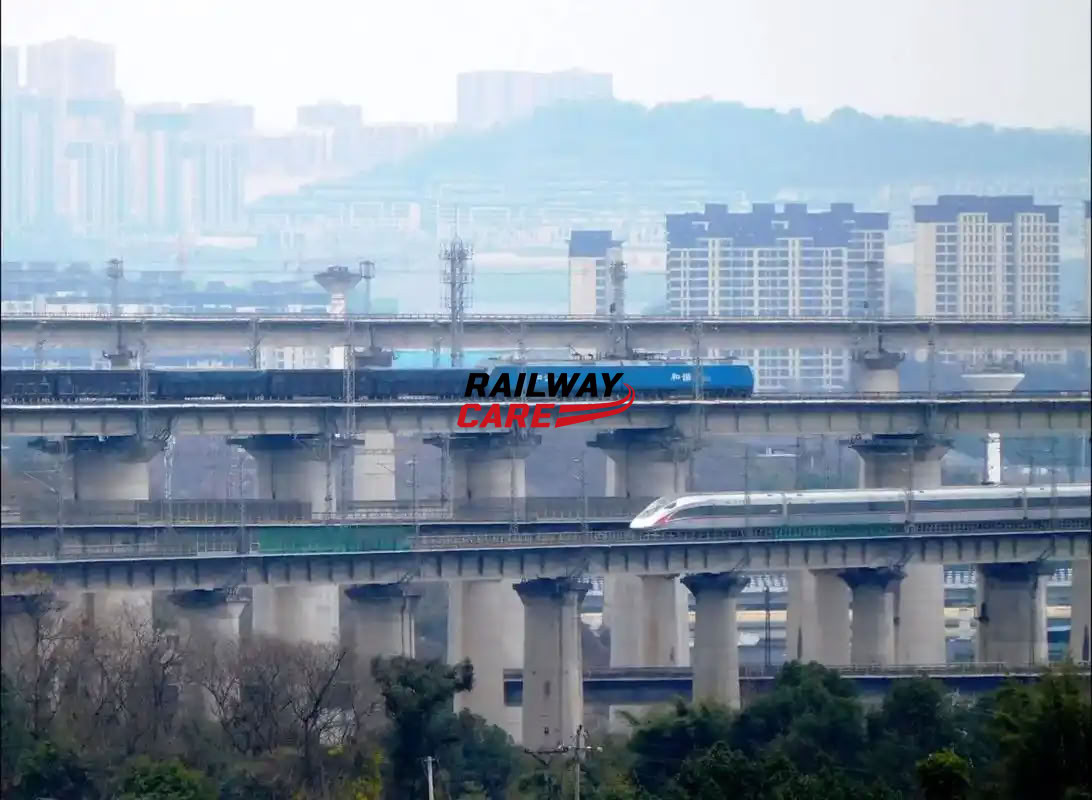
As a means of transportation, trains offer long-distance travel and high speeds, making them one of the important modern transport options.
The slower, relatively basic green trains of the past have become a memory of the times, replaced by electric multiple units (EMUs) and high-speed rail.
You may have noticed that conventional train tracks are covered with crushed stones, leading some to wonder—what are they actually called?
They are called ballast. This distinguishes the type of track: tracks with ballast are used for conventional trains and are called ballasted tracks, while tracks without ballast are used for high-speed rail and are called ballastless tracks.
Both high-speed rail and conventional trains need tracks to run, but why do conventional train tracks have crushed stones underneath, while high-speed rail tracks do not? What is the reason behind this?
Ballast is made from specially processed granite
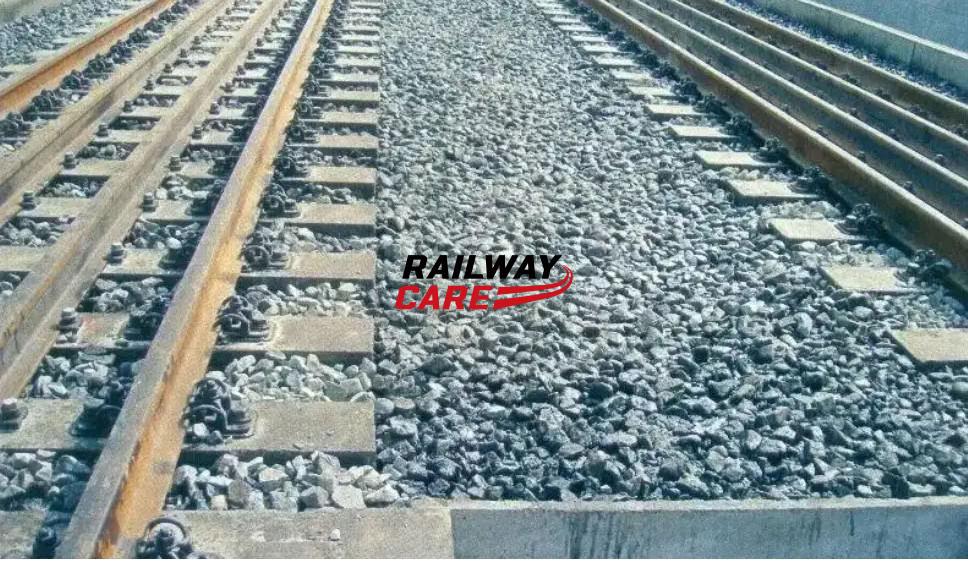
Ballast
Ballast, had a more straightforward name—these crushed stones laid on railway sleepers are indeed “debris” or “broken fragments” in a literal sense.
Ballast is essentially crushed stone, primarily consisting of rocks such as granite, basalt, limestone, and sometimes even slag as a substitute for traditional stone materials.
Ballast is not simply any type of crushed stone. To meet functional requirements and perform its intended roles effectively, it must possess sufficient strength, and its particle shape and gradation must comply with specific standards. This is because the durability of ballast particles directly influences its overall performance.
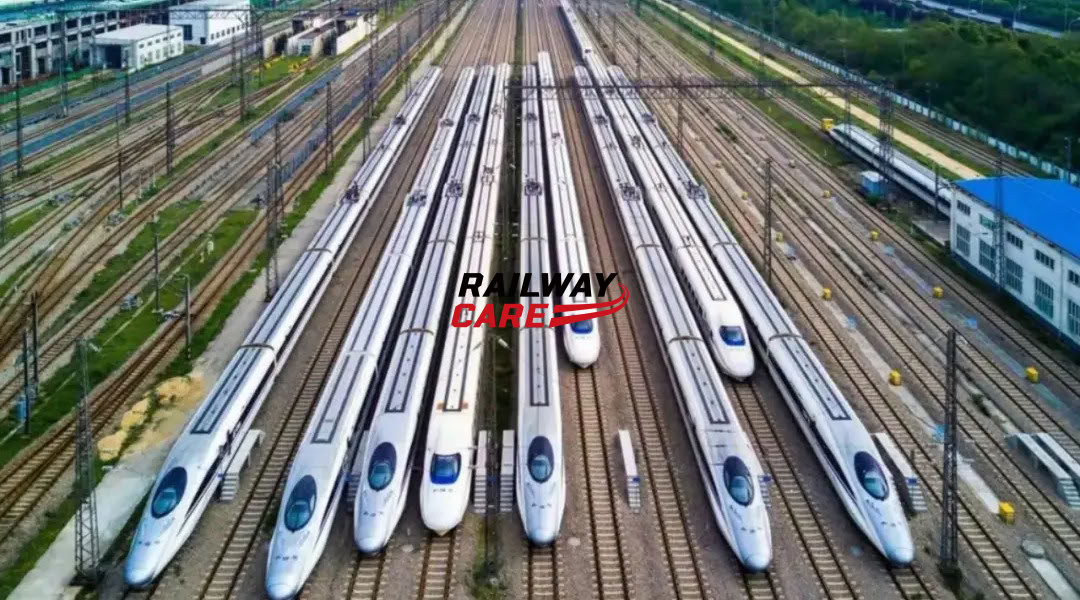
High-speed rail uses ballastless tracks
Ballast Functions
One of the advantages of ballast is its ability to reduce vibrations, noise, and heat generated when trains pass by.
Though these impacts may seem insignificant, they can shorten the service life of railway tracks. Over time, subtle changes in track gauge may occur, increasing the risk of derailment accidents.
Vibrations and noise also affect passenger comfort. Therefore, when we enjoy a relatively quiet and comfortable environment while traveling by train, we owe thanks to these humble little stones.
Ballast helps disperse the pressure exerted by trains on the ground. The construction process of railway tracks involves first laying a layer of ballast on the roadbed, compacting it, and then placing sleepers and rails on top.
Ballast supports the track sleepers, distributing the weight of trains and rails to reduce concentrated pressure. This provides cushioning and minimizes pressure, helping to prevent deformation of the rails and sleepers while ensuring smooth train operation.
Ballast also serves a drainage function. The gaps between the crushed stones form effective drainage channels, allowing rainwater to quickly seep underground and enhancing the overall drainage capacity of ballasted tracks.
This prevents the roadbed and sleepers from being soaked by rainwater or eroded by water flow, reducing maintenance costs.
The drainage properties of ballast also inhibit weed growth on the tracks, keeping the area around the railway clean and tidy.
Just as roads rely on drainage ditches and sewer systems to protect urban streets from heavy rain and flooding—reducing waterlogging—ballast plays a similar role as a "drainage expert" for railways. Without it, the track foundation would be less stable, and the sleepers would deteriorate due to prolonged exposure to rainwater.
Ballast also facilitates track maintenance. The gaps between particles provide space for storing dirt and debris, which can be washed away by rainwater and absorbed into the ground.
If rails and sleepers become heavily soiled due to natural or human factors, their service life could be shortened, leading to additional costs.
However, ballast also requires regular maintenance. Over time, ballast can wear out and become contaminated. Debris such as sleeper fragments, fallen cargo particles, and dust can fill the gaps between stones, impairing drainage efficiency.
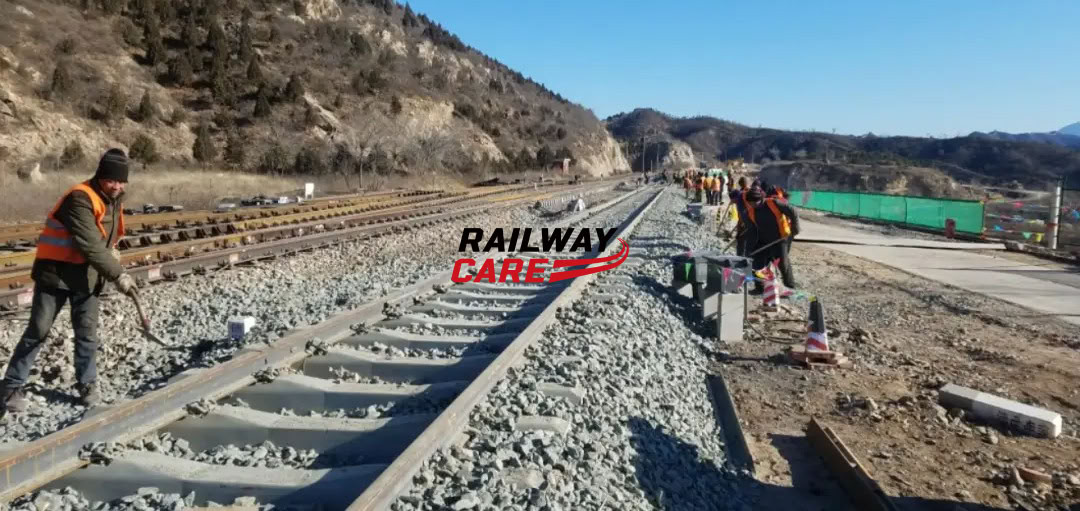
Thus, periodic cleaning, screening, and replacement are necessary. During this process, ballast is gradually consumed. Railway maintenance personnel must tamp and compact it, remove fine crushed stones, and replenish it with new gravel.
Railway maintenance personnel are working to replace the ballast
Why Isn't Ballast Used for High-Speed Rail?
We have listed many uses of ballast, and its advantages are clear to see. Given the numerous benefits of ballasted tracks, why doesn’t high-speed rail adopt them?
One reason is that high-speed trains travel too fast, and using ballast could lead to ballast flying.
Conventional trains typically operate at speeds between 80–120 km/h, while China’s high-speed trains generally run at 250–350 km/h.
High-speed trains run both fast and smoothly
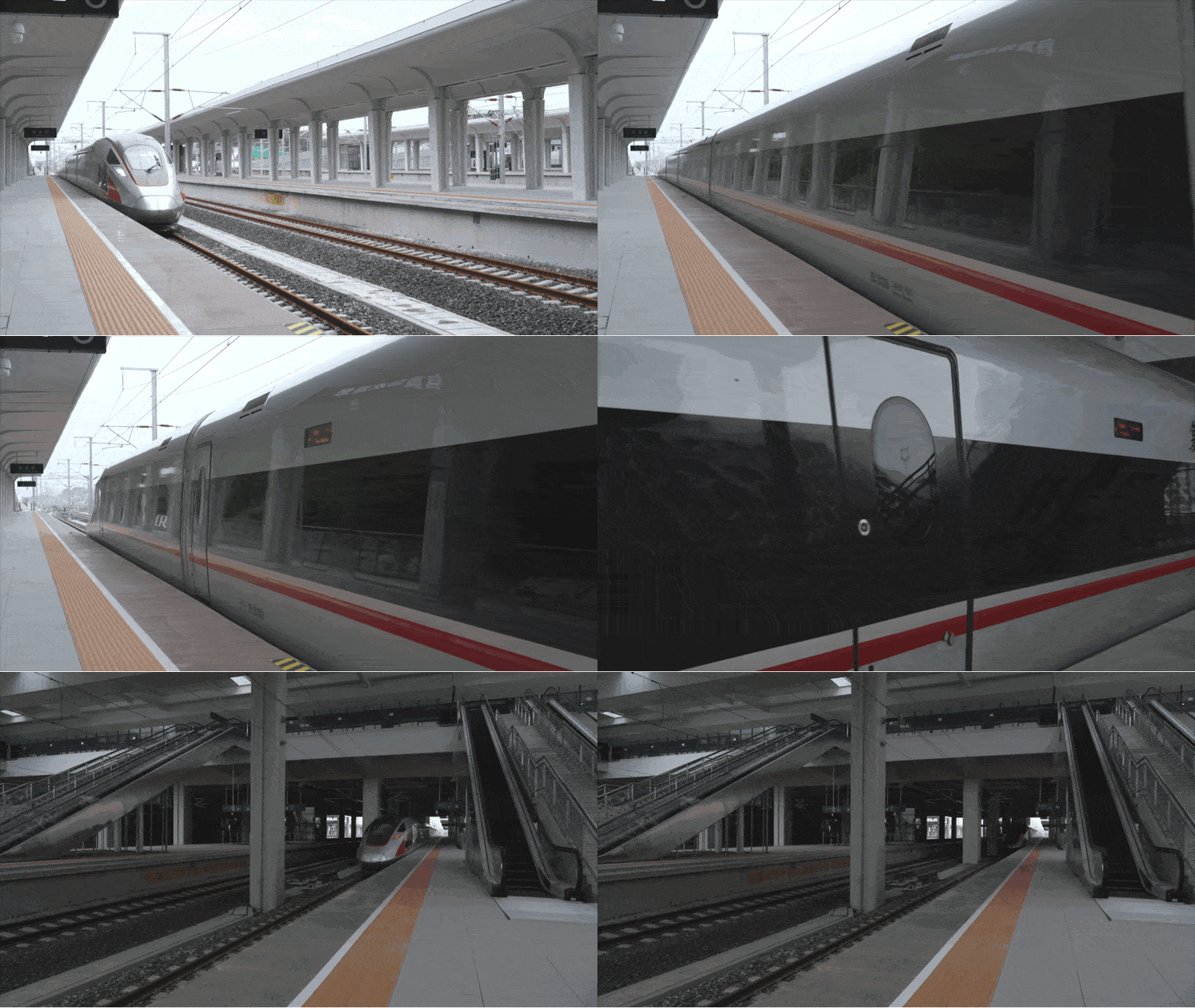
The high-speed movement of trains generates strong airflow, which can lift crushed stones from the tracks and hurl them to both sides, posing significant safety risks. High-speed rail instead uses a ballastless track structure, made of materials such as concrete and asphalt, to replace crushed stone ballast.
Imagine passengers standing on platforms less than two meters from the tracks while waiting for a high-speed train. If flying stones were to hit the train windows, they could cause damage; if they were to hit people, injuries would be inevitable.
When French high-speed rail used ballasted tracks, the ballast underwent special treatment—it was bonded with adhesive to form a stable, cohesive mass.
To give an analogy, it might resemble a rubberized running track. Though the bonded ballast retains a granular texture, it forms a unified whole and does not scatter.
Ballastless Track Display
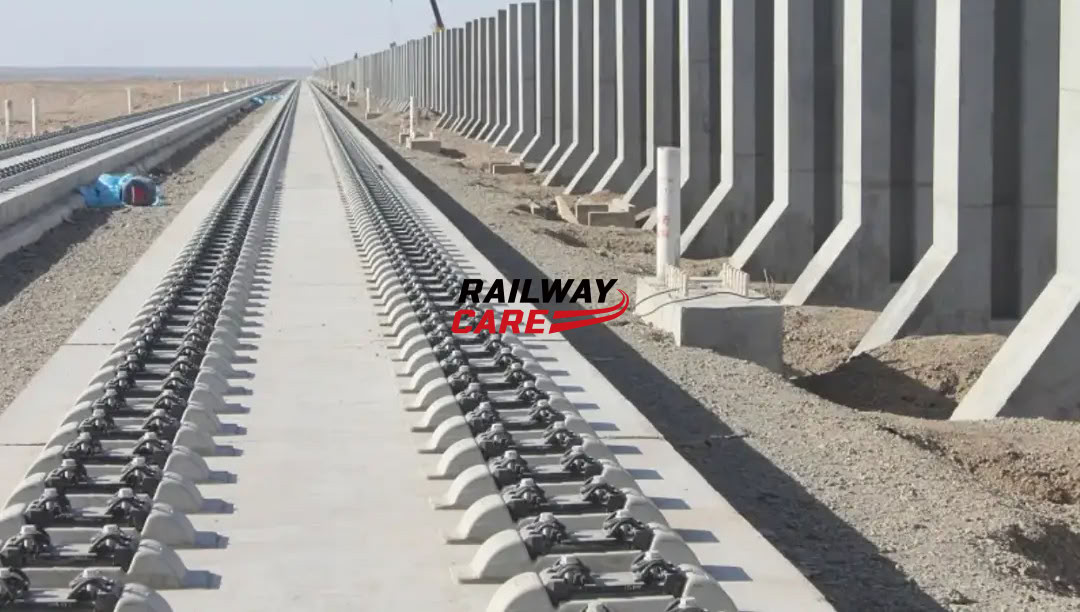
Advantages of Ballastless Tracks
As the designated track system for high‑speed rail, what advantages do ballastless tracks offer?
First, ballastless tracks provide superior stability. Compared to loose, gap‑filled crushed‑stone ballast, tracks constructed with concrete maintain their geometric alignment much longer and are highly resistant to weathering. Their maintenance costs and required workload are also lower and lighter than those of ballasted tracks.
Maintenance personnel do not need to frequently replace or repair them, which reduces interference with train operations, cuts labor costs, and increases line utilization efficiency.
The concrete‑based track structure conforms to aerodynamic principles, exhibits a more refined form, and ensures that all operational indicators remain within safety standards even under high‑speed running.
As early as 2004, China’s Ministry of Railways built the first ballastless track test section connecting Suining in Sichuan and Chongqing, with a total length of 13.16 kilometers.
China's First Ballastless Track Test Section — Caijia Test Section of the Suiyu Railway
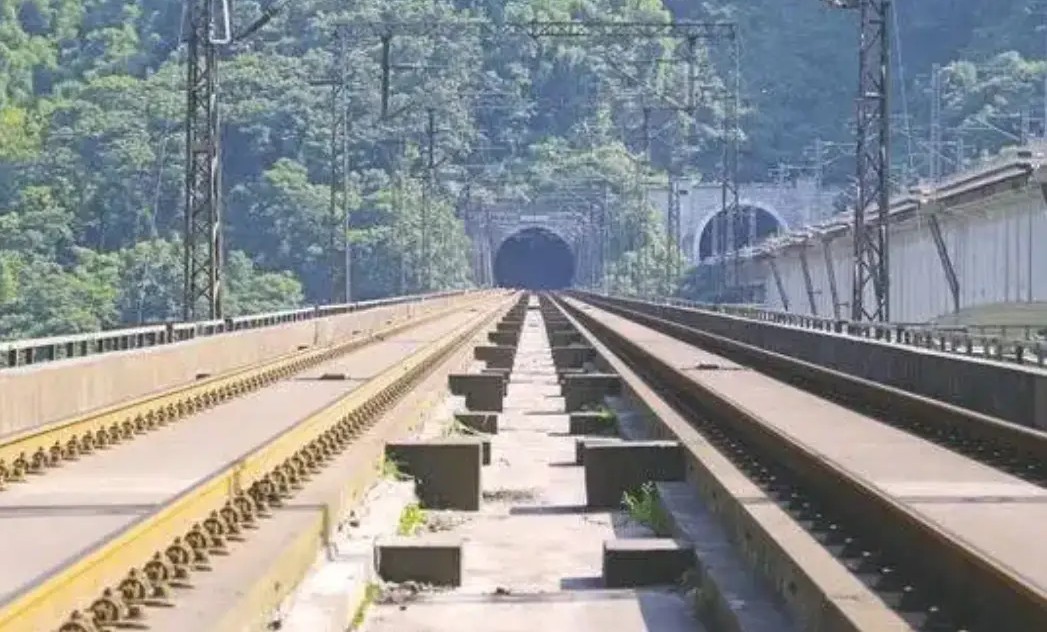
On December 26, 2009, the Wuhan‑Guangzhou High‑Speed Railway opened, adopting the German Rheda 2000 twin‑block ballastless track technology introduced from RailOne.
Ballastless tracks also feature excellent smoothness and uniform stiffness. They are lightweight, which reduces the load pressure on bridges; have low structural height and require less excavation, minimizing environmental impact; and offer better economic efficiency in tunnels compared to ballasted tracks.
In terms of design, ballastless tracks provide higher bonding quality, facilitate integrated construction, have a long service life, ensure high safety, meet electrical insulation requirements, and can be put into use progressively during construction.
Railway Grinding & Maintenance: Crucial for Both Ballastless and Ballasted Tracks
Whether it's ballastless track or ballasted track, both require meticulous grinding and maintenance to carry speeding trains and distant dreams.
Ballastless Track: Built on a solid concrete base, its millimeter-level surface precision relies on professional grinding to eliminate minor irregularities, ensuring an ultra-smooth ride.
Ballasted Track: With an elastic structure of crushed stone ballast, it is prone to deformation and wear under repeated train loads, requiring regular tamping, stabilization, and profile restoration.
Grinding removes corrugations, maintenance prolongs lifespan. Every precise operation is a solemn commitment to safety and efficiency.
The perfect state of track begins with grinding and is achieved through maintenance.
Railway Grinding
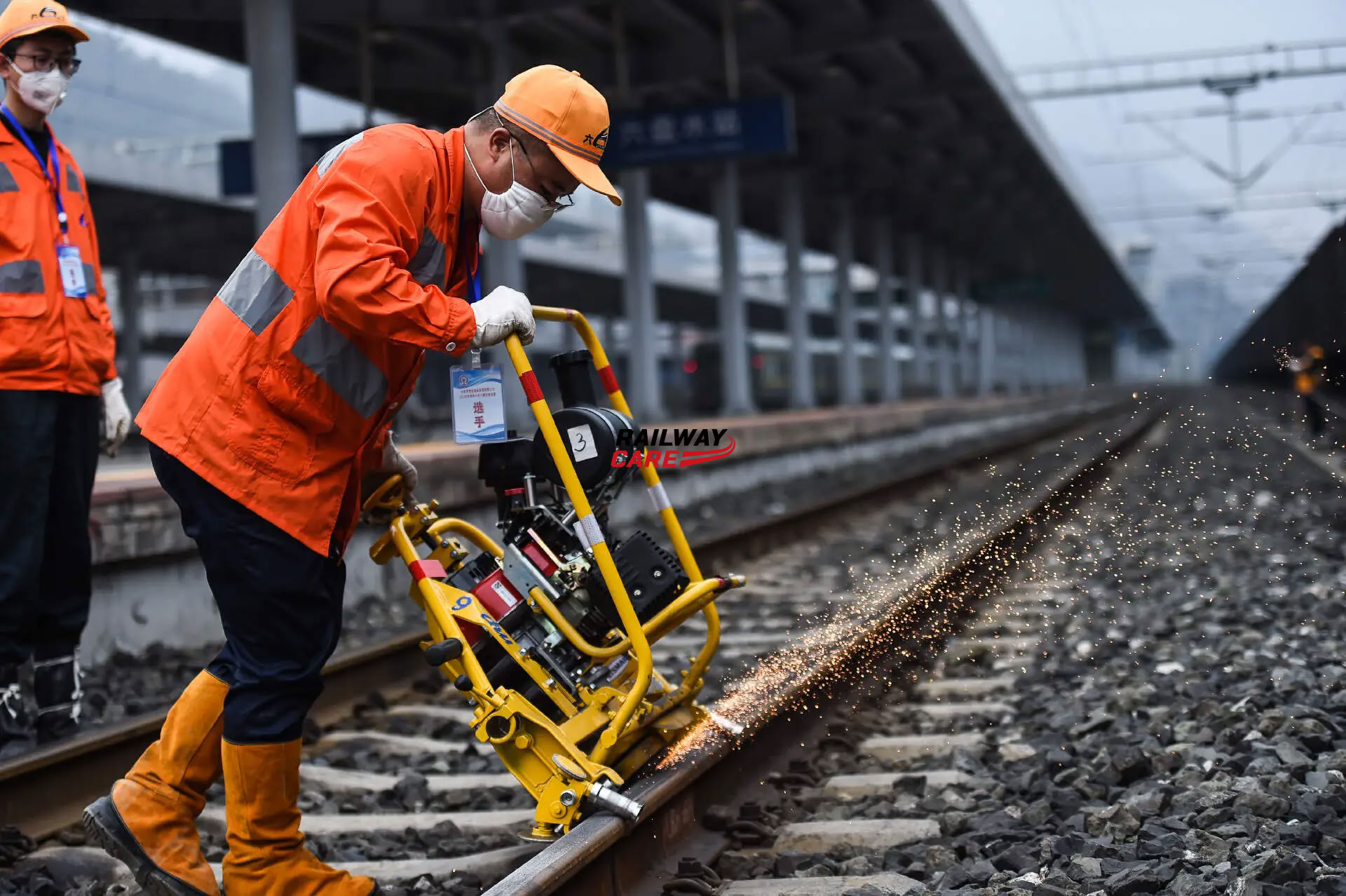
From Ballast to Ballastless, From the Past to the Future
Although ballasted tracks have contributed greatly to China's railway transportation in the past, their capacity and performance can no longer meet the demands of the growing market economy.
Today, we see fewer passenger trains on such tracks, with most remaining ballasted lines dedicated to transporting coal and freight. Their wheels roll steadily into the distance, carrying goods across vast landscapes.
Meanwhile, more comfortable and efficient high‑speed rail has become the preferred choice for intercity and interprovincial travel, gliding gracefully on sleek ballastless tracks.
From conventional trains to high‑speed rail, from ballasted to ballastless tracks—this evolution reflects the inevitable progress of our times.
Coexisting Tracks – A Symphony of Speed and Strength

FAQ
What is the crushed stone under railway tracks called?
Ballast. It is crushed stone — mainly granite, basalt or limestone, and sometimes slag — laid and compacted on the roadbed before the sleepers and rails go down. It is not arbitrary rubble: the particle shape, gradation and strength all have to meet specification, because ballast durability governs how long the track holds its geometry.
Why do high-speed lines use ballastless track instead of ballast?
Chiefly because of speed. Conventional lines run at roughly 80–120 km/h while high-speed services run at 250–350 km/h, and the airflow under a train at those speeds can lift loose stones and throw them clear of the track — a direct risk to trains and to passengers standing at platforms close to the running line. Ballastless structures of concrete or asphalt remove that failure mode entirely. Where ballasted track is used at high speed, as on French high-speed lines, the ballast is bonded with adhesive so it stays put.
What is ballast actually for?
Four jobs: it distributes train and rail loads through the sleepers to reduce concentrated pressure, it damps vibration and noise, it drains — the voids between stones act as channels that take rainwater away from the roadbed and sleepers — and it makes maintenance easier, because tamping can restore geometry without rebuilding the track structure.
Does ballastless track need less maintenance?
Yes. Concrete-based track holds its geometric alignment for far longer, resists weathering better, and does not need the periodic cleaning, screening, tamping and replenishment that fouled ballast does. The trade-off is a higher build cost and a much less forgiving structure if the supporting layer is not right.
Do ballasted and ballastless tracks both need rail grinding?
Both do, for different reasons. On ballastless track the concrete base holds alignment well, so grinding concentrates on the millimetre-level irregularities in the railhead itself. On ballasted track the elastic support and the ballast condition allow more deformation and wear under repeated loading, so grinding is paired with tamping, stabilisation and profile restoration. Bleeding off small irregularities before they grow is the same logic in both cases — see our complete guide to rail grinding, and for the corrugation specifically rail corrugation.
Talk to RailwayCare
Need a grinding wheel specification for your fleet, or a second opinion on a rail maintenance programme? Our engineers work directly with track operators, contractors and distributors worldwide, and answer technical questions in English and Chinese.
WhatsApp: +86 15072332788
Email: simon.wang@railwaycare.com
Web: www.railwaycare.com