Why Grinding Length Is the Unseen Critical Parameter in Rail Weld Seam Finishing
- Share
- Issue Time
- Mar 19,2026
Summary
Post-weld rail grinding is critical for ensuring train safety, ride comfort, and track longevity.
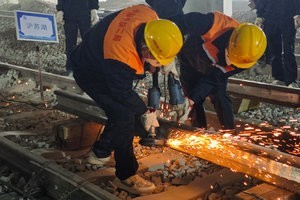
As high-speed rail exceeds 350 km/h and heavy-haul lines surpass 400 million tons annually, track geometry smoothness has become the decisive factor for safety, asset life, and operational expenditure. The welded joint—though narrow—is the most frequent origin of track irregularities. And grinding length, far from being a matter of “more is better,” is a multidisciplinary challenge rooted in metallurgy, vehicle-track dynamics, and precision process control.
The Hidden Cost of Improper Rail Grinding Length
Many maintenance teams focus solely on surface finish, overlooking the structural consequences of inadequate coverage or abrupt transitions:
⚪ Wheel-rail impact spikes: Incomplete grinding creates a “step effect,” generating transient forces that accelerate ballast degradation and sleeper cracking;
⚪ Stress concentration at HAZ edge: The heat-affected zone (HAZ) exhibits high hardness but low toughness. Stopping grinding at its boundary ⚪ forms a stiffness discontinuity—a prime site for fatigue crack initiation;
⚪ Shortened maintenance cycles: Initial smoothness degrades within 3–6 months, forcing repeat interventions and inflating lifecycle costs.
Field data from an eastern China high-speed railway shows that 23% of early joint failures stem directly from insufficient grinding length.
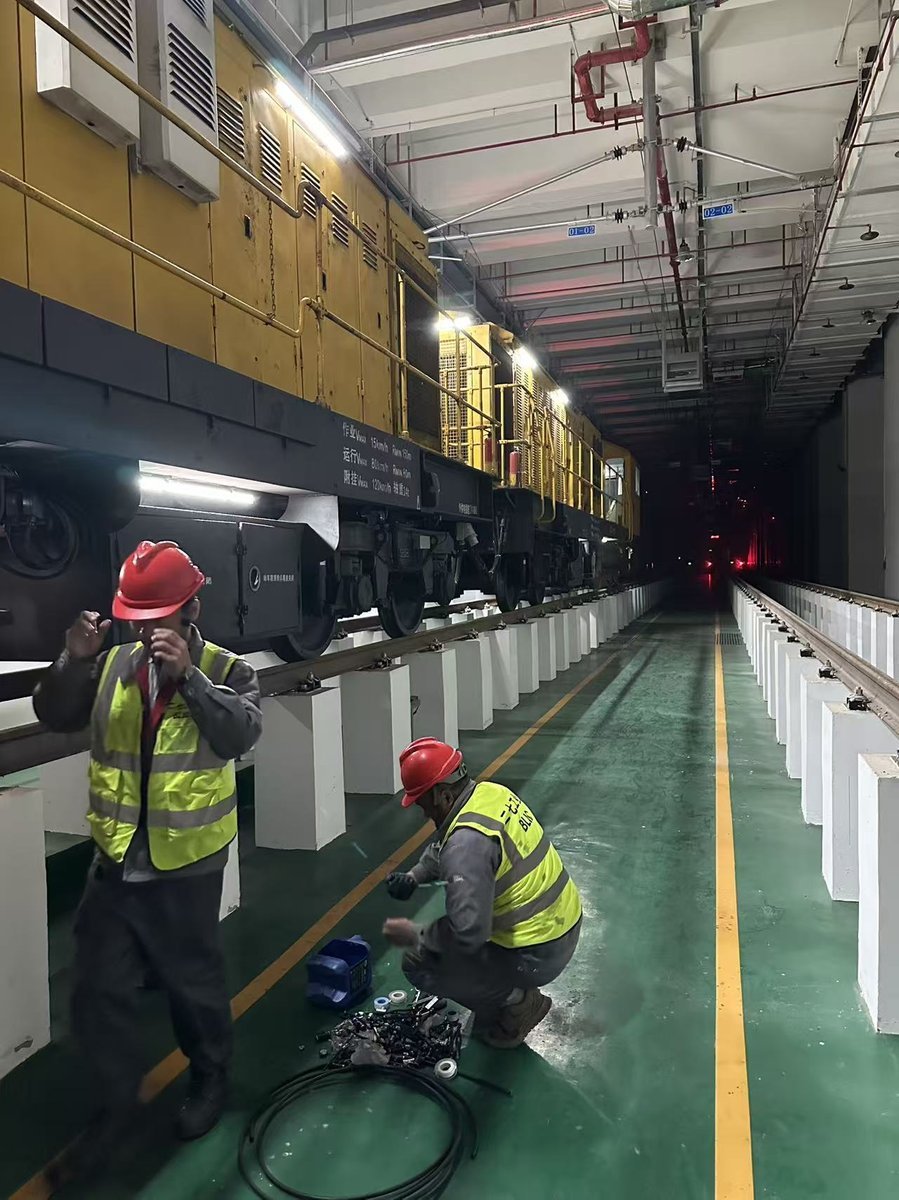
Why Grinding Length Fails: Conventional Rail Grinding Wheels Can’t Deliver Precision Across Transition Zones
At the wheel level, this is a consumable problem before it is an operator problem. A conventional resin-bond wheel wears and glazes across the transition zone, so material removal falls away exactly where the profile has to blend, and the operator is left chasing the target with extra passes.
This issue is exacerbated when using conventional resin-bond rail grinding wheels, which suffer from rapid wear and poor heat dissipation. In contrast, advanced rail grinding wheels engineered specifically for weld seam finishing—featuring optimized superabrasive grading, thermally conductive aerogel pore structures, and high-retention bond systems—deliver consistent material removal across the full 400–600 mm transition zone in a single pass, eliminating under-grinding or thermal damage caused by wheel glazing.
From Craftsmanship to Intelligent Control: RailwayCare’s Breakthrough
Traditional manual grinding relies heavily on operator skill, yielding inconsistent results. RailwayCare’s Adaptive Grinding Length System, refined over a decade of field deployments, delivers:
⚪ Real-time laser profilometry: Automatically locates weld center and HAZ edges with ±2 mm accuracy;
⚪ AI-driven process planning: Dynamically generates optimal grinding length and depth profiles based on rail grade, temperature, and traffic type;
⚪ Closed-loop quality verification: Instantly outputs smoothness reports compliant with ISO 3095 noise limits and UIC 518 dynamic performance criteria.
On a major coal-haul corridor, the system extended joint maintenance intervals from 6 to 14 months, reduced annual OPEX by 28%, and lowered wheel-rail noise by 6 dB(A).
Practical Checklist: Is Your Grinding Process Up to Standard?
We recommend periodic audits using these criteria:
1. Measure longitudinal irregularity over 1 meter on both sides of the weld with a digital straightedge;
2. Verify grinding extends into visibly unhardened base material beyond the HAZ;
3. Review wheel replacement logs—no single superabrasive grinding wheel should grind more than 8 joints on P60+ rails.
Frequent rework, spalling, or abnormal wheel squeal often signals systemic flaws in length or gradient control.
FAQ
Why does grinding length matter more than surface finish at a weld?
Because the risk is structural, not cosmetic. Short or abruptly ended grinding leaves a step at the joint that produces wheel-rail impact spikes and accelerates ballast degradation and sleeper cracking, while stopping at the edge of the heat-affected zone creates a stiffness discontinuity. Field data from an eastern China high-speed line attributed 23% of early joint failures directly to insufficient grinding length.
What is the heat-affected zone and why is it a risk?
The heat-affected zone around a thermite weld is hard but low in toughness. If grinding stops at its boundary, the transition from hard weld metal to parent rail becomes a stiffness step, and that step is a prime site for fatigue crack initiation. Grinding has to extend into visibly unhardened base material beyond the zone.
How long should the transition zone be ground?
The full 400–600 mm transition has to be covered in a single pass sequence, with consistent material removal across it. That is a consumable requirement: a wheel that wears or glazes part-way through the zone will under-grind exactly where the profile must blend. The wheel properties that make it possible are discussed in railway grinder wheel selection.
How many welds should one grinding wheel complete?
The practical audit rule is that no single wheel should grind more than eight joints on P60 or heavier rail. Frequent rework, spalling or abnormal wheel squeal are the signals that length or gradient control has gone out of specification rather than the wheel being at fault.
How is grinding length controlled in practice?
By locating the weld centre and heat-affected zone edges to within ±2 mm, generating the length and depth profile from rail grade, temperature and traffic type, and verifying smoothness after the pass against accepted noise and dynamic criteria. The welding workflow this finishing step belongs to is described in our guide to thermite welding and grinding.
Stop letting “good enough” grinding compromise your entire track segment.
Request your RailwayCare Rail Weld Seam Diagnostic Package today.
📧 Email: simon.wang@railwaycare.com
📱 WhatsApp: +86 15072332788
🌐 Website: www.railwaycare.com
💬 Reply “Weld Diagnostic” for a technical proposal within 24 hours
Precision starts with defined length.