Why 60% of the World’s Railways Use 1435mm Gauge– And What It Means for Maintenance Excellence
- Share
- Issue Time
- Dec 25,2025
Summary
In 1830, George Stephenson's "Rocket" established the 1435mm (4 feet 8.5 inches) gauge as the world's standard.

1829: George Stephenson's "Rocket" and the 1435 mm Gauge
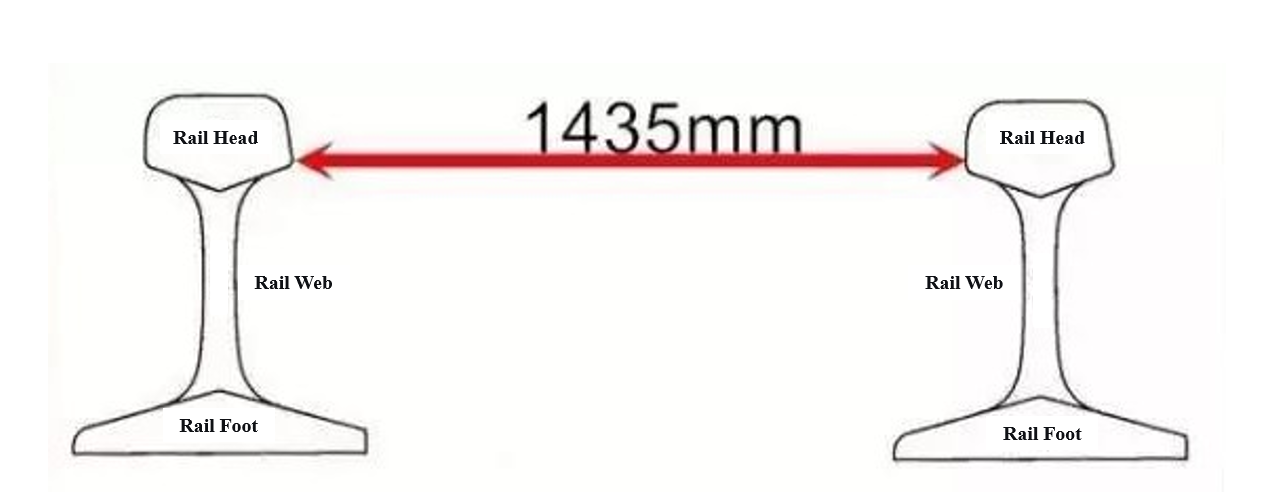
When you board a high-speed train in Paris, a freight locomotive in Chicago, or a metro car in Shanghai, you’re almost certainly riding on tracks spaced exactly 1,435 millimeters (4 feet 8.5 inches) apart. This dimension—known as standard gauge—underpins roughly 60% of the world’s railway network, including all major economies in Europe, North America, and China.
But here’s the surprising truth: this global standard wasn’t born from scientific optimization. It emerged from history, habit, and industrial momentum.
The Real Origin of 1435mm: From Roman Chariots to George Stephenson
⚪ Global Coverage: Approximately 60% of railways use 1435mm gauge
⚪ Historical Origin: Traces back to ancient Roman chariot wheel spacing
⚪ Geographic Distribution: Major economies including Europe, North America, China
⚪ Economic Impact: Standardization reduces interoperability costs by over 30%
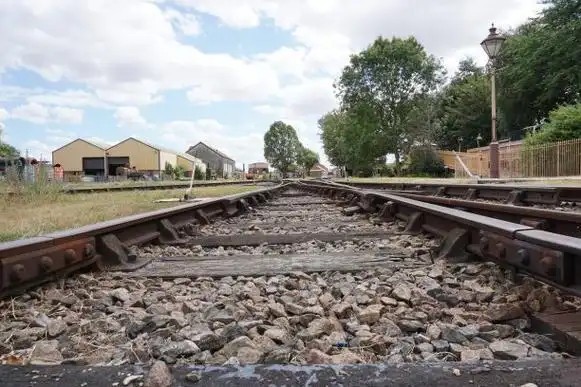
Contrary to popular belief, the 1435mm gauge wasn’t selected after rigorous engineering analysis. Its roots trace back over two millennia:
| Roman Era
Archaeologists have found ruts in ancient roads across Europe spaced approximately 1.435 meters apart—the width needed for a horse-drawn chariot. This spacing became a de facto standard for wheeled vehicles.
| Early 19th Century
Early coal wagons and colliery railways reused existing road widths and wheel designs. When George Stephenson built his pioneering locomotive Rocket in 1829, he adopted this familiar spacing—simply because it worked with existing infrastructure and rolling stock.
| 1845
The British Parliament formalized 1435mm as the national standard through the Gauge Act, cementing its dominance.
| 20th Century – Present
Globalization has propelled 1435mm to become the foundational standard for international railway interoperability.
Achieving Excellence Within the Standard Gauge Framework
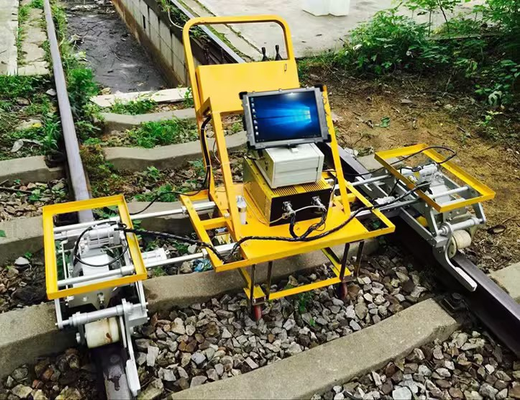
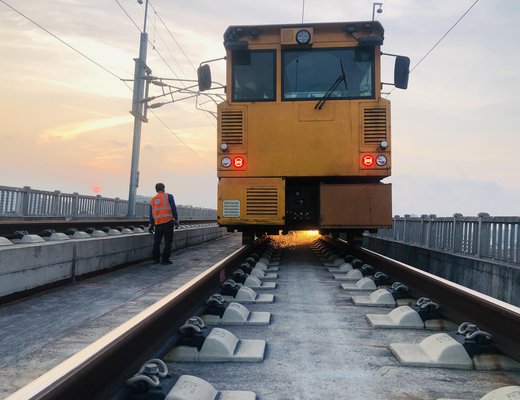
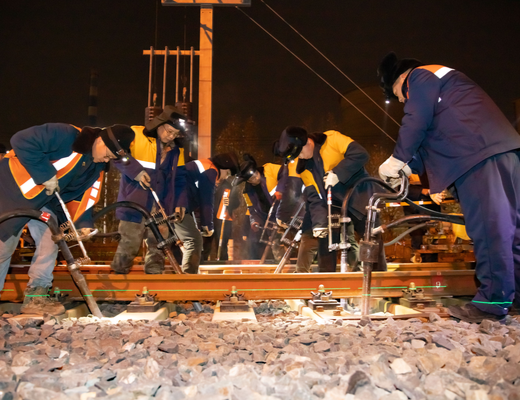
Why choose RailwayCare ?
Leveraging our deep expertise in China's 1435mm standard gauge, our professional team delivers comprehensive track inspection, maintenance, and rail grinding solutions, backed by strong collaborations within the national railway system.
⚪ Standard Gauge Expertise
⚪ Professional & Reliable Team
⚪ Deep Industry Collaboration

FAQ
How much of the world's railway uses 1435 mm gauge?
Roughly 60%, including all the major economies of Europe, North America and China. It is the reason a high-speed train in Paris, a freight locomotive in Chicago and a metro car in Shanghai sit on the same 1,435 mm track centre spacing — and why standardisation has cut interoperability costs by more than 30%.
Where does the 1435 mm gauge actually come from?
From habit rather than optimisation. Archaeologists have found Roman road ruts across Europe spaced at about 1.435 m — the track width of a horse-drawn chariot — and early colliery railways reused the road and wheel widths already in service. When George Stephenson built the Rocket in 1829 he adopted that familiar spacing because it worked with existing infrastructure and rolling stock; the British Parliament formalised it in the Gauge Act of 1845.
Why does standard gauge matter for maintenance?
Because it determines what can be shared. A common gauge means common rail sections, common tolerances and common maintenance practice across networks, so rail maintenance methods, equipment and consumables developed for one standard-gauge network transfer to another with limited re-engineering.
Do non-standard gauges need different grinding wheels?
They can. Gauge itself is not the constraint — rail section, axle load, curve radius and rail hardness are. Broad-gauge networks such as the EAEU 1520 mm system run heavier axle loads and harder R65/R75 rail, which changes both wheel loading and thermal risk; the specification response is described in our analysis of 1520 mm gauge grinding wheels.
Do all standard-gauge networks use the same rail section?
No. Standard gauge fixes the distance between the running edges of the rail head, not the rail itself. Networks still choose their own rail weight, head profile and steel grade, and those differences change wear behaviour and the grinding programme required — which is why a maintenance method transfers between standard-gauge networks far more readily than a wheel specification does.
What limits how far standard gauge can be standardised?
Curve radius, axle load and traffic mix. A metre of 1435 mm track on a 300 m radius curve in a heavy-haul corridor behaves nothing like a metre of tangent track on a high-speed line, and the grinding interval, removal depth and target profile differ accordingly. Gauge gives the industry a common interface; the operating environment still decides how that interface has to be maintained.
What does maintenance excellence look like within standard gauge?
Three things working together: precision inspection so the intervention is based on measured condition rather than a calendar, measurement of rail wear and profile to decide grind or replace, and a mature grinding programme that holds the target profile across the network. Standard gauge gives the industry a common platform; it does not remove the need to manage it.
Talk to RailwayCare
Need a grinding wheel specification for your fleet, or a second opinion on a rail maintenance programme? Our engineers work directly with track operators, contractors and distributors worldwide, and answer technical questions in English and Chinese.
WhatsApp: +86 15072332788
Email: simon.wang@railwaycare.com
Web: www.railwaycare.com