What Are Railroad Tracks Made Of? Rail Steel, Ties and Ballast Explained
- Share
- Issue Time
- Oct 10,2026
Summary
A track is four materials working together: rail steel, ties, ballast and fastenings. This guide explains what each is made of, the steel grades used, and how those material choices drive the maintenance regime.
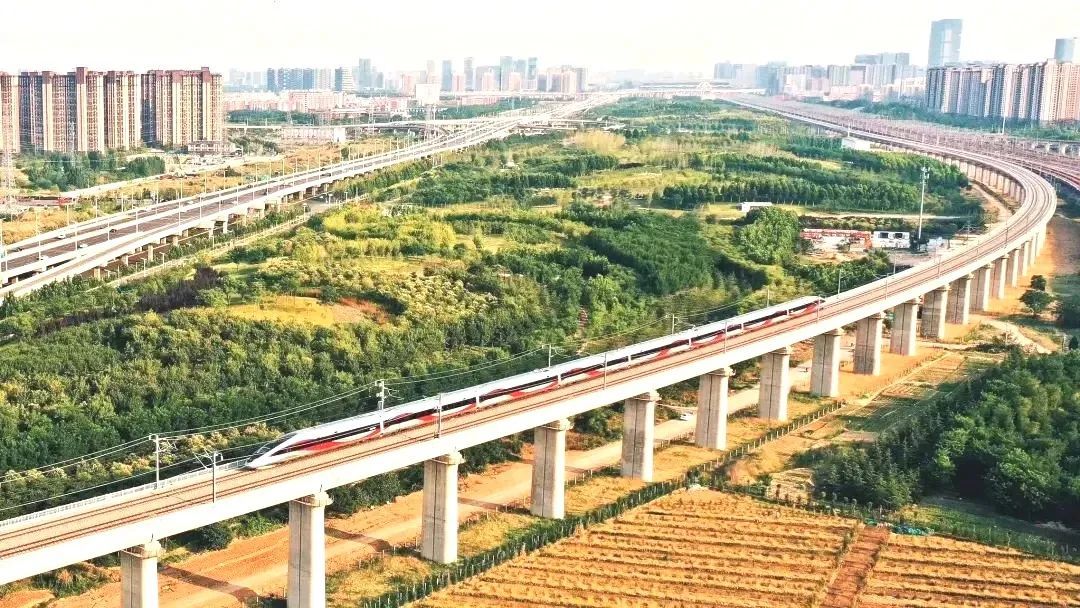
A railroad track is not one material but four working together: steel rails that carry and guide the wheels, ties (sleepers) that hold the rails to gauge and spread the load, ballast or a concrete slab that supports the whole assembly and drains it, and fastenings that clamp rail to tie and resist every lateral and longitudinal force the train applies. This guide explains what each component is actually made of, which steel grades and materials are used and why, and how those material choices decide the maintenance regime a track needs.
What Are Railroad Tracks Made Of: The Four Components of a Track Structure
Every conventional railway track, from a mineral spur to a 350 km/h main line, is built from the same four elements. What changes between them is the specification of each element, not the principle.
- - Rail — hot-rolled steel, usually a carbon-manganese pearlitic grade, formed into the familiar I-section with a head, web and foot. The head carries the wheel load; the foot distributes it into the tie.
- - Ties or sleepers — the transverse members that hold the two rails at the correct gauge and transfer load into the ballast. Wood, concrete, steel and composite versions all remain in service.
- - Ballast or slab — the support layer. Ballasted track uses graded crushed stone; ballastless track uses a concrete or asphalt slab with a stabilised base beneath it.
- - Fastenings — the elastic clips, baseplates, bolts and insulators that clamp the rail foot to the tie and keep the assembly from moving under traffic.
Above those four sits the rail profile itself: the precise cross-section of the rail head that the wheels run on. It is worth separating the material question from the geometry question early, because maintenance decisions are driven by both, and grinding is the operation that manages the geometry side while the materials set the limits.
What Are Railroad Rails Made Of: Steel Grades and Head Hardness
Rail steel is a high-carbon, high-manganese pearlitic steel, hot rolled to a specified section and then, in the grades used on demanding lines, heat treated to harden the running surface while keeping the core tough enough to absorb impact.
Three grades cover most Chinese railway applications, and the differences between them are the differences that matter operationally:
- - U71Mn — the general-purpose grade used across a large part of the conventional network. A sound balance of strength, hardness and weldability.
- - U75V — a higher-carbon grade with greater hardness, used where wear rates on the rail head justify a harder material.
- - U78CrV — a chromium-vanadium alloyed wear-resistant grade developed for heavy-haul duty, where axle loads of 25 tonnes and above make rail head wear and plastic deformation the limiting factor on rail life.
Alongside the grade, two further properties decide how a rail behaves in service:
- - Head hardness — the resistance of the running surface to wear and to plastic flow. Heavier axle loads push specification towards harder, head-hardened rail.
- - Cleanliness — the level of inclusions and internal defects left by steelmaking. Clean steel is what keeps a rail from developing internal defects that no amount of surface grinding can remove.
The specification framework for rails in China comes from TB/T 2344.1—2020, which covers rail sections from 43 kg/m to 75 kg/m. Rail use itself is governed by Q/CR 583. On heavy-haul and high-speed lines the practical trend has been towards deeper head hardening and cleaner steel, because both translate directly into longer intervals between maintenance interventions.
Rail Weight and Profile: 50, 60 and 75 kg/m Track
Rail is specified by mass per metre, and that single number tells you a great deal about the duty the track is expected to carry.
- - 50 kg/m — legacy and light-duty track. It survives on low-traffic lines, but it is no longer appropriate for busy routes.
- - 60 kg/m — the working standard for main lines. New construction is expected to use 60 kg/m continuously welded rail except on safety sidings, and lighter rail on sidelines may be replaced with second-hand 60 kg/m rail rather than new 50 kg/m.
- - 75 kg/m — heavy-haul and high-speed applications where the extra section depth and stiffness are needed to control bending stress and wear.
There is a maintenance reason behind the shift away from 50 kg/m that is easy to miss. Wheel treads in service are matched to the 60N rail profile. Run those wheels on a lighter, differently shaped rail head and the contact patch sits in the wrong place, which produces abnormal rail head wear and a fatty edge on the gauge side. In other words, a rail profile that no longer matches the wheel population generates its own defects — and correcting it becomes a profile restoration job rather than a rail replacement job.
What Are Railroad Ties Made Of: Wood, Concrete, Steel and Composite
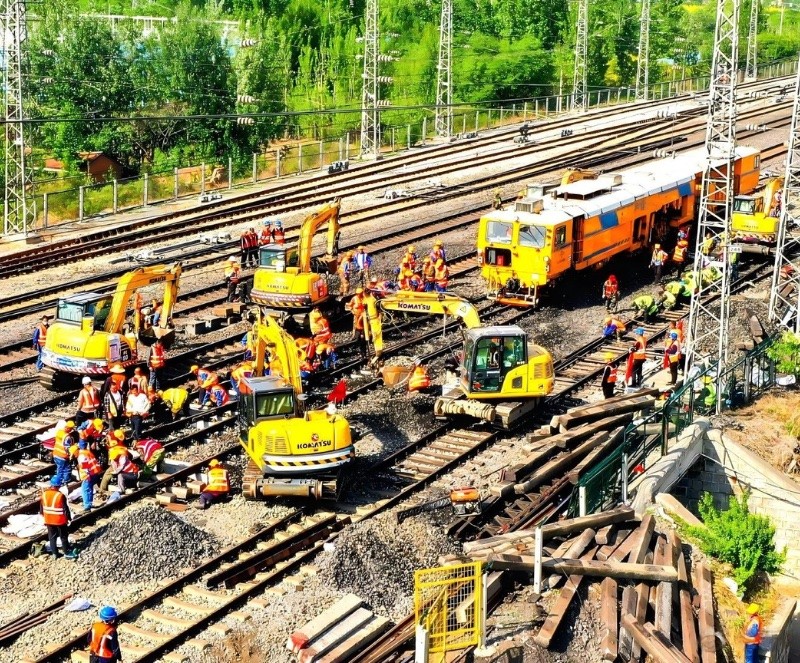
The tie is the component most often taken for granted, and the one whose material choice has the biggest effect on how stable a track feels under load.
- - Wood — historically universal, still used in low-traffic and specialist locations. Easy to work and electrically insulating, but it decays, splits and has a limited life under heavy loading.
- - Concrete — the dominant tie in modern railway construction. Prestressed concrete ties hold gauge and track geometry far better than timber under repeated loading, which is why main lines and reception tracks use the heaviest available types. Concrete ties are specified under GB/T 37330, with concrete turnout ties under TB/T 3080 and elastic concrete ties under TB/T 2629.
- - Steel — used where a tie needs to be thin, strong and resistant to impact, and in locations where concrete is impractical.
- - Composite — engineered polymer ties are a specialist option for locations where electrical insulation, chemical resistance or low weight matter more than first cost.
Tie spacing and tie type are also specified by line class. On Chinese railways the heavier tie types — III-type and N-type — are used on main lines and reception-departure tracks, while lighter types are specified for secondary lines, and special types are required on tight-radius hump curves and in track circuit sections where insulated ties are needed.
Ballast: The Crushed Stone Layer and What It Actually Does
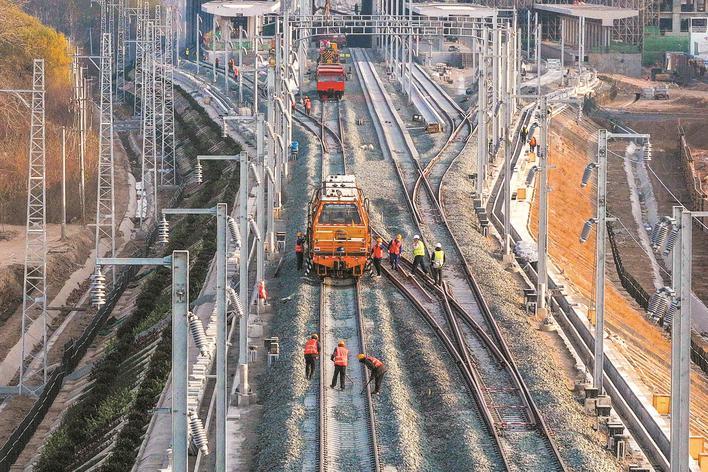
Ballast is the graded crushed stone — typically granite, basalt or limestone, sometimes slag — that is laid and compacted beneath the ties. It is not arbitrary rubble: particle shape, gradation and strength all have to meet specification, covered in China by TB/T 2140.
It does four jobs at once:
- - Load distribution — spreading the concentrated load under each tie across a wider area of the formation.
- - Drainage — the voids between stones act as channels that take water away from the ties and the formation, which is what stops the track foundation softening.
- - Geometry correction — because ballast can be tamped, the track can be lifted, levelled and aligned without rebuilding the structure.
- - Vibration and noise damping — the granular layer absorbs part of the dynamic energy a passing train puts into the track.
Ballast also degrades, and that is the maintenance consequence. Fines from tie abrasion, spilled cargo and dust fill the voids, drainage slows, and the ballast stops holding the geometry it was tamped into. Cleaning, screening and replenishment become part of the routine, and the layer is gradually consumed. The trade-off between ballasted and ballastless track, and why high-speed lines normally use slab track, is covered in more detail in our article on why conventional tracks have crushed stone underneath and high-speed lines do not.
Fastenings and Joints: What Holds the Track Together
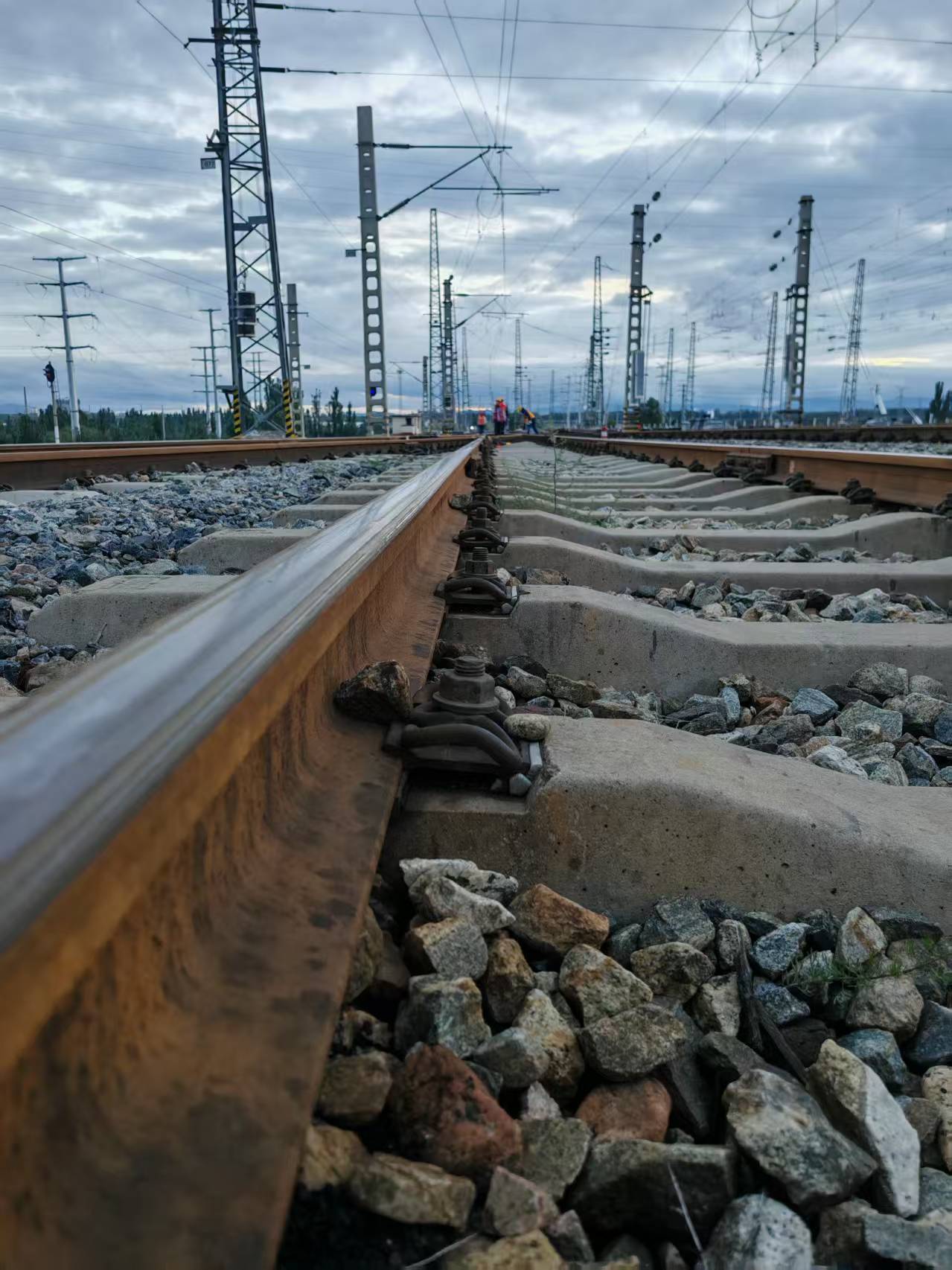
Fastenings are the small steel components that turn four separate materials into one structure. They hold the rail foot down against the tie, maintain the correct gauge under lateral load, and provide the electrical insulation that track circuits depend on.
The main Chinese fastening systems are the elastic clip families — Type I clips under TB/T 1495, Type II under TB/T 3065 and Type III under TB/T 3570 — with the heavier types used where lateral loads are highest. Baseplates, pads, insulators, bolt assemblies and anti-loosening devices complete the assembly.
Two points about fastenings tend to be learned the hard way:
- - Corrosion is the real failure mode. As maintenance cycles extend, fastening durability has become a recognised problem, particularly in damp or corrosive environments where conventional components rust and lose their clamping force. Steel components and clips with a specified corrosion resistance, and covered nuts in tunnels and on bulk-loading lines, are the standard response.
- - Bolted connections need positive anti-loosening measures. Anti-loosening nuts, check nuts and split pins are specified for critical locations, and insulated joints are expected to use coated insulating clips rather than plain ones.
Get the fastening system wrong and the symptom does not appear at the fastening. It appears as gauge variation, as rail cant, as impact at joints — and eventually as rail head defects that are traced back to a track structure that was moving when it should have been still.
What Are Railroad Tracks Made Of on Different Railways: Freight, High-Speed and Transit
The four components stay the same, but the specification changes sharply with the traffic the line carries. That is why the same phrase — railroad track — describes very different structures.
- - Heavy haul — deep, heavy rail in the 75 kg/m class on curves and in high-tonnage sections, wear-resistant alloyed grades, the heaviest tie types, high clamping-force fastenings, and deep ballast. Everything is sized for axle load and for the plastic deformation that follows from it.
- - High-speed passenger — 60 kg/m continuously welded rail with a tightly controlled profile, very precise fastenings, and on most new alignments ballastless slab track rather than ballast. The priority is geometric precision and long-term stability, not ultimate load capacity.
- - Conventional mixed traffic — 60 kg/m rail in the standard case, concrete ties, conventional ballast, and a maintenance programme that has to serve both passenger comfort and freight tonnage on the same alignment.
- - Metro and light rail — similar principles in a much smaller envelope, with tight curves, restricted clearances and a strong emphasis on noise and vibration control.
How Track Materials Decide the Maintenance Regime
This is the part that matters commercially. A track's materials determine which defects it will produce, how fast they develop, and what can be done about them.
Rail head defects — corrugation, fish-scale cracking, spalling, fatty edge, side wear, crushing — account for the large majority of rail defects found in service. Which one dominates depends on the material and the duty: high-speed lines tend to show contact fatigue cracking, heavy-haul lines show crushing and fatty edge, and urban transit on curves below about 1,000 m radius shows side wear and corrugation.
Three material facts drive the maintenance response:
- - A rail can only be ground so far. Grinding removes metal from the parent rail, and the permissible allowance is finite — in Chinese acceptance practice around 0.5 mm of parent metal. Once defects are deeper than the grinding allowance, the decision shifts from grinding to replacement.
- - Profile matching is a maintenance parameter, not a construction detail. A rail profile that no longer matches the wheel population concentrates contact where it should not be, which is what generates fatty edge and abnormal head wear. Measurement of that wear, and the grind-or-replace decision that follows, is set out in our guide to rail wear measurement and when to grind or replace.
- - Some defects cannot be ground out at all. Transverse defects, deep cracks and section loss beyond limits mean replacement. The defect families and their treatment limits are catalogued in our article on rail defect types and repair solutions.
The practical sequence for any track is therefore the same: measure the profile and the surface condition, decide whether the defect is within the grinding allowance, grind to restore the target profile, and verify the result against measurable acceptance criteria — flatness within 0.3 mm under a one-metre straightedge, roughness within 10 µm, no continuous blue band, and a longitudinal ramp at the transition. The operation itself, and how a grinding pass removes metal, is explained in our guide to rail grinding.
Matching Materials to the Job: Where RailwayCare Fits
RailwayCare (Wuhan Huatie Ruijie Rail Transit Technology Co., Ltd.) works on the maintenance side of the track structure: rail grinding and profile restoration, rail inspection, cutting and welding, and the consumables and machines that carry those operations out. Molaton rail grinding wheels are produced at a rate of 500,000 pieces a year and are supplied for rail grinding trains, turnout grinders and hand-held machines, which means the wheel is matched to the machine and the rail grade rather than to a catalogue entry.
If you are specifying maintenance for a particular track structure — a heavy-haul corridor, a high-speed alignment, a metro curve or a freight yard — send us the rail grade, the rail weight, the tie and ballast arrangement and the defect pattern you are seeing. We will come back with a matched grinding and inspection proposal. The wider equipment set is listed under rail maintenance solutions, with the tooling side covered under railway maintenance tools.
The questions below are the ones that come up most often when people first look at what a track is built from.
What are the three main parts of a railroad track?
Rail, ties and ballast — with fastenings as the fourth element that turns them into a single structure. The rails guide and carry the wheels, the ties hold the rails at gauge and spread the load, and the ballast supports and drains the whole assembly. On ballastless track the ballast is replaced by a concrete or asphalt slab.
Why is rail steel different from ordinary structural steel?
Because it has to do a different job. Rail steel is a high-carbon, high-manganese pearlitic steel designed to resist wear and plastic flow under very high contact pressure, while still being tough enough to absorb impact and weldable in the field. Structural steel is optimised for strength and stiffness in static applications, which is not the same set of requirements.
Which rail grade is used for heavy haul?
A wear-resistant alloyed grade such as U78CrV is used where axle loads are highest, together with head-hardened rail. The purpose is to resist both wear and plastic deformation, which are the two mechanisms that limit rail life under heavy tonnage.
Do modern railways still use wooden sleepers?
Yes, but selectively. Prestressed concrete ties dominate modern main-line construction because they hold gauge and geometry far better under repeated loading. Timber ties remain in use on low-traffic lines and in specialist locations where their workability or electrical properties are an advantage.
What is ballast made of?
Graded crushed stone — typically granite, basalt or limestone, and sometimes slag — laid and compacted beneath the ties. Particle shape, gradation and strength are all specified, and it has to drain, distribute load and be tampable, which is what makes it different from any other crushed rock.
Why does track material matter for rail grinding?
Because the material sets the defects and the limits. Rail grade and head hardness determine how fast the head wears and how it deforms, and the permissible parent-metal removal allowance decides whether a defect can be ground out or whether the rail has to be replaced. Measurement of wear, and the grind-or-replace decision, is the first step in every maintenance cycle.
Talk to RailwayCare
RailwayCare supplies rail grinding wheels, rail inspection and measurement equipment, rail cutting and welding systems and grinding machines, and supports track operators with maintenance planning and crew training. If you would like a second opinion on the maintenance regime for a particular track structure, send us the rail type, the traffic duty and the defect pattern you are seeing, and our engineers will respond with a matched proposal.
WhatsApp: +86 15072332788
Email: simon.wang@railwaycare.com
Web: www.railwaycare.com