Railroad Company Types: Freight, National and Transit Operators Explained
- Share
- Issue Time
- Oct 12,2026
Summary
Railroad company types explained: how freight railroads, national operators, transit authorities, infrastructure managers and contractors differ, and how to tell them apart.
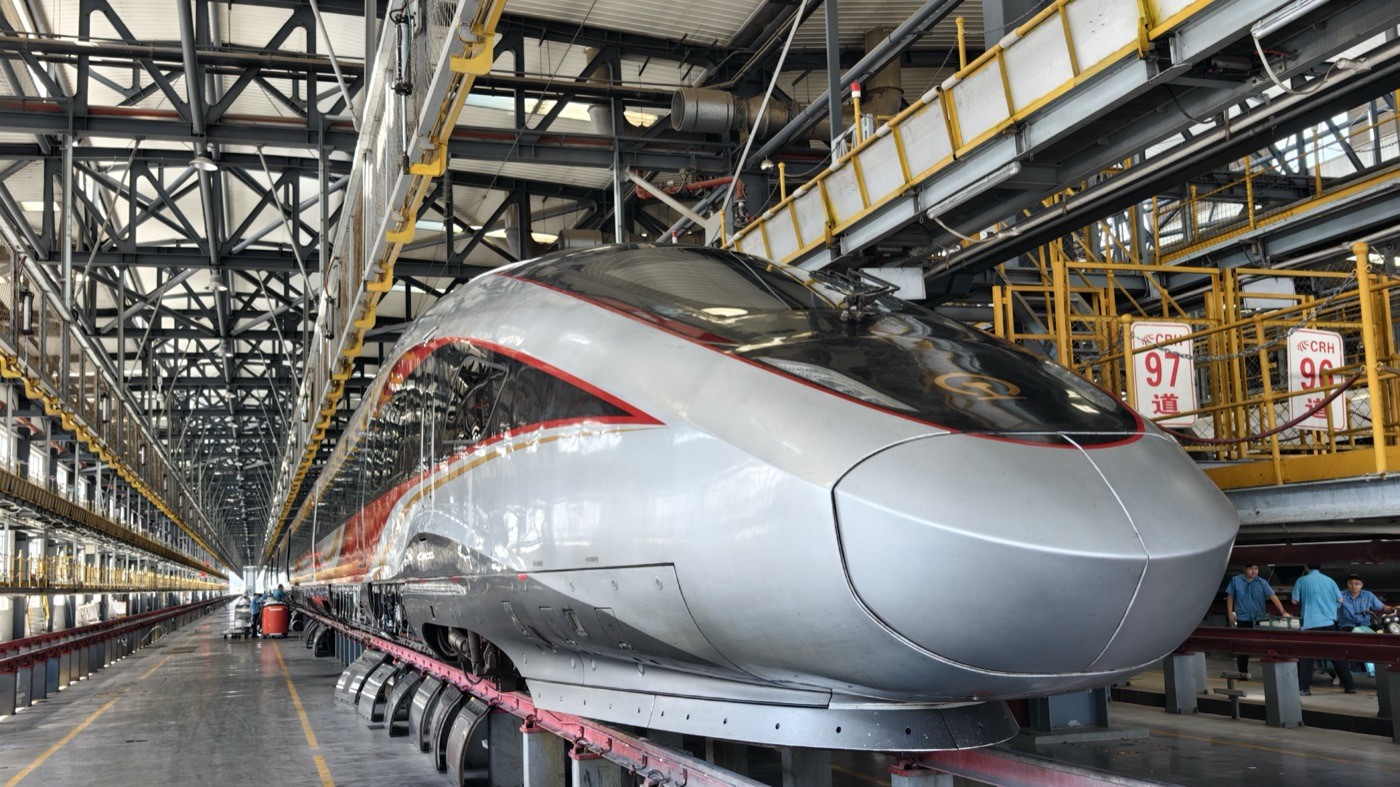
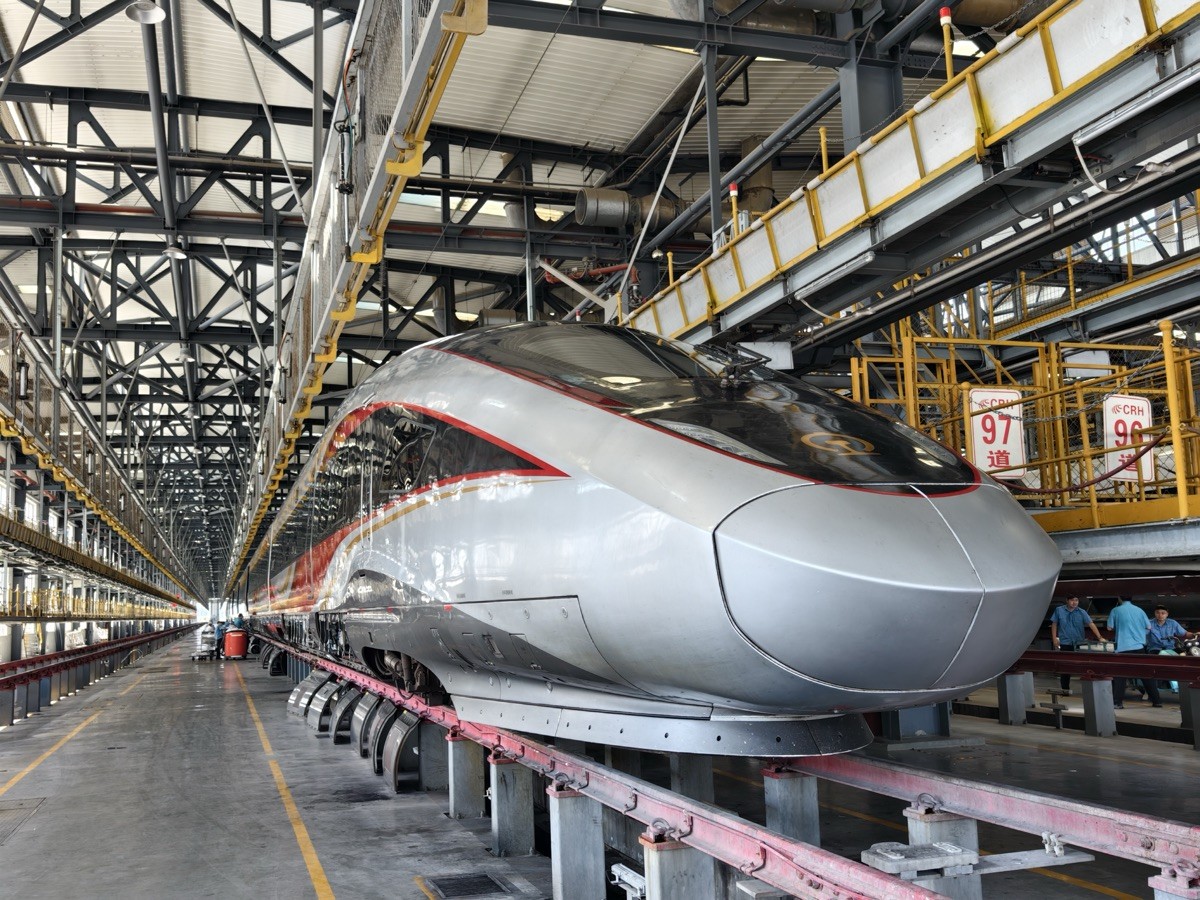
The words "railroad company" describe at least six different kinds of organisation, and they do not buy, own or operate anything alike. A Class I freight railroad owns thousands of route miles and its own fleet. A national railway is a state body carrying a public service obligation as well as freight. A metro authority may own the track and franchise every train on it. A contractor turns up on your track with machines and crews and leaves when the possession ends. Getting the type wrong at the start sends a procurement enquiry to an organisation that cannot supply what you need, or a supplier enquiry to an organisation that is your potential customer instead. This guide separates the categories, gives the verifiable tests that tell them apart, and explains what changes in the conversation once you know which one you are talking to.
In one sentence: the fastest way to classify any railroad company is to ask what it owns, what it is paid for, and who regulates it — an operator earns fares or freight revenue, an infrastructure manager earns access charges, and a contractor is paid against a contract for work performed.
What the Term Railroad Company Actually Covers
In everyday use the term covers everything from a continental freight system to a two-person track maintenance firm, and the confusion is not merely linguistic. The classifications that matter commercially come from three different places, and they are not interchangeable:
- Regulatory classes. In the United States the Surface Transportation Board sorts carriers by annual operating revenue into Class I, Class II and Class III under 49 CFR Part 1201. The thresholds are re-indexed every year for inflation using a deflator drawn from the Producer Price Index for line-haul railroads. For the 2025 reporting year the Class I threshold is $1,094,774,354 and the Class II threshold is $49,143,204; anything below Class II is Class III.
- Ownership and mandate. A state railway, a municipal transit authority and a listed freight carrier are all "railway companies" and are answerable to entirely different masters — a ministry, a city government, or a shareholder base.
- Function in the value chain. Some companies run trains. Some own the track those trains run on. Some own only the rolling stock. Some own none of it and are paid to maintain what others own.
The regulatory classes are the most frequently misused, because the label sounds like a quality or scale judgement when it is nothing of the kind. The Class I test is a revenue reporting rule. It determines which carriers file which reports with the regulator. It is not a service rating, not a ranking of competence, and not a statement that a Class I is the right partner for a given job. A regional railroad with 400 route miles may well be the correct counterparty for a track project while a Class I would not take the enquiry.
The practical consequence is this: never qualify a company by its class alone. Establish first whether it operates, owns, builds or supplies — and only then look at size.
Freight Railroads: Class I, Regional and Short Line
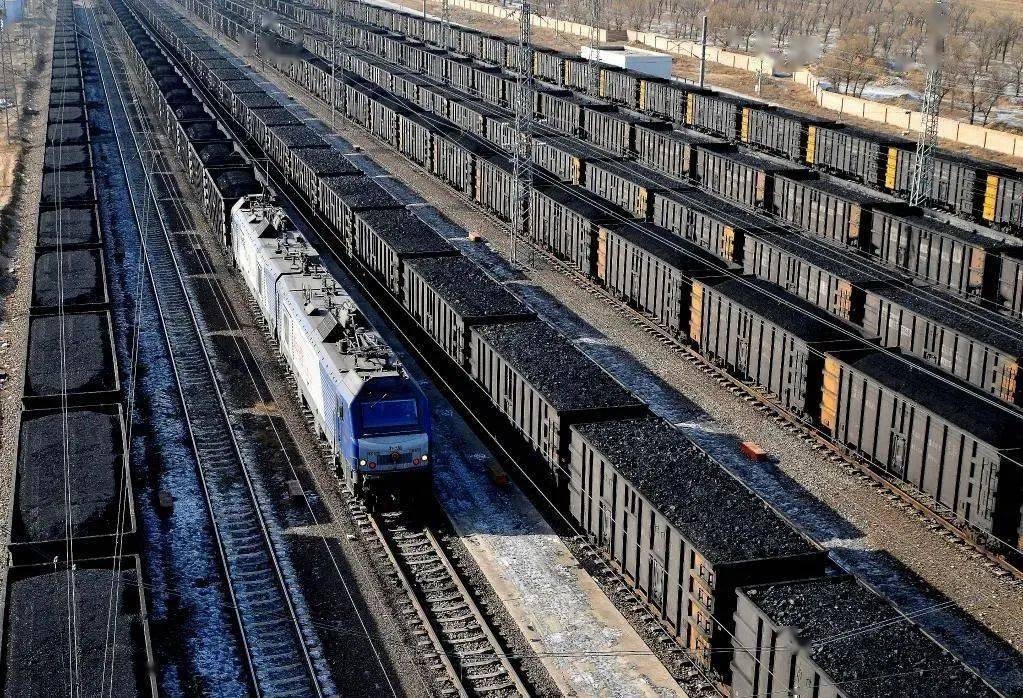
Freight railroads exist to move goods for revenue, and in North America they are classified by that revenue. The structure has consolidated dramatically: in 1976 there were 30 independent Class I systems made up of 63 Class I railroads. Today there are seven Class I railroads operating in North America — BNSF Railway, CSX Transportation, Norfolk Southern, Union Pacific, Canadian Pacific Kansas City, Canadian National, and Kansas City Southern de México. Amtrak, which is a passenger operator, also clears the revenue threshold and is therefore classified as a Class I carrier.
The most recent structural change came in April 2023, when Canadian Pacific acquired Kansas City Southern in a transaction valued at approximately $31 billion, creating CPKC — the first single-line railway connecting Canada, the United States and Mexico. The merger was approved with an unprecedented set of conditions including a seven-year oversight period. A further proposal announced in July 2025 would combine Union Pacific and Norfolk Southern, which if completed would create a network of more than 50,000 route miles across 43 states — an outcome that remains subject to regulatory review.
Behind the seven large systems sits a much larger population of small ones. Class II and Class III freight railroads — regional and short line carriers — number around 615 in North America. Together with the Class I systems they form a freight network of roughly 140,000 route miles, carrying about 153,000 direct rail jobs. The economics are extremely top-heavy: Class I carriers account for roughly 67% of track mileage, nine in ten rail-related employees, and 94% of freight revenue. Nearly all of the remaining revenue and most of the network's operators are small companies that exist to feed traffic onto the big systems and to serve a specific industrial base.
That distribution matters when you are looking for a counterparty. If your requirement is a switch, a siding, a short branch or a local industrial spur, the company that owns it is almost certainly a Class III operator running a handful of locomotives — not the Class I whose name is on the main line it connects to.
What a Freight Railroad Owns That Others Do Not
A North American freight railroad is generally vertically integrated: it owns its track, its right of way, its locomotives and its freight cars, and it employs its own track forces. That is a meaningful difference from the European and British model, where owning the track and running the trains are often separate businesses. When a freight railroad invites a supplier onto its property, the supplier is dealing with an organisation that owns the entire asset — which means the technical standards applied to the work, and the consequences of getting it wrong, belong to the same balance sheet.
Freight railroads also tend to be the most advanced buyers of track maintenance technology, because their economics are driven by tonnage and axle load rather than by timetable. A heavy-haul corridor under 30 to 40 tonne axle loads consumes rail, sleepers and ballast at a rate that makes mechanised grinding and accurate wear measurement a direct operating cost decision rather than a discretionary purchase.
National Railway Operators: State Ownership and Integrated Networks
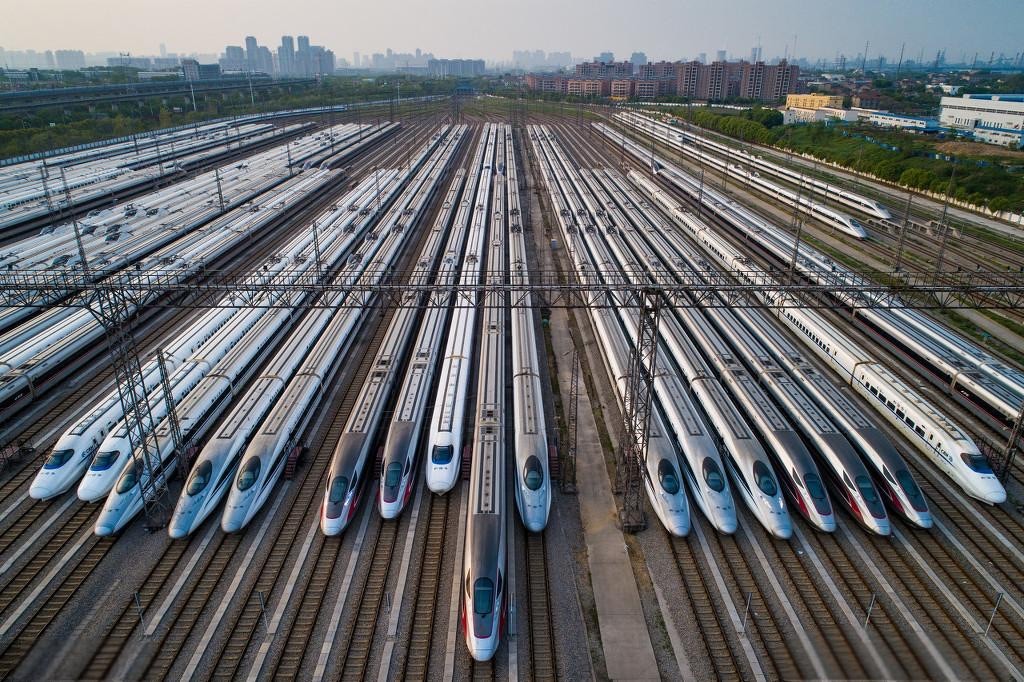
A national railway company is a state body, and it is bought, funded and governed by rules that have no counterpart in the freight world. It is normally expected to provide passenger service as a public service obligation — running trains that lose money because the service is required, not because it is profitable — while earning its margin from freight.
China Railway. The China State Railway Group operates the largest network in the world by high-speed mileage. As of 2025 the national network reached 165,000 km of route, of which high-speed rail exceeded 50,000 km; electrification stands at 76.7% and double-tracking at 61.2%. National railway freight traffic totalled 4.068 billion tonnes and passenger journeys 4.258 billion, and transport revenue passed CNY 1 trillion for the first time, with total assets of CNY 10.2 trillion.
Indian Railways. Indian Railways is a departmental undertaking of the Ministry of Railways and one of the largest civilian employers in the world, with a workforce of roughly 1.25 million. Its network runs to about 68,000 route kilometres, carrying over 13,000 passenger trains and more than 11,000 freight trains a day, and moving 1.617 billion tonnes of freight in 2024-25. Electrification reached 99.1% of the network by October 2025, and the ministry reports that the resulting reduction in diesel use saved roughly INR 6,000 crore in fuel in a single year.
European state operators. Deutsche Bahn, SNCF and the various components of the former JNR in Japan occupy the same category: state-linked, passenger-dominated, freight-carrying, and subject to political decisions about fares and investment that a commercial carrier would never make.
Three characteristics distinguish this group commercially:
- Cross-subsidy. Indian Railways is the textbook case. Passenger fares are held below cost for political reasons, and the shortfall is recovered by loading high tariffs onto freight. The predictable result is that cost-sensitive cargo — cement, steel, containers, finished goods — migrates to road, and rail's share of land freight declines over decades. Railway managers in this category are permanently under pressure to reduce unit maintenance cost.
- Public accountability for procurement. A state railway buys through published tender, under national procurement rules, with qualification requirements that a private buyer would never impose. Suppliers must be prepared for registration, certification and audit as a condition of being allowed to bid at all.
- Capital investment decided politically. New lines, electrification and rolling stock programmes follow national plans and budget cycles rather than rate-of-return calculations. India's electrification programme and dedicated freight corridors, and China's five-year network expansion, are both examples of investment decided at the level of the state.
For a supplier, this is the segment where the sales cycle is longest, the documentation burden is heaviest, and the volume can be largest. It is also the segment where a technical reference on a similar network carries the most weight, because publicly accountable buyers need to show why a source was selected.
Urban Transit Operators: Authorities, Concessionaires and Their Contractors
Urban rail is the category most often misunderstood, because the organisation whose name is on the train is frequently not the organisation that runs it. Three distinct roles exist, and they can sit in one company or in three separate ones:
- The authority — a public body that owns or controls the network, sets fares, plans the service and holds the budget.
- The concessionaire or franchisee — a company contracted to operate trains to the authority's specification, usually for a fixed term.
- The maintenance contractor — a company contracted to maintain track, signalling or rolling stock, again for a defined term.
Transport for London illustrates the separation clearly. TfL was established in 2000 under the Greater London Authority Act and is responsible for the London Underground, London Overground, the Elizabeth line, the Docklands Light Railway, buses, trams and principal roads, with a workforce of about 28,000 and a budget of around £10.3 billion, of which roughly 47% came from fares in the year reported. Yet the London Underground is run by a wholly owned subsidiary, and most of the remaining rail services, the trams and the majority of bus routes are contracted out to private operators under a concession model. When someone says "I work for TfL", "I operate for TfL" and "I maintain for TfL" they may be describing three different employers.
New York shows a different split of the same roles. The Metropolitan Transportation Authority runs nearly all of New York City's public transport — subway, buses and commuter rail including the Long Island Rail Road — across a 5,000 square mile region with over 15 million residents, while the Port Authority of New York and New Jersey separately manages the Trans-Hudson rail crossing and the region's airports, ports and bridges. Governance is layered: the MTA board and chief executive are appointed by the state governor, who also approves the budget and five-year capital programmes, which means the capital spending that maintenance contractors depend on is set through a political process.
A third model exists in which the authority has almost no operating role at all: it plans, coordinates and integrates ticketing while multiple public and private companies run the services. German transport associations, Île-de-France Mobilités in Paris and the metropolitan transport commissions in Korea are examples.
The commercial implication is direct. On a transit network the maintenance budget is usually a service contract, not an ownership decision. The party that signs the grinding or inspection contract may be the authority, the concessionaire, or a tier-one maintenance contractor, and each has a different tolerance for risk, a different acceptance standard, and a different procurement route. Discovering which one you are talking to is more important than discovering the size of the network.
Transit maintenance also works to a different physics from main line freight. Possessions are short — measured in hours, often at night — the track is in a tunnel or on an elevated structure, dust and noise are constrained, and the defect mix is dominated by short-pitch corrugation and tight-radius wear rather than by tonnage-driven fatigue. The operating constraints of that environment are set out in our guide to grinding metro and light rail track.
Infrastructure Managers and Who Actually Owns the Track
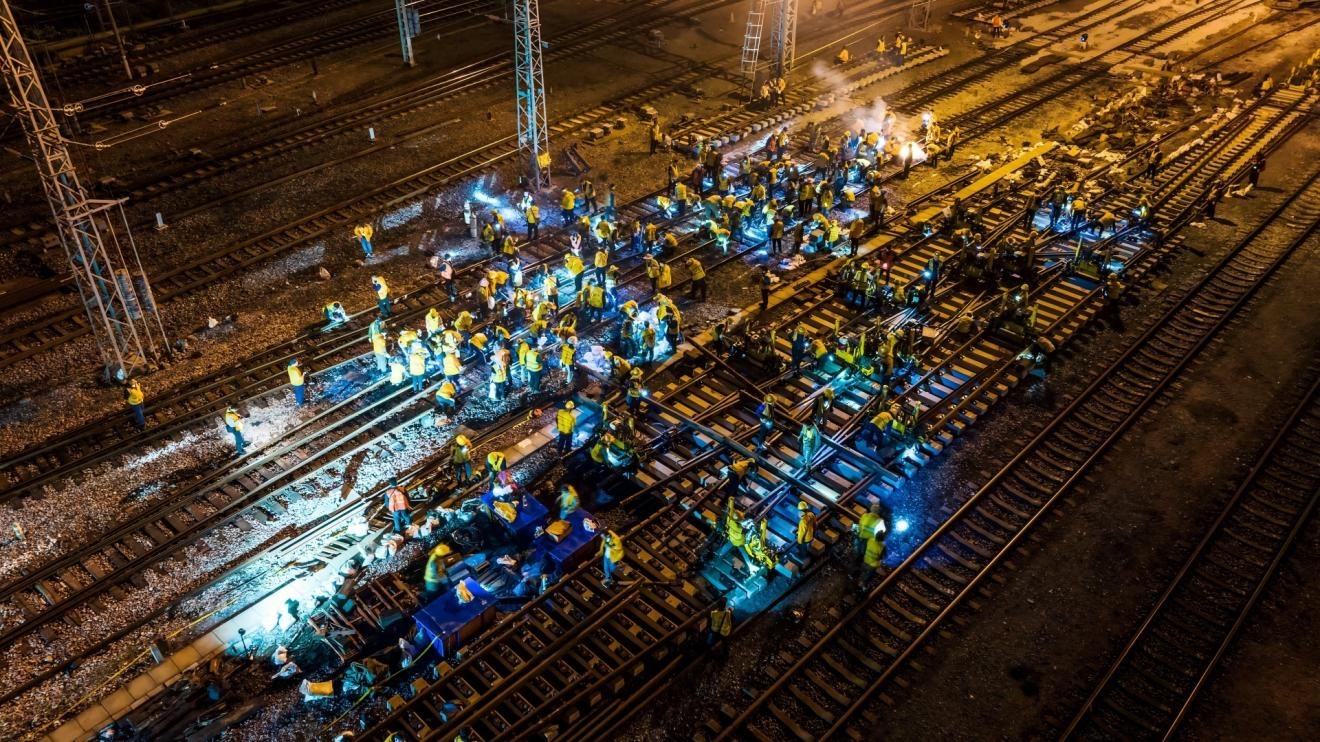
In much of Europe the company that owns the railway is not the company that runs trains on it. The infrastructure manager (IM) owns and maintains the track, signalling and structures, and charges train operators for access. Operators pay for the right to run; the IM is paid to keep the asset available. Britain's Network Rail is the classic example, with train operating companies running services over infrastructure they do not own.
This split changes what "maintenance" means. In a vertically integrated freight railroad, the person signing the grinding contract also owns the rail and bears the cost of replacing it — so they are motivated to pay for prevention. In a separated system, the IM bears the asset cost while the operator bears the delay cost of a possession, and the two have structurally opposed interests in how long a possession should last. Suppliers working on separated networks learn to build two business cases: one for the asset owner about rail life, and one for the operator about service disruption.
The separation question is not academic for anyone selling into rail. It determines who the budget holder is, what the acceptance standard looks like, and whether a technical decision can be taken by an engineer or has to survive a regulatory process. When you approach a "railway company" in continental Europe, establish early whether it is the IM, an operator, or a holding group containing both — the answer decides the entire sales conversation.
Rail Contractors: The Companies That Bring Equipment to Your Track
A rail contractor is paid to perform work, not to own or operate a railway. The distinguishing feature is that it arrives with machines and people, executes under a contract with defined scope and acceptance criteria, and leaves. It may specialise in grinding, welding, track renewal, resurfacing, inspection or signalling.
This is the segment most likely to be confused with a supplier, because grinding contractors and grinding wheel manufacturers can appear in the same tender and describe themselves in similar language. The differences that matter:
| Contractor | Supplier | |
|---|---|---|
| What is sold | Work performed, measured against acceptance criteria | Products, delivered to specification |
| Who owns the equipment | The contractor | The buyer |
| Risk carried | Schedule, productivity, restitution of the track | Conformance of the deliverable |
| Typical pricing | Per kilometre, per possession, per shift | Per unit, per order |
| Where it appears | Operations on your track | Your stores or your machine |
Contractors come in a wide range of sizes, from multi-national grinding and welding specialists with their own fleets of grinding trains to firms that own two tampers and work within one region. The evaluation criteria for choosing between them — what evidence of capacity to demand, what certification is non-negotiable, which claims cannot be substantiated — are treated in our guide to selecting rail grinding companies and in the practice of structuring and accepting the contract itself in our review of rail grinding services and their commercial models.
For a track owner, a contractor is a way of accessing capability without owning it. For a manufacturer, a contractor is often a channel rather than a competitor: the grinding train that does the work consumes wheels supplied by someone, and the specification of those wheels is decided by the machine and the job.
Equipment Manufacturers and Suppliers: The Other Side of the Table
The last category does not run, own or maintain trains at all. It makes and sells the things that the other categories use — grinding machines and grinding trains, bonded abrasive wheels, rail saws and welding equipment, ultrasonic flaw detectors, track gauges and geometry measurement systems, fastenings, sleepers and turnout components.
Manufacturers divide further by what layer of the machine they supply. An original equipment manufacturer builds the machine that carries its own brand. A component or consumable supplier makes the part that wears — the grinding wheel, the cutting blade, the measuring sensor. Both are "railway suppliers", and both compete for the same maintenance budget, but they are evaluated on completely different evidence. A machine purchase turns on capital cost, productivity, service network and resale value. A consumable decision turns on removal rate, wheel life per kilometre, burn behaviour against the rail grade, dimensional conformance to the machine head, and delivery reliability.
Two structural facts about this segment are worth holding on to. First, consumables are where the operating cost of grinding actually sits — the number of passes to clear a defect programme, and the metres of wheel consumed doing it, decide the cost per track kilometre far more than the hourly rate does. Second, the wheel has to match the machine, not a generic profile: diameter, bore, thickness, abrasive specification and rated speed are all set by the grinding head it will run on. Getting this wrong is the most common and most expensive specification error in the category, and it is the reason a supplier that can manufacture a non-standard format is worth more than a catalogue.
For anyone comparing quotations in this space, the technical background on what drives wheel cost and life is worth reading before the commercial discussion: what actually determines rail grinding wheel specification and price and how cost per kilometre is calculated in practice.
Railroad Company Types Side by Side: A Comparison
Read across the table for the question you are actually asking: who owns the track, who pays for it, and who decides what maintenance happens on it.
| Type | Owns | Revenue from | Regulated by | Maintenance decision made by |
|---|---|---|---|---|
| Class I freight railroad | Track, right of way, locomotives, wagons | Freight rates | National regulator (e.g. STB, 49 CFR Part 1201) | Its own engineering function; capital budget |
| Regional / short line freight | A specific branch or industrial network | Freight rates, sometimes subsidy | Same regulator, lighter reporting | Its own small engineering team; often contracted out |
| National railway operator | The network (or most of it) plus rolling stock | Fares, freight, state support | Ministry and national audit | Central engineering directorate under public procurement rules |
| Transit authority | Network and stations, or a concession | Fares, government grant, borrowing | City or state government | Authority engineering, delivered through contractors |
| Concessionaire / franchisee | Sometimes rolling stock only | Contract payment, sometimes revenue share | Contract terms with the authority | Bounded by the franchise agreement |
| Infrastructure manager | Track, signalling, structures | Access charges from operators | National rail regulator | Its own asset management plan |
| Rail contractor | Its machines and crews | Contract payments | Client terms; safety regulator | None — executes to the client's specification |
| Equipment manufacturer / supplier | Its factory and product range | Product sales | Product standards (e.g. TB/T, GOST, EN, AREMA) | None — specified by the buyer |
One reading of that table is worth stating plainly. Only the first six rows are buyers of rail maintenance. The last two are sellers. A great deal of wasted enquiry traffic comes from treating a seller as a buyer, or worse, from a seller approaching a company two rows up and discovering it is a competitor rather than a customer.
How to Identify Which Type of Railroad Company You Are Dealing With
Six checks will place almost any organisation in the table above. None requires privileged information.
- Ask what it owns. Track? Rolling stock? Machines? Only a brand? The answer immediately separates operator, infrastructure manager, lessor, contractor and supplier. A company that owns no track but performs grinding is a contractor.
- Ask what it is paid for. Freight revenue, fares, an access charge, a contract price, a unit price or a licence fee. Payment mechanism is the most reliable single classifier — operators are paid for movement, infrastructure managers for availability, contractors for output, suppliers for delivery.
- Ask who regulates it. A regulator, a ministry, a city authority, a client contract, or a product standard. A freight carrier answers to an economic regulator; a state railway answers to a ministry; a contractor answers to its client and the safety authority.
- Look at the reporting obligations. In the United States, whether a carrier files an annual R-1 report tells you its regulatory class. Class I carriers file in detail; the reporting burden decreases with class. Public authorities publish budgets and capital plans; contractors do not.
- Check the registration and qualification record. Companies bidding for public work appear on procurement registries and hold the certifications their market requires. A supplier claiming railway qualification should be able to produce the certificate, its scope, its issuing body and its validity dates. Where a supplier cannot name the standard its product was tested against, the claim has no content.
- Search the name as a buyer would. Prospective employees and partners search company names alongside terms like *login*, *application*, *careers* and *verification*. Those searches exist because the public cannot tell from a website whether a company is an operator with a hiring gate, a contractor with a safety induction, or a trading name with no assets behind it. If a company's public record cannot answer which of the three it is, that absence is itself information.
The failure mode to avoid is assuming that a familiar name on a large network means the same company owns the decision. In separated and franchised structures the entity that answers the telephone is frequently not the entity that owns the track, the trains or the maintenance budget.
Why the Distinction Changes What You Should Ask For
Knowing the category changes the enquiry, the evidence requirement and the commercial terms. Four consequences follow.
The specification changes. A vertically integrated freight railroad with 35 tonne axle loads is buying removal depth and profile outcome against a tonnage-driven defect programme. A transit authority with a three-hour night window is buying a machine and a method that fit inside a possession and control dust and noise. A state railway buying under public procurement is buying documented conformance to a national standard. The same product is specified three different ways, and a supplier that quotes one specification to all three is telling you it has not done the work.
The acceptance standard changes. Freight carriers tend to manage to an internal engineering standard and a revenue-tonnage consequence. Transit operators work to a contractual acceptance standard, often with noise and ride-quality criteria attached. State railways work to published national standards with formal handover documentation. A quote that never mentions which standard the work will be accepted against cannot be compared with one that does.
The procurement route changes. A private freight carrier can qualify a supplier on technical evidence and a trial, and move quickly. A state railway must run a tender under national rules, which may require registration, a local agent, certified test reports from an accredited laboratory and a demonstrated supply record. A metro authority may pass the decision to a maintenance contractor who then buys on the authority's behalf. Each route has a different lead time, and none of them can be compressed by enthusiasm.
The risk allocation changes. In a contractor engagement, the contractor carries productivity and schedule risk. In a supply engagement, the buyer carries specification risk from the moment the order is placed. That is why a supplier that will not interrogate your machine specification, your rail grade and your target profile before quoting is transferring a risk back to you that it is better placed to hold. The dimensional matching problem between grinding wheels and machine heads, and the rail-grade dependence of wheel behaviour, are both treated in our guide to choosing a rail grinder and its consumables.
Working with RailwayCare as a Rail Equipment Supplier
To place ourselves in the structure above: RailwayCare is a manufacturer and supplier, not an operator, not an infrastructure manager and not a maintenance contractor. We do not own track, we do not run grinding campaigns on your network, and we do not bid against the contractors who do. We make the consumables and supply the field equipment that both operators and contractors use — bonded abrasive rail grinding wheels for grinding trains, switch and turnout grinders and hand-held machines, rail saws and welding equipment, ultrasonic flaw detectors, digital track gauges and track geometry measurement systems.
Being clear about that position is deliberate, because it tells you what we can and cannot help with. We can specify a grinding wheel against your machine head, your rail grade and your acceptance standard, and demonstrate conformity with third-party test evidence. We can supply the measuring instruments that let you prove the geometry of the finished work. We cannot act as your contractor, and we will not pretend that a wheel sale is a maintenance programme.
What we can offer a railway at any position in the table is a technical counterparty rather than a catalogue. If you tell us the machine, the rail section and grade, the defect you are trying to remove and the standard the work will be accepted against, we can work from that to a specification. If you are buying through a contractor, we will work to the contractor's programme and the owner's acceptance criteria together, because those are the two documents that decide whether the work passes.
Where you are looking for a partner rather than a transaction, supply outside China runs through our global partnership network, covering distribution, agency and OEM/ODM arrangements, and project-based collaboration through project cooperation. Our manufacturing and qualification background is set out on our about us page. If you are not sure which category of supplier you need, describe the job and we will tell you honestly whether it is ours.
WhatsApp: +86 15072332788 Email: simon.wang@railwaycare.com
What is the difference between a railroad and a railway company?
In practice, very little — the words are largely regional. "Railroad" is the usual term in North America and "railway" in Britain, Europe and most Commonwealth countries. The distinction that carries commercial meaning is not the word but the function: an operator runs trains for fares or freight revenue, an infrastructure manager owns the track and charges for access, a contractor is paid to perform work, and a supplier sells products. Two organisations both described as railway companies can be a customer and a supplier to each other.
How do I know if a company is genuinely a railroad operator?
Ask it to name the track it owns or the services it is contracted to run, and check that answer against a public record — a network map, a regulator's carrier list, a franchise award, or a published timetable. An operator can be placed on a map. If a company describes itself as a railway business without being able to say which track it operates, which trains it runs or which authority licenses it, treat the description as marketing rather than fact. The same test works in reverse for suppliers: a genuine manufacturer can name the standard its product is tested against and produce the certificate.
Why does a freight railroad buy differently from a transit system?
Because their costs fall in different places. A heavy-haul freight railroad is buying rail life against tonnage — the value of grinding is measured in how much longer the rail lasts under 30 to 40 tonne axle loads, and it can be calculated. A transit operator is buying possession efficiency and defect control inside a short night window, with noise, dust and ride quality as acceptance criteria. The same grinding wheel is therefore specified by removal rate and life in one case and by machine fit, cut depth and surface outcome in the other. A supplier that cannot tell which of those two conversations it is in will quote the wrong product.
What should a railway supplier be able to prove before an order?
Four things, and each is checkable. The standard its product was manufactured and tested against, named specifically — not "international quality standards". Third-party test evidence from an accredited laboratory, rather than a specification sheet it wrote itself. Dimensional and rated-speed conformance to the specific machine the product will run on. And a supply record on comparable machines or networks, which for a consumable means pass-kilometres per unit and removal performance, not a customer logo wall. Where a supplier cannot produce the first two items, the remaining claims cannot be evaluated at all.
Can one supplier serve operators, contractors and manufacturers at once?
It happens, and it is a warning sign rather than a recommendation. A company that claims to operate networks, contract maintenance work and manufacture the consumables involved is describing three businesses with different assets, different risks and different regulators. In practice organisations specialise, and the specialisation is useful information: it tells you where their cost base sits and what they are good at. Our own position is deliberately narrow — we manufacture and supply grinding wheels and field equipment, and we work with the contractors who execute the work rather than competing with them. The evaluation criteria for choosing between contractors, if that is what you need, are set out in our guide to rail grinding companies and how to select them.
Where does a grinding wheel supplier sit in this structure?
At the bottom of the table, on the selling side, and the position is worth understanding before you negotiate. A grinding wheel is a consumable: it is specified by the machine head that will turn it, the rail steel it will cut and the surface the operator has to accept. That means the specification decision is jointly owned — the machine constrains the format, the rail grade constrains the abrasive, and the acceptance standard constrains the removal depth per pass. A supplier that comes to you with a catalogue and no questions has not understood this. A supplier that asks for the machine, the grade and the standard before quoting has. What those three variables do to wheel life and cost per kilometre is set out in our analysis of what drives rail grinding wheel price.