Rail Grinding Machine Manufacturers: Global Directory
- Share
- publisher
- RailwayCare
- Issue Time
- Sep 9,2026
Summary
Seventeen rail grinding machine builders mapped by machine family and wheel format, with twelve factory audit questions and a twenty-year cost structure indexed to capital.
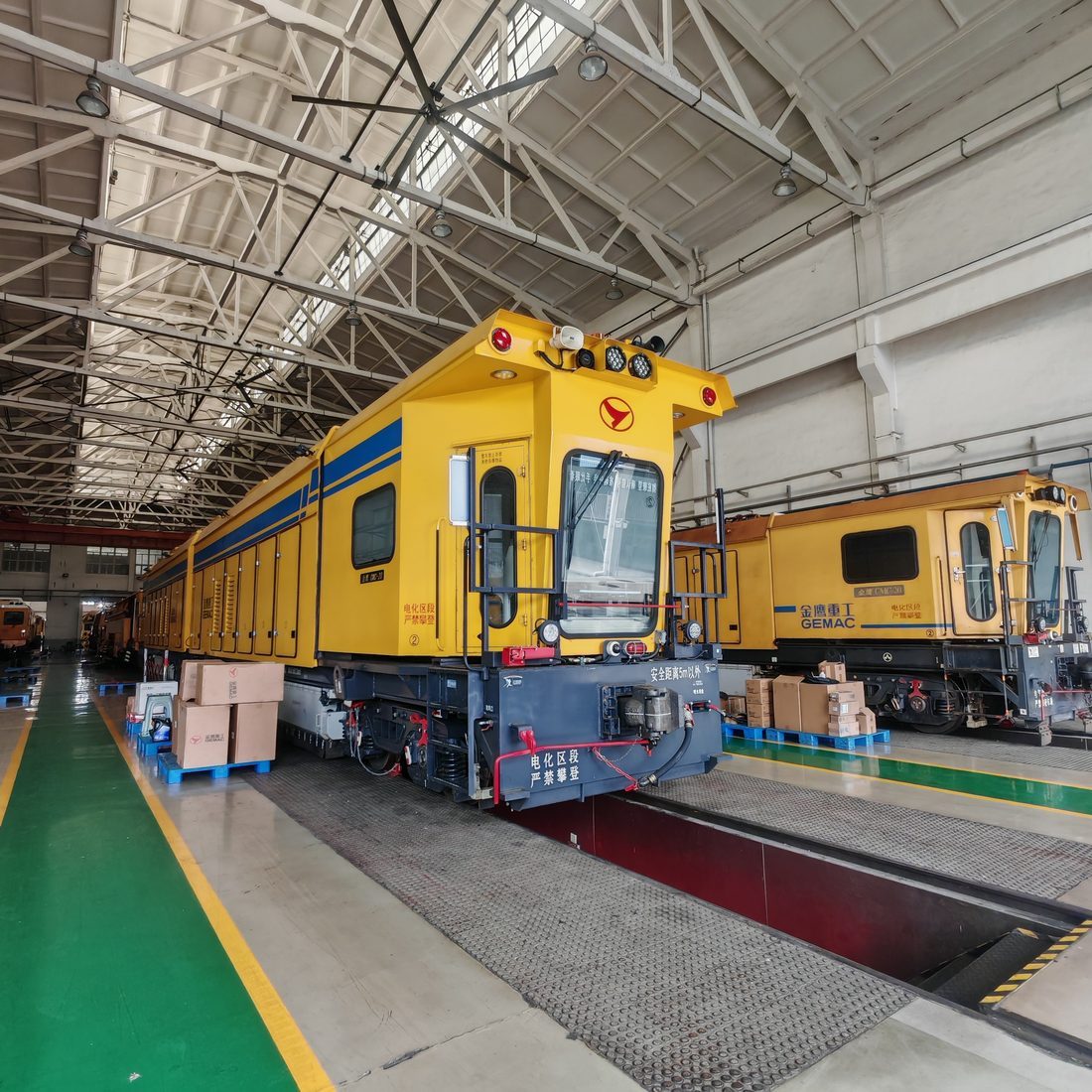
A rail grinding train costs millions and stays on your network for decades. But the machine is only half the system. The other half is the grinding wheel bolted to each of its 12, 48 or 96 grinding heads, and every machine builder has firm views about which wheels are permitted on its equipment.
For maintenance managers and procurement teams, understanding the landscape of rail grinding machine manufacturers is the first step towards a grinding programme that is reliable, measurable and affordable. This directory maps the builders worldwide — grinding train OEMs, hand-machine makers and road-rail specialists — and sets out which wheel format each family takes.
Direct answer
Most buyers approach this market the wrong way round. They shortlist brand names first, then discover that the shortlist has locked them into a consumable supply chain for twenty years. The order that works is: architecture, then machine family, then wheel format, then brand. This guide follows that order.
The global rail grinding machine market was worth roughly USD 482 million in 2024 and is growing at about 3.3% a year towards USD 628 million by 2031. China accounts for around 39% of units sold, Europe 24% and North America 15%, with Europe and China the two production bases. The machine builders below are not interchangeable, and the differences that matter are rarely the ones in the brochure.
Why the Manufacturer Landscape Matters
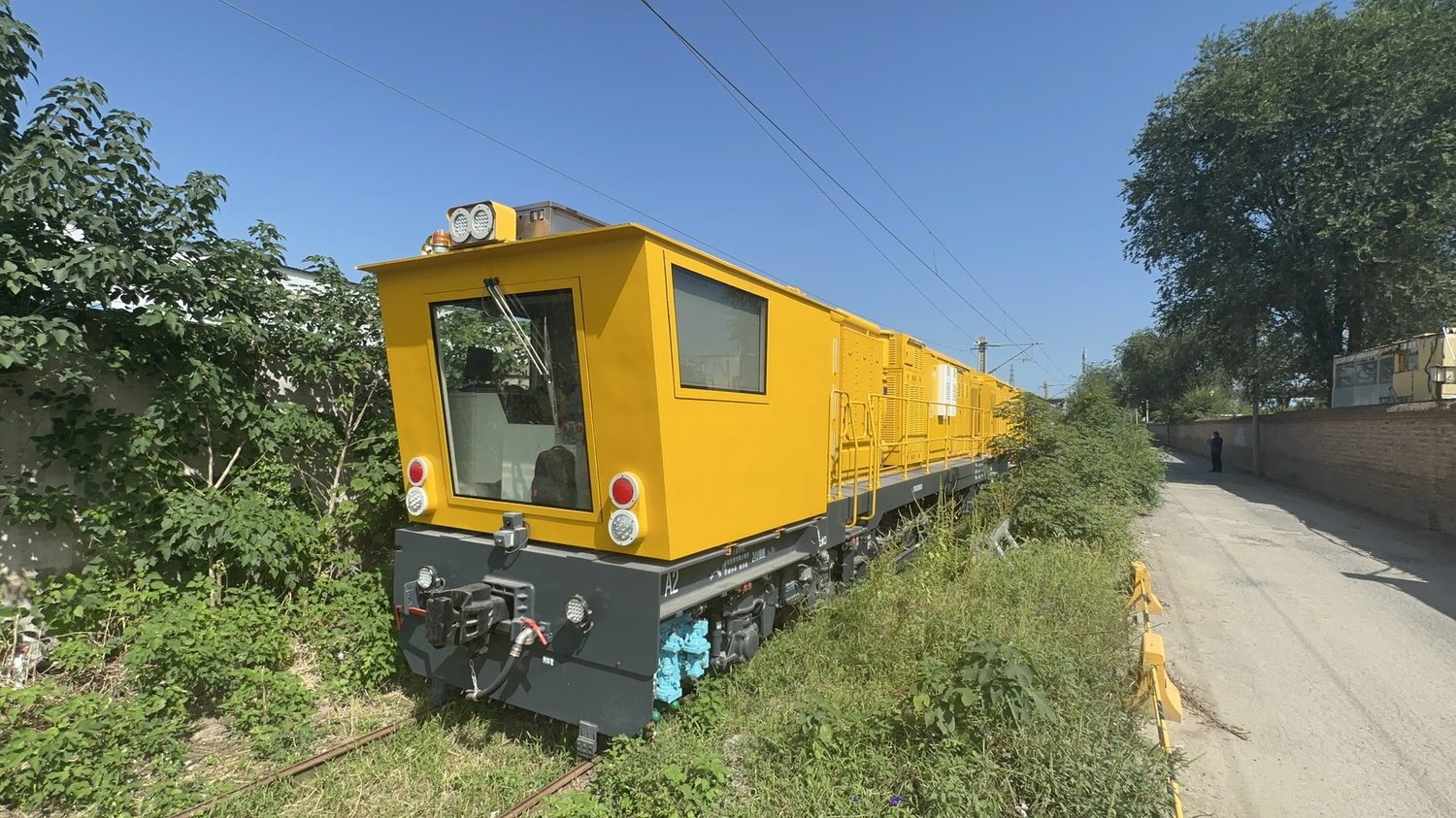
Rail grinding stopped being a niche operation some time ago. As networks age and axle loads rise, grinding machines and the consumables that feed them have become recurring, budgeted purchases rather than one-off capital projects.
The builder you choose matters at three levels, and only the first is usually discussed.
Machine level. Active grinding trains, high-speed passive systems and hand machines remove metal by completely different physics. A builder that is excellent at 96-head production grinding is usually not the best source for a switch grinder, and almost no builder covers all three architectures well. Picking a builder means picking an architecture, whether you intended to or not.
Consumable level. Each machine family specifies its own wheel dimensions, speed rating, bore and bond type. A wheel that fits a Harsco-class machine will not fit a Speno-class or Loram-class machine, and the difference is not cosmetic — it is 260×90×154 against 180×105×90 against 260×83×152. The machine decision therefore sets a twenty-year consumable specification, which is why it deserves more scrutiny than the purchase price.
Service level. Machines are bought once. Wheels, technical support and grinding-programme advice are bought for the life of the asset. A builder with no service footprint in your region is a builder whose machine will be running below its capability within two years, because grinding parameters are tuned, not installed.
The three levels interact in a way that is easy to miss during a tender. A builder strong at machine level but thin at consumable level will deliver a machine whose wheels are proprietary, expensive and slow to arrive; a builder strong at consumable level but thin at service will deliver wheels that nobody on the network knows how to optimise. The best combination in this market is rarely the biggest brand — it is the one whose machine architecture, wheel specification and local support are all legible to you. That is why the rest of this directory is organised by machine family rather than by company size.
The Grinding Train Builders: A Working Map
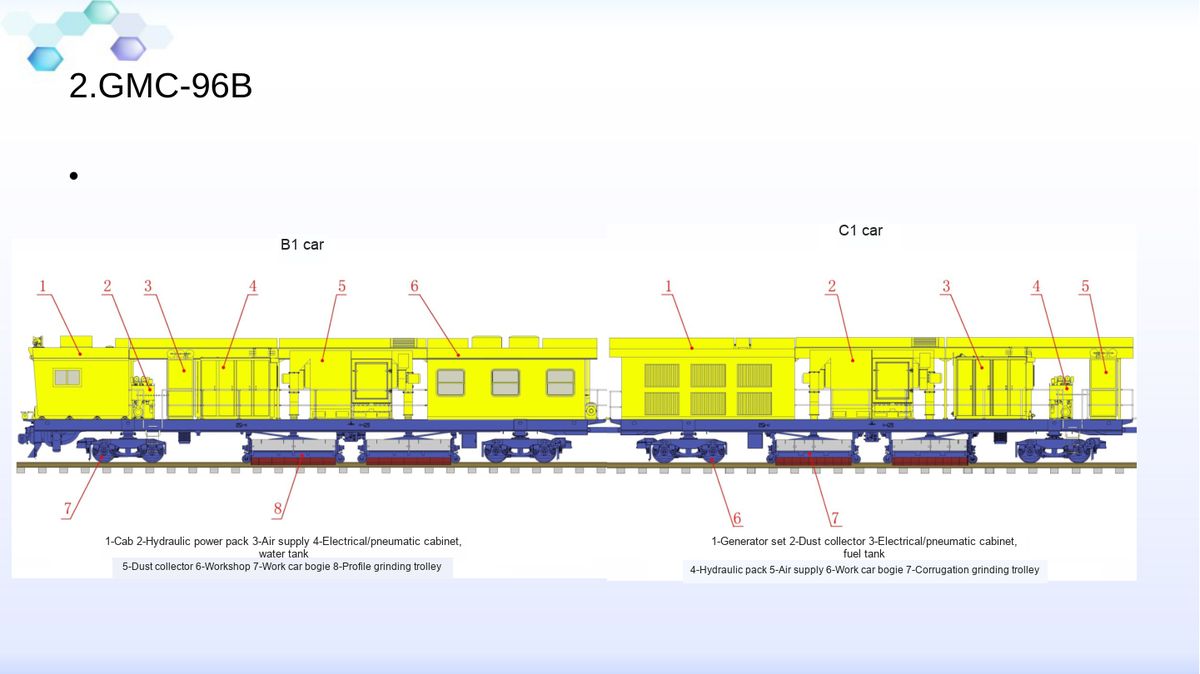
The production grinding train market is not crowded. Roughly a dozen builders worldwide supply the machines that grind kilometres of mainline inside a possession window, and they divide along two axes: the architecture they build, and the networks they were designed for.
Table 1 sets out the production builders — the machines that grind kilometres of mainline in a possession window.
| Builder | Country | Production platforms | Typical deployment |
|---|---|---|---|
| Loram | USA | RG400, C44, RGI | Heavy haul, freight, mainline |
| Harsco Rail | USA | PGM-96C, PGM-48 | Heavy freight, mainline, transit |
| Speno International | Switzerland | RR24M, RR48M | Mainline, high-speed, metro |
| Vossloh High Speed Grinding | Germany | HSG-2, HSG-city | High-speed preventive (passive) |
| CRRC (Beijing Erqi) | China | GMC-96B, GMC-48JS, GMC-16B | High-speed, heavy haul, metro |
| CRCC High-Tech Equipment | China | GMC series | Metro, urban rail, conventional |
| GEMAC | China | CMC20, GMC-96X | Metro, conventional, turnouts |
| Plasser & Theurer | Austria | ATMO | Mainline, high-speed |
| Schweerbau | Germany | GWM series | Mainline, service contracts |
| Linsinger | Austria | SF03, MG series | Rail milling, heavy defect removal |
Two entries in that table need a note. Plasser & Theurer is often described as a tamping company, but the ATMO grinding system is a genuine production platform and appears on mainline networks. Linsinger machines mill rather than grind — they cut metal with a milling drum instead of an abrasive wheel — and they belong in a grinding directory because they compete for the same budget line and the same possession.
The buyers' shortlist usually settles on four names, for reasons that have little to do with marketing. Loram and Harsco Rail dominate the English-speaking heavy-haul world, and both have built their position on service contracts rather than equipment sales — the machine is often the vehicle for a multi-year grinding agreement. Speno built the European high-speed and metro business, and its technology travelled: the Chinese GMC production trains descend from SPENO technical cooperation, which is why a GMC-96X and a Speno-era wheel specification look familiar to each other. Vossloh took a different route entirely and industrialised passive grinding, which is why HSG appears in high-speed tenders that no active train bid on.
That leaves the rest of the table as specialists rather than contenders. CRRC and CRCC High-Tech Equipment supply the domestic Chinese volume and increasingly export; GEMAC has become the reference point for metro and turnout work in China because its machines are compact enough for depot access; Plasser & Theurer arrives at grinding from a track-geometry background and sells ATMO as part of a broader maintenance fleet; Schweerbau's GWM series is most often met inside a service contract rather than on a purchase order; and Linsinger occupies the milling niche, where very deep defects make cutting cheaper than grinding.
Table 2 covers everything that is not a corridor-scale train: switch and turnout grinders, transit units and specialty platforms.
| Builder | Country | Specialty platforms | Where they are used |
|---|---|---|---|
| Harsco Rail | USA | RGH20C, RGH10C, Mosier | Switches, crossings, transit |
| Loram | USA | RGS, RGT, RGX, LRG, MRG | Specialty, transit, light rail |
| Speno International | Switzerland | SRR16M-1, RPS32 | Metro, tunnel, confined sites |
| CRRC / CRCC | China | GMC-16B class, switch units | Metro, turnouts, depots |
| Mecno Service | Italy | 350 mm wheel series machines | Turnouts, weld finishing |
| L&S (Luddeneit & Scherf) | Germany | RRGM, RGM, LRGM | Turnouts, metro, mainline |
| Autech | Switzerland | AT VM 8000, AT 2200 | Metro, tramway, light rail |
The transit segment deserves its own note, because it is where purchase decisions are most often made on the wrong criteria. Metro operators tend to buy compact units on capital price and depot clearance, then discover that a machine designed for short-window work has a wheel format available from one supplier only. The tight geometry of a metro network is not a reason to accept a proprietary consumable; it is a reason to check the consumable specification before signing, because the depot that cannot store a 96-head train is exactly the depot that will be buying wheels for twenty years.
The structural point is that roughly a dozen builders own the machine platforms worldwide, while the wheel remains an open and competitive market. That asymmetry is what makes a mixed fleet — OEM machines fed by an independent wheel supplier — entirely normal, and often the lowest-cost configuration. The platform is chosen once. The consumable is chosen every grinding season.
The Wheel Format Follows the Machine Family
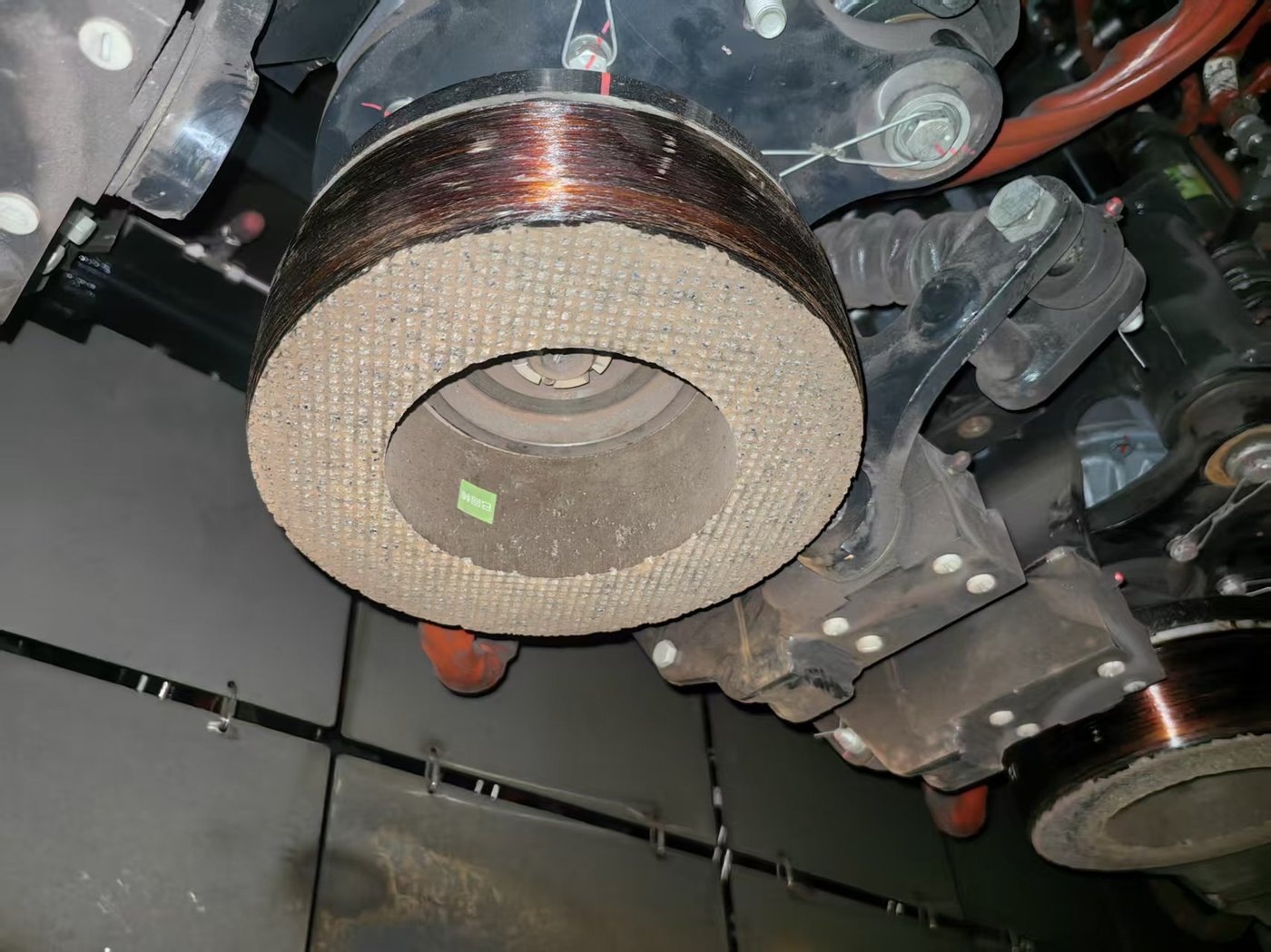
This is the part of the directory that most buyers use in practice, because it is the part that costs money. Table 3 maps the common machine families to the wheel formats they accept.
| Machine family | Typical wheel format (mm) | Speed rating | Notes |
|---|---|---|---|
| Harsco PGM-48 / PGM-96C (GMC-96X class) | 260 × 90 × 154 | 50 m/s | Standard 96-head production format |
| GMC-96B class | 250 × 75 × 150 | 50 m/s | Distinct from the 96X format |
| RGH20C turnout grinder | 280 × 25.5 × 116 | 50 m/s | Thin wheel for switch geometry |
| Switch and hand units (M20 mount) | 150 × 80 × 150, 150 × 77 × 150 | 50 m/s | Interchangeable across builders |
| Speno GMC16A class | 180 × 105 × 90 | 50 m/s | Different bore and thickness |
| Loram production trains | 260 × 83 × 152 | 50 m/s | Closest to the 96X format, not identical |
| Mecno machines | 350 × 60 / 50 / 35 / 25 × 127 | 50 m/s | 350 mm series, four thicknesses |
| HSG high-speed passive systems | Ø119–122.5 × 71.5–74.5 | up to 40 m/s | Different product family entirely |
| Hand machines (Geismar / Robel compatible) | 150 × 70 × M20, 150 × 65 × M20, 125 mm series | 50–80 m/s | Depends on machine spindle speed |
Fit the wrong format and the machine cannot work at all. Fit the right format with the wrong abrasive and it works badly, which is the more expensive outcome because the programme still runs — it just removes less metal per shift and produces a surface that fails acceptance later.
The magnitude is not marginal. Grinding research on a heavy-haul programme measured the difference abrasive quality makes on identical machines and identical profile targets: zirconia alumina achieved a grinding ratio of 41.0, against 22.4 for calcined brown fused alumina and 11.9 for white fused alumina. Compressive strength measured 308 MPa for the zirconia product against 103–124 MPa for the fused aluminas. Same machine, same rail, three times the metal removed per millimetre of wheel wear.
That is the argument for treating the wheel as an engineering component rather than a commodity purchase, and it is why the machine family — not the builder's brand — is the useful unit of analysis.
Reading Table 3 correctly takes four steps, and only the first is usually done.
Match the three dimensions. Diameter, thickness and bore, in that order. Diameter and thickness are on every quotation; bore is the one that gets omitted and the one that stops the machine. A 260×90 wheel with a 152 mm bore will not mount on a spindle machined for 154 mm, and the difference is invisible in a description that reads "260×90".
Match the speed rating to the spindle, not to the train speed. A production train grinding at 14 km/h runs its wheels at 50 m/s. A hand grinder held by one operator can run at 80 m/s. Fitting a 50 m/s wheel on a high-speed hand spindle is a burst risk, and it is a mistake made most often when a depot substitutes a train wheel for a hand wheel because both are "150 mm class".
Match the abrasive to the duty, not to the previous supplier. Zirconia alumina suits high-pressure production grinding and corrugation removal. Fused aluminas are cheaper and adequate for light weld finishing. Moving a zirconia specification into a depot hand-grinding application is a cost with no benefit; moving a fused alumina specification into a 96-head train is a false economy measured in extra passes.
Verify on your own rail. A spec sheet describes a wheel; a field trial describes your result. The three numbers to record are pass-km per wheel, pass-km per millimetre of wheel wear, and Ra at the end of the possession. Those three, measured on your rail type and your machine, are the only figures that transfer reliably into a budget.
Reading the Chinese Machine Market
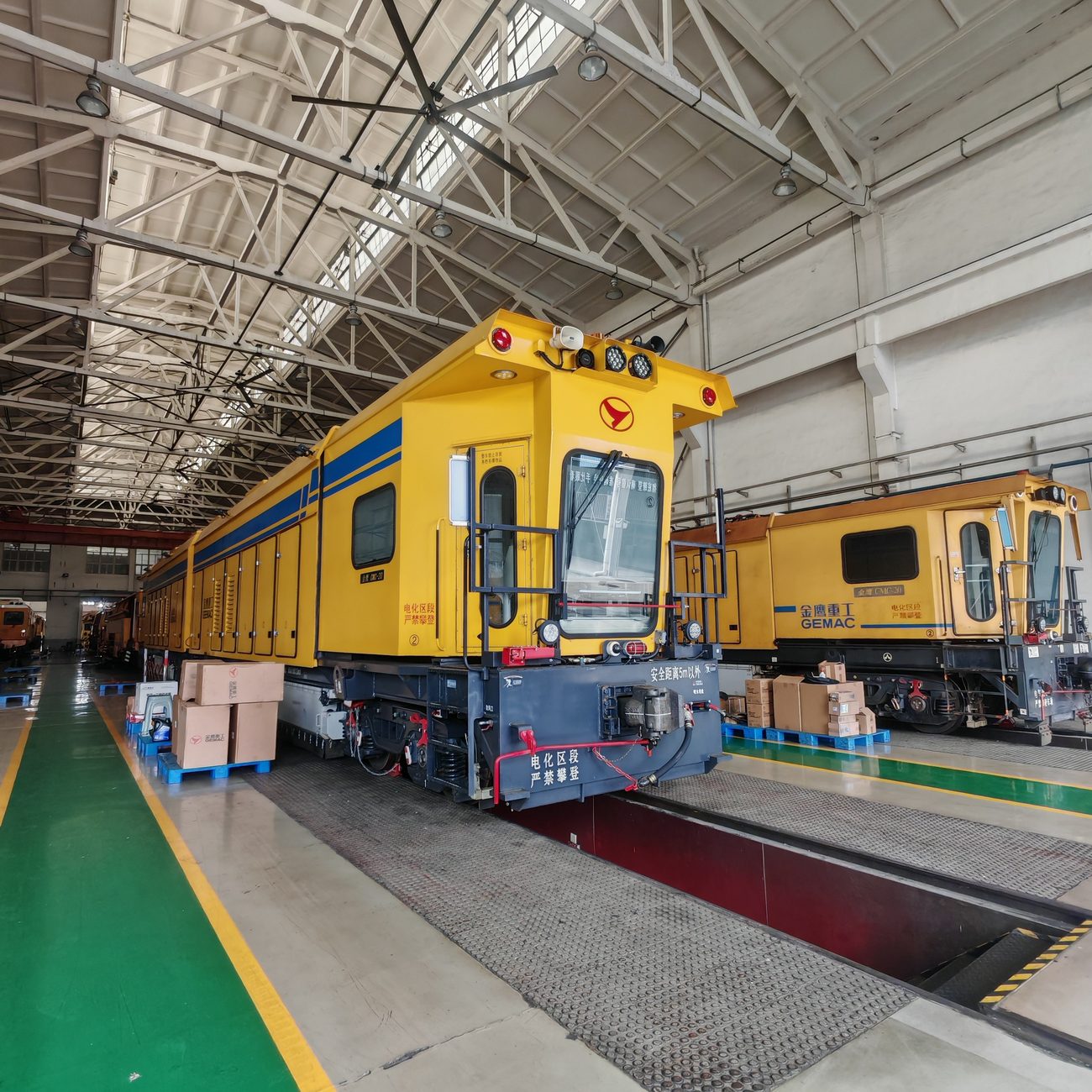
Chinese builders appear in every directory of this market and in very few explanations of it, which is why buyers outside China often treat "CRRC" as a single entity and then cannot understand why a GMC-96X wheel will not fit a GMC-96B.
The platforms are distinct, and they come from different engineering lineages. The mainstream domestic production platforms are the GMC-96X and the GMC-96B, and they are not variants of one another — they take different wheels, 260×90×154 mm and 250×75×150 mm respectively. A supplier who quotes "GMC-96 wheels" without asking which one has not understood the question — our short answer on the leading rail grinding machine manufacturers groups the platforms by class.
Behind the model names sit four different organisations. GEHI supplies the GMC-96X platform; CRRC Beijing Erqi supplies the GMC-96B; CRRC Times Electric and CRCC High-Tech Equipment cover adjacent platforms and export channels; and GEMAC concentrates on compact machines for metro, conventional lines and turnouts, including the CMC20. Add the joint-venture and licensed-production arrangements that have run since the 2000s, and the picture is a dozen platforms with overlapping names.
The reason this matters commercially is counter-intuitive. Chinese machine platforms are now common enough outside China that a wheel specification written for one of them is no longer a domestic-only concern — and because the platforms were developed at different times against different wheel formats, a mixed fleet of Chinese machines is more likely to need two wheel specifications than a mixed fleet of European ones.
There is a second, subtler point. The Chinese production trains trace back to SPENO technical cooperation, which means their grinding geometry and head loading are closer to the European tradition than to the American heavy-haul tradition. This shows up in the wheel: a GMC-96X responds to the same abrasive and bond philosophy that suits a Speno-era machine, and less well to formulations developed for high-pressure American practice. Buying a Chinese platform therefore usually means buying into a European consumable logic, which is either an advantage or a surprise depending on whether anyone checked.
Hand-Held, Road-Rail and Weld Finishing Machines
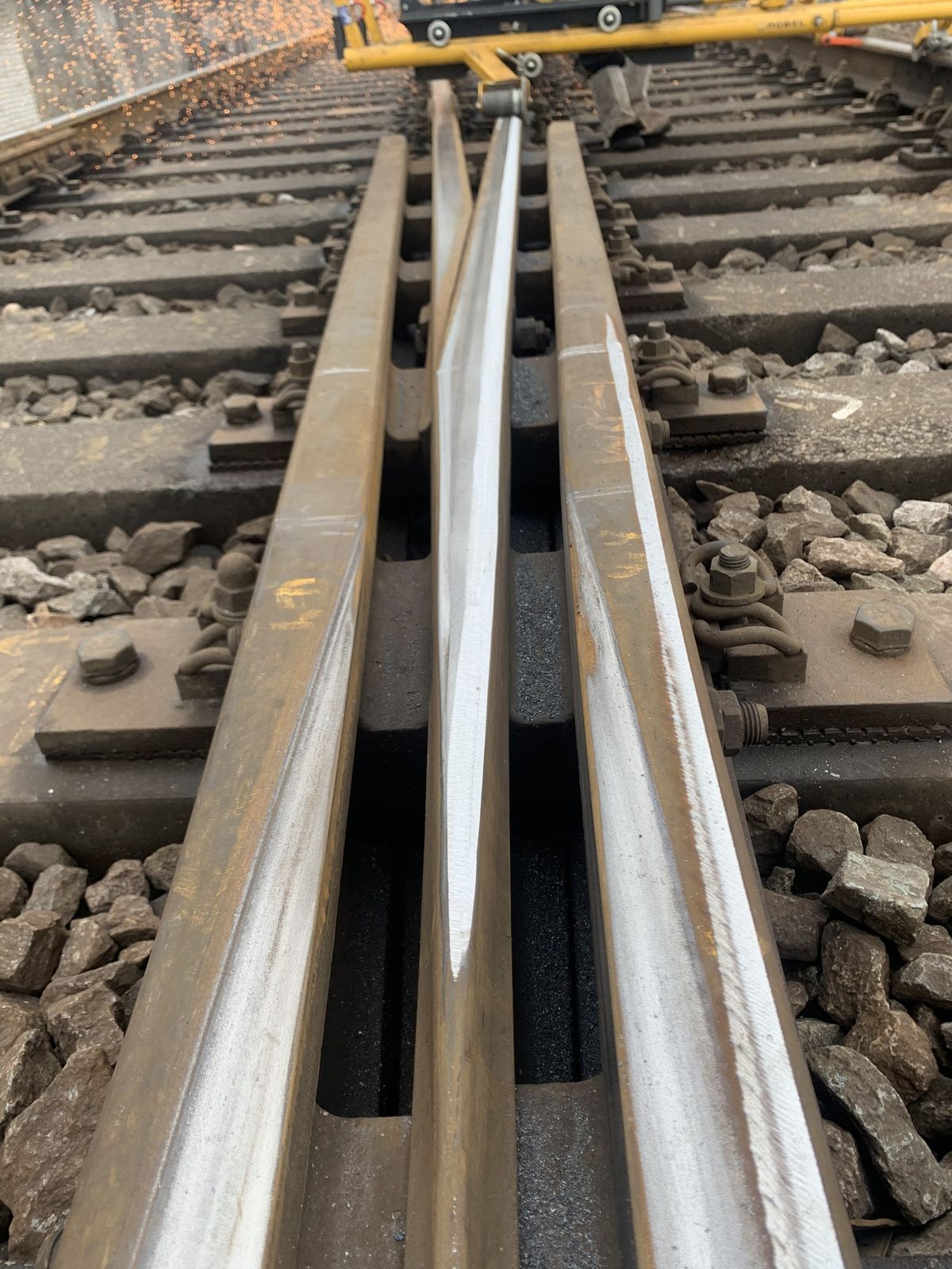
Grinding trains solve corridor problems. The other half of rail grinding — weld finishing, switch work, isolated defects and small corrections — is done with machines small enough to carry into a work site. This is the segment the phrase "rail grinding machine manufacturers" tends to hide, and it is where most operators spend their consumable budget in volume terms.
Table 4 covers the builders that matter in this segment.
| Builder | Country | Hand and road-rail platforms | Typical use |
|---|---|---|---|
| Geismar | France | 125 and 150 series hand grinders | Weld and turnout finishing |
| Robel | Germany | 13.xx and 15.xx hand grinders | Weld finishing, isolated defects |
| Autech | Switzerland | AT VM 8000, AT 2200 | Weld finishing at scale |
| Mecno Service | Italy | Road-rail and rail-bound units, 350 mm wheels | Turnouts, weld finishing |
| L&S (Luddeneit & Scherf) | Germany | RRGM, RGM, LRGM | Turnouts, metro, mainline |
| Schweerbau | Germany | GWM series | Mainline contracts, weld work |
| Chinese and Indian builders | China / India | Hand grinders on 125–150 mm formats | Domestic volume, price-led |
Hand-held rail grinders from Geismar and Robel are the universal tools of weld and turnout finishing. They take compact wheels — typically 125 mm or 150 mm diameter with M20 or M8 mounts — running at 6,000–7,500 rpm. They are cheap, they are everywhere, and they are almost never specified with the same discipline as a train.
That is the gap. A network that runs a 96-head train with a documented wheel specification will often run its hand grinders on whatever the local distributor stocks, and then wonder why weld finishing takes longer every year and why the finished surface varies between crews. The format is standardised; the abrasive is not.
Specialty weld grinding machines take over where hand work is too slow and too variable. Autech's AT VM 8000 12E is the clearest example: 12 spindles at 12 kW each, 4,000–6,500 rpm, angle coverage from −72° to +20°, around 300 m/h working efficiency, 0.2–0.3 mm of metal removal per pass, 5,000 m³/h dust extraction, and roughly 1,000 m of weld finishing per set of 12 wheels. Those numbers are worth reading twice if you are still finishing welds by hand on a high-speed corridor.
Turnout and switch grinding vehicles such as the RGH20C class handle the tight geometry of switches and crossings with dedicated thinner wheels, and they exist as a separate machine family precisely because a production train cannot get into a crossing without damaging it.
Active versus Passive: Choose the Architecture First
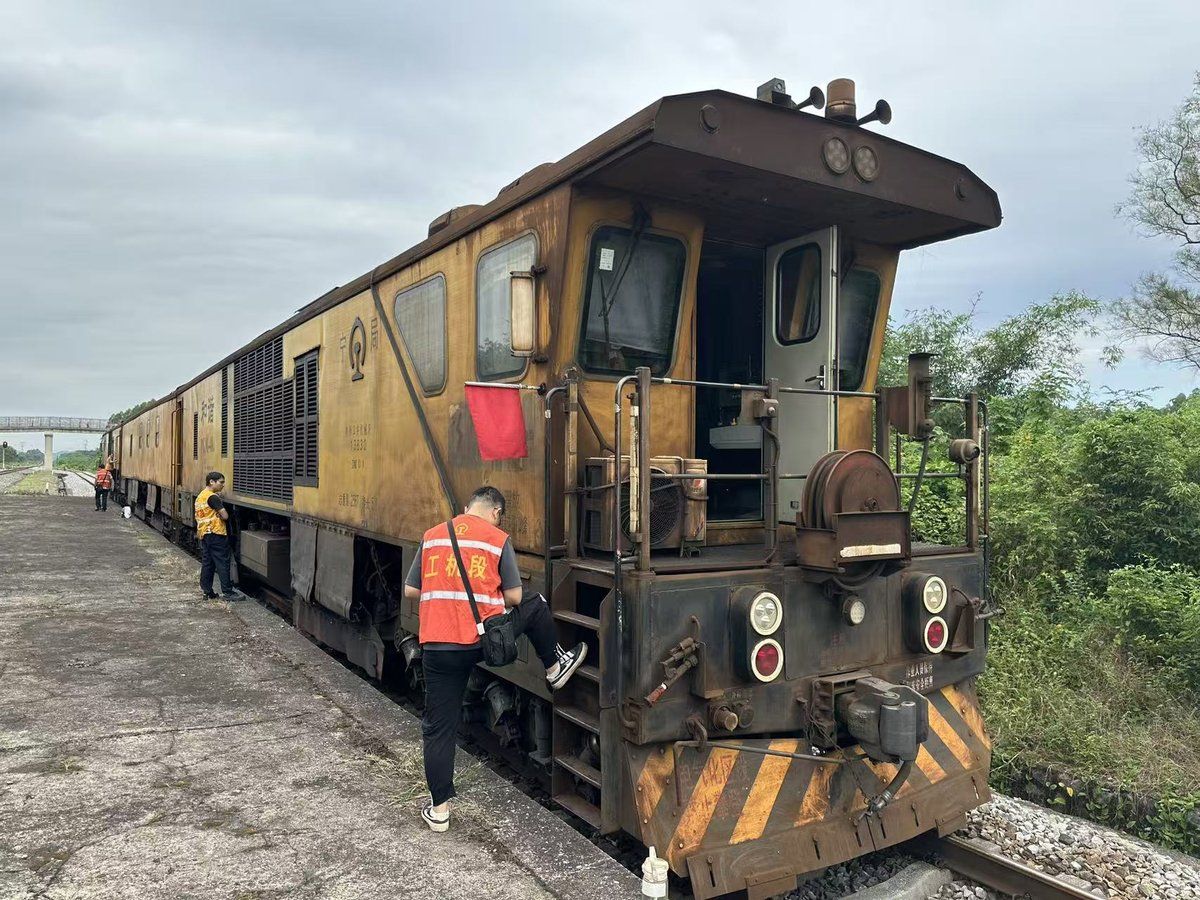
Selecting a "rail grinding machine manufacturer" before choosing a grinding philosophy is backwards, and it is the most common sourcing error in this market. The two dominant architectures are not competitors — they solve different problems on different parts of the network.
Active, motor-driven grinding. Wheels are driven by motors and pressed hydraulically into the rail. Metal removal is high and controllable, and power per head is significant. In RailwayCare's GMC-96X trials, grinding power ran around 20 kW at 68% of maximum, with motors at 3,600 rpm and train speeds of 12–16 km/h. This is the standard for preventive and corrective profile work on mainline and heavy-haul track, and it is the only architecture that can correct an existing profile defect in a controlled number of passes.
High-speed passive grinding. Free-rolling stones grind at traffic speed with low removal per pass. It is effective for stopping corrugation from growing on long high-speed corridors, where the economics are driven by not needing a possession at all. The stones are a different product family entirely — zirconia alumina, Ø119–122.5 mm, up to 40 m/s — and the machine and wheel operate at completely different speeds and pressures from an active system.
The two architectures bring their own builders, their own wheel formats and their own acceptance criteria, and the acceptance criteria are not comparable. A passive system is judged on whether corrugation growth is arrested across a corridor over years. An active system is judged on profile geometry and surface roughness at the end of a possession.
Buying decisions should therefore start with the defect mix and the possession regime, not with the brand. Our article on high-speed passive rail grinding covers the parameters in detail; the point here is only that the choice of architecture eliminates most of the machine market before you start comparing suppliers.
There is a third architecture worth knowing about, because it is increasingly specified on networks that cannot justify either of the first two: hybrid and low-pressure active systems, usually mounted on road-rail chassis or on a small number of heads. Removal per pass is modest, but the machine can be at a weld or a crossing within the hour rather than within the month, and that changes what the maintenance planner can attempt.
A practical test for which architecture you actually need: count the defects your network currently leaves in place because no machine can reach them in the available window. If that count is high, the problem is not removal capacity but access, and a smaller, more mobile machine will outperform a bigger train on the same budget. If the count is low and the issue is that corrugation returns between campaigns, the problem is interval and the answer is a production train or a passive system — not a hand machine.
The failure mode in this market is buying the architecture that appears in other operators' press releases. Networks differ in possession regimes, defect spectra and axle loads far more than the marketing material suggests, and the architecture decision is the one place where copying a neighbour's choice is most likely to be wrong.
Matching the Manufacturer to Your Network
The directory is only useful if it narrows. Table 5 maps four common network profiles to the machine families and builders that fit them.
| Network profile | Defect mix | Architecture that fits | Builders to look at |
|---|---|---|---|
| Heavy haul, high tonnage | Corrugation, head checks, gauge face wear | Active production train, high removal | Loram, Harsco Rail, CRRC |
| High-speed passenger | Micro-corrugation, short-pitch defects | Passive at line speed, plus active for correction | Vossloh HSG, Speno, CRRC GMC-96B |
| Metro and urban transit | Corrugation, short wavelengths, tight windows | Compact and transit units, road-rail | Loram RGX/LRG/MRG, Speno SRR16M-1, GEMAC CMC20 |
| Light rail, tramway, depot | Weld finishing, isolated defects, switches | Hand machines, road-rail, switch grinders | Geismar, Robel, Autech, Mecno, L&S |
Two observations from that table are worth stating plainly.
First, most real networks need three of those four rows, not one. A national operator with high-speed, conventional and metro lines will end up with three machine families and three wheel formats, and the procurement question is not "which builder" but "which combination, and who supplies consumables across all of it". A single-source wheel supplier is worth considerably more to such an operator than a single-source machine builder.
Second, the hand-machine row is usually under-managed relative to its volume. A 96-head train consumes wheels spectacularly and visibly. The twenty hand grinders in the depots consume them quietly, month after month, with no specification and no acceptance data. When operators audit their consumable spend, this is typically where the surprise is.
A third observation is procedural rather than technical. The four rows in Table 5 are usually bought by four different parts of the same railway — production grinding by a central engineering function, transit units by a city operator, hand machines by depots, switch grinders by the permanent way department. Each negotiates its own wheel supply, and the network ends up with four wheel specifications, four stock holdings and four sets of lead times for what is, in abrasive terms, a small number of product families. Consolidating that is unglamorous and saves more than most procurement initiatives.
Twelve Audit Questions for Any Rail Grinding Machine Manufacturer
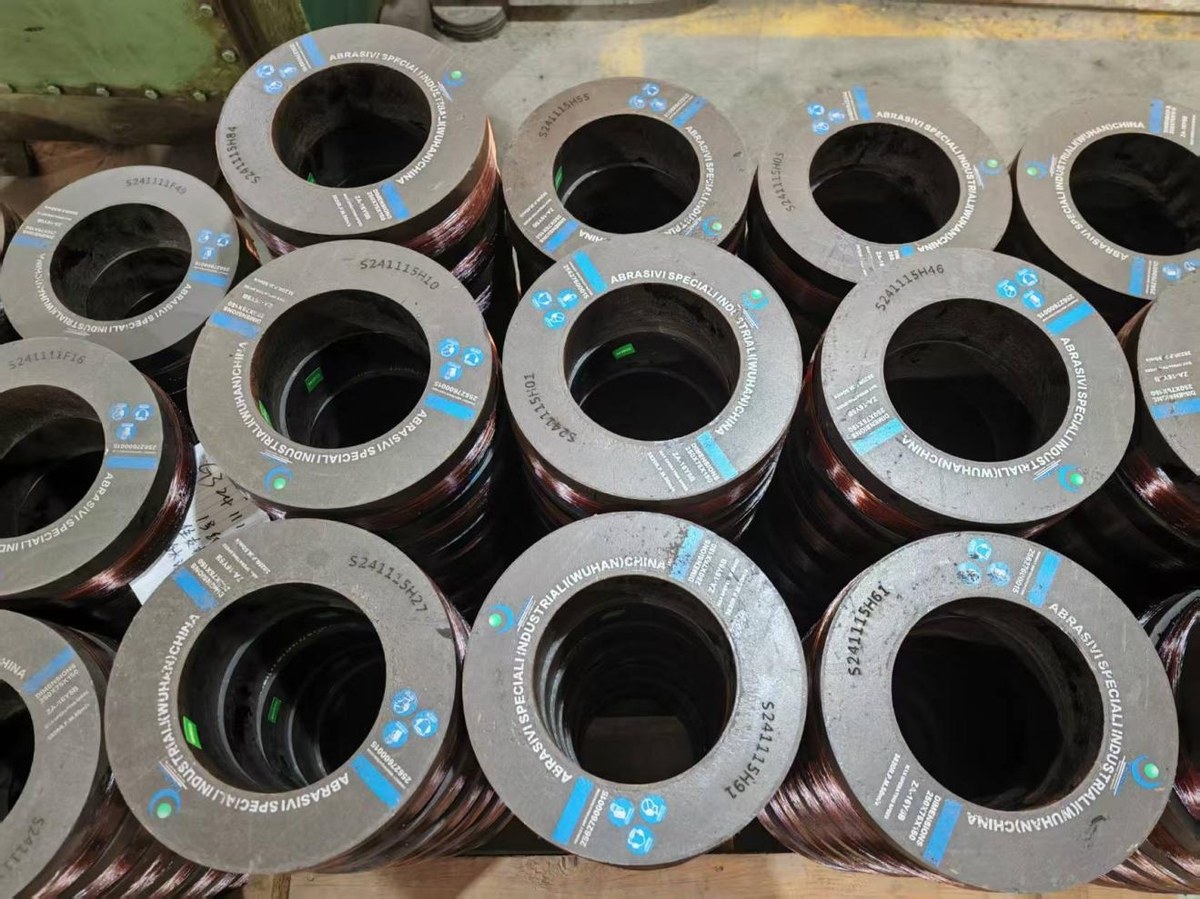
Whether you are buying a machine or qualifying a supplier for wheels, the audit is the same exercise: separate a manufacturer from a trading company, and separate a documented process from a claimed one.
The five areas that matter are manufacturing, assembly, testing, spares and after-sales. Twelve questions cover them, and Table 6 is written so that it can be printed and carried into a factory visit.
| # | Question | What a strong answer looks like |
|---|---|---|
| 1 | Do you manufacture the machine or assemble imported kits? | Named plant, own machining and assembly lines, photographs of the line you will visit |
| 2 | What is your annual capacity, and what is it running at? | A number, plus current utilisation — capacity without utilisation is a brochure figure |
| 3 | Which certifications are current, and who issued them? | Certificate numbers, issuing bodies and expiry dates you can verify independently |
| 4 | Who makes the motors, bearings, guides, control system and wheel spindle? | Named brands with traceable part numbers, not "international brand" |
| 5 | What assembly records exist for each unit? | Per-unit assembly records with torque values, alignment data and operator sign-off |
| 6 | What testing is done before shipment, and who witnesses it? | No-load and load tests, accuracy verification, third-party witness option |
| 7 | Can we see the acceptance data for the last three units shipped? | Actual measured values for named customers, not a generic test report |
| 8 | What is in your spare-parts warehouse, and what is the lead time? | Consumable and critical-part stock levels, quoted response times by part class |
| 9 | Who supports the machine in our region, and where are they based? | Named engineers, distance, response commitment in the contract |
| 10 | What training is included, and who delivers it? | Days, location, syllabus, and whether grinding parameters are taught or only operation |
| 11 | Which comparable networks run this model, and can we speak to them? | Named operators on comparable duty, with contactable references |
| 12 | What are the warranty, default and IP terms? | Written warranty period by component, remedies, and clarity on who owns tooling and drawings |
The questions are ordered deliberately. Questions 1 to 3 eliminate trading companies and undated certificates. Questions 4 to 7 establish whether the process is documented or merely described. Questions 8 to 12 establish whether the supplier will still be useful in year five, which is when most of the cost actually appears.
What separates a rail grinding machine manufacturer from a trading company
The distinction is not about size. It is about whether the supplier controls the process that determines the result.
A genuine manufacturer can answer question 4 with part numbers, question 5 with per-unit records, and question 7 with measured data from units already delivered. A trading company can usually answer question 2 with an impressive capacity figure — the capacity of the factory it buys from — and then deflect questions 5, 7 and 10, because those records belong to someone else.
The tell is question 10. A manufacturer that only teaches operation, and not grinding parameters, is selling a machine. One that teaches parameters is selling an outcome, and that is the supplier worth keeping.
The first three questions eliminate the wrong suppliers
Questions 1 to 3 are filters, not evaluations, and they are worth asking before you spend a day travelling to a factory. A supplier that assembles imported kits is not dishonest, but it cannot control the tolerances that determine whether your grinding programme holds its profile, and it cannot answer question 5. A capacity figure without a utilisation figure is a brochure number. A certificate without an issuing body and a date is decoration.
In this market the certificate trap has a specific form. A manufacturer may hold a valid certificate for a product family while the specific format you need is outside its scope — a common situation with wheel suppliers, where a certified range covers 125–250 mm and not the 260 mm train format. Ask for the scope, not the certificate, and read the scope against your requirement.
Questions four to seven establish whether the process is real
The middle group is where a factory visit earns its cost. Question 4 asks who makes the motors, bearings, guides, control system and wheel spindle, and a strong answer comes with part numbers. The interesting answer is not the list of famous brands; it is whether the supplier can trace a specific component in a specific machine to a purchase order.
Question 5 is the one most suppliers fail quietly. Per-unit assembly records with torque values, alignment data and operator sign-off are standard practice in serious manufacturers and rare in trading companies. If the records exist, ask to see three units at random. If they are produced instantly and look identical, they are a template.
Questions 6 and 7 are the pair that separates a tested machine from a machine that has been run. A no-load test proves the spindle turns. A load test with accuracy verification, witnessed by a third party if you ask, proves the machine grinds to tolerance. And question 7 — acceptance data for the last three units shipped — is the single most useful document in the whole audit, because it is measured on customers' rails rather than in a test hall.
Questions eight to twelve predict year five
The last group is about the period after the warranty, which is where most of the twenty-year cost sits. Question 8 is not only about lead times; it is about whether the supplier holds critical parts as stock or orders them per machine. Question 9 is about geography — a service engineer nine hours away by air is not support, whatever the contract says.
Question 10 contains the tell described below, and question 11 is the one buyers most often skip. Comparable references are worth more than any specification sheet, provided you speak to them without the supplier present and ask about unscheduled downtime rather than satisfaction.
Question 12 is where the commercial risk is buried. Warranty periods differ by component for good reason, but the remedies matter more than the duration, and the ownership of tooling and drawings determines whether a second wheel supplier is possible in ten years. A machine whose spindle drawings are unavailable locks you into one consumable supplier permanently.
The documentation that decides an audit
Ask for three documents before the visit and check them against each other. The certificate tells you what the supplier claims is certified; the scope on the certificate tells you what is actually covered, which is often narrower. The test report tells you what was measured; the measurement conditions tell you whether the figures are relevant to your duty. The customer reference tells you who is running the equipment; a conversation with that customer tells you what the machine is really like in year three.
In this industry the gap between a certificate and its scope is where most disappointments originate — a wheel maker certified for a product family is not thereby certified for your specific format and speed rating.
What a Machine Family Really Costs Over Twenty Years
The purchase price of a grinding machine is the smallest number in its financial life, and almost every sourcing process is organised around it. That mismatch is the root of most of the disappointments described in this directory.
Table 7 sets out the cost structure of a production grinding train over twenty years, indexed so that the capital purchase is 100. The figures are indicative ranges drawn from published contract rates and typical fleet economics, not a quotation for any specific machine.
| Cost line | Indexed to capital = 100 | Notes |
|---|---|---|
| Capital purchase | 100 | The number that dominates the tender document |
| Grinding wheels | 260–420 | Proportional to pass-km, not to machine hours |
| Possession time | 180–350 | The cost nobody invoices for and nobody measures |
| Maintenance and spares | 90–160 | Rises sharply after year eight |
| Crews and training | 70–130 | Highest where one crew runs several machine types |
| Mobilisation and transport | 50–110 | Depends on network geography, not on the machine |
| Downtime at acceptance | 20–80 | Falls to near zero with a documented wheel specification |
The right-hand column carries the argument. Wheels are the largest recurring line, and they are the one line the buyer can still influence after the machines are delivered. Possession time is the second largest and the one most often under-counted, because it is paid in lost train paths rather than in cash — a machine that needs one extra pass across a campaign consumes possession the operator had budgeted for something else.
The last line is the one to remember during a factory audit. Downtime at acceptance is not a maintenance problem; it is the consequence of a wheel that does not match the machine and the rail, discovered after the possession has been booked. It is also the line that a documented wheel specification and a supervised trial eliminate almost entirely, which is why the two hours spent on the wheel format during procurement are worth more than the two weeks spent on the machine's paint specification.
A second structural point follows from the table. Because wheels are 260–420 indexed against a capital of 100, a supplier who bundles a proprietary consumable at a 30% premium is not charging a premium on a small line — over twenty years it approaches the cost of a second machine, without the second machine. This is the strongest available argument for keeping the consumable specification open, and for refusing to buy a platform whose spindle drawings and wheel drawings are unavailable to third parties. The arithmetic that makes wheels the dominant line is set out in our rail grinding cost per kilometre analysis, and the price mechanics of the consumable itself in what drives rail grinding wheel price.
The Consumables Question: Who Makes Your Wheels
Most rail grinding machine manufacturers do not make grinding wheels. They buy them from abrasive specialists. The global names include Norton (Saint-Gobain), Weiler and Noritake, and in many markets operators historically imported wheels for their machines.
That dependence is changing, and it matters for two reasons.
Cost. Imported wheels carry long lead times, freight and certification overhead. Local manufacturing shortens both, and for a consumable bought every season the working capital effect is larger than the unit-price effect.
Compatibility and certification. Wheels for export markets need documented conformity — in the Eurasian market, for example, EAC certification under GOST 33174-2014 is a real requirement, which we have covered separately.
When a machine supplier insists on a single wheel brand, ask whether the restriction is technical or commercial. Grinding wheels are engineered to machine specifications, not to brand loyalty, and a wheel maker that publishes formats, speeds and test data against your machine make and model is easier to audit than one that does not. If the answer to that question is a shrug, the restriction is commercial.
Molaton: One Wheel Supplier Across Every Machine Family
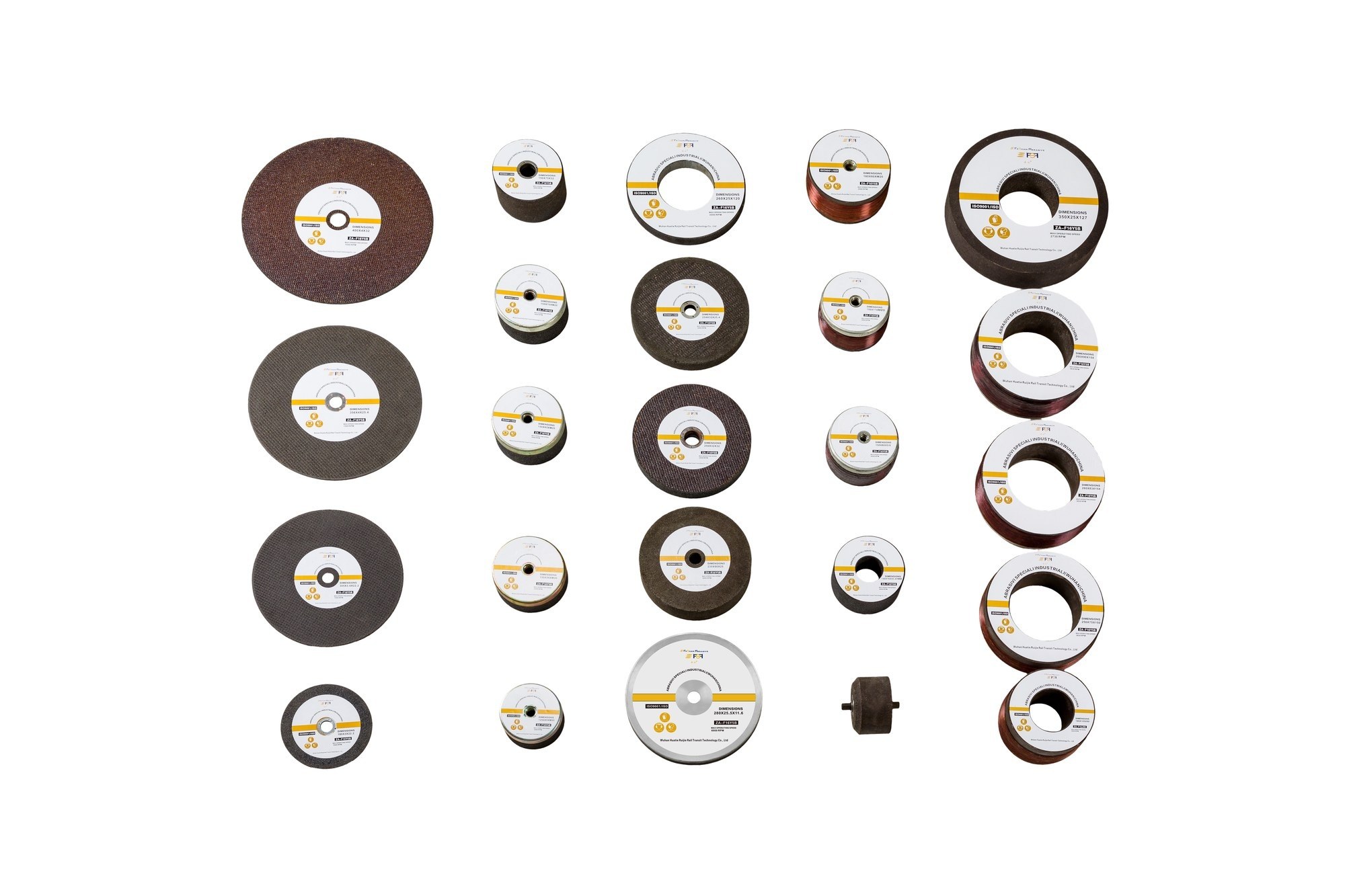
RailwayCare (Wuhan Feelow Friction Material / Wuhan Huatie Ruijie Rail Transit Technology) has manufactured rail grinding wheels since 2004, when it became China's first company dedicated to grinding machine wheels. The company co-drafted the Chinese industry standard JB/T 11431 (current edition 2020), holds CRCC certification, operates under ISO 9001 and ISO 45001, and passed the China Academy of Railway Sciences technical review for grinding machine accessories.
Molaton wheels cover every format in Table 3 — from hand-machine wheels for Geismar and Robel machines to train wheels for Harsco, GMC, Speno, Loram and Mecno fleets — at a production scale of 500,000 wheels per year.
For a buyer running a mixed fleet, that coverage is the practical proposition. A network with a GMC-96X train, a set of Geismar hand grinders and an RGH20C switch grinder currently needs three wheel specifications from up to three suppliers, each with its own lead time, minimum order and certification file. Consolidating those three into one supplier with one certificate scope and one delivery schedule removes a category of procurement work that produces no visible benefit and consumes attention every season.
The engineering approach is that the wheel is matched to the machine and the duty, not just to the rail. Vehicle speed, motor pressure, work site and rail grade all enter the formulation, and the approach is set out in our vehicle-matched wheel guide. The results are documented in field trials quoted across this site: double the durability of imported comparison wheels in a GMC-96X half-car test, 4.28 pass-km per millimetre of wheel wear on a high-speed line, and 6 µm Ra surface finish with zero rail burn in a Harsco 96 application.
For a directory of machines, the practical takeaway is simple. Whatever family your network runs, the consumables side of the market is global, competitive and auditable, and it is worth a second quote — particularly if the first quote came bundled with the machine.
Frequently Asked Questions
Who are the main rail grinding machine manufacturers?
The production grinding train market is led by Loram and Harsco Rail in the United States, Speno International in Switzerland, Plasser & Theurer in Austria and Vossloh in Germany, with CRRC, CRCC High-Tech Equipment and GEMAC increasingly active from China. Hand and specialty machines come from Geismar, Robel, Autech, Mecno and L&S.
Do different manufacturers use the same grinding wheels?
No. Each machine family specifies its own dimensions, speeds and mounts: 260×90×154 mm on PGM/GMC-96X-class trains, 250×75×150 mm on GMC-96B-class, 180×105×90 mm on Speno GMC16A-class, 350 mm series on Mecno machines, and 260×83×152 mm on Loram trains. Always fit the format the builder specifies.
Should we buy a grinding machine or hire a grinding service?
It depends on annual grinding volume and line length. Networks with large volumes and regular preventive programmes typically justify owning machines. Smaller operators hire specialist services, and often get better results because the contractor grinds enough to keep its crews sharp. The wheel data in this guide applies either way — services buy wheels too.
Can we source wheels locally instead of from the machine manufacturer?
Usually yes, provided the wheel maker documents formats, speed ratings, testing and any certification such as EAC/GOST for Eurasian markets against your specific machine model. A technical spec sheet with measured data is worth more than a brand name.
How do I know a wheel is right for my machine?
Check three numbers first: dimension (diameter × thickness × bore), maximum operating speed, and the abrasive and bond type recommended by the builder. Then verify with a documented field trial on your own rail before committing to a season's order.
Why do some networks run machines from several manufacturers?
Because no single builder is strong across production trains, transit units and hand machines, and because the network's defect mix usually spans more than one of those categories. A mixed fleet is normal; the complexity it creates is in consumables, which is why operators in that position tend to consolidate wheel supply rather than machine supply.
How many machine families does a national network typically need?
Three or four, in practice: a production train for corridor work, a compact or transit unit for metro and depot access, a set of hand machines for welds and isolated defects, and often a switch grinder if turnout density is high. Each brings its own wheel format, which is why consolidating consumable supply across the fleet usually saves more than consolidating machine brands.
Does the machine builder have to supply the wheels?
No, and in most markets it does not. Builders specify formats, speeds and bond types; they rarely manufacture abrasives. Buying wheels from the machine builder is convenient and occasionally necessary where a warranty is conditioned on it, but it removes the competition that keeps the consumable line honest.
Is a more expensive machine always the better machine?
No. The purchase price is typically a small fraction of the twenty-year cost, which is dominated by consumables, possession time and the labour around the machine. A mid-priced machine with a well-documented wheel specification and a competent local service footprint usually beats a premium machine with proprietary consumables and no local support.
Get Grinding Wheels for Your Machine Make and Model
Tell us your machine manufacturer, model, wheel format and rail conditions — RailwayCare will send the matching Molaton specification, third-party test reports and field-trial data, and help you set up a supervised trial on your own line.
If you are still selecting the machine itself, the railway grinder range and the railway grinder machine pages set out what we supply, alongside the full rail grinding wheel range; for the wider programme, see the rail grinding solution pages. For partnership and local representation enquiries, see project cooperation and the global partnership network, or read about RailwayCare.
WhatsApp: +86 15072332788 Email: simon.wang@railwaycare.com
RailwayCare (Wuhan Huatie Ruijie Rail Transit Technology Co., Ltd.) — your professional partner in rail grinding, with Molaton grinding wheels field-proven on high-speed, heavy-haul and metro lines since 2004.