Rail Grinding Curves: Managing Side Wear on Curved Track
- Share
- publisher
- RailwayCare
- Issue Time
- Sep 14,2026
Summary
A practical guide to rail grinding curves: why side wear concentrates on the gauge corner, how asymmetric profiles work, when to grind and how to verify the result.
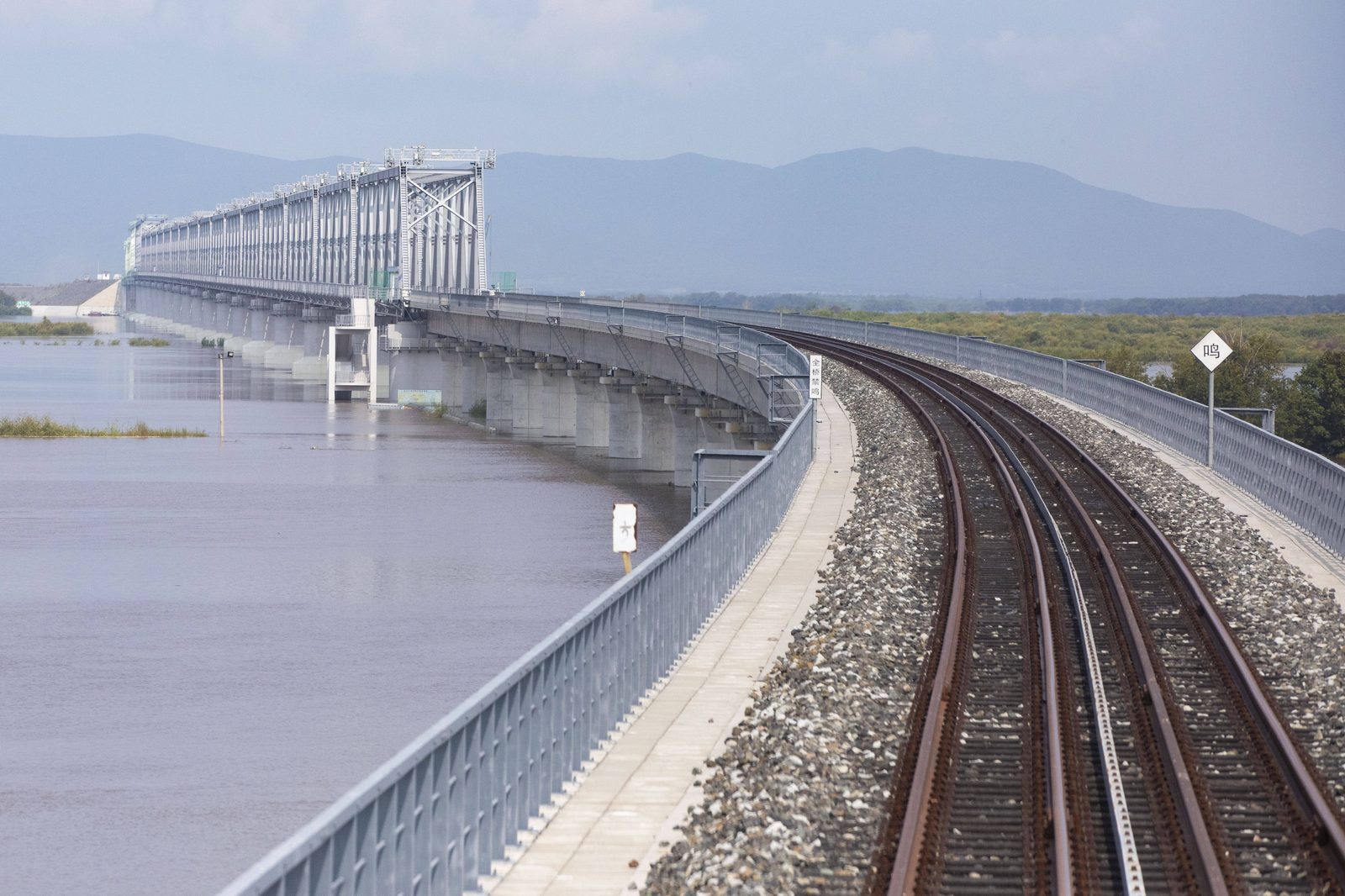
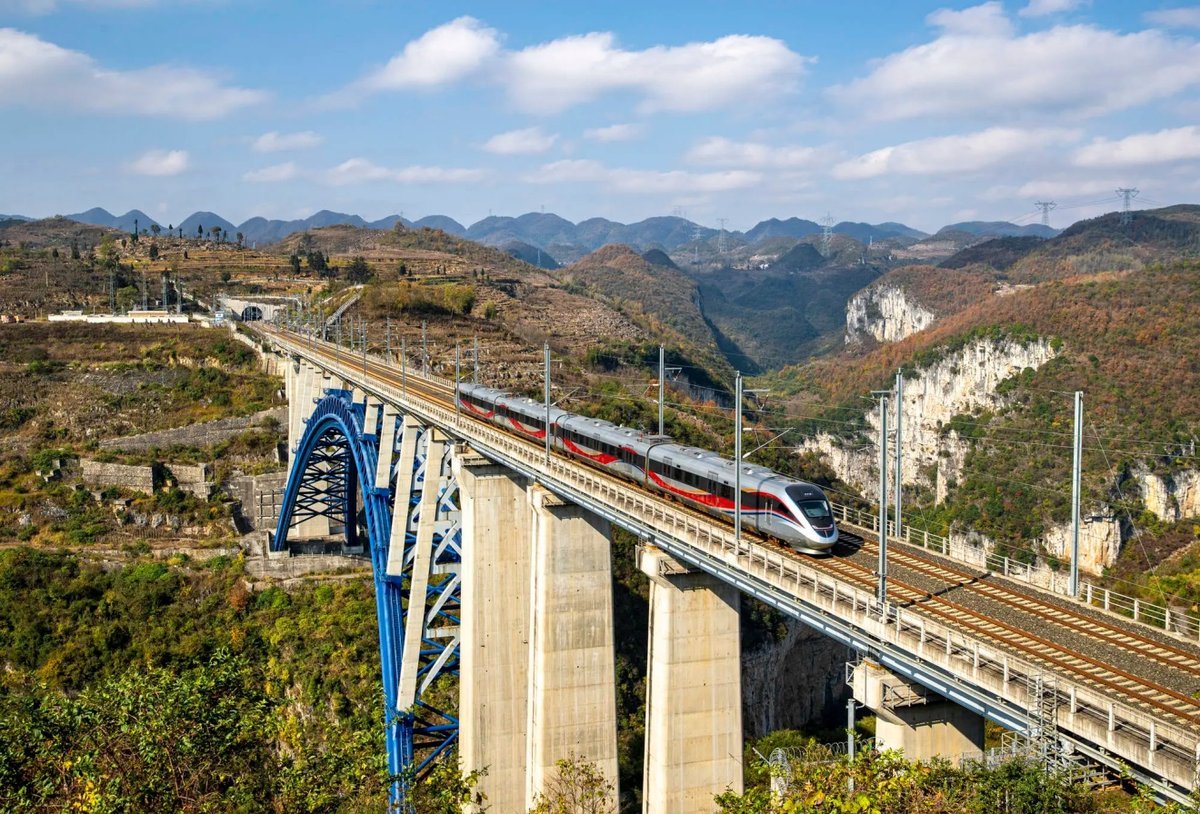
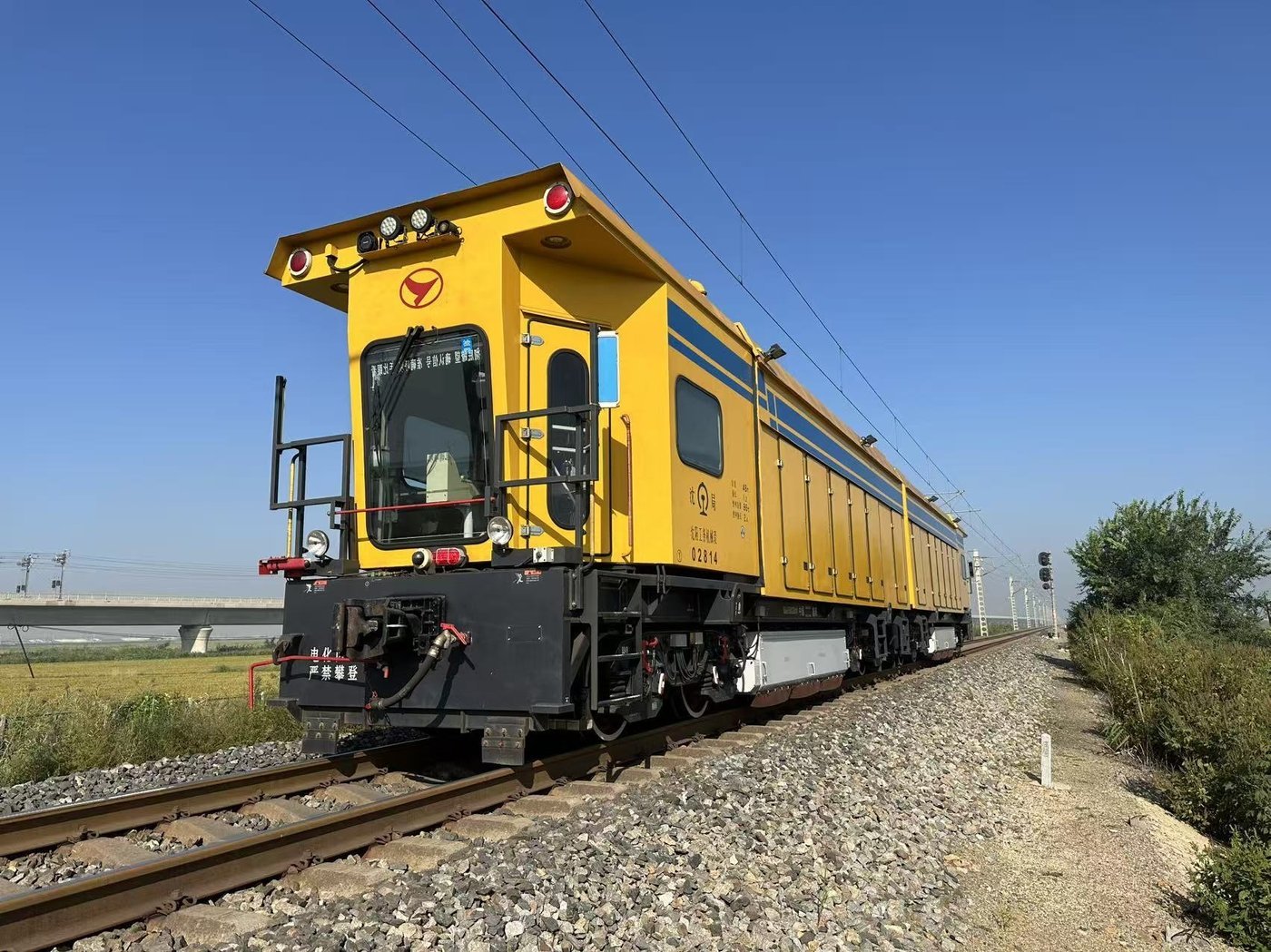
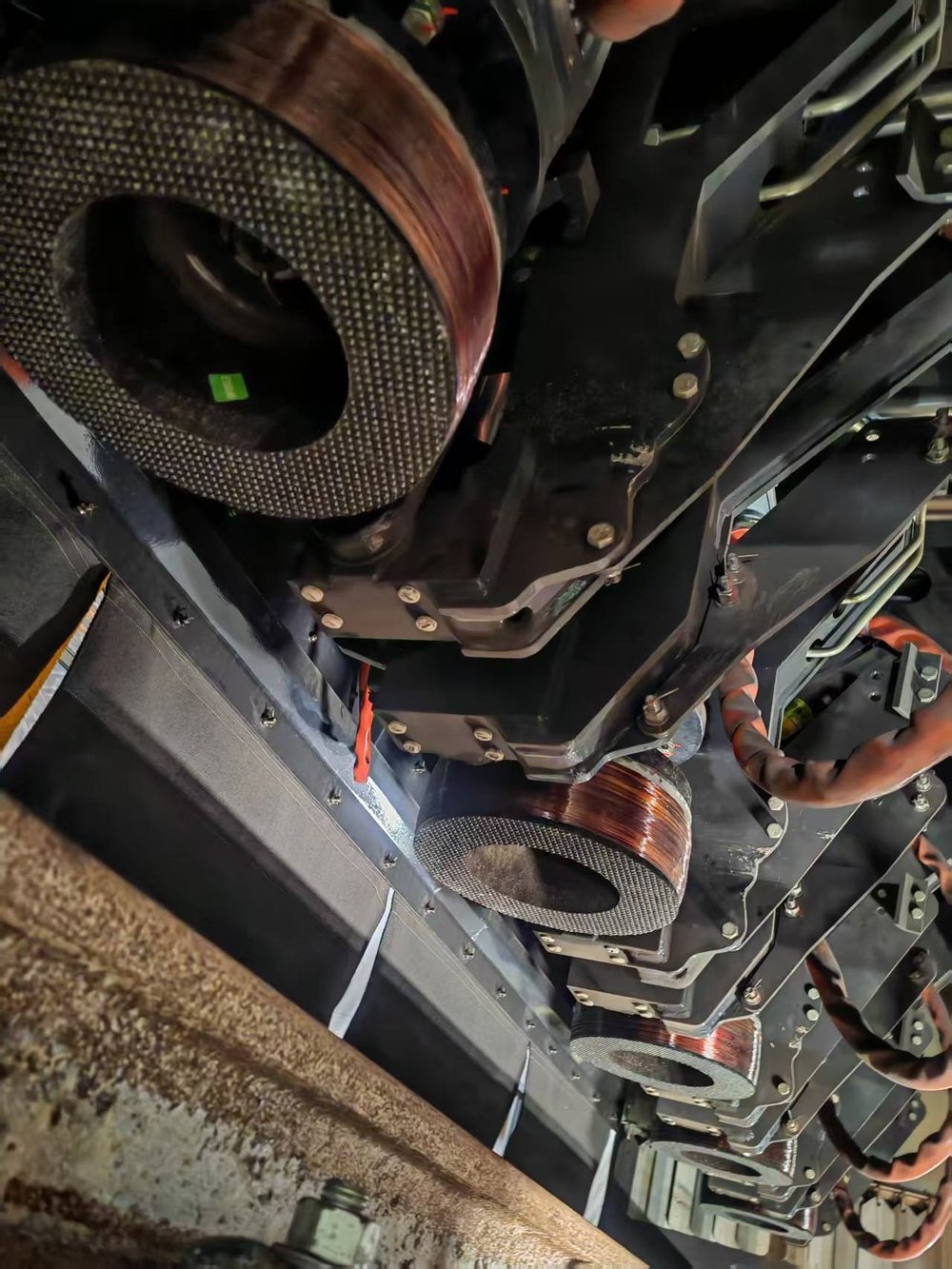
A tangent rail wears evenly. A curved rail does not. On the outer rail of a curve, every axle pushes the wheel flange toward the gauge corner, so metal disappears from one narrow band of the head while the rest of the profile is barely touched. That is why a curve cannot be ground with the same pass that works on plain line - and why rail grinding curves is a discipline of its own: a different target profile for each rail, a different metal-removal depth, a different inspection routine. This guide sets out what changes on a curve, the two grinding strategies available, the targets and limits that define acceptable work, how to choose intervals and consumables, and how to prove the result with measured data. It draws on our field work on heavy-haul, high-speed and metro curves, and on published wheel-rail research. The physics is straightforward: the tighter the radius, the greater the lateral force the wheel flange applies to the high rail, and the more the contact point migrates from the top of the head toward the gauge corner. At the gauge corner the contact geometry becomes two-point contact, creepage rises, and material is lost by both wear and rolling contact fatigue at the same time. Three consequences follow, and all three matter to a grinding programme: The value of getting this right is measurable. Zhai Wanming and colleagues at Southwest Jiaotong University designed asymmetric grinding profiles for a 600 m radius curve on the Shuohuang heavy-haul line and published field measurements in Vehicle System Dynamics (2014): after grinding to the designed profiles, rail side wear on the test curve was reduced by 30-40 per cent. Related work by Shi Zhiyong et al. (ICRT 2017/2018) extended the method to 400 m, 500 m, 600 m, 800 m and 1,500 m radii and found the largest gains on the smallest radii. The Shuohuang corridor is one we know well - it is where our own heavy-haul verification programme ran to 172.8 pass-km. There are two ways to grind a curve, and choosing the wrong one wastes the possession. Symmetric grinding uses one target profile for both rails. It suits tangent track and gentle curves where the contact conditions of the two rails are similar. It is simple to specify and simple to inspect. Asymmetric grinding sets a different target profile for the high rail and the low rail. The logic is: The trap in asymmetric grinding is over-doing the high rail. If the outer gauge corner is ground back too far, the rolling radius of the outer wheel falls, self-steering weakens, the angle of attack grows and lateral force rises - producing more side wear, not less. Published profile-optimisation work is explicit on this point: the target profile has to be derived from the measured wear pattern and the wheel-rail contact, not from a fixed angle. Our own field records show how unequal the two faces of one rail can be. On a R=800 m curve on the Yiyang line, six grinding passes removed a maximum of 0.3 mm from the outer face of the high rail and 1.8 mm from the inner face - six times as much metal on one side of the same head. A single symmetric target profile cannot express that. Curve grinding is judged on the profile, the surface and the contact band - not on how the rail looks. The main acceptance measures we work to: GQI - the Grinding Quality Index - is the most useful of these because it converts profile fit into a single number that a section manager can accept or reject. It divides the rail head into four zones and scores how closely the ground profile matches the design profile. On a curve the zones are not equally important: the gauge corner zone on the high rail carries the side-wear responsibility, while the top-centre zone controls ride quality. Side wear itself should be measured, not estimated. If you are deciding whether to grind or to renew a curve, the decision rests on measured side wear against the operator's limit plus the remaining head - see our guide to rail wear measurement and the grind-or-replace decision. Two programmes, one budget: What limits you is not the machine but the possession. In a 2-hour night window on the Hengliu line (Nanning Bureau, 2022), a GMC-96X train ground 18.72 pass-km with our wheels in service. Plan curve programmes in pass-km per hour of possession, not in track kilometres, and the interval decision becomes an arithmetic question: metal to remove per cycle ÷ removal per pass = passes per cycle, and passes × pass-km per hour = possession hours. Removal per campaign is small and zone-dependent. In our Loram DM01 trial (Jiangmen, April-June 2026), measured with a profile gauge over the campaign, metal removal was 0.142-0.241 mm in the inner-rail zone, 0.165-0.326 mm in the outer-rail zone and 0.193-0.222 mm at the rail top. That is the correct order of magnitude for a preventive cycle - and it explains why deep defects need a corrective programme rather than a longer preventive pass. Because consumable life is expressed in pass-km per millimetre of wheel wear, the interval choice and the wheel choice are the same decision. On heavy-haul track we have measured 5.7 pass-km/mm (Yiyang, 145 pass-km with 25.45 mm average consumption) and 4.98 pass-km/mm (Shuohuang, 172.8 pass-km with 34.67 mm average consumption). A wheel that lasts twice as long changes how many possessions a year of grinding actually costs - see rail grinding cost per kilometre. The machine dictates the wheel, and the curve dictates the machine. On plain line a 96-stone grinding train can tilt enough stones to reach the gauge corner; at a turnout or a very tight curve, geometry limits the attack angle and a smaller, dedicated machine does the work. Two properties of the wheel matter more on curves than anywhere else: Abrasive toughness. Curves concentrate load and heat on a narrow band. A grain that dulls and glazes under that load stops cutting and starts rubbing, which is how blue bands are made. In the Shenhua project test programme, compressive strength and grinding ratio were measured for three grain types: This is why a zirconia-alumina wheel in a 16-grit, resin-bond, glass-fibre-wrapped construction is the default for grinding-train work - and why a soft-bonded wheel from a general-purpose catalogue fails quickly when a fleet starts grinding head-hardened rail on small-radius curves. Our comparison of domestic and imported rail grinder wheels across five performance indicators covers the same ground from a procurement angle. Reach and shape. Wheel diameter, thickness and bore must match the machine's spindle and head geometry - a 350 mm series wheel cannot be substituted for a 260×90 format however good its abrasive is. The global directory of rail grinding machine manufacturers lists the formats each fleet runs, and why a wheel is engineered to the machine, not just to the rail is worth reading before a curve programme is specified. A curve grinding programme without pre- and post-measurement is an opinion. The minimum data set we recommend: Our own numbers, measured this way: in the Loram DM01 trial at Jiangmen, roughness across all ground rails came out at 1.05-9.0 μm, most readings 2-4 μm, with no blue bands. In a trial acceptance on Chengdu Metro small-radius curves, M20×2.5 Molaton stones scored 90/100 against TB 10413-2018, and the restored heads passed both the roughness and the light-band checks. Wheel samples also passed rotary safety testing at 6,354 r/min without fracture - relevant on curves, where the gauge-corner load is highest. The pattern is consistent: on curves and heavy-haul, where the wheel is asked to cut hard in a narrow band, consumable life is what separates two quotes that look identical on paper. Molaton rail grinding wheels are produced by RailwayCare (Wuhan Huatie Ruijie Rail Transit Technology Co., Ltd.) at a capacity of 500,000 wheels per year, in the formats used by every major grinding-train family and turnout grinder - see the directory above. For deeper reading on the grinding side of the problem, our guides to rail profile grinding, rail head grinding, corrugation removal, turnout grinding and the root causes of rail side wear cover the adjacent work. Asymmetric grinding sets a different target profile for each rail of a curve: the high rail is ground mainly at the gauge corner to reduce side wear and pull the contact patch back toward the running surface, while the low rail is ground at the top-of-rail to keep the rolling radius difference that lets a wheelset steer itself. It is used on curves because the two rails do not wear the same way - on an R=800 m curve we measured 0.3 mm of removal on the outer face of the high rail against 1.8 mm on the inner face. There is no universal interval - it depends on radius, axle load, annual tonnage and the operator's wear limits. The common model is a network-wide preventive programme of light, frequent passes plus corrective passes on the fastest-wearing small-radius curves, often at roughly quarterly intervals. Set the interval from measured metal-removal per pass and pass-km per possession: in a 2-hour window a 96-stone train ground 18.72 pass-km in our Nanning Bureau work. Grinding does not restore the metal that has been worn away - it reshapes what remains. The practical objectives are to remove the work-hardened and cracked gauge-corner material, to re-establish a contact geometry that reduces the rate of further wear, and to keep the rail in service longer. Published measurements on a 600 m radius heavy-haul curve recorded a 30-40 per cent reduction in side wear after asymmetric profile grinding. Turnout and tight-curve grinders generally run smaller, dedicated formats: RGH20C machines use 280×25.5×116 mm and 150 mm series wheels (150×80 with a 5/8" bore, or 150×77 with an M20 thread), while grinding trains use 260×90×154 mm, 250×75×150 mm, 180×105×90 mm or 260×83×152 mm depending on the class. Fit the format the machine builder specifies - the bore, thickness and mounting pattern are fixed by the spindle. Measure four things: the profile at fixed chainages against the design profile (GQI or equivalent), surface roughness Ra (target ≤10 μm), the contact band width and position (25-30 mm high-speed, 35-40 mm conventional and heavy-haul), and wheel consumption in millimetres per wheel against pass-km ground. That data set is enough to accept or reject a pass, and to cost the next cycle. Send us the curve data - radius, rail section and grade, measured side wear before grinding, annual tonnage, machine model and the target profile you are working to - and we will come back with a wheel specification, the expected pass-km per wheel with its test basis, and a commercial frame you can compare against any other supplier. RailwayCare (Wuhan Huatie Ruijie Rail Transit Technology Co., Ltd.) – your professional partner in rail grinding, with Molaton grinding wheels field-proven on high-speed, heavy-haul and metro lines since 2004. RailwayCare (Wuhan Huatie Ruijie Rail Transit Technology Co., Ltd.) – your professional partner in rail grinding, with Molaton grinding wheels field-proven on high-speed, heavy-haul and metro lines since 2004.Why Curves Wear Differently From Tangent Track
Symmetric and Asymmetric Rail Grinding Curves
What Acceptable Curve Grinding Looks Like: Targets and Limits
Measure Requirement Basis Profile quality (GQI) Single profile: excellent ≥85, pass ≥70, fail <70; section acceptance assessed separately Guangdong Intercity standard Q/GDCJ-SS-GL-JS-041 (2024-10) Profile deviation by zone Zone 1 (top centre) +0.2 / -0.4 mm; zones 2-4 ±0.2 mm Same, measured against the design profile Surface roughness Ra ≤10 μm TB 10413-2018 and equivalent operator standards Grinding burn No continuous blue band Operator acceptance rules Contact band width 25-30 mm high-speed; 35-40 mm conventional and heavy-haul Turnout grinding practice, China Railway Wheel-side tolerances OD ±2.0 mm, thickness ±1.5 mm, parallelism ≤0.4 mm, coaxiality ≤0.5 mm JB/T 7992, JB/T 11431 Balance G1 ≤30 g, G3 ≤34 g GB/T 2492 Preventive and Corrective Intervals on Curves
Choosing Machines and Wheels for Rail Grinding Curves
Machine family Typical wheel format (D × T × H, mm) Harsco PGM-48 / PGM-96C (GMC-96X class) 260×90×154 GMC-96X 96-stone class (G1) 260×90×153 GMC-96B class (G3) 250×75×150 Speno GMC16A (dual-power) 180×105×90 Mecno machines 350 mm series (350×60/50/35/25×127) Loram 260×83×152 RGH20C turnout grinder 280×25.5×116; 150×80 (5/8"); 150×77 (M20) Passive high-speed systems Ø119-122.5 × 71.5-74.5 Abrasive Compressive strength Grinding ratio Zirconia alumina 308.0 MPa 41.0 Calcined brown alumina 124.0 MPa 22.4 White alumina 103.2 MPa 11.9 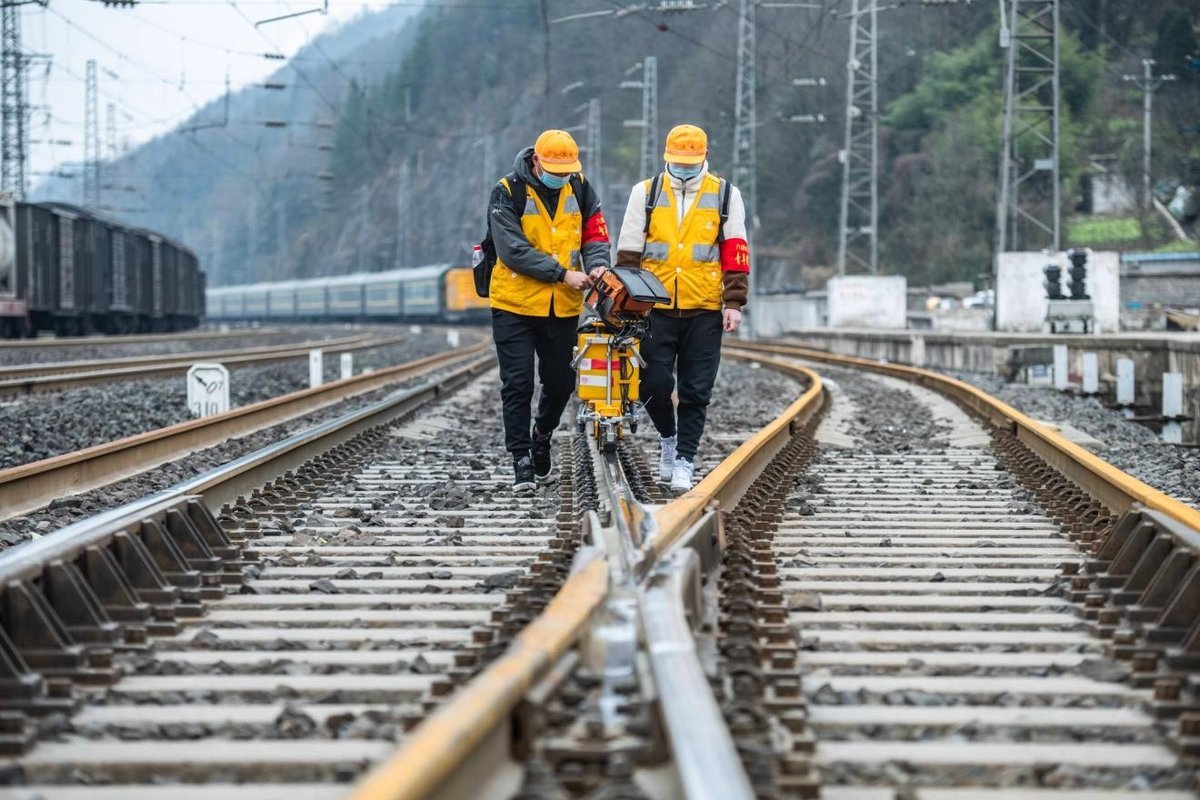
Measuring Before and After: How to Prove a Curve Programme Worked
Field Results From Curved and Heavy-Haul Track
Programme Line and machine Result Heavy-haul preventive/corrective Yiyang (Shandong Hi-Speed), 68 km, 40 Mt/yr, 60-U71Mn / 60-U75V 5 windows, 145 pass-km, 25.45 mm average consumption = 5.7 pass-km/mm; 12 km/h, 15.6 kW; defects dominated by edge lipping and fish-scale cracks Heavy-haul batch verification Shuohuang (CHN Energy), GMC-96B 172.8 pass-km, 34.67 mm average consumption = 4.98 pass-km/mm; 15 km/h, 13.8 kW Half-car comparison GMC-96X (Nanning Bureau, 2022) 48 Molaton wheels left side vs 48 imported HTT right side, same machine: ≈1.5× durability, comparable quality, no end-face cracks, less fume High-speed Hefei-Wuhan HSR, PGM-96C (GMC-96X), 2020 4.28 vs 3.27 pass-km/mm (1.31× life), 214.22 pass-km per wheel average; no continuous blue bands, centred light band Night window Hengliu line, GMC-96X, 2022 18.72 pass-km in a 2-hour possession; trial wheels 20-30 mm consumption vs 43.5-59 mm for the imported comparison wheels Six Mistakes That Cost Money When Grinding Curves
How Molaton Wheels Support Rail Grinding Curves
What is asymmetric grinding and why is it used on curves?
How often should curves be ground?
Can grinding remove rail side wear?
Which wheel format do I need for a turnout grinder or a tight curve?
How do I verify curve grinding quality without a laboratory?
Talk to a Rail Grinding Wheel Supplier Who Works on Curves