Rail Grinder Machine: How to Choose a Rail Grinder for Your Track in 2026
- Share
- Issue Time
- Oct 11,2026
Summary
How to choose a rail grinder machine: machine types, the specifications that matter, matching to rail profile and steel grade, wheel formats, and the buying checklist.
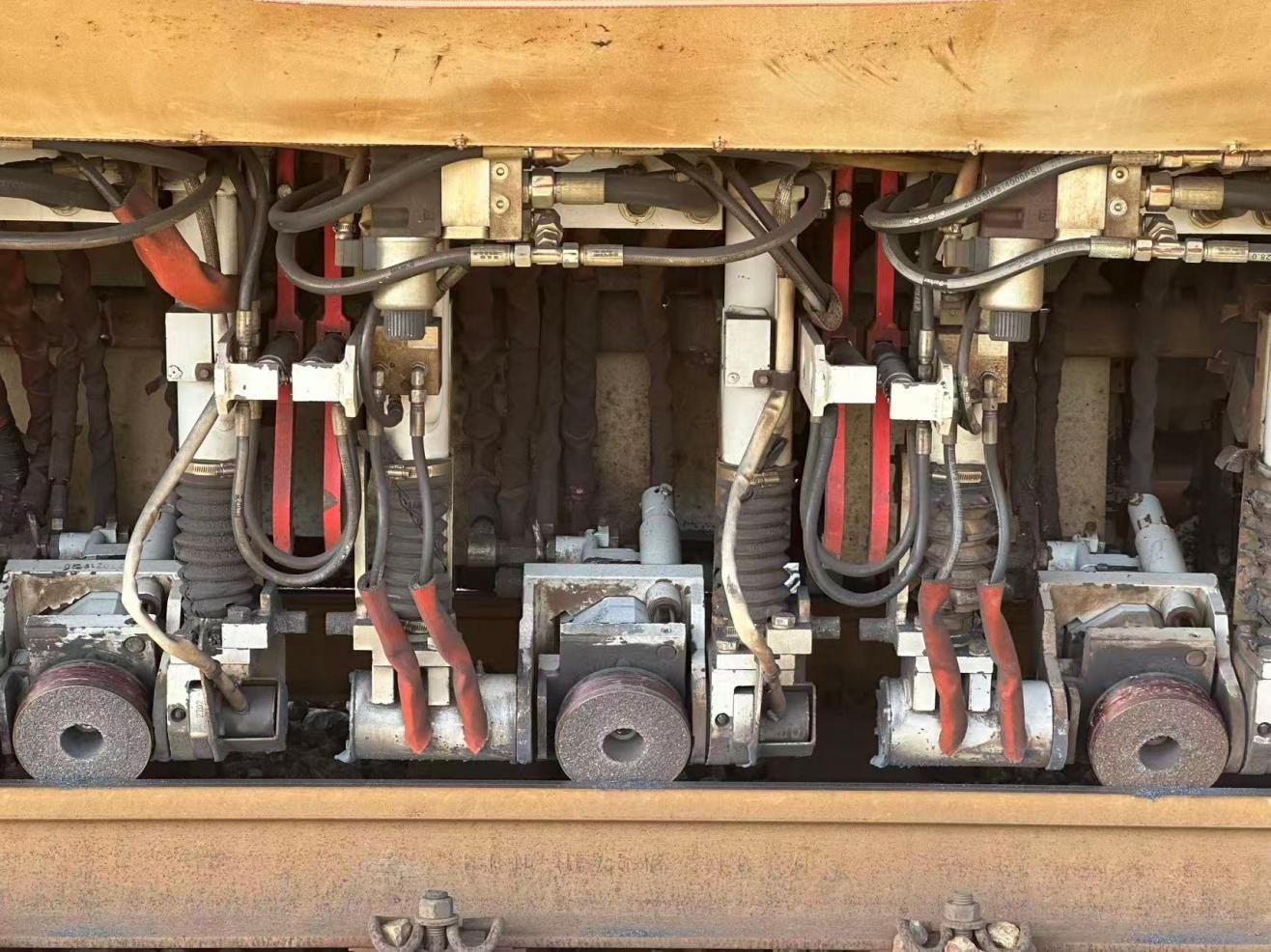
Choosing a rail grinder is a procurement decision that locks in your grinding cost per kilometre for the next decade, because the machine decides how many passes a defect takes, what wheel it consumes, and whether the work fits inside the possession you can actually get. This guide works through the machine families in service, the specifications that actually change outcomes, how to match a machine to a track rather than to a brochure, and what to put in the purchase checklist — including the consumable side, which is where most of the operating cost sits.
In one sentence: A rail grinder should be chosen from the work outwards — where the grinding happens, how much metal has to come off, and the tolerance the operator has to prove — with the grinding wheel treated as part of the machine specification rather than as a purchase made afterwards.
What the Machine Actually Has to Do
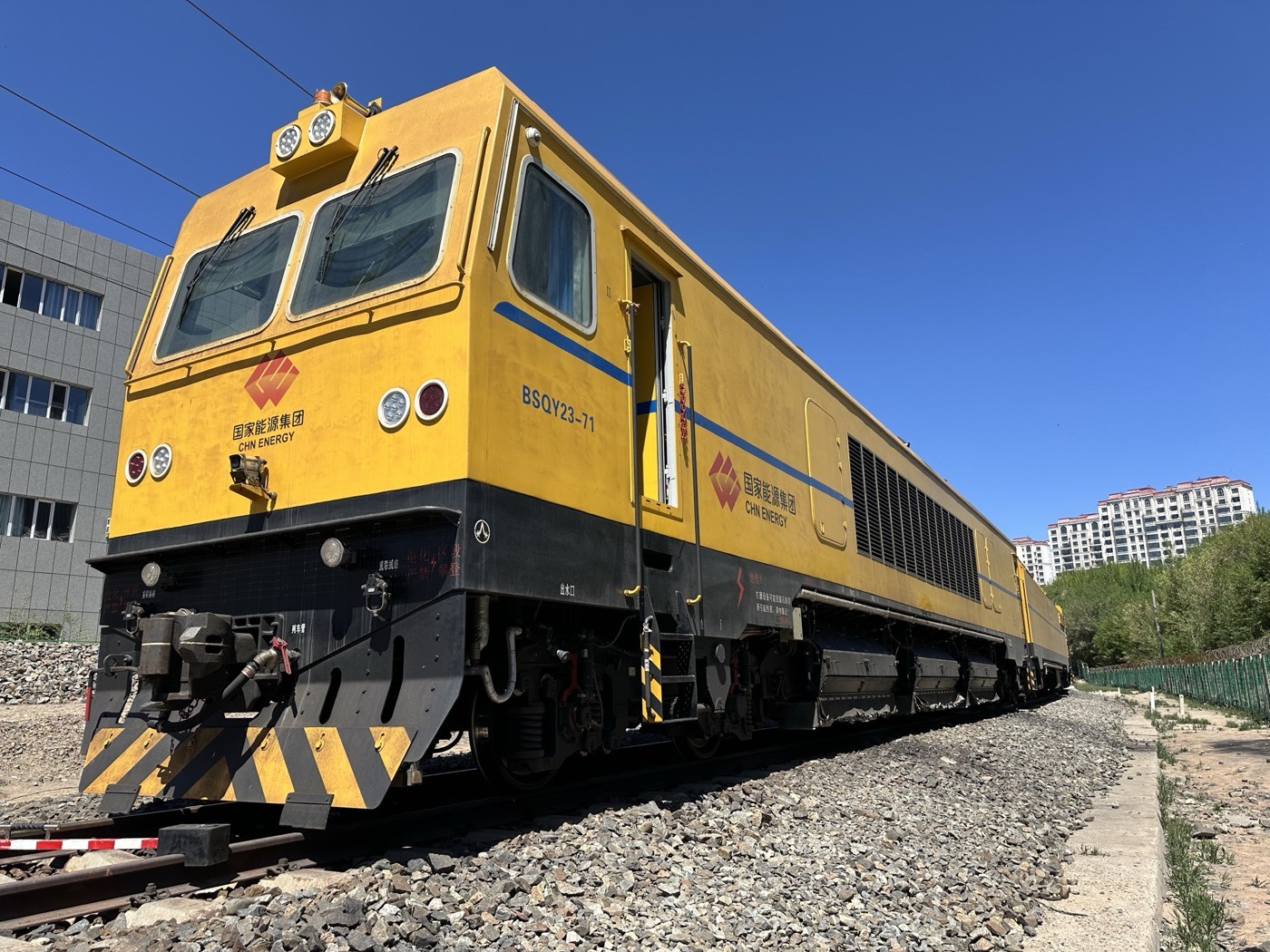
A rail grinder is not a finishing tool bolted onto a track machine. It is the instrument through which a track operator controls the geometry of the wheel-rail interface, and that interface decides ride quality, noise, rail life and, at the extreme, whether the rail fails.
The work breaks into four jobs that no single machine does well:
- Preventive grinding removes a shallow surface layer on a cycle, before defects develop, to keep the profile within tolerance and strip the surface layer where fatigue cracks initiate.
- Corrective grinding removes existing damage — established corrugation, shelling, spalling, plastic flow on the gauge corner — down to sound metal.
- Profile grinding restores the design cross-section, which is the operation that actually fixes the running behaviour: contact band position, equivalent conicity, and the lateral forces that drive side wear on curves.
- Local finishing deals with welds, isolated defects, frog noses and switch blades, at locations a train-mounted grinder physically cannot reach.
The machine you buy determines which of those four jobs you can do at all, and how economically you can do it. That is the whole selection problem, and it is why the answer is usually a combination of machines rather than one purchase — a point worth settling before any catalogue is opened.
Two acceptance figures frame everything below, because they are what the work is judged against. On Chinese networks, a ground profile is accepted within 0.3 mm measured against a 1 m straightedge, with surface roughness no coarser than Ra 10 μm, no continuous blue band, a ramping gradient better than 1‰, and a maximum cut into the parent metal of 0.5 mm. A machine that cannot hold those numbers is not doing the job, regardless of what it removes. The full set of criteria, and how they are measured, is set out in our guide to what rail grinding is and what it achieves for track operators.
Rail Grinder Machine Types: Handheld, Self-Propelled and Grinding Trains
The market divides into three classes, and the division is not about size — it is about which of the four jobs the machine can be pointed at.
What a Handheld Machine Does in Turnouts and Yards
A handheld or portable rail grinder is a single-head machine, typically 60 to 120 kg, carried or trolleyed to the location and lifted onto the rail in minutes. Its economics are the opposite of a grinding train's: it is slow per metre, but it needs no possession, no works train and no fleet, and it reaches places nothing else does.
The list of jobs that depend on it is longer than most engineers expect:
- Weld finishing. After aluminothermic or flash-butt welding, the collar has to come off and the running surface blended into the parent rail. This is the single largest use of portable machines worldwide.
- Switch blades and frogs. Restricted zones, thin blade sections and curved surfaces that a train-mounted unit cannot address without risk.
- Isolated defects. Squats, indentations and localised spalling at a specific location, where mobilising a train would cost more than the defect.
- Curve transitions and ramp zones. The short lengths where the profile changes and a train cannot build up its pass.
- Depot roads, sidings and buffer stops. Track the train never visits.
Working speed is typically 1–2 km/h with a single head, and the achievable accuracy is actually better than a train's: profile control of ≤ ±0.1 mm and surface finish of ≤ Ra 6 μm are achievable on this class, against ≤ ±0.2 mm and Ra < 10 μm for a vehicle. The reason is simple — a hand-guided head works slowly and locally, so the operator can afford precision.
Two power architectures dominate. Petrol or diesel machines run all shift anywhere; electric machines are quieter and cleaner; and lithium-battery machines have become the default for tunnels, enclosed stations and metro night work, where exhaust and noise are the binding constraint. A representative lithium turnout machine in current service runs a 4.7 kW brushless DC motor on a 72 Ah battery, with 0.1 mm feed accuracy, wheel speed of 3600 rpm, a −80° to +30° wheel deflection range and a 200 mm vertical feed stroke — enough travel and angle range to follow switch and crossing geometry with one machine.
The Self-Propelled Middle
Between the hand machine and the full train sits a class that is easy to overlook and often the best value on a mid-sized network: a self-propelled grinding vehicle with a modest head count. It carries its own traction and power, so it can transfer between sites without a locomotive and work without a works train, but it does not have the throughput of a 48-stone consist. For a regional line, an industrial railway or a metro system with short night windows, this class frequently beats both extremes on total cost.
The published parameters from a representative 12-head machine illustrate the envelope this class occupies: 12 × 12 kW of grinding power, wheel speeds of 4000–6500 rpm, a head angle range of −72° to +20°, 0.2–0.3 mm removal per pass, dust extraction of 5000 m³/h, a working rate around 300 m/h, and a set of 12 wheels good for roughly 1000 m of track. Those numbers describe a machine that will not win a contest against a grinding train but will cover a short section, a depot or a night window without mobilising a fleet.
Grinding Train vs Single-Head Machine: Choosing for Long Mainline Grinding
The decision between a train and a portable machine is genuinely about scope, and the arithmetic is unforgiving in both directions.
A ground-level comparison, which we set out in full in our comparison of portable rail grinders and full-size grinding trains, comes down to this:
| Portable / handheld | Grinding train | |
|---|---|---|
| Heads | 1–2 | 16–20, up to 48 wheels per group |
| Working speed | 1–2 km/h | 3–16 km/h |
| Profile control | ≤ ±0.1 mm | ≤ ±0.2 mm |
| Surface finish | ≤ Ra 6 μm | < Ra 10 μm |
| Typical task | Welds, turnouts, isolated defects, curve transitions | Profile restoration, corrugation elimination, preventive programmes |
| Logistics | Carried to site, lifted on track in minutes | Needs a possession and a works train |
The decisive number is throughput per wheel set, not speed. On a 48-wheel high-speed car, a single group grinds 10 to 15 km continuously before the set is spent, and a documented campaign in Liuzhou ground 18.72 km·passes inside a two-hour night window. A portable machine cannot approach that, and no amount of operator skill changes it. Equally, no grinding train can finish a weld collar or work a frog. Networks that own only one of the two end up either leaving local defects untreated or paying train rates for hand-machine work.
The practical answer for most operators is a mixed fleet: a train or vehicle for kilometres of mainline, a turnout machine for restricted geometry, and portable units for welds and follow-up. If your scope is genuinely national rather than local, rail grinding services can be contracted instead of bought, and the trade-offs between owning, hiring and contracting are treated in our guide to rail grinding companies and how to evaluate them.
Key Specs of the Machine: Power, Depth of Cut and Wheel Size
Brochures quote different headline numbers, which makes comparison harder than it should be. These are the six that translate directly into work done.
Removal per pass. The single most consequential figure, because it sets how many passes a defect takes and therefore how much track time is consumed. A large grinding train removes 0.1–0.3 mm per pass; a small machine is typically limited to ≤0.1 mm. The distinction matters because preventive work *wants* a shallow cut applied on schedule, while corrective work needs enough depth to reach sound metal without an impractical number of passes. A machine that cannot make a deep pass cannot clear established corrugation; a machine that cannot make a consistently shallow pass will over-cut a preventive programme.
Grinding power at the head. Not total installed power — the power actually delivered at the contact. A high-capacity car may have hundreds of kW on board distributed across 48 to 96 heads. A representative hand machine draws under 5 kW at a single head. Telling figures from real campaigns: a 48-stone car working at 68% of available grinding power (20.4 kW per head) at 3600 rpm and 16 km/h, and grinding trains operating at 15.6 kW (12 km/h) and 13.8 kW (15 km/h) on heavy-haul duty. Power at the head is what governs how the wheel behaves under load, and therefore the burn risk.
Head count and arrangement. More heads means more coverage per pass and a wider profile envelope, but also more wheels consumed per kilometre. A 16-head or 20-head array is the usual mainline configuration; high-capacity cars run 48 to 96. Beyond a point, the constraint stops being head count and becomes wheel supply — 96 heads consume a great deal of consumable, and the cost sits in the running budget rather than the capital budget.
Wheel size, bore and rated speed. Every head is designed around a specific wheel format, and the format is not interchangeable. The specification to read is diameter × thickness × bore together with the rated peripheral speed. The formats in service across the machine families we support are:
| Machine | Wheel format | Rated speed |
|---|---|---|
| Harsco PGM-48 / PGM-96C (GMC-96X class) | 260 × 90 × 154 mm | 3630 rpm |
| Harsco PGM-96C (alt.) | 260 × 90 × 153 mm | 3630 rpm |
| Loram grinders | 260 × 83 × 152 mm | machine rated |
| Speno / CRRC GMC96B (G3 type) | 250 × 75 × 150 mm | machine rated |
| Speno GMC16A (dual power) | 180 × 105 × 90 mm | machine rated |
| Mecno | 350 × 60 / 50 / 35 / 25 × 127 mm | 2730 rpm |
| Harsco RGH20C turnout car | 280 × 25.5 × 116 mm | 3630 rpm |
| Harsco RGH20C turnout car | 150 × 80 × 5/8", 150 × 77 × M20 | 6000 rpm |
| G6 turnout grinding car | 150 × 27 × 92 mm | machine rated |
| Handheld and portable machines | 150 × 70 × M20, 150 × 65 × M20, 150 × 75 × 32, 125 × 65 × 20 | 6000–7500 rpm |
We supply the full range across these formats; the rail grinding wheel product range lists them by machine family. A costly and common error is to assume that a wheel which fits the spindle will work the head. Bore, thickness and rated speed all have to match, and the abrasive specification has to match the duty. Whether one wheel can serve several machine types is a question with a specific answer, and we have treated it separately.
Angle and travel range. The adjustment envelope decides which geometry the machine can reach: head tilt range, vertical feed stroke and lateral travel. A turnout machine needs a wide deflection range (the lithium machine quoted earlier offers −80° to +30°) plus enough stroke to follow blade and frog geometry. A mainline train needs coordinated multi-head angles to shape a complete profile in one pass.
Dust extraction and emissions. Not a detail on tunnel, metro and station work — it is the specification that decides whether the machine may work there at all. Extraction capacity is quoted in m³/h, and what matters is capture performance at fine particle sizes rather than nominal airflow, since it is sub-micron swarf that reaches catenary and signalling equipment.
Mounting and drive interface. The least glamorous specification and the one most likely to strand a machine. Fastener format, thread and effective engagement length have to match the head; on large wheels a bolt-hole thread with a defined minimum engagement is specified for a reason, and substituting fasteners to make a wheel fit is a decision that costs more than the wheel.
Railroad Rail Grinder vs Railroad Track Grinder: Matching Machines to Rail Profile
The two terms are used loosely, and the looseness causes real procurement errors. The distinction that matters is not the wording but the rail section and profile the machine has to work:
- Rail weight and head geometry. A machine set up for 60 kg/m rail does not automatically work on 75 kg/m rail, and vice versa. Head width, contact geometry and target profile all change, and the grinding angles that produce a correct 60 E1 profile do not produce a correct 75 kg/m profile by scaling.
- Rail steel grade. Chinese networks run 60 and 75 kg/m rail in U71Mn, U75V and U78CrV. Head-hardened and microalloyed grades remove differently from standard carbon rail and are far less tolerant of a hot cut — the same machine and wheel combination that behaves well on U71Mn will burn U78CrV. How rail steel hardness changes the wheel choice is a question worth answering before the machine is specified, because the answer constrains both.
- Profile condition at the start. A machine brought in to restore a profile must be able to reach the target from the measured starting section. If the deviation is large, the head count and removal-per-pass have to be sufficient to close it within the available passes; if it is small, a lighter machine does the job for a fraction of the cost.
The practical test is to take the measured rail profile and the design profile for that section, work out the maximum deviation, and ask what combination of passes and removal per pass closes it inside one possession. That single calculation eliminates most unsuitable machines before a quotation is written — and it is also the calculation that determines how many wheels the job will consume.
There is one more dimension worth naming, because it catches operators out on long sections: the profile is not uniform along the route. Rail in tangent track, on high rails of curves, on low rails and through transition zones has worn differently, and a machine that holds a profile well in one condition may not in another. This is why our separate guide to rail profile grinding treats the target profile as a per-location decision rather than a single network-wide figure.
How to Match a Machine to the Work
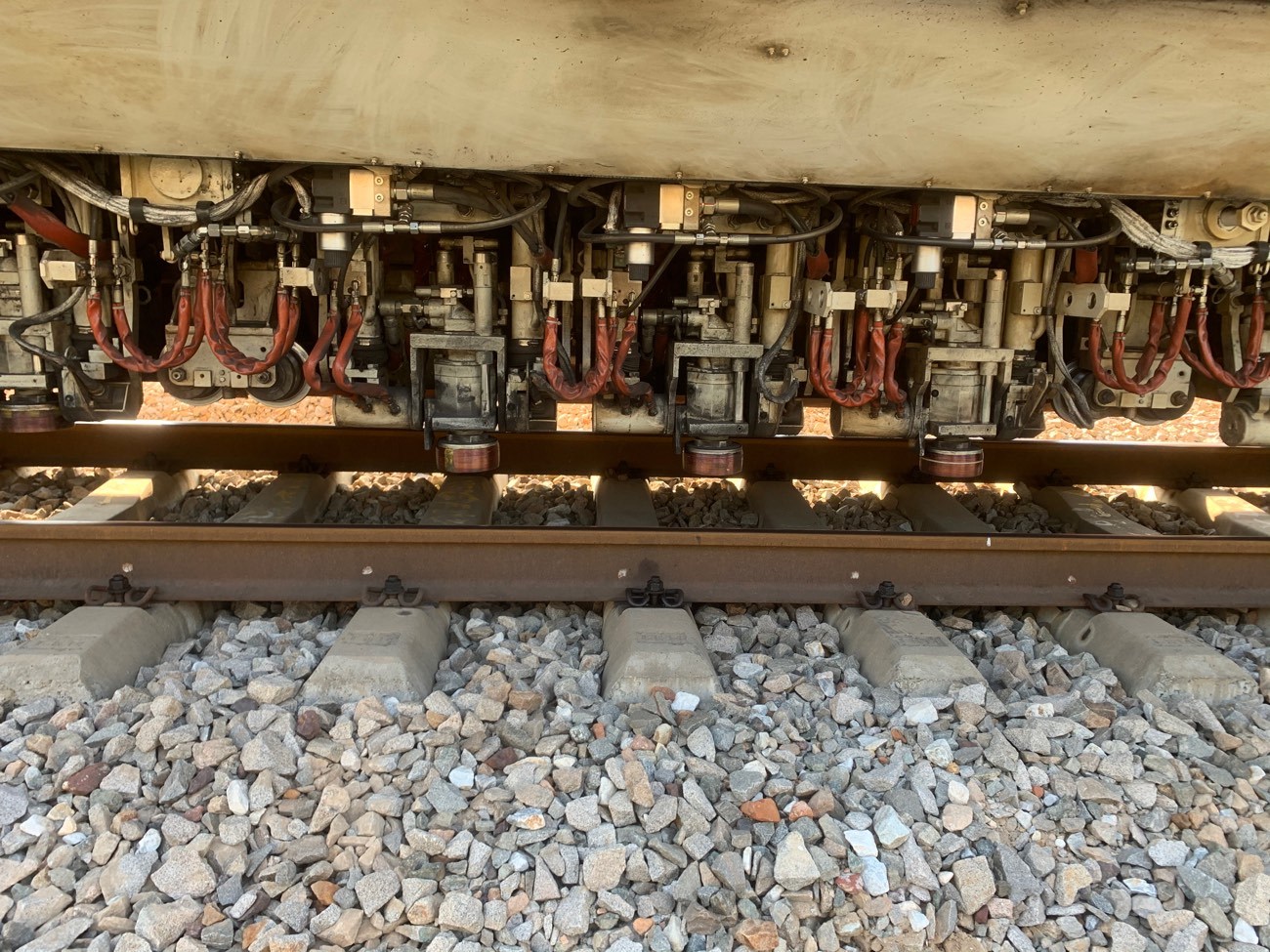
Work from the task backwards. Six questions, asked in this order, will narrow the field to two or three candidates — and they are the same six we use when a customer asks how to choose a railroad track grinding machine.
1. Where does the grinding happen? Kilometres of open mainline, or turnouts, welds and isolated defects? The answer splits the market in half immediately. Mainline scope points to a vehicle or train; turnout, weld and depot scope points to portable or compact machines.
2. How much metal has to come off, and how often? Preventive programmes on a cycle want shallow, consistent passes and prioritise stability over cutting power. Corrective work on established corrugation wants depth. A machine optimised for one is a compromise on the other, and a fleet that has to do both needs more than one machine class — this is the single most common planning gap we see.
3. What power source can the site support? Lithium for tunnels, enclosed stations, metro night windows and any location where exhaust or noise is restricted; diesel or electric for sustained high-output campaigns on open track. On a network with both tunnel and open sections, the answer may be two machines rather than one compromise.
4. What precision must be proved at handover? This is where the acceptance standard enters the specification. If the operator has to demonstrate a profile within ≤0.3 mm of the straightedge criterion and Ra ≤10 μm with no blueing, the machine has to be capable of repeatability at that level, and the measurement method has to exist independently of the machine. Frogs and switch rails generally need copying capability rather than a flat cut.
5. Is the wheel supply matched to the head? Wheel diameter, bore, thickness, abrasive, grit and rated speed all have to align with the head's design. A machine whose only serviceable wheel is an import with a long lead time is a machine whose availability is capped by that lead time.
6. What support comes with it? Commissioning, operator training, spare wheel supply, response time and the ability to make a non-standard wheel when a machine's format is unusual. On a machine expected to work for fifteen years, the support arrangement outlives the specification sheet.
Get those six right and the machine choice generally follows. Get one wrong and the cost appears later, usually as re-grinding, as a wheel life that is half of what was quoted, or as a machine that sits idle because the possession it needed was not the possession the operator had.
Two further questions sit outside the six but decide the commercial model: how many kilometres per year will the machine actually grind, and how long is the possession. If annual mileage is low or the requirement is episodic, contracting a service or hiring capacity may beat ownership outright, and the flexibility is worth more than the utilisation. If it is high and continuous, ownership is usually correct and the calculation turns on cost per kilometre rather than capital cost.
What the Machine Does Not Solve: Wheels, Consumables and Cost per Kilometre
This is the section most buying decisions underweight, and it is where the operating budget actually lives.
The wheel is not an accessory to the machine; it is half of the cutting system. Two wheels of the same nominal dimensions but different abrasive specification and bond will behave differently in three ways the operator feels directly: how much metal comes off per pass, how long the wheel lasts, and whether the surface is burn-free. All three are measurable, and the differences are large.
Field data from Chinese campaigns makes the point:
| Campaign | Machine and condition | Result |
|---|---|---|
| Liuzhou, 2022 | GMC-96X, 2-hour night window | 18.72 km·passes; wheel wear 20–30 mm against 43.5–59 mm for the imported reference wheel |
| Yiyang–Yangkou line, 2023 | 12 km/h, 15.6 kW; 145 pass-km total | Average wear 25.45 mm → 5.7 pass-km per mm of wheel |
| Shuohuang heavy haul, 2023 | 15 km/h, 13.8 kW; 172.8 pass-km total | Average wear 34.67 mm → 4.98 pass-km per mm of wheel |
| Hewu high-speed, 2020 | PGM-96C, 68% power (20.4 kW), 3600 rpm, 16 km/h, 260 × 90 × 154 mm at 50 m/s | 4.28 pass-km/mm against 3.27 for the incumbent wheel — a 1.31× life gain; average 214.22 pass-km per wheel |
Read the Liuzhou line carefully, because it is the clearest statement of what wheel choice is worth. Two wheels on the same machine, in the same window, doing the same work: one set wore 20–30 mm, the other 43.5–59 mm. The wheels consumed roughly twice as much of the consumable to achieve the same result, and the difference was not the machine. It is worth recalculating any machine purchase on the assumption that wheel life could differ by a factor of two, because that is what the evidence supports.
The same logic means that the number to negotiate is not the wheel price but the cost per kilometre — wheels consumed per kilometre, multiplied by the price per wheel, plus the track time the passes consume. Our guide to rail grinding wheel price explains which specification decisions drive the price, and the drivers behind cost per kilometre, including how the number of passes moves the whole bill, are set out in our analysis of rail grinding cost per kilometre.
Three consumable properties deserve verification before a machine is committed to:
- Rotational strength. A rail grinding wheel runs at high peripheral speed under load, and the safety case rests on burst testing. A wheel in current supply passed a safety-speed test at 4775 rpm held for 30 seconds without rupture, and a burst test at 6354 rpm without rupture, with imbalance measured at 21 g against a ≤39 limit, and dimensional tolerances on diameter and thickness within ±1.5 mm — tested to JB/T 11431-2020 and GB 2494-2014.
- Cutting performance against the requirement. Abrasive institute testing of rail grinding wheel types measured workpiece removal exceeding the technical requirement by 1.4 to 2.6 times across grades, which is the margin that shows up as fewer passes on track.
- Burn tendency. Thermal behaviour decides whether the wheel can be used on head-hardened rail at all. Comparative thermal imaging at 3600 rpm recorded a working-surface temperature of 124 °C against 143 °C for the imported reference, with SO₂ emissions 30–35% lower — relevant wherever emissions are regulated.
A machine is only as productive as its wheel supply, and the wheel is where the grinding programme is actually executed. Whether a portable machine's wheel and a train's wheel are interchangeable is a question that decides how much of a mixed fleet can share a single consumable line. This is why the two are best specified as one system rather than purchased separately, and it is the basis on which we work with machine operators, alongside the wider rail maintenance solution we supply.
If the project is at the quotation stage, the data pack that makes wheel and machine quotes comparable is worth assembling first — our guide to getting a rail grinding quote sets out what to send.
Machine Buying Checklist: Spares, Service and Training
A machine purchase is a fifteen-year relationship, and the commissioning document should read like one. The following items belong in the specification, not in a side letter.
Spares and consumables - Wheel supply chain: who manufactures, what the lead time is, whether an equivalent wheel can be sourced locally. - Guaranteed availability for the expected machine life, with a stated annual quantity and a response commitment on urgent orders. - Common wear parts — belts, bearings, hydraulic components, cables — with a parts list and prices at handover. - Whether non-standard wheel formats can be manufactured, and at what minimum order.
Service and response - Commissioning support and who performs it. - Service response time, and how it is measured. - Remote diagnosis capability, if the machine has measurement and control systems. - Field support during the first grinding campaign — this is where specification errors surface, and having the supplier present converts a lost night into a learning one. - A maintenance schedule with intervals for the systems that actually fail: grinding head bearings, hydraulic circuits, dust extraction, battery packs on lithium machines.
Training - Operator training on the specific machine, covering not only controls but grinding parameters: pass depths, angles, speeds and the signs of a wheel cutting too hot. - Acceptance and measurement training — an operator who cannot measure a profile cannot prove the work, and the operator is usually the one signing the record. - Refresher training, because grinding settings drift as crews change. A structured training programme, such as the grinding training we run with operators, tends to pay for itself in reduced over-grinding. Training and support terms are also covered in our answer on what happens after equipment purchase.
Documentation - Measured machine capability: profile accuracy and repeatability demonstrated on track, not quoted from a drawing. - Wheel specification sheet matched to each head, with bore, thickness and rated speed. - Acceptance criteria for the finished surface, and the measurement method. - Safety documentation for the wheel — burst test evidence and standard compliance.
Commercial terms - Annual wheel consumption estimate per kilometre, with the basis on which it was calculated. - Terms for a trial order before a fleet commitment, and what a trial is expected to demonstrate. - Whether the supplier will take responsibility for profile conformance across a section, or only for supplying a wheel.
Common Selection Mistakes and What They Cost
Buying on head count. The largest machine available is not the best machine for a turnout-heavy network or a metro system with two-hour windows. Head count buys throughput you may never use and consumes wheels whether or not they are cutting.
Specifying the machine before reading the rail. Profile, weight, steel grade and the measured deviation from design should all come before the machine shortlist, because they constrain it. Machines have been bought for 60 kg/m U71Mn track and then asked to work 75 kg/m head-hardened rail, where the burn margin evaporates.
Treating the wheel as a separate purchase. This is the mistake with the largest financial consequence, and the Liuzhou figures above quantify it: the same machine, the same window, roughly twice the wheel consumption. Specifying wheel and machine as one system costs nothing and is worth a great deal.
Assuming precision scales with price. A portable machine holds ±0.1 mm and Ra 6 μm; a grinding train holds ±0.2 mm and Ra 10 μm. The slow machine is the accurate one. Buying a large machine for precision work is buying the wrong tool at a higher price.
Forgetting the possession. A machine's real output is bounded by the window, not the specification sheet. A two-hour night window yielded 18.72 km·passes on a well-run campaign; a machine that needs a longer setup or a works train may not yield half that in the same window.
Skipping the trial. A trial on your own track, your own profile condition and your own rail grade is the only test that settles wheel performance. Terms that allow a measured trial before a fleet commitment are worth negotiating for, and our guide to getting a rail grinding quote explains how to structure the comparison so the trial produces a decision rather than an impression. The rail grinder machine range is a useful reference for comparing formats side by side.
Buying without the measurement capability to verify. A machine that grinds but cannot be checked against the acceptance criteria is a machine whose work cannot be signed off. The measurement method is part of the purchase.
A Field Guide to the Machine Families You Will Meet
Anyone specifying a rail grinder will meet the same named families repeatedly, and knowing which is which saves a great deal of time. What follows is orientation, not endorsement — the machine is one half of the specification and the wheel is the other, which is the business we are in.
Rail grinding trains cover the mainline duty. The principal platforms in global service are Speno and Harsco's PGM and GMC ranges, Loram's grinders, Vossloh's high-speed and transit units, and CRRC's GMC series. Machine architectures differ enough that wheel formats are not transferable between families; our directory of rail grinding machine manufacturers and the machine families they supply sets out the landscape, and the wheel formats each family uses.
High-speed and passive grinding units work while travelling, at speeds approaching line speed, which makes them the only class usable inside a live timetable. They are shallow-cut tools by design and suit preventive programmes rather than deep correction.
Turnout and switch machines are built around clearance and copying: narrow bodies, wide head deflection, and in the higher-specification versions CNC profile control that follows a stored target profile for frogs and blades. On turnout work the acceptance question is geometry and surface, not volume removed, which is why an aggressive flat cut is the expensive mistake rather than the slow one.
Portable and handheld machines do the weld, defect and depot work. Their importance is out of proportion to their price: on most networks they are the machines that keep the acceptance records clean, because they handle every location the train cannot reach.
A special case worth naming: the industry also uses recycled grinding vehicles — older trains rebuilt around new grinding heads and control systems, sometimes with a different wheel format from the original. These are legitimate machines with a real cost advantage, but their wheel specification is often unique to the rebuild and worth confirming before the machine is accepted, since the format may not match any standard catalogue item. One such vehicle, the Molaton rail grinding vehicle derived from a rebuilt Loram unit, is treated separately in our machine notes.
Request a Machine Recommendation from RailwayCare
RailwayCare has manufactured bonded abrasive rail grinding wheels since 2004 — the first company in China dedicated to them, with roots in the friction-materials laboratory of Wuhan University of Technology — and took part in drafting JB/T 11431, the Chinese national standard for bonded abrasive rail grinding wheels. The Molaton brand supplies wheels matched to the mounting and drive formats of the major machine families in service, including Mecno, Speno and CRRC GMC, Harsco PGM and GMC, Loram, and the turnout and portable machines, with dimensions specified per machine rather than per generic profile.
Because we supply the consumable side across so many machine types, we see which machine and wheel combinations work on which track — and that is the knowledge we can bring to a selection decision. We are not a neutral party, and we will tell you plainly which of your candidate machines we can supply for, what the wheel life has been on comparable track, and where a specification looks wrong for the rail you actually have.
If you are specifying a rail grinder, replacing wheels on machines already in service, or trying to work out why one machine costs more per kilometre than another on the same network, send us the machine make and model, the rail section and steel grade, and the measured profile condition.
WhatsApp: +86 15072332788
Email: simon.wang@railwaycare.com
How do I choose the right grinder for my track?
Choose from the work outwards: decide whether the grinding is mainline kilometres or turnouts, welds and isolated defects; work out how much metal has to come off and how often; check what power source the site supports; establish the precision the acceptance standard demands; confirm the wheel format matches the head; and assess the supplier's spare-wheel supply and training. Those six questions in that order narrow the market quickly, and the wheel format is the constraint most often discovered too late.
What is the difference between a portable machine and a grinding train?
A rail grinder covers single-head and compact multi-head machines used for welds, turnouts and isolated defects, working at 1–2 km/h with accuracy of ≤ ±0.1 mm and finish ≤ Ra 6 μm. A rail grinding train is a self-propelled, multi-head vehicle for profile restoration and preventive programmes over kilometres of mainline, working at 3–16 km/h with 16 to 96 heads and holding ≤ ±0.2 mm. They do different jobs rather than the same job at different scales, which is why most networks need both.
How much does a rail grinder cost to operate?
Judge it on cost per kilometre rather than on capital cost or wheel price, because wheel life varies widely with specification. On documented campaigns, wheel consumption ranged from 4.98 to 5.7 pass-km per mm of wheel wear on heavy-haul and regional lines, and one high-speed trial recorded 214 pass-km per wheel with a 1.31× life advantage over the incumbent wheel. Two wheels on the same machine in the same window have worn 20–30 mm and 43.5–59 mm respectively — roughly a factor of two in consumable cost for identical output.
Can one machine grind different rail profiles?
It can be set up for them, but not interchangeably without specification work. Rail weight changes head geometry and target profile, and steel grade changes the burn margin — U71Mn, U75V and U78CrV behave differently under the same head, and head-hardened rail tolerates far less heat. Before committing a machine to a section, take the measured profile and the design profile, calculate the maximum deviation, and confirm the machine can close it in the passes available.
What should be in a purchase checklist?
Wheel supply terms with lead times and guaranteed availability; a parts list for wear components; stated service response times and commissioning support; operator training that covers grinding parameters and not only controls; measurement and acceptance training; measured machine capability demonstrated on track rather than quoted; and an annual wheel consumption estimate with its calculation basis. Support arrangements outlive the specification sheet on a machine expected to work for fifteen years.
Is it better to buy or to contract the work?
It depends on annual mileage and the length of possession you can obtain. Continuous high mileage generally favours ownership, where the calculation turns on cost per kilometre. Low or episodic mileage favours contracting or hiring, because flexibility is worth more than utilisation. The decisive inputs are kilometres per year, the longest possession available, and whether you can keep a machine fully employed — a machine that sits idle still consumes its capital cost.