Rail Corrugation Elimination: Precision Grinding from Theory to Practice with the Right Railway Grinder Wheel
- Share
- publisher
- Molaton
- Issue Time
- Jul 23,2026
Summary
Complete rail corrugation elimination methodology: physics of fastener resonance (f=v/λ), 0.1mm-per-pass precision grinding, thermal management, and proven results. Beijing Bureau documented case study.
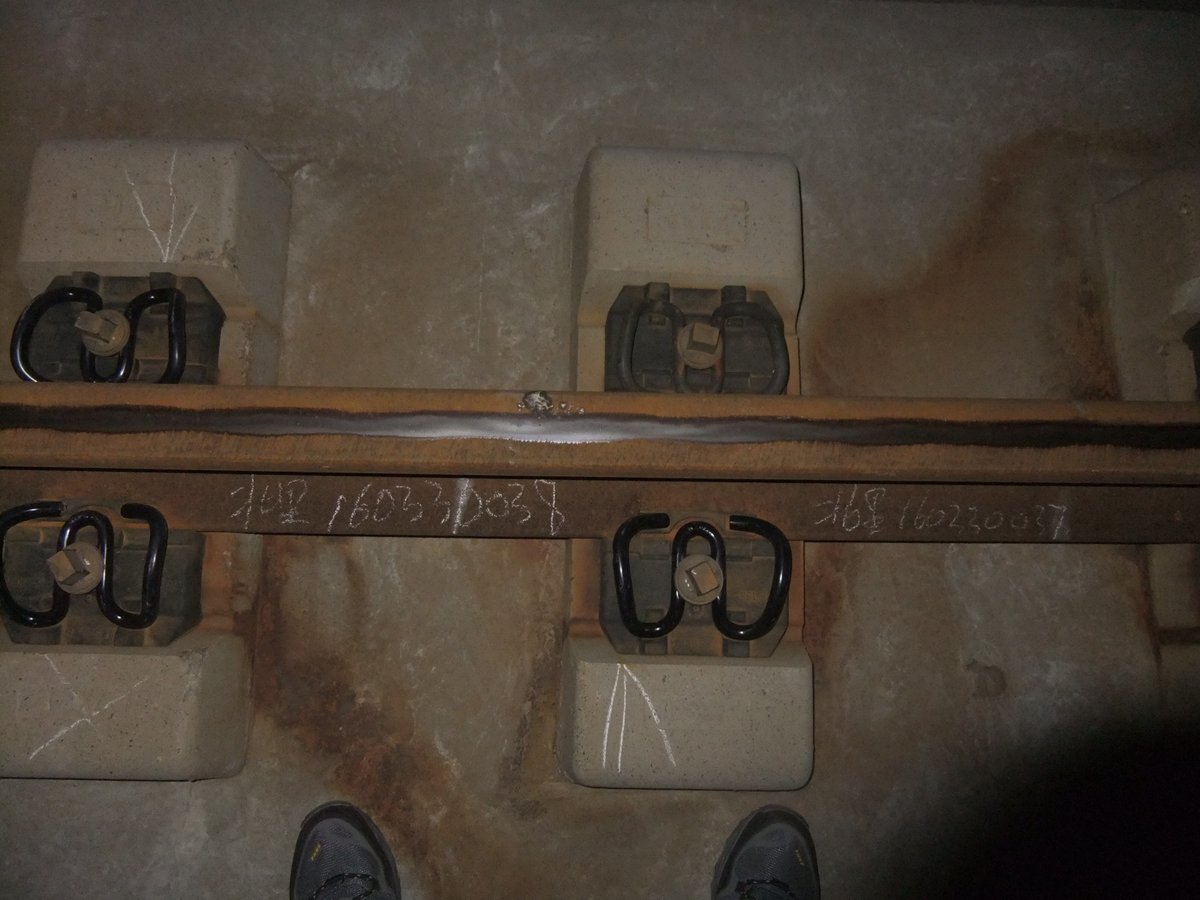
Rail corrugation is one of the most persistent and costly problems in railway maintenance — a wavy wear pattern on the rail surface that generates intense vibration, accelerates component degradation, and in high-speed applications can trigger fastener fracture through resonance. Eliminating corrugation requires a railway grinder wheel capable of 0.1 mm-per-pass precision cutting, with thermal management so effective that the rail surface shows no blue discoloration even after dozens of passes. The Beijing Railway Bureau's documented methodology proves this is achievable with the right equipment, technique, and wheel selection.
Rail corrugation is a periodic waviness of the running surface, typically described by its wavelength (λ) and depth. It forms through a complex interaction between wheel dynamics, track stiffness, friction characteristics, and material properties. Once established, corrugation becomes self-reinforcing: the wavy surface causes wheels to oscillate vertically, which increases dynamic contact forces at the wave peaks, which accelerates wear at those same peaks.
For conventional-speed lines, corrugation is primarily a noise and comfort issue. For high-speed lines operating at 250–300 km/h, the consequences are far more severe:
The Beijing Bureau's analysis provides a clear mathematical framework for understanding when corrugation becomes dangerous to fastener integrity:
f = v / λ Where: f = vibration frequency (Hz), v = train speed (m/s), λ = corrugation wavelength (m) Critical fastener natural frequencies documented by the bureau:
At train speeds of 250–300 km/h (69–83 m/s), the dangerous wavelength ranges become:
This analysis explains why corrugation on high-speed lines cannot be ignored — it directly threatens track structural integrity through mechanical resonance. And it explains why the choice of railway grinder wheel matters: only a wheel capable of completely removing the corrugation pattern (not just reducing its amplitude) can eliminate the resonance excitation source.
Fastener fracture caused by corrugation-induced vibration resonance — the consequence of incomplete or delayed railway grinder wheel intervention.
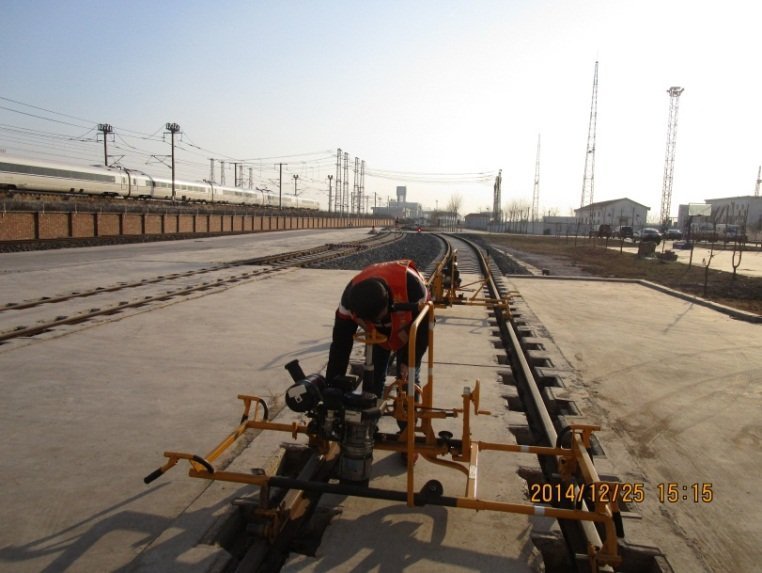
The Beijing Bureau specifies a comprehensive toolkit for corrugation treatment operations. Each piece of equipment interacts with the railway grinder wheel in specific ways:
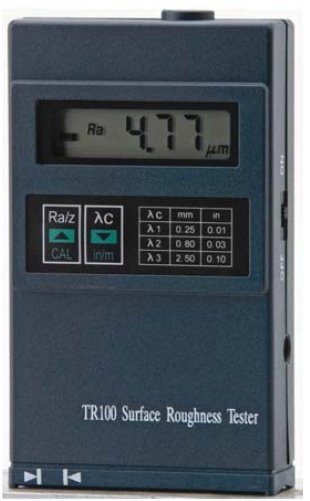
Primary large-machine platform. Wheel specifications must match machine power curve and target removal rate. Supplementary small-machine work. Requires fine-control railway grinder wheel for precision passes. Measures pre/post profiles. Validates that wheel selection achieved target geometry. Physical profile template for field verification during grinding passes. Power supply for portable machines. Backup unit ensures continuous operation. Edge finishing and localized defect removal after main grinding complete. 1-meter digital straightedge measures corrugation depth before and after treatment. Verifies post-grinding Ra values meet acceptance criteria. Specialized instrument measuring wavelength and amplitude of residual corrugation.
Before any railway grinder wheel engages the rail, the Beijing Bureau requires systematic measurement:
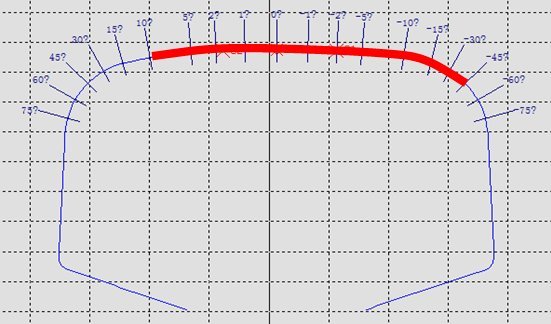
The most important technical decision in corrugation grinding is where to start and which direction to grind. The Beijing Bureau specifies:
Starting position: 45° angle position on the rail head Grinding begins at the 45° point on the gauge-corner side of the rail head and proceeds systematically across the entire running surface. This starting position ensures the first pass addresses the area where corrugation typically initiates — near the gauge corner where lateral contact stresses are highest.
This is the single most critical parameter in corrugation elimination: each pass must remove no more than 0.1 mm of material. This rule exists for three reasons:
Removing more than 0.1 mm/pass generates frictional heat faster than the rail can dissipate it, risking blue tempering of the surface layer. Deeper passes make it harder to stop exactly at the target profile, increasing risk of over-grinding. Light passes ensure consistent material removal across the full width of each ground band.
After each pass, the operator must verify flatness using the electronic straightedge. If corrugation remains visible, the process repeats. The railway grinder wheel must deliver exactly 0.1 mm of predictable removal every time — Molaton's hot-pressed bond system is specifically engineered for this level of control.
The Beijing Bureau defines strict limits on the width of each ground band produced by the railway grinder wheel:
These standards prevent the "terracing" effect that occurs when ground bands are too wide or have abrupt transitions between zones. A properly selected railway grinder wheel with appropriate grain size and bond hardness naturally produces bands within these limits when operated at the specified 0.1 mm/pass removal rate.
When corrugation exhibits locally deep valleys (exceeding normal amplitude), the standard uniform-pass approach must be modified. The Beijing Bureau's special case protocol:
Localized deep corrugation treatment — disrupting the wave pattern before finishing the full surface with the railway grinder wheel.
Throughout the entire corrugation grinding operation, one rule is absolute: the ground rail surface must show no continuous blue discoloration band.
Blue discoloration indicates that the rail surface exceeded the austenitizing temperature (approximately 720°C for rail steel) and was rapidly quenched by the cold bulk metal beneath, forming hard, brittle martensite. This "white layer" (白层) is a crack initiation site that can cause spalling within weeks of train traffic resuming.
Preventing blue bands requires:
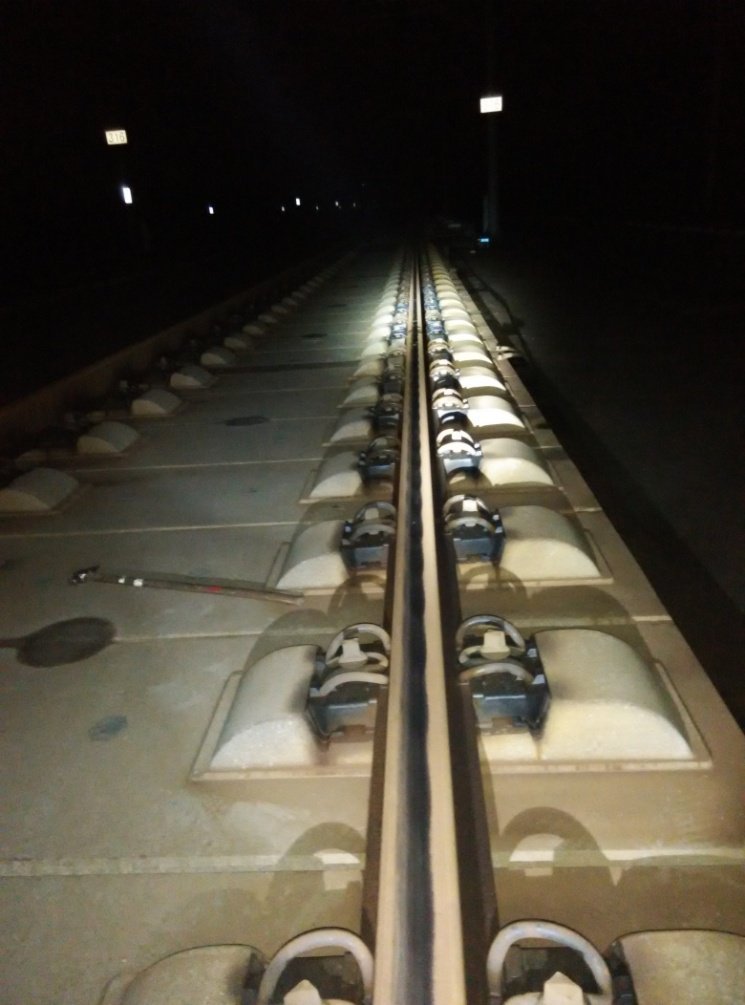
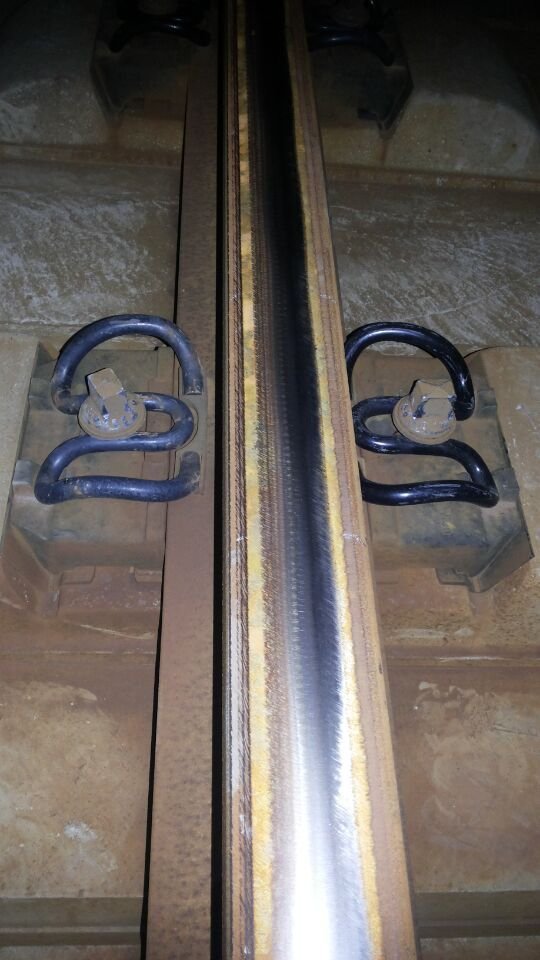
The Beijing Bureau documented a representative case: a 13-meter corrugated section with 140 mm wavelength and 0.05 mm valley depth. After treatment following the above protocol:
Before treatment: severe corrugation with clearly visible wave pattern across the rail surface. After treatment: uniform light band with zero visible corrugation. Follow-up inspection at 1 week and 1 month showed no recurrence and zero fastener fractures.
Corrugation elimination places unique demands on the railway grinder wheel that differ from both open-line profiling and turnout defect treatment:
Molaton offers dedicated corrugation-elimination wheel grades for both large machines (Loram/Harsco/Speno) and portable units (Geismar/Robel). Contact our team for specification matching.
Molaton's corrugation-specialist railway grinder wheel series delivers 0.1 mm precision with zero blue-band risk. Request your free application consultation today.What Is Rail Corrugation and Why It Threatens High-Speed Operations
The Physics: Vibration Frequency Calculation and Fastener Resonance Risk
Fastener Type Natural Frequency WJ-8 type clip ~800 Hz W300-1 type clip ~600 Hz
Equipment Preparation: The Full Toolkit for Corrugation Elimination
Mp23 Grinding Vehicle
MV3 Portable Grinder
Rail Profilometer
Template Ruler
2kW Generator × 2
Angle Grinder (砂轮机)
Electronic Straightedge
Roughness Meter
Corrugation Gauge
Pre-Grinding Measurement Protocol: Quantify Before You Cut
The Precision Grinding Flow: Starting Angle and Direction
The 0.1mm Rule: Controlling Removal Depth Pass by Pass
Heat Control
Precision
Uniformity
Ground Band Width Standards: What Acceptable Looks Like
Rail Zone Max Ground Band Width Width Change Rate (per 100mm) Within ±10mm of centerline ≤10 mm ≤25% of max width 10mm to 25mm from centerline ≤7 mm ≤25% of max width All other zones ≤5 mm ≤25% of max width Special Case Strategy: Localized Deep Corrugation Treatment
No Blue Band: The Thermal Discipline That Protects Rail Metallurgy
Treatment Results: From Severe Corrugation to Mirror-Smooth Surface
Selecting the Right Railway Grinder Wheel for Corrugation Work
Eliminate Corrugation Permanently — Start With the Right Wheel