An In-Depth Look at Rail Head Rollover: Causes, Hazards, and Efficient Mitigation Strategies
- Share
- Issue Time
- Apr 23,2026
Summary
Rail head rollover is a common defect where rail head metal plastically flows and extrudes outward under immense wheel loads, frequently occurring on small-radius curves and switch points.
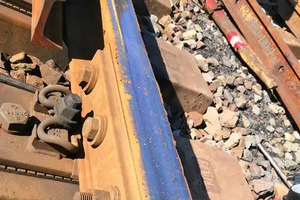
Have you ever heard the term "rail head rollover" near the tracks? It’s certainly not a culinary delight, but a vivid and critical technical term in railway maintenance. Rail head rollover refers to the phenomenon where the metal at the edge of the rail head plastically deforms and extrudes outward due to repeated wheel loading that exceeds the material's yield strength. This seemingly minor defect is, in fact, a significant threat to train ride quality and track safety.
I. How Does Rollover "Grow"? – The Inevitable Result of Plastic Flow
The formation of rollover is fundamentally a direct manifestation of plastic deformation in material mechanics. As a wheel rolls over the rail, extremely high localized contact pressure is generated. If this pressure exceeds the yield strength of the rail steel, the metal cannot fully rebound and instead undergoes permanent "flow," much like modeling clay.
● Small-Radius Curves: A Breeding Ground for Rollover
On curves, the outer rail is elevated above the inner rail (superelevation) to counteract centrifugal force. This causes the inner (low) rail to bear a significantly higher wheel load than on tangents. The immense vertical pressure forces the inner rail head metal to squeeze outwards (especially towards the gauge side), forming classic rollover.
● Switch Points: The Vulnerable "Front Line"
The tip of a switch rail has a small cross-section and relatively lower strength. If the "ramp height" (the designed height difference) between the switch rail and the stock rail is mismatched, it can cause the switch rail to bear load prematurely. The concentrated wheel-rail contact stress can easily exceed the yield limit of the switch rail material, rapidly forming rollover at its tip.
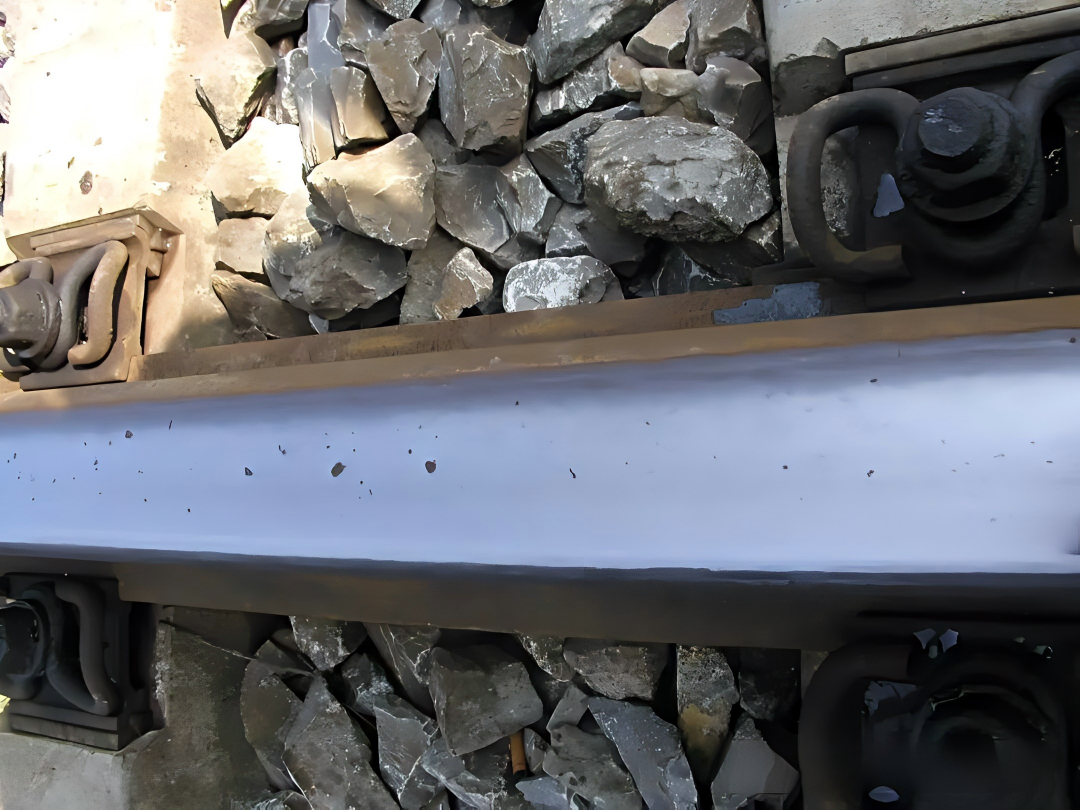
II. Significant Hazards: A Safety Chain from Rocking to Derailment
Rail head rollover is far more than just a cosmetic issue; its hazards permeate the entire operational safety chain:
● 1. Disrupts Wheel-Rail Interface, Causing Abnormal Vibration:
Rollover alters the ideal rail head profile, inducing irregular hunting oscillation in the wheelset. This results in noticeable carbody rocking as trains pass, severely impacting passenger comfort.
● 2. Threatens Switch Safety, Leading to Poor Fit:
At turnouts, rollover on either the switch rail or stock rail can prevent their tight closure, creating a "false fit." This not only accelerates component wear but can also cause the switch rail to move or even lead to a derailment as a train passes, with potentially catastrophic consequences.
● 3. Interferes with Braking Systems, Planting Seeds for Accidents:
On lines using shoe brakes, excessive rollover can jam the brake shoe, preventing its normal release. Being forcibly dragged along can easily cause a vehicle to derail.
● 4. Accelerates Rail Damage, Shortening Service Life:
Rollover itself is a result of plastic deformation, and its root is often a stress concentration zone, highly prone to crack initiation. These cracks can then develop into spalling or other severe defects, drastically shortening the rail's service life.
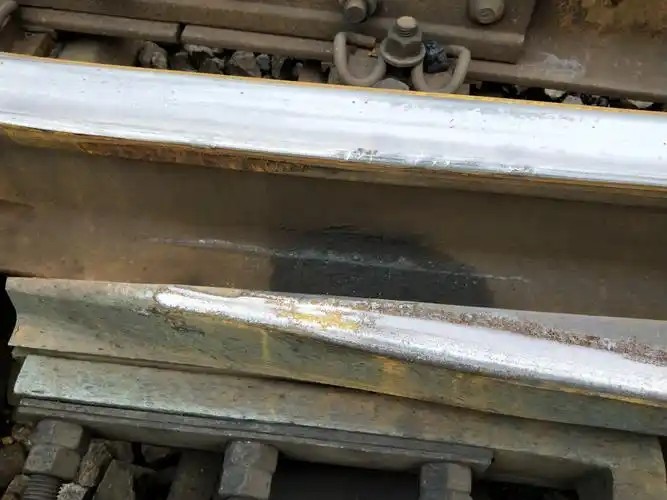
III. Rail Grinding: The Most Precise and Efficient Remedy
For addressing rollover, rail grinding is universally recognized as the most direct and effective method. According to railway maintenance regulations, any rollover exceeding 0.8mm in height must be ground down.
Grinding operations are primarily of two types:
● Manual Grinding:
Suitable for localized, minor rollover, using small tools like angle grinders for precise finishing.
● Mechanical Grinding:
For extensive or severe rollover, specialized turnout grinders or large grinding trains are required to achieve efficient and uniform material removal.
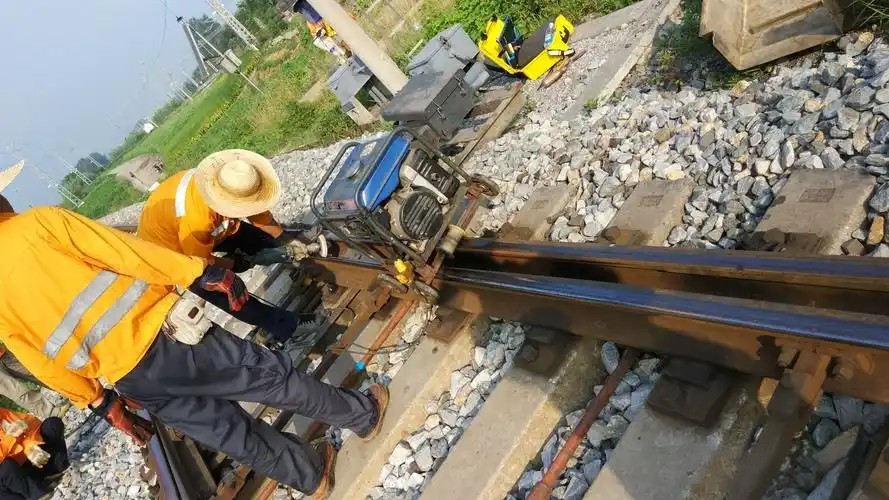
Regardless of the method, the core objective is to precisely remove the excess metal and restore the designed rail head profile, thereby re-establishing a healthy wheel-rail contact relationship.
IV. Choosing the Right Rail Grinder Wheel: The Key to Success
The effectiveness of grinding largely depends on the grinding wheel used. Standard wheels are often inefficient against high-hardness rails and stubborn rollover and can easily burn the rail surface.
The Molaton RailwayCare range of grinding wheels is engineered specifically for such challenges. These products utilize specially formulated abrasives and high-strength bonds, offering exceptional thermal stability and self-sharpening properties. When grinding rollover, RailwayCare wheels maintain a consistent cutting rate, effectively preventing rail surface burns (tempering) caused by frictional overheating. This ensures every grinding pass is precise and efficient, maximizing rail life.

V. Prevention is Better Than Cure: Building a Rollover Defense System
Beyond timely remediation, proactive prevention is equally crucial:
● Optimize Track Geometry:
Properly set superelevation on curves to avoid overloading the inner rail; ensure the ramp height between switch and stock rails is precisely matched.
● Implement Preventive Grinding Cycles:
Conduct regular preventive grinding on high-risk sections (e.g., small-radius curves, turnouts) to eliminate micro-defects and prevent rollover from taking hold.
● Use Premium Rail Steel:
Install higher-grade, wear-resistant rails in critical areas to enhance resistance to plastic deformation from the outset.
FAQ
What is rail head rollover?
It is plastic extrusion of metal at the edge of the rail head, caused by repeated wheel loading that exceeds the yield strength of the rail steel. Because the metal cannot rebound, it flows outward — most visibly towards the gauge side — and permanently changes the rail head profile.
Where does rollover form first?
Two places. On curves, superelevation loads the inner (low) rail more heavily than tangent track, so the head metal squeezes outward at the gauge side. At switch points, the tip of the switch rail has a small cross-section and relatively lower strength; if the ramp height between switch rail and stock rail is mismatched the tip takes load prematurely and rolls over quickly.
At what height must rollover be ground out?
Railway maintenance regulations require any rollover exceeding 0.8 mm in height to be ground down. Localised minor rollover is usually finished by hand tools, while extensive or severe rollover needs a turnout grinder or a large grinding train to achieve uniform removal. The aim in both cases is the same: remove the excess metal and restore the designed rail head profile.
How do you grind rollover without burning the rail?
The risk in shallow corrective grinding is thermal, not mechanical, because passes are light and repeated in the same place. A wheel with self-sharpening grain and controlled bond erosion keeps cutting instead of polishing, so friction heat stays below the level that forms a white etching layer. The mechanism and the wheel properties that prevent it are set out in rail burning prevention.
Can rollover be prevented rather than ground?
Partly. Setting superelevation correctly avoids overloading the inner rail, matching ramp height at switches stops the switch tip taking load early, and preventive grinding cycles on high-risk sections remove the micro-defects that let rollover take hold. For the profile side of prevention see rail profile grinding, and for the turnout-specific work precision turnout grinding.
Take Action Now to Safeguard Your Track!
Though small, rollover poses a major risk. Choosing the right tools and partner is key to its efficient management and ensuring operational safety.
Contact the Molaton expert team today!
Contact the Molaton expert team today! We offer you:
● A complimentary professional consultation to tailor the optimal rollover management and prevention plan based on your specific line and equipment conditions.
● A trial sample of our high-performance RailwayCare grinding wheels, so you can experience firsthand their outstanding performance in handling rollover and restoring the rail head profile.
● Comprehensive technical support, guiding you from grinding parameter setup to post-grinding evaluation, every step of the way.
Don't let rollover continue to threaten your operations. [Click here] or call our hotline now to get your customized solution and keep every inch of your track in peak condition!
📧 Contact us: simon.wang@railwaycare.com
🌐 Explore our Rail Grinding Solution!
📱 WhatsApp: +86 15072332788